
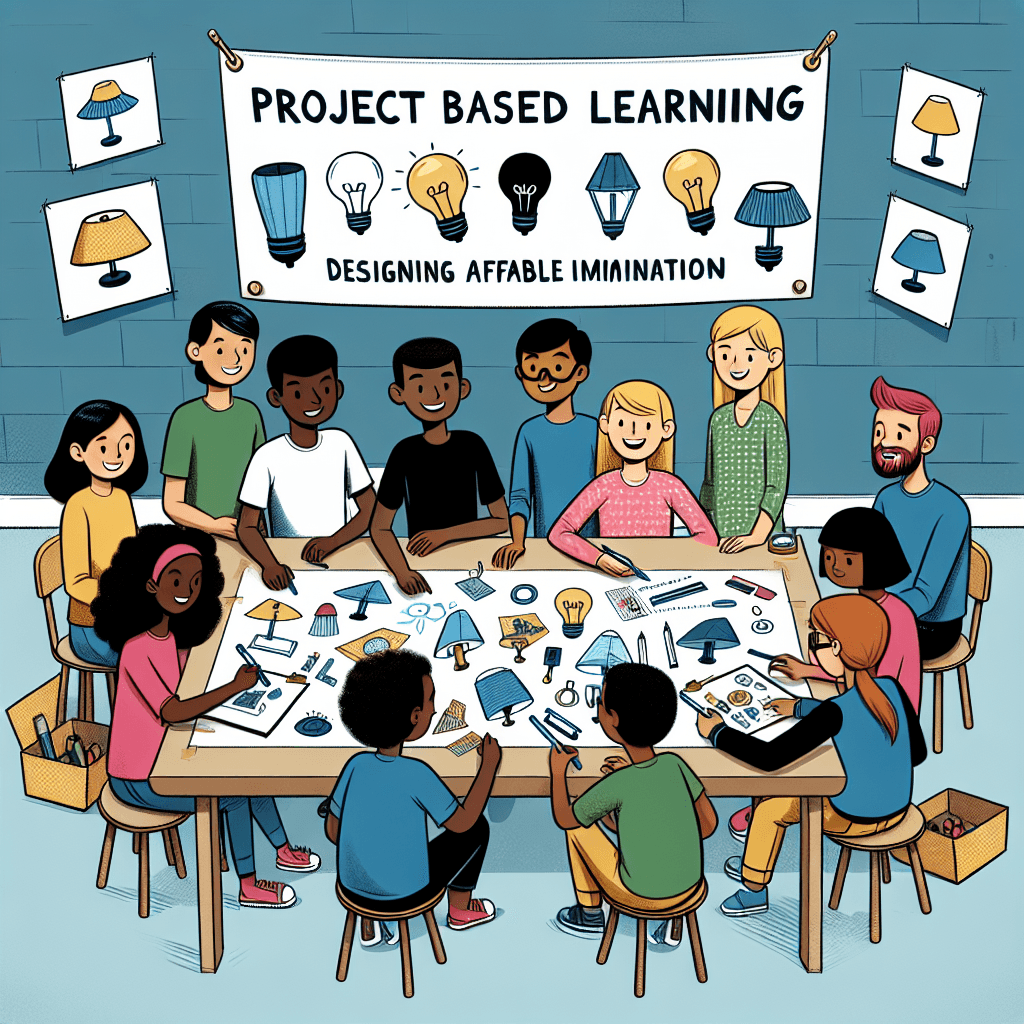
Affordable Illumination: Designing Low-Cost Lamps for All
Inquiry Framework
Question Framework
Driving Question
The overarching question that guides the entire project.How can we design flexible, durable, and cost-effective lighting solutions that address the unique energy consumption challenges and improve the quality of life for families living on less than $1.25 a day across various geographic locations?Essential Questions
Supporting questions that break down major concepts.- What are the unique energy consumption challenges faced by families living on less than $1.25 a day?
- How does access to affordable and reliable lighting impact the daily lives of low-income families?
- What design considerations must be taken into account when developing flexible and durable lighting solutions?
- How can technology be leveraged to create cost-effective lighting solutions for communities at the base of the pyramid?
- What role does sustainability play in designing lighting solutions for low-income families?
- How can we assess and meet the diverse needs of households in different geographic locations through lighting design?
Standards & Learning Goals
Learning Goals
By the end of this project, students will be able to:- Develop an understanding of the energy consumption challenges faced by low-income families living on less than $1.25 a day.
- Design and create flexible, durable, and affordable lighting solutions for low-income families.
- Analyze and apply engineering principles to develop innovative technology-driven solutions for real-world problems.
- Evaluate and optimize design solutions considering cost, durability, flexibility, and sustainability.
- Research and consider the diverse needs of households across various geographic locations when designing solutions.
NGSS Engineering
Common Core Mathematics
NGSS Physical Science
Entry Events
Events that will be used to introduce the project to studentsInnovation Hackathon
Kick off with an intensive hackathon event centered around 'Light for All'. Students quickly prototype ideas in teams, receiving instant feedback from a panel of mentors and potential beneficiaries. This rapid experimentation fosters creativity and enthusiasm to refine their designs further.Portfolio Activities
Portfolio Activities
These activities progressively build towards your learning goals, with each submission contributing to the student's final portfolio.Prototype Development Sprint
Students will convert their lamp design concepts into tangible prototypes, ready to be tested. The aim is to physically realize the design for further analysis and refinement.Steps
Here is some basic scaffolding to help students complete the activity.Final Product
What students will submit as the final product of the activityA functional prototype of the lamp ready for testing and refinement.Alignment
How this activity aligns with the learning objectives & standardsAligns with ETS1.B and ETS1.C by transforming conceptual designs to practical prototypes and starting optimization.Optimization and Cost Analysis Lab
This activity focuses on refining the lamp prototypes by optimizing their design to meet cost, durability, and flexibility requirements using strategic mathematical calculations.Steps
Here is some basic scaffolding to help students complete the activity.Final Product
What students will submit as the final product of the activityAn optimized lamp design with a detailed cost analysis and enhancement report.Alignment
How this activity aligns with the learning objectives & standardsAligns with ETS1.C - Optimizing the Design Solution and 7.EE.B.3 for cost analysis through mathematical modeling.Energy Efficiency Workshop
Students will explore the energy requirements and efficiency of their designs, focusing on renewable energy sources and sustainable practices.Steps
Here is some basic scaffolding to help students complete the activity.Final Product
What students will submit as the final product of the activityA sustainability plan for the lamp design that details energy sources and efficiency strategies.Alignment
How this activity aligns with the learning objectives & standardsAligns with HS-PS3.D by addressing energy in chemical processes and everyday life, focusing on energy efficiency and sustainability in lighting solutions.Design Concepts Ideation Workshop
Following the research phase, students will brainstorm different design concepts for flexible, durable, and affordable lamps. The goal is to generate a variety of potential solutions addressing the identified needs and constraints.Steps
Here is some basic scaffolding to help students complete the activity.Final Product
What students will submit as the final product of the activityA selected lamp design concept with initial sketches and a rationale for its potential effectiveness.Alignment
How this activity aligns with the learning objectives & standardsAligns with ETS1.B - Developing Possible Solutions by generating multiple design options for consideration.Rubric & Reflection
Portfolio Rubric
Grading criteria for assessing the overall project portfolioLighting Solutions Design and Engineering Rubric
Research and Analysis
Assessment of students' understanding of energy consumption challenges and socio-economic factors affecting low-income families.Understanding of Energy Challenges
Evaluate the student's ability to identify and analyze the energy consumption challenges faced by low-income families.
Exemplary
4 PointsDemonstrates in-depth analysis and understanding of various energy consumption challenges, considering multiple perspectives and implications.
Proficient
3 PointsShows thorough understanding with effective analysis of key energy challenges, incorporating relevant data.
Developing
2 PointsDisplays basic understanding with limited analysis of energy challenges, relying on general information.
Beginning
1 PointsShows minimal understanding of energy challenges, with superficial analysis.
Socio-Economic Analysis
Assess the student's capability to understand and analyze socio-economic factors impacting lighting solutions for low-income families.
Exemplary
4 PointsProvides a comprehensive analysis of socio-economic factors, with insightful connections to design implications.
Proficient
3 PointsOffers clear and detailed analysis of socio-economic factors, linking them to design considerations.
Developing
2 PointsProvides a basic analysis of socio-economic factors, with limited connections to design.
Beginning
1 PointsShows minimal awareness of socio-economic factors, with vague connections to design.
Design and Prototyping
Evaluation of students' ability to design, prototype, and test flexible, durable, and affordable lighting solutions.Design Innovation and Creativity
Assess the creativity and innovation in the student's design solutions for lighting challenges.
Exemplary
4 PointsExhibits exceptional creativity with highly innovative and original design solutions, addressing all constraints effectively.
Proficient
3 PointsShows innovative and creative design solutions that effectively address most constraints.
Developing
2 PointsDisplays some creativity with basic design solutions, addressing some constraints.
Beginning
1 PointsShows limited creativity with incomplete or conventional design solutions.
Prototype Construction and Testing
Evaluate the processes and techniques used in constructing and testing the prototype.
Exemplary
4 PointsDemonstrates meticulous construction and thorough testing of prototypes, with insightful analysis of performance.
Proficient
3 PointsCarries out effective construction and testing of prototypes, with clear performance analysis.
Developing
2 PointsDisplays basic construction and testing efforts, with some performance analysis.
Beginning
1 PointsShows minimal construction efforts and limited testing, with superficial performance analysis.
Optimization and Cost Analysis
Assessment of students' ability to optimize designs and perform cost analysis using mathematical modeling.Cost Analysis and Budgeting
Evaluate the student's ability to analyze and propose cost-effective solutions through budgeting and modeling.
Exemplary
4 PointsPerforms comprehensive cost analysis and presents well-justified, cost-effective solutions using advanced modeling techniques.
Proficient
3 PointsConducts detailed cost analysis and proposes clear budget solutions using modeling techniques.
Developing
2 PointsCarries out basic cost analysis and suggests preliminary budget solutions with simple modeling.
Beginning
1 PointsShows minimal cost analysis with unclear or unrealistic budgeting solutions.
Optimization of Design
Assess the student's ability to refine and optimize designs for performance, cost, and sustainability.
Exemplary
4 PointsShows exceptional optimization of designs, incorporating innovative methods to balance performance, cost, and sustainability.
Proficient
3 PointsEffectively optimizes design solutions with well-balanced performance and cost considerations.
Developing
2 PointsDisplays basic attempts at optimizing design solutions with partial balance achieved.
Beginning
1 PointsShows minimal optimization with imbalanced design considerations.
Energy Efficiency and Sustainability
Evaluation of students' approach to integrating energy efficiency and sustainability into lighting solutions.Energy Efficiency Strategies
Evaluate the effectiveness and creativity of energy efficiency strategies proposed by the student.
Exemplary
4 PointsDevelops highly effective and creative energy efficiency strategies, demonstrating in-depth understanding of energy concepts.
Proficient
3 PointsProposes solid and effective energy efficiency strategies with clear understanding.
Developing
2 PointsSuggests basic energy efficiency strategies with limited effectiveness.
Beginning
1 PointsProposes minimal energy strategies with unclear or ineffective approaches.
Sustainability Considerations
Assessment of the student's integration of sustainability into design and implementation of lighting solutions.
Exemplary
4 PointsIntegrates comprehensive sustainability considerations, showing deep understanding and commitment to sustainable practices.
Proficient
3 PointsIncorporates effective sustainability measures, reflecting a strong commitment to sustainable practices.
Developing
2 PointsIncludes basic sustainability considerations with emerging depth of understanding.
Beginning
1 PointsShows minimal sustainability considerations with limited understanding.