
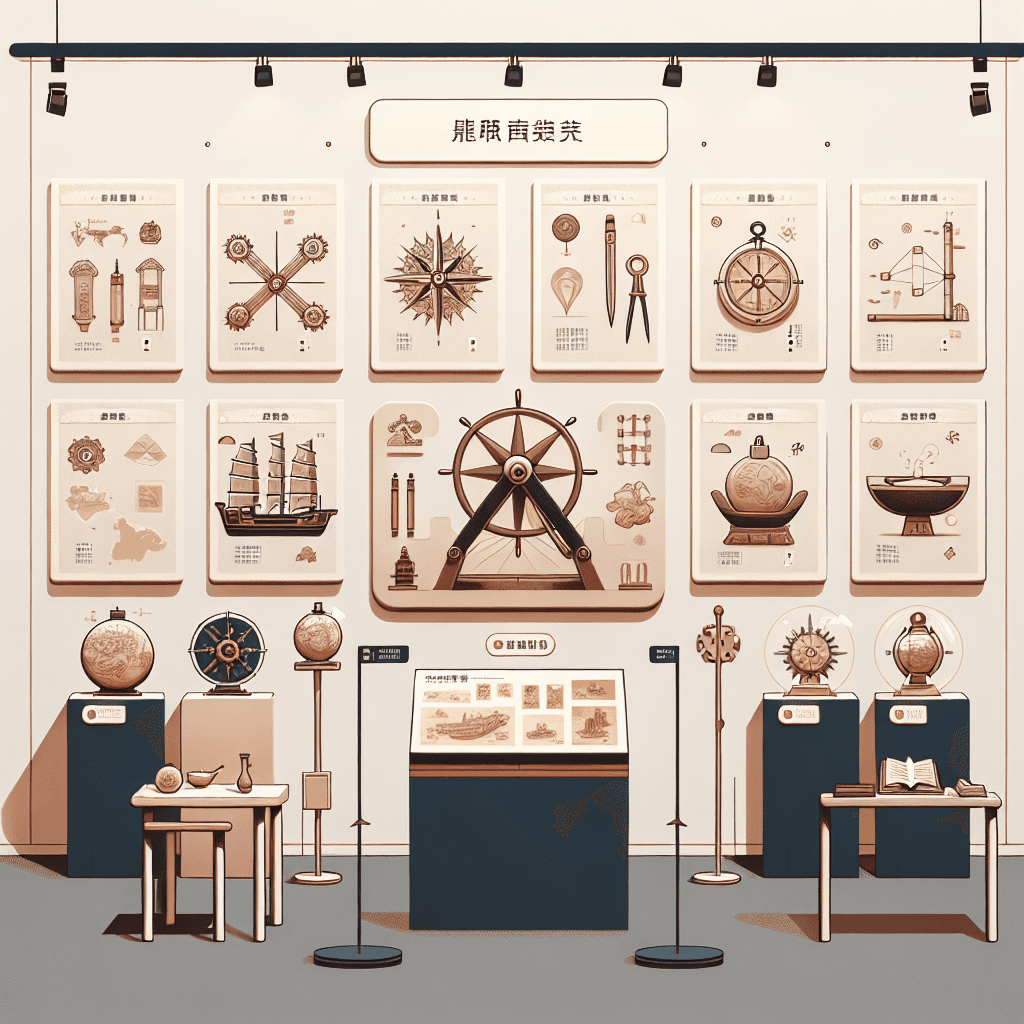
Ancient Chinese Inventions Museum Exhibit: Design and Impact
Inquiry Framework
Question Framework
Driving Question
The overarching question that guides the entire project.How did Ancient Chinese inventions revolutionize life and leave a lasting global legacy?Essential Questions
Supporting questions that break down major concepts.- How did Ancient Chinese inventions shape the course of history and influence other cultures?
- What were the key innovations of Ancient China, and what problems did they solve?
- How did specific Ancient Chinese inventions impact various aspects of life, such as agriculture, warfare, or art?
- In what ways did Ancient Chinese inventions contribute to the development of science and technology?
- How can we effectively curate and design a museum exhibit to showcase the significance of Ancient Chinese inventions?
Standards & Learning Goals
Learning Goals
By the end of this project, students will be able to:- Understand the historical context and significance of Ancient Chinese inventions.
- Analyze the impact of Ancient Chinese inventions on various aspects of life (agriculture, warfare, art, etc.).
- Evaluate the influence of Ancient Chinese inventions on other cultures and the development of science and technology.
- Develop research, critical thinking, and communication skills through the creation of museum exhibits.
- Apply principles of museum exhibit design, including curation, layout, and effective presentation of information.
- Collaborate effectively in teams to research, design, and present museum exhibits.
- Reflect on the process of historical inquiry and the role of inventions in shaping civilization.
- Compare and contrast Ancient Chinese inventions with those of other ancient civilizations.
- Assess the lasting global legacy of Ancient Chinese inventions and their relevance to contemporary society.
- Demonstrate an understanding of historical sources and evidence to support claims about Ancient Chinese inventions and their impact
Entry Events
Events that will be used to introduce the project to students"Shark Tank: Ancient China" Simulation
"Shark Tank: Ancient China" Simulation: Divide the class into teams, each representing a group of ancient Chinese inventors pitching their innovation to a panel of "investors" (teachers/community members). Students must present the invention's purpose, benefits, and potential impact, fostering an understanding of the inventions' value and historical context in a fun, competitive format.Portfolio Activities
Portfolio Activities
These activities progressively build towards your learning goals, with each submission contributing to the student's final portfolio.Invention Spotlight: Research Proposal
Students select an Ancient Chinese invention to focus on for their museum exhibit. They conduct preliminary research to understand its basic function, historical context, and significance.Steps
Here is some basic scaffolding to help students complete the activity.Final Product
What students will submit as the final product of the activityA one-page research proposal outlining the chosen invention, its basic function, its historical context, and a preliminary list of sources.Alignment
How this activity aligns with the learning objectives & standardsLearning Goal: Understand the historical context and significance of Ancient Chinese inventions. Learning Goal: Develop research, critical thinking, and communication skills through the creation of museum exhibits. Learning Goal: Demonstrate an understanding of historical sources and evidence to support claims about Ancient Chinese inventions and their impact.Impact Analysis: Deep Dive Research
Students delve deeper into researching the chosen invention, focusing on its impact on different aspects of life (e.g., agriculture, warfare, art) and its influence on other cultures.Steps
Here is some basic scaffolding to help students complete the activity.Final Product
What students will submit as the final product of the activityA detailed research report (3-5 pages) analyzing the invention's impact and influence, supported by cited evidence.Alignment
How this activity aligns with the learning objectives & standardsLearning Goal: Analyze the impact of Ancient Chinese inventions on various aspects of life (agriculture, warfare, art, etc.). Learning Goal: Evaluate the influence of Ancient Chinese inventions on other cultures and the development of science and technology. Learning Goal: Demonstrate an understanding of historical sources and evidence to support claims about Ancient Chinese inventions and their impact.Exhibit Blueprint: Design & Planning
Students design a museum exhibit for their chosen invention, considering layout, visuals, and informational text. This can be done individually or in small groups.Steps
Here is some basic scaffolding to help students complete the activity.Final Product
What students will submit as the final product of the activityA detailed exhibit design plan, including a layout sketch, descriptions of visuals (images, artifacts, interactive elements), and sample text for informational panels.Alignment
How this activity aligns with the learning objectives & standardsLearning Goal: Apply principles of museum exhibit design, including curation, layout, and effective presentation of information. Learning Goal: Develop research, critical thinking, and communication skills through the creation of museum exhibits. Learning Goal: Collaborate effectively in teams to research, design, and present museum exhibits.Exhibit Prototype: Model Building
Students create a scaled-down model or prototype of their museum exhibit. This could involve building a physical model, creating a digital mockup, or designing a presentation.Steps
Here is some basic scaffolding to help students complete the activity.Final Product
What students will submit as the final product of the activityA physical or digital model of the museum exhibit, showcasing the layout, visuals, and informational text.Alignment
How this activity aligns with the learning objectives & standardsLearning Goal: Apply principles of museum exhibit design, including curation, layout, and effective presentation of information. Learning Goal: Develop research, critical thinking, and communication skills through the creation of museum exhibits. Learning Goal: Collaborate effectively in teams to research, design, and present museum exhibits.Museum Showcase: Presentation & Reflection
Students present their museum exhibit models to the class, explaining their design choices and the significance of their chosen invention.Steps
Here is some basic scaffolding to help students complete the activity.Final Product
What students will submit as the final product of the activityA presentation of the museum exhibit model, along with a reflection paper discussing the learning process and the invention's lasting legacy.Alignment
How this activity aligns with the learning objectives & standardsLearning Goal: Develop research, critical thinking, and communication skills through the creation of museum exhibits. Learning Goal: Reflect on the process of historical inquiry and the role of inventions in shaping civilization. Learning Goal: Assess the lasting global legacy of Ancient Chinese inventions and their relevance to contemporary society.Rubric & Reflection
Portfolio Rubric
Grading criteria for assessing the overall project portfolioInvention Spotlight: Research Proposal Rubric
Research Proposal Quality
Assesses the quality of the research proposal, including historical accuracy, clarity, and source quality.Historical Accuracy
Accuracy and depth of historical information presented in the proposal.
Exemplary
4 PointsDemonstrates a comprehensive and nuanced understanding of the invention's historical context, function, and significance, supported by substantial evidence from credible sources.
Proficient
3 PointsDemonstrates a thorough understanding of the invention's historical context, function, and significance, supported by evidence from credible sources.
Developing
2 PointsDemonstrates a basic understanding of the invention's historical context, function, or significance, but may have gaps or inaccuracies, with limited supporting evidence.
Beginning
1 PointsDemonstrates a minimal understanding of the invention's historical context, function, and significance, with significant inaccuracies and little to no supporting evidence.
Clarity and Focus
Clarity and focus of the proposal, including a clear statement of the invention's purpose and historical context.
Exemplary
4 PointsThe proposal is exceptionally clear, concise, and well-focused, presenting a compelling case for the invention's significance and clearly outlining the research plan.
Proficient
3 PointsThe proposal is clear, concise, and well-focused, presenting a solid case for the invention's significance and outlining the research plan.
Developing
2 PointsThe proposal is generally clear but may lack focus in certain areas, with some ambiguity regarding the invention's significance or the research plan.
Beginning
1 PointsThe proposal is unclear, unfocused, and difficult to understand, failing to adequately present the invention's significance or the research plan.
Source Quality
Quality and relevance of sources cited in the proposal.
Exemplary
4 PointsThe proposal cites a diverse range of highly relevant and credible sources, demonstrating a sophisticated understanding of research methodologies and source evaluation.
Proficient
3 PointsThe proposal cites relevant and credible sources, demonstrating a good understanding of research methodologies and source evaluation.
Developing
2 PointsThe proposal cites some sources, but their relevance or credibility may be questionable, indicating a limited understanding of research methodologies or source evaluation.
Beginning
1 PointsThe proposal cites few or no sources, or the sources cited are irrelevant or unreliable, indicating a lack of understanding of research methodologies and source evaluation.