
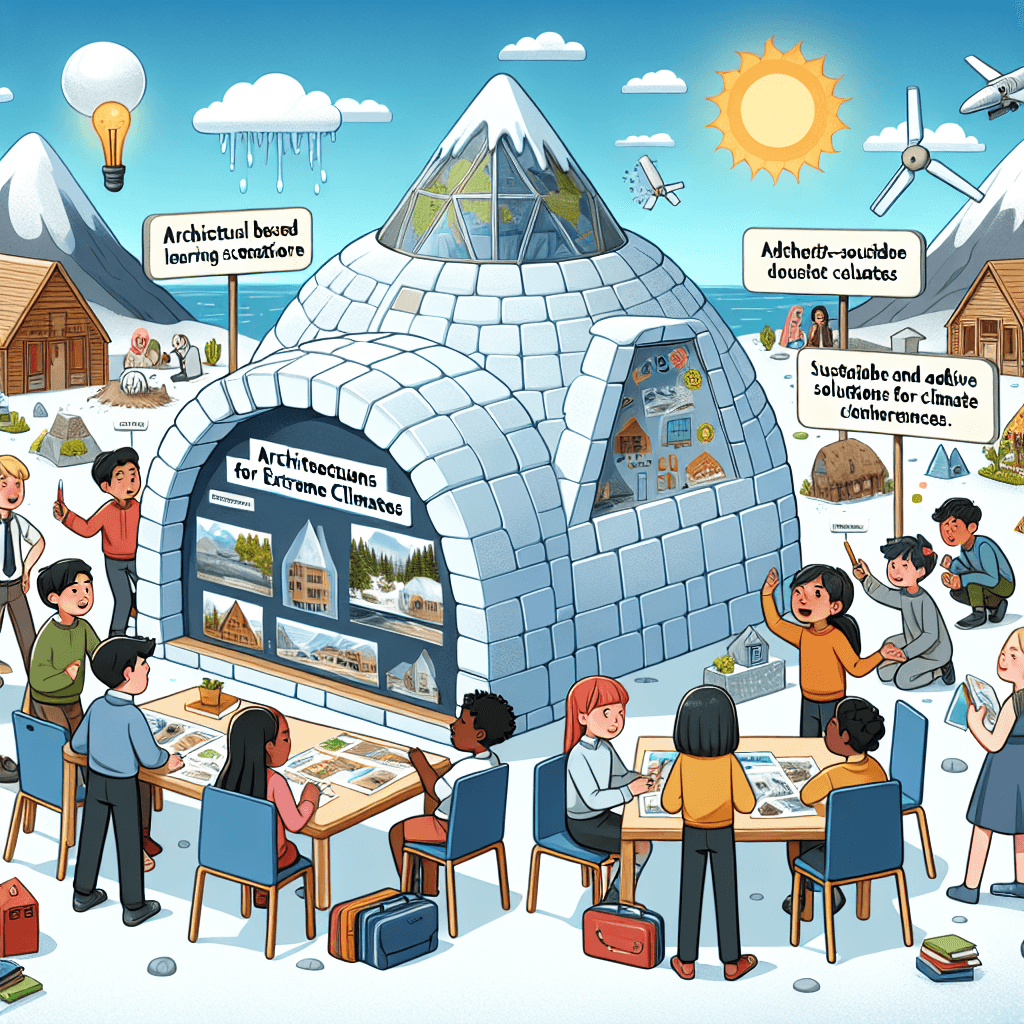
Architectural Solutions for Extreme Climates
Inquiry Framework
Question Framework
Driving Question
The overarching question that guides the entire project.How can we design resilient and culturally responsive housing solutions that address the environmental challenges and community needs in extreme climates like deserts or arctic regions, while also integrating sustainable materials, technologies, and lessons from traditional building techniques?Essential Questions
Supporting questions that break down major concepts.- How can architectural design mitigate the impacts of extreme weather conditions on housing?
- What are the key environmental factors that influence architectural design in desert climates?
- What are the key environmental factors that influence architectural design in arctic climates?
- What are the sustainable materials and technologies suitable for housing in extreme climates?
- How can traditional building techniques inspire modern architectural solutions for extreme climates?
- What are the social and cultural considerations in designing housing for communities in extreme climates?
Standards & Learning Goals
Learning Goals
By the end of this project, students will be able to:- Understand the impact of extreme climates on architectural design.
- Apply sustainable materials and technologies in housing design.
- Incorporate traditional building techniques into modern architectural solutions.
- Address social and cultural considerations in housing design for extreme climates.
Entry Events
Events that will be used to introduce the project to studentsClimate Crisis Escape Room
Students enter a pop-up escape room that simulates a climate disaster scenario (e.g., desertification, glacial melt). They must solve architectural challenges within the room to 'escape' and, in doing so, uncover the core design considerations for extreme climate housing.Portfolio Activities
Portfolio Activities
These activities progressively build towards your learning goals, with each submission contributing to the student's final portfolio.Climate Data Dive
Students research and analyze climate data for their chosen extreme environment (desert or arctic). They will identify key environmental challenges that will influence their architectural designs.Steps
Here is some basic scaffolding to help students complete the activity.Final Product
What students will submit as the final product of the activityA comprehensive climate analysis report outlining key environmental challenges.Alignment
How this activity aligns with the learning objectives & standardsAddresses learning goal: Understand the impact of extreme climates on architectural design.Material Innovation Lab
Students investigate sustainable and locally sourced materials suitable for their chosen climate. They will explore both modern and traditional materials, assessing their thermal properties, durability, and environmental impact.Steps
Here is some basic scaffolding to help students complete the activity.Final Product
What students will submit as the final product of the activityA material selection portfolio with justifications for chosen materials.Alignment
How this activity aligns with the learning objectives & standardsAddresses learning goal: Apply sustainable materials and technologies in housing design.Vernacular Architecture Study
Students study traditional building techniques used in their chosen climate. They will analyze how these techniques address environmental challenges and cultural needs.Steps
Here is some basic scaffolding to help students complete the activity.Final Product
What students will submit as the final product of the activityA case study of traditional building techniques and their relevance to modern design.Alignment
How this activity aligns with the learning objectives & standardsAddresses learning goal: Incorporate traditional building techniques into modern architectural solutions.Community Needs Assessment
Students conduct a needs assessment to understand the social and cultural considerations for housing in their chosen climate. They will research the demographics, lifestyles, and specific needs of the communities they are designing for.Steps
Here is some basic scaffolding to help students complete the activity.Final Product
What students will submit as the final product of the activityA community needs assessment report informing the design of their housing prototype.Alignment
How this activity aligns with the learning objectives & standardsAddresses learning goal: Address social and cultural considerations in housing design for extreme climates.Rubric & Reflection
Portfolio Rubric
Grading criteria for assessing the overall project portfolioArchitectural Solutions for Extreme Climates Rubric
Climate Data Analysis
Assessment of the student's ability to research and analyze climate data for their chosen extreme environment, identifying key environmental challenges.Data Accuracy and Relevance
Accuracy and relevance of the climate data presented and its direct relationship to the chosen extreme climate.
Exemplary
4 PointsPresents comprehensive and accurate climate data that is highly relevant to the chosen extreme climate, demonstrating a deep understanding of environmental factors.
Proficient
3 PointsPresents accurate climate data that is relevant to the chosen extreme climate, demonstrating a good understanding of environmental factors.
Developing
2 PointsPresents climate data with some inaccuracies or limited relevance to the chosen extreme climate, demonstrating a basic understanding of environmental factors.
Beginning
1 PointsPresents incomplete or inaccurate climate data with minimal relevance to the chosen extreme climate, demonstrating a limited understanding of environmental factors.
Challenge Identification
Effectiveness in identifying and articulating the significant environmental challenges for housing design based on the climate data.
Exemplary
4 PointsClearly and insightfully identifies the most significant environmental challenges for housing design, providing a sophisticated analysis of the impacts.
Proficient
3 PointsIdentifies the significant environmental challenges for housing design, providing a clear analysis of the impacts.
Developing
2 PointsIdentifies some environmental challenges for housing design, but the analysis of the impacts is limited.
Beginning
1 PointsStruggles to identify the environmental challenges for housing design, and the analysis of the impacts is minimal.
Material Innovation
Evaluation of the student's investigation into sustainable materials suitable for their chosen climate, assessing their thermal properties, durability, and environmental impact.Material Research and Selection
Depth and breadth of research into sustainable materials and the appropriateness of the selected materials for the chosen climate.
Exemplary
4 PointsDemonstrates extensive research into a wide range of sustainable materials, selecting the most appropriate options with strong justifications based on thermal properties, durability, and environmental impact.
Proficient
3 PointsDemonstrates thorough research into sustainable materials, selecting appropriate options with clear justifications based on thermal properties, durability, and environmental impact.
Developing
2 PointsDemonstrates basic research into sustainable materials, selecting some appropriate options with limited justifications.
Beginning
1 PointsDemonstrates minimal research into sustainable materials, struggling to select appropriate options with insufficient justifications.
Justification and Analysis
Clarity and strength of the justification for chosen materials, including a comprehensive analysis of their thermal properties, durability, and environmental impact.
Exemplary
4 PointsProvides a compelling and well-supported justification for the chosen materials, including a comprehensive and insightful analysis of their thermal properties, durability, and environmental impact, comparing traditional and modern uses.
Proficient
3 PointsProvides a clear and logical justification for the chosen materials, including a thorough analysis of their thermal properties, durability, and environmental impact.
Developing
2 PointsProvides a basic justification for the chosen materials, but the analysis of their thermal properties, durability, and environmental impact is limited.
Beginning
1 PointsProvides a weak or unclear justification for the chosen materials, with minimal analysis of their thermal properties, durability, and environmental impact.
Vernacular Architecture Integration
Assessment of the student's understanding and incorporation of traditional building techniques into modern architectural solutions.Technique Analysis
Depth of analysis of traditional architectural techniques used in the chosen climate, including their effectiveness in mitigating environmental challenges and their cultural significance.
Exemplary
4 PointsDemonstrates a deep and nuanced understanding of traditional architectural techniques, providing an insightful analysis of their effectiveness in mitigating environmental challenges and their profound cultural significance.
Proficient
3 PointsDemonstrates a thorough understanding of traditional architectural techniques, providing a clear analysis of their effectiveness in mitigating environmental challenges and their cultural significance.
Developing
2 PointsDemonstrates a basic understanding of traditional architectural techniques, but the analysis of their effectiveness and cultural significance is limited.
Beginning
1 PointsDemonstrates a minimal understanding of traditional architectural techniques, struggling to analyze their effectiveness or cultural significance.
Relevance and Application
Demonstrated ability to relate traditional techniques to modern design challenges and to apply these insights in innovative ways.
Exemplary
4 PointsDemonstrates an exceptional ability to connect traditional techniques to modern design challenges, applying these insights in highly innovative and effective ways to enhance the proposed architectural solutions.
Proficient
3 PointsDemonstrates a strong ability to connect traditional techniques to modern design challenges, applying these insights effectively to enhance the proposed architectural solutions.
Developing
2 PointsShows some ability to connect traditional techniques to modern design challenges, but the application of these insights is limited.
Beginning
1 PointsStruggles to connect traditional techniques to modern design challenges, and the application of these insights is minimal.
Community Needs Integration
Evaluation of the student's understanding and integration of social and cultural considerations into the housing design.Needs Assessment
Thoroughness and accuracy of the community needs assessment, including consideration of demographics, lifestyles, and cultural values.
Exemplary
4 PointsConducts a comprehensive and insightful community needs assessment, accurately capturing the demographics, lifestyles, and cultural values of the target community and demonstrating a deep understanding of their specific housing needs and preferences.
Proficient
3 PointsConducts a thorough community needs assessment, accurately capturing the demographics, lifestyles, and cultural values of the target community and demonstrating a good understanding of their specific housing needs and preferences.
Developing
2 PointsConducts a basic community needs assessment, capturing some of the demographics, lifestyles, and cultural values of the target community, but the understanding of their specific housing needs and preferences is limited.
Beginning
1 PointsConducts a minimal community needs assessment, struggling to capture the demographics, lifestyles, and cultural values of the target community, and the understanding of their specific housing needs and preferences is insufficient.
Design Integration
Effectiveness in integrating the findings of the needs assessment into the housing design, demonstrating sensitivity to social and cultural context.
Exemplary
4 PointsSeamlessly integrates the findings of the community needs assessment into the housing design, demonstrating a deep sensitivity to the social and cultural context and creating a culturally responsive and appropriate design solution.
Proficient
3 PointsEffectively integrates the findings of the community needs assessment into the housing design, demonstrating a clear sensitivity to the social and cultural context.
Developing
2 PointsPartially integrates the findings of the community needs assessment into the housing design, showing some sensitivity to the social and cultural context.
Beginning
1 PointsMinimally integrates the findings of the community needs assessment into the housing design, lacking sensitivity to the social and cultural context.