
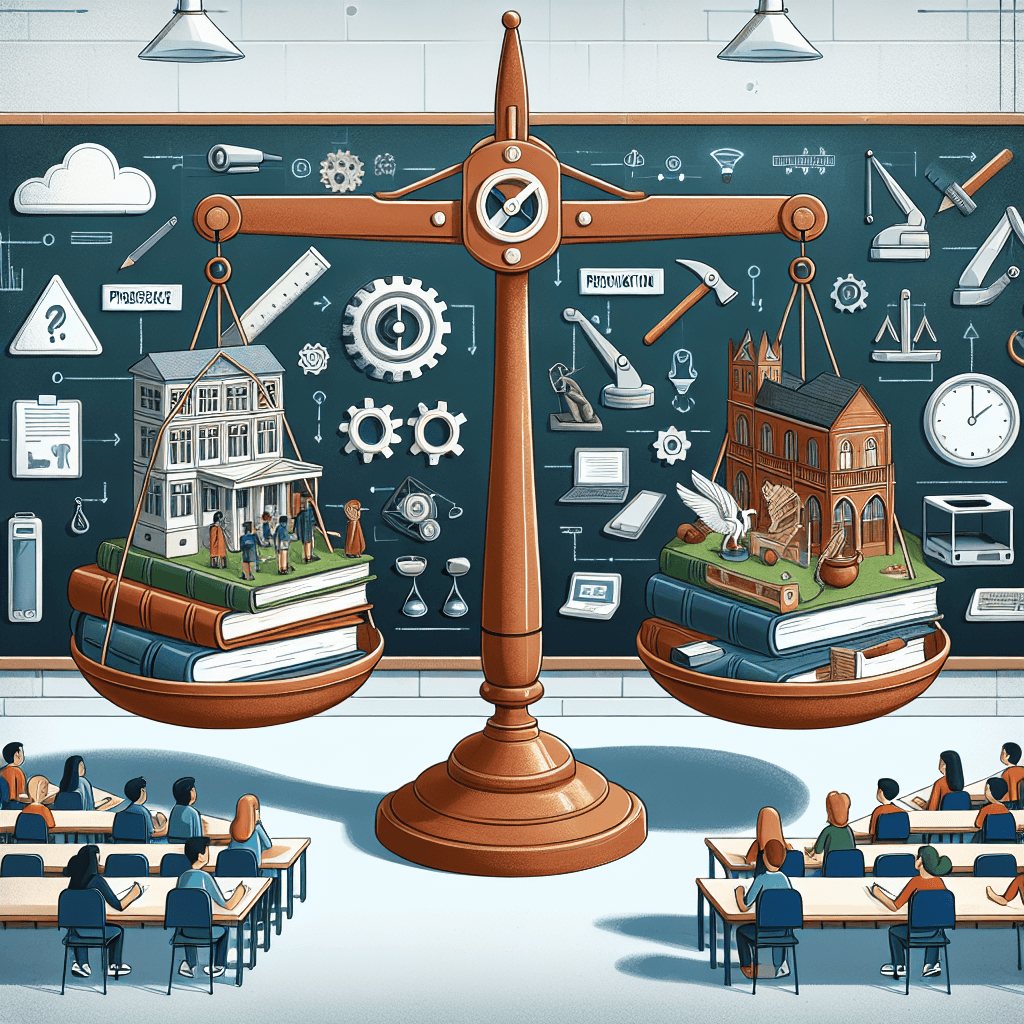
Balancing Preservation and Progress: A Cultural Heritage Exploration
Inquiry Framework
Question Framework
Driving Question
The overarching question that guides the entire project.How can societies effectively balance the need for progress with the obligation to protect cultural heritage, and what roles do storytelling and organizations like UNESCO play in influencing these preservation efforts?Essential Questions
Supporting questions that break down major concepts.- What is cultural heritage, and why is it important to preserve it?
- How does development commonly conflict with cultural preservation?
- What are the roles of organizations like UNESCO in preserving cultural heritage during development projects?
- How can societies balance the need for progress with the obligation to protect cultural heritage?
- What are some examples (besides those mentioned in the article) of successful cultural preservation efforts during urban development?
- In what ways can storytelling, literature, and media influence public opinion on cultural preservation?
Standards & Learning Goals
Learning Goals
By the end of this project, students will be able to:- Understand and articulate the concept of cultural heritage and its significance in modern society.
- Analyze case studies of cultural preservation in the face of urban and technological development, drawing conclusions about best practices.
- Evaluate the role of global organizations like UNESCO in mediating between development and preservation efforts.
- Develop skills in persuasive communication and debate regarding cultural heritage issues, fostering critical thinking and reasoned argumentation.
- Investigate the impact of storytelling and media on public opinion about cultural preservation.
Common Core Standards
Entry Events
Events that will be used to introduce the project to studentsHeritage Hackathon: Solutions for Simultaneous Progress
Organize a hackathon where students brainstorm and prototype tech-based solutions for simultaneously achieving progress and preserving cultural heritage. This hands-on, creative event will energize students and expand their thinking about modern solutions.Portfolio Activities
Portfolio Activities
These activities progressively build towards your learning goals, with each submission contributing to the student's final portfolio.Heritage Hunters: Analyzing Cultural Significance
Students will dive into the concept of cultural heritage and its significance, examining examples from the article such as the Abu Simbel temples and the Kaohsiung Railway Station. They will understand why preserving these historical sites is crucial for maintaining a sense of identity and history.Steps
Here is some basic scaffolding to help students complete the activity.Final Product
What students will submit as the final product of the activityA reflective journal entry detailing the understanding of cultural heritage and its importance based on the discussed examples.Alignment
How this activity aligns with the learning objectives & standardsCCSS.ELA-LITERACY.RI.11-12.1 - Students analyze the text to understand cultural preservation's significance.Debate Designers: Arguing for Preservation vs. Progress
Students will form argumentation skills by using evidence from the article and their research, focused on debating the tensions between progress and preservation. They will develop claims and counterclaims, using strong textual evidence to support their positions.Steps
Here is some basic scaffolding to help students complete the activity.Final Product
What students will submit as the final product of the activityA structured argument presented during a class debate, with supporting evidence and counterclaims.Alignment
How this activity aligns with the learning objectives & standardsCCSS.ELA-LITERACY.W.11-12.1 - Writing arguments to support claims with valid reasoning and sufficient evidence.UNESCO Advocates: Understanding Global Mediation
Students explore how organizations like UNESCO influence cultural preservation. They simulate roles in a preservation mediation, analyzing the complexities of global and local interests during development projects.Steps
Here is some basic scaffolding to help students complete the activity.Final Product
What students will submit as the final product of the activityA simulation report detailing the mediation exercise and reflections on UNESCO's role.Alignment
How this activity aligns with the learning objectives & standardsCCSS.ELA-LITERACY.SL.11-12.1 - Engaging in collaborative discussions and simulations, building on ideas.Storytelling Sentinels: Media's Influence on Preservation Views
Analyzing how storytelling, literature, and media shape public opinion on cultural preservation. Students create their media pieces reflecting preservation messages to understand their influence on public opinion.Steps
Here is some basic scaffolding to help students complete the activity.Final Product
What students will submit as the final product of the activityA media piece that uses storytelling techniques to present a perspective on a cultural preservation issue.Alignment
How this activity aligns with the learning objectives & standardsCCSS.ELA-LITERACY.RI.11-12.1 - Citing textual evidence and examples to analyze storytelling's role in preservation.Rubric & Reflection
Portfolio Rubric
Grading criteria for assessing the overall project portfolioCultural Heritage and Progress Balance Rubric
Understanding of Cultural Heritage
Assessment of student's comprehension of cultural heritage concepts and their ability to articulate the significance of preservation alongside progress.Conceptual Clarity
Student's ability to explain the concept of cultural heritage and its significance.
Exemplary
4 PointsProvides a sophisticated and nuanced explanation of cultural heritage, demonstrating deep understanding and insight into its significance.
Proficient
3 PointsProvides a thorough and clear explanation of cultural heritage, showing strong understanding and insight into its significance.
Developing
2 PointsProvides a basic explanation of cultural heritage, showing emerging understanding and limited insight into its significance.
Beginning
1 PointsProvides an incomplete or unclear explanation of cultural heritage, showing minimal understanding and insight.
Analysis of Examples
Student's ability to analyze cultural preservation examples from the text and their broader impact on cultural identity.
Exemplary
4 PointsConducts a detailed analysis of preservation examples, connecting them adeptly to broader cultural identity impacts with comprehensive evidence.
Proficient
3 PointsConducts a thorough analysis of preservation examples, relating them effectively to broader cultural identity impacts with clear evidence.
Developing
2 PointsConducts a basic analysis of preservation examples, attempting to relate them to broader cultural identity impacts with partial evidence.
Beginning
1 PointsConducts a superficial or unclear analysis of preservation examples, showing minimal connection to broader cultural identity impacts.
Argumentation and Critical Thinking
Evaluation of student ability to formulate coherent arguments and demonstrate critical thinking in discussions about preservation versus progress.Argument Development
Strength and clarity of arguments for preservation and progress, supported by evidence.
Exemplary
4 PointsDevelops sophisticated and compelling arguments, using extensive and diverse evidence to support claims effectively.
Proficient
3 PointsDevelops clear and well-reasoned arguments, using appropriate evidence to support claims effectively.
Developing
2 PointsDevelops basic arguments, using some evidence to support claims with partial effectiveness.
Beginning
1 PointsStruggles to develop coherent arguments, using minimal or unclear evidence that weakly supports claims.
Critical Engagement
Student's ability to engage critically with differing viewpoints and counter-arguments.
Exemplary
4 PointsEngages deeply and thoughtfully with differing viewpoints and counter-arguments, demonstrating advanced critical thinking.
Proficient
3 PointsEngages effectively with differing viewpoints and counter-arguments, demonstrating good critical thinking.
Developing
2 PointsEngages superficially with differing viewpoints and counter-arguments, demonstrating basic critical thinking.
Beginning
1 PointsEngages minimally with differing viewpoints and counter-arguments, demonstrating limited critical thinking.
Creative Expression and Media Influence
Assessment of student’s ability to creatively express ideas and influence opinions through media projects.Media Technique and Creativity
Effectiveness and creativity in employing media techniques to communicate perspectives on cultural preservation.
Exemplary
4 PointsEmploys innovative and highly effective media techniques, presenting perspectives with exceptional creativity and impact.
Proficient
3 PointsEmploys effective media techniques, presenting perspectives with clear creativity and impact.
Developing
2 PointsEmploys basic media techniques, presenting perspectives with limited creativity and impact.
Beginning
1 PointsEmploys minimal media techniques, presenting perspectives with little creativity and impact.
Influence and Audience Engagement
The piece's influence on public opinion and the level of audience engagement it generates.
Exemplary
4 PointsSignificantly influences public opinion and engages the audience deeply, showcasing advanced persuasion skills.
Proficient
3 PointsEffectively influences public opinion and engages the audience well, showcasing clear persuasion skills.
Developing
2 PointsModerately influences public opinion and engages the audience, attempting basic persuasion skills.
Beginning
1 PointsLimited influence on public opinion and minimal audience engagement, showcasing weak persuasion skills.