
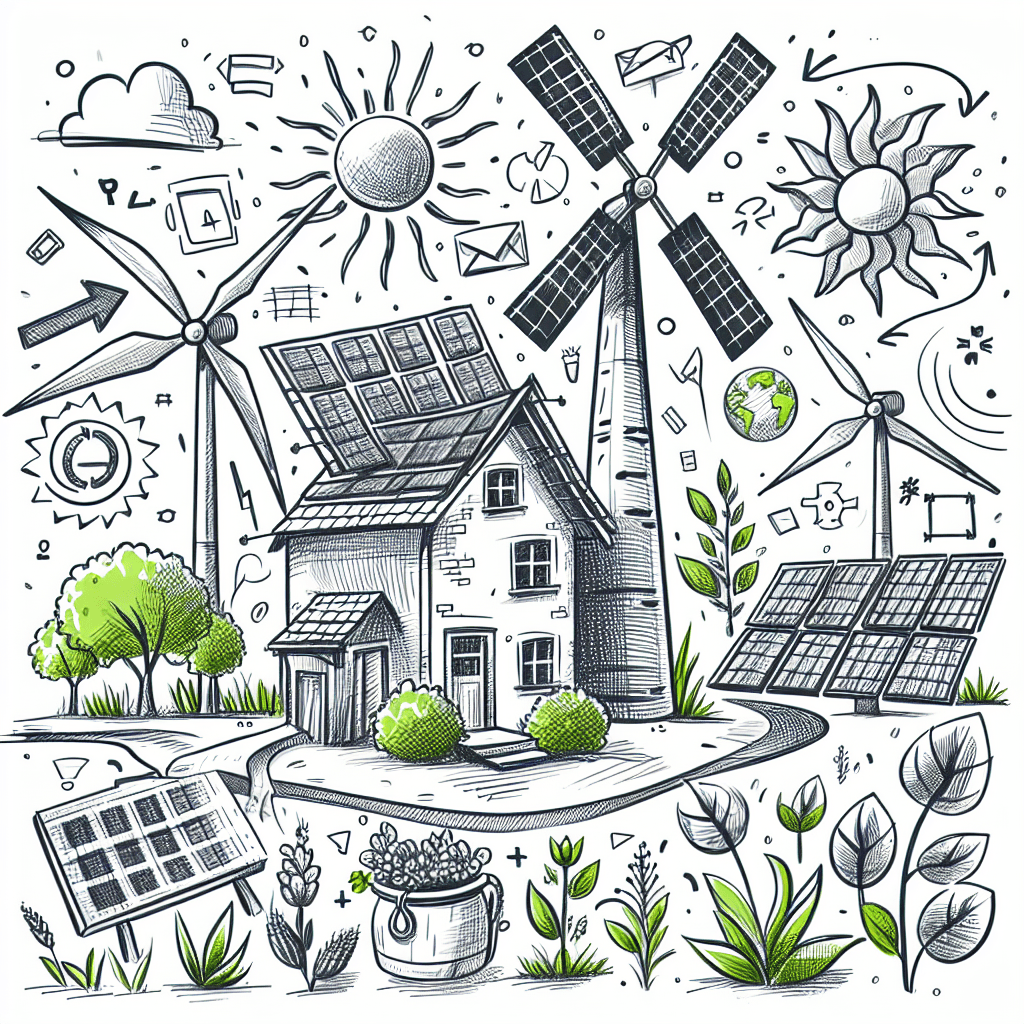
Bio-Smart Energy: Blending Nature and Tradition for Sustainability
Inquiry Framework
Question Framework
Driving Question
The overarching question that guides the entire project.How can we, as students, create a smart and energy-saving system for our community by learning from nature and traditional ways, so we can reduce energy waste and help the environment?Essential Questions
Supporting questions that break down major concepts.- How can we apply nature's designs (biomimicry) to solve modern energy challenges in our community?
- How can we synthesize traditional ecological knowledge with modern technology to create a more sustainable future?
- In what ways does the flow of energy in biological systems mirror or differ from the energy systems in our built environment?
- How does reducing energy waste impact both our local environment and global climate patterns?
- How can we evaluate the effectiveness of an energy-efficient design based on physical science principles like heat transfer and insulation?
Standards & Learning Goals
Learning Goals
By the end of this project, students will be able to:- Analyze how biological structures regulate temperature or energy and apply these biomimicry principles to create a design prototype.
- Investigate and demonstrate the principles of thermal energy transfer (conduction, convection, radiation) to optimize insulation and energy efficiency in a physical model.
- Synthesize traditional ecological knowledge and modern engineering practices to propose a system that reduces local energy waste and addresses global climate impact.
- Execute the iterative engineering design process to define, test, and refine a 'smart' community system based on specific criteria and constraints.
- Communicate the effectiveness of a design solution using evidence-based arguments that link physical science principles to environmental sustainability.
Next Generation Science Standards (NGSS)
Entry Events
Events that will be used to introduce the project to studentsThe Great Meltdown Challenge
The classroom lights and AC are 'cut' by a simulated power grid failure, and students are challenged to keep an ice sculpture from melting using only 'low-tech' traditional materials and bio-inspired techniques. This hands-on struggle forces them to investigate how ancestors and animals regulated temperature without a plug.The Thermal Ghost Hunt
Students use thermal imaging cameras to go on a 'ghost hunt' around the school, identifying 'energy spirits' (heat leaks) escaping the building. They are then shown footage of a termite mound or a traditional wind-catcher to see why those 'ghosts' don't exist in nature or history.Portfolio Activities
Portfolio Activities
These activities progressively build towards your learning goals, with each submission contributing to the student's final portfolio.Nature’s Thermal Lab: The Bio-Insulation Blueprint
Students act as biological detectives to investigate how specific organisms (like polar bears, cacti, or termites) manage thermal energy in extreme environments. They will research the physics behind these adaptations—such as how blubber acts as an insulator (conduction) or how termite mounds use air pockets (convection)—and connect these biological strategies to the concepts of heat transfer.Steps
Here is some basic scaffolding to help students complete the activity.Final Product
What students will submit as the final product of the activityA 'Biomimicry Anatomy Poster' (digital or physical) that labels an organism's features, explains the heat transfer principle at play, and proposes one way this could be used in a building.Alignment
How this activity aligns with the learning objectives & standardsThis activity aligns with MS-LS2-2 (Interactions in ecosystems) and MS-PS3-3 (Thermal energy transfer). Students analyze biological structures to predict how they regulate energy, providing the scientific foundation for their biomimetic designs.The Eco-Innovation Sketchbook: Tradition Meets Tech
In this activity, students bridge the gap between ancient wisdom and modern science. They will research a traditional building practice (like Middle Eastern wind catchers or Adobe thick-walled homes) and combine it with a biomimicry concept from Activity 1. The goal is to sketch a 'Smart System' component for a community building that requires zero electricity to maintain a comfortable temperature.Steps
Here is some basic scaffolding to help students complete the activity.Final Product
What students will submit as the final product of the activityA 'Fusion Design Sketch' featuring a blueprint of a building component with detailed call-outs explaining the combination of traditional practices and nature-inspired design.Alignment
How this activity aligns with the learning objectives & standardsAligns with MS-ESS3-3 (Minimizing human impact) and MS-ETS1-2 (Evaluating design solutions). By synthesizing traditional knowledge with biomimicry, students design a solution that addresses environmental impact through reduced energy consumption.The Thermal Shield Prototype: From Sketch to Structure
Students will transition from sketches to physical models. Using a shoebox or similar container as a 'community building,' students will apply their biomimetic and traditional designs using everyday materials (recycled cardboard, cotton, foil, clay, etc.). This model serves as the primary tool for testing their energy-efficiency hypotheses.Steps
Here is some basic scaffolding to help students complete the activity.Final Product
What students will submit as the final product of the activityA physical 'Smart-System Prototype' and an accompanying 'Material Logistics Log' detailing why each material was chosen based on its thermal properties.Alignment
How this activity aligns with the learning objectives & standardsAligns with MS-PS3-3 (Design and construct a device) and MS-ETS1-4 (Develop a model for testing). Students move from theory to physical application, building a device meant to control thermal energy transfer.The Iteration Station: Stress-Testing the Smart System
Students put their prototypes to the test! Using heat lamps or ice packs, they will simulate extreme environmental conditions and measure the internal temperature of their models over time. After the first round of testing, students must identify one 'energy leak' and use their knowledge of heat transfer to modify and improve their design for a second round of testing.Steps
Here is some basic scaffolding to help students complete the activity.Final Product
What students will submit as the final product of the activityAn 'Iterative Test Report' containing two sets of data (pre-modification and post-modification) and a reflection on why the changes improved (or didn't improve) efficiency.Alignment
How this activity aligns with the learning objectives & standardsAligns with MS-ETS1-2 (Evaluate competing solutions) and MS-ETS1-4 (Iterative testing and modification). Students use empirical data to justify design changes, a core practice in the engineering design process.The Smart-System Showcase: Pitching for the Future
For the project finale, students prepare a professional pitch for their community leaders. They must present their tested prototype, explain the biomimicry and traditional principles used, and provide evidence from their testing data to prove that their system reduces energy waste and supports sustainability.Steps
Here is some basic scaffolding to help students complete the activity.Final Product
What students will submit as the final product of the activityA 'Sustainable Community Proposal' presented as a video or slide deck, featuring the final prototype, data visualizations, and a persuasive argument for its implementation.Alignment
How this activity aligns with the learning objectives & standardsAligns with MS-ESS3-3 (Minimizing impact) and MS-PS3-3 (Evidence-based design). This final activity requires students to communicate the scientific effectiveness of their design and its benefit to the environment.Rubric & Reflection
Portfolio Rubric
Grading criteria for assessing the overall project portfolioMasteryMate: Smart & Sustainable Systems Rubric
Scientific Understanding and Innovation
Evaluation of the student's ability to apply NGSS science concepts (MS-PS3-3, MS-LS2-2) to real-world design challenges.Scientific Analysis of Thermal Systems
Ability to identify, analyze, and apply heat transfer principles (conduction, convection, radiation) and biological adaptations to regulate temperature.
Exemplary
4 PointsProvides a sophisticated and accurate analysis of conduction, convection, and radiation in both the organism and the prototype. Demonstrates an advanced understanding of how biological structures manipulate these principles to survive extreme conditions.
Proficient
3 PointsClearly identifies and explains the relevant heat transfer principles within the chosen organism and correctly applies them to the prototype's design. Analysis is scientifically accurate.
Developing
2 PointsIdentifies some heat transfer principles but may have minor inaccuracies or gaps in explaining how they function within the organism or the prototype. Application is inconsistent.
Beginning
1 PointsDemonstrates a minimal understanding of heat transfer principles. The connection between the organism's biological features and the physical science of heat is missing or incorrect.
Biomimetic and Traditional Synthesis
The degree to which the student synthesizes biomimicry (nature-inspired design) and traditional ecological knowledge to create a unique energy-saving solution.
Exemplary
4 PointsSynthesizes biological principles and traditional practices into an innovative, 'smart' design that exceeds basic expectations. The 'Bio-Insulation Blueprint' and 'Fusion Sketch' show exceptional creativity and deep integration of diverse knowledge sets.
Proficient
3 PointsSuccessfully combines a specific biomimetic strategy with a traditional building practice. The design is coherent, logical, and directly addresses energy efficiency through this synthesis.
Developing
2 PointsAttempts to use either biomimicry or traditional practices, but the integration of the two is weak or superficial. The design lacks a clear connection to the researched evidence.
Beginning
1 PointsFails to incorporate biological or traditional elements into the design. The proposal shows little to no evidence of research-based inspiration.
Engineering Design Process
Evaluation of the student's execution of the engineering design cycle, from physical construction to rigorous testing (MS-ETS1-2, MS-ETS1-4).Prototyping and Material Logic
Evaluation of the physical prototype's construction, material selection based on thermal properties, and alignment with the initial design sketches.
Exemplary
4 PointsThe prototype is exceptionally well-constructed using materials chosen for specific, scientifically-justified thermal properties (e.g., thermal mass, insulation). The material log provides a sophisticated rationale for every choice.
Proficient
3 PointsThe prototype is a solid physical representation of the design sketch. Materials are chosen thoughtfully to reflect the intended thermal functions (conduction vs. insulation) and are documented in the material log.
Developing
2 PointsThe prototype is partially completed or uses materials that do not fully align with the scientific goals of the project. The material log is missing key details or scientific justifications.
Beginning
1 PointsThe prototype is incomplete, fragile, or built without regard for thermal properties. No clear rationale is provided for material selection.
Data-Driven Iteration
Assessment of the student's ability to use the engineering design process (MS-ETS1-4) to test, analyze data, and refine their system.
Exemplary
4 PointsUses precise data collection and sophisticated graphing to identify design 'failure points.' The modification is highly effective and rooted in scientific theory, resulting in a significantly improved second test result.
Proficient
3 PointsCollects and records data accurately during testing. Identifies an area for improvement and makes a logical modification based on heat transfer principles, showing measurable improvement in the second test.
Developing
2 PointsConducts tests and records data, but the analysis of 'failure points' is vague. The modification is made without a clear scientific reason, or testing is inconsistent.
Beginning
1 PointsTesting is incomplete or data is not recorded. No meaningful attempt is made to modify the design based on test results.
Communication and Advocacy
Focuses on the communication of scientific results and the advocacy for environmental solutions.Evidence-Based Sustainability Proposal
Ability to communicate the effectiveness of the design and its potential impact on community sustainability and global climate (MS-ESS3-3).
Exemplary
4 PointsDelivers a compelling, evidence-based argument that masterfully links data results to environmental impact. Uses high-quality visuals and persuasive language to advocate for the system's community-wide implementation.
Proficient
3 PointsPresents a clear proposal that uses test data to prove the design's effectiveness. Explains how the design reduces energy waste and supports sustainability in a professional manner.
Developing
2 PointsThe proposal is descriptive but lacks strong evidence from the testing phase. The connection to environmental sustainability or community impact is mentioned but not well-developed.
Beginning
1 PointsThe final presentation is disorganized or lacks scientific evidence. The argument for sustainability is missing or based on opinion rather than data.