
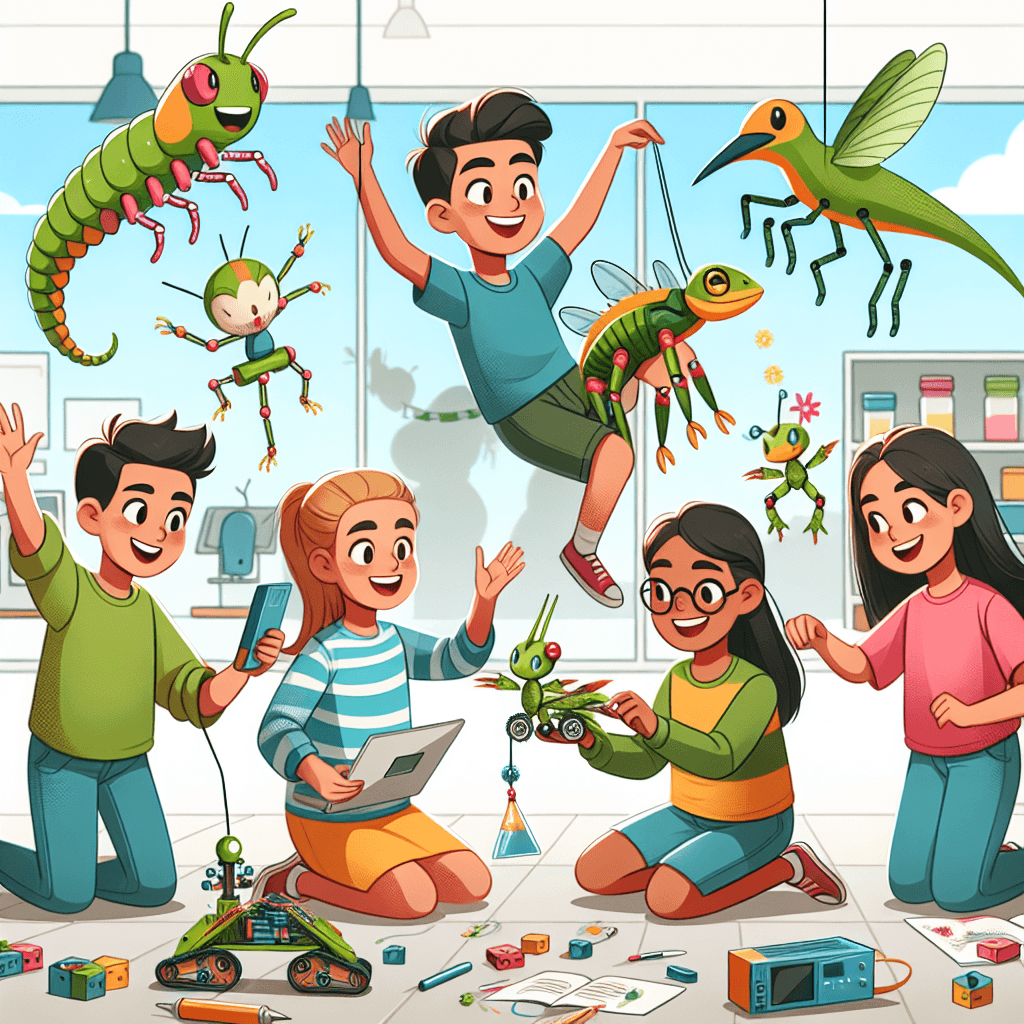
Biomimicry Bots: Nature-Inspired Robots for Real-World Solutions
Inquiry Framework
Question Framework
Driving Question
The overarching question that guides the entire project.How can principles from nature inspire the design of robots that solve complex human problems while promoting sustainable innovation?Essential Questions
Supporting questions that break down major concepts.- How can principles from nature be applied to the design of robots to solve human problems?
- What are the similarities and differences between biological systems and engineered systems?
- How do the designs of natural organisms inspire technological innovation?
- What processes are involved in identifying and replicating natural adaptations for technological uses?
- How can biomimicry contribute to sustainable development and engineering?
- In what ways does the study of nature drive creativity and innovation in technology and science?
Standards & Learning Goals
Learning Goals
By the end of this project, students will be able to:- Understand and explain the concepts and principles of biomimicry and their applications in technology and design.
- Model the process of biomimicry by identifying natural principles and mimicking them in robotic design.
- Design and create a robotic solution to a problem inspired by nature, using critical and creative thinking skills.
- Evaluate the effectiveness of biomimetic design solutions in addressing real-world problems based on predefined criteria.
- Integrate knowledge from different subject areas to develop a biomimicry-based robot, promoting interdisciplinary learning.
Teacher Specified
NGSS
Entry Events
Events that will be used to introduce the project to studentsNature's Engineers Unmasked
Kick off the project by inviting a local biologist or engineer to discuss how animals and plants have solved problems in nature and how these solutions have inspired human engineering. Students will hear stories of incredible adaptations, like gecko feet that inspired advanced adhesive technology, engaging them to think about nature's problem-solving prowess.Portfolio Activities
Portfolio Activities
These activities progressively build towards your learning goals, with each submission contributing to the student's final portfolio.Nature's Blueprint Investigation
Students explore and document real-world biological systems to understand their structure, function, and potential application to engineered designs. Provide a list for students to choose from.Steps
Here is some basic scaffolding to help students complete the activity.Final Product
What students will submit as the final product of the activityA detailed concept map and report on a biological system, highlighting potential engineering applications.Alignment
How this activity aligns with the learning objectives & standardsAligns with standard 2.3 by analyzing biological systems and how components work together. Aligns with 6.1 by integrating biology knowledge with engineering concepts.Bio-Inspiration Brainstorm
Students use creative thinking strategies to brainstorm innovative robotic designs inspired by their previously researched biological systems.Steps
Here is some basic scaffolding to help students complete the activity.Final Product
What students will submit as the final product of the activityA series of sketches and notes illustrating potential robotic designs inspired by nature.Alignment
How this activity aligns with the learning objectives & standardsConforms to standard 5.2 by enabling students to develop creative solutions. It also aligns with standard 2.3 by further applying the analysis of biological systems to robotics.Design Criteria Workshop
Students define criteria and constraints for their robotic designs, focusing on real-world effectiveness and sustainability.Steps
Here is some basic scaffolding to help students complete the activity.Final Product
What students will submit as the final product of the activityA comprehensive design rubric outlining criteria and constraints for the biomimetic robot.Alignment
How this activity aligns with the learning objectives & standardsMeets standard MS-ETS1-1 by defining design problem criteria and constraints, ensuring a framework for successful engineering solutions.Rubric & Reflection
Portfolio Rubric
Grading criteria for assessing the overall project portfolioBiomimicry Bots Portfolio Assessment Rubric
Understanding of Biomimicry Principles
Evaluation of students' understanding of the core concepts of biomimicry and their ability to identify and analyze natural systems.Identification of Biological Systems
The ability to accurately identify and describe biological systems that solve problems through their unique adaptations.
Exemplary
4 PointsIdentifies a wide range of biological systems with comprehensive descriptions of unique adaptations and their problem-solving traits.
Proficient
3 PointsIdentifies several biological systems with clear descriptions of unique adaptations and problem-solving traits.
Developing
2 PointsIdentifies some biological systems with partial descriptions of unique adaptations and problem-solving traits.
Beginning
1 PointsStruggles to identify biological systems or provides minimal descriptions of unique adaptations and problem-solving traits.
Systems Analysis
The analysis of how components of a biological system interact to solve problems, and its potential engineering applications.
Exemplary
4 PointsThoroughly analyzes the interactions within biological systems and proposes detailed, innovative engineering applications.
Proficient
3 PointsEffectively analyzes interactions within biological systems and suggests clear engineering applications.
Developing
2 PointsProvides basic analysis of interactions within biological systems and suggests limited engineering applications.
Beginning
1 PointsMinimal analysis of biological systems interactions and struggles to suggest engineering applications.
Creative Design Application
Assessment of the students' ability to creatively apply natural principles to robot design.Idea Generation and Conceptualization
The ability to brainstorm and document multiple innovative design concepts inspired by nature.
Exemplary
4 PointsGenerates a wide range of innovative design concepts with detailed sketches and comprehensive notes.
Proficient
3 PointsProduces several innovative design concepts with clear sketches and notes.
Developing
2 PointsProduces some design concepts with basic sketches and notes.
Beginning
1 PointsLimited generation of design concepts, with rudimentary sketches or incomplete notes.
Design Criteria and Constraints Definition
Evaluating how well students define criteria and constraints for their biomimetic designs, considering the realities of engineering problems.
Exemplary
4 PointsDefines comprehensive design criteria and constraints that are well-aligned with engineering realities and sustainability goals.
Proficient
3 PointsDefines clear design criteria and constraints with consideration of engineering realities and sustainability.
Developing
2 PointsDefines basic design criteria and constraints with limited consideration of engineering realities.
Beginning
1 PointsStruggles to define clear design criteria and constraints or lack consideration of engineering realities.
Application of Critical Thinking Skills
Assessment of students' critical thinking in solving real-world problems using biomimetic design.Problem Identification and Solution Development
Ability to identify complex human problems and develop well-reasoned biomimetic solutions.
Exemplary
4 PointsIdentifies complex problems and proposes well-reasoned, innovative biomimetic solutions.
Proficient
3 PointsIdentifies significant problems and proposes clear biomimetic solutions.
Developing
2 PointsIdentifies basic problems and proposes simplistic biomimetic solutions.
Beginning
1 PointsStruggles to identify problems or provide coherent biomimetic solutions.
Evaluation of Design Effectiveness
The process of evaluating the effectiveness of biomimetic designs based on predefined criteria.
Exemplary
4 PointsConducts thorough evaluations of design effectiveness with insightful reflections and revisions.
Proficient
3 PointsConducts clear evaluations of design effectiveness with thoughtful reflections.
Developing
2 PointsProvides basic evaluations of design effectiveness with limited reflection.
Beginning
1 PointsStruggles to evaluate design effectiveness or provide meaningful reflection.