
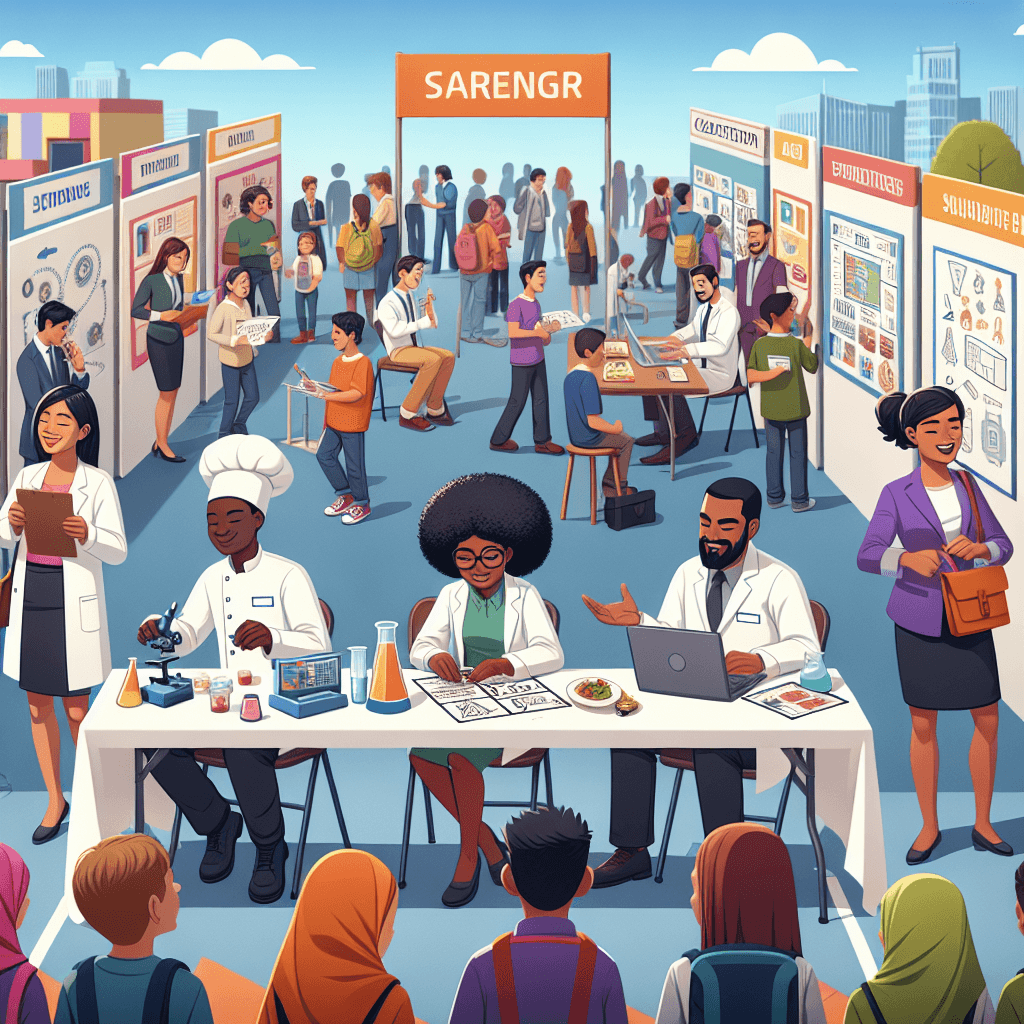
Career Simulation: A Day in the Life
Inquiry Framework
Question Framework
Driving Question
The overarching question that guides the entire project.How can we design a 'Day in the Life' simulation that accurately reflects the realities, responsibilities, and societal impact of a chosen career, while also highlighting the connection between personal skills/interests and key factors in career decision-making?Essential Questions
Supporting questions that break down major concepts.- How does a career's daily tasks connect to personal skills and interests?
- What factors should be considered when choosing a career path?
- How can a simulation accurately represent a real-world career experience?
- What are the key responsibilities and challenges in the selected career?
- How does this career contribute to society?
Standards & Learning Goals
Learning Goals
By the end of this project, students will be able to:- Identify personal skills and interests relevant to career choices.
- Investigate the daily tasks, responsibilities, and challenges of a chosen career.
- Design a 'Day in the Life' simulation that accurately reflects the realities of the chosen career.
- Analyze the societal impact and contributions of the chosen career.
- Understand the factors to consider when making informed career decisions.
Entry Events
Events that will be used to introduce the project to studentsFuture of Work
"'Future of Work' Brainstorm": Engage students in a discussion about emerging technologies and societal trends that will shape the future of work. Students then choose a specific trend (e.g., AI, climate change) and explore its potential impact on different careers, designing a 'Day in the Life' simulation that reflects these future challenges and opportunities."Portfolio Activities
Portfolio Activities
These activities progressively build towards your learning goals, with each submission contributing to the student's final portfolio.Skills & Interests Discovery
Students will complete a self-assessment to identify their skills, interests, and values. They will then research how these attributes align with different career paths.Steps
Here is some basic scaffolding to help students complete the activity.Final Product
What students will submit as the final product of the activityA personal skills and interests inventory, along with a list of potential careers that align with their attributes.Alignment
How this activity aligns with the learning objectives & standardsLearning Goal: Identify personal skills and interests relevant to career choices.Career Deep Dive
Students will select a career and conduct thorough research on its daily tasks, responsibilities, required skills, and potential challenges.Steps
Here is some basic scaffolding to help students complete the activity.Final Product
What students will submit as the final product of the activityA detailed career profile, including a description of a typical day, required skills, responsibilities, and challenges.Alignment
How this activity aligns with the learning objectives & standardsLearning Goal: Investigate the daily tasks, responsibilities, and challenges of a chosen career.Simulation Blueprint
Students will create a storyboard or script for their 'Day in the Life' simulation, outlining the key events, challenges, and decisions that a person in their chosen career might face.Steps
Here is some basic scaffolding to help students complete the activity.Final Product
What students will submit as the final product of the activityA detailed storyboard or script for the 'Day in the Life' simulation, including visual representations or descriptions of each scene.Alignment
How this activity aligns with the learning objectives & standardsLearning Goal: Design a 'Day in the Life' simulation that accurately reflects the realities of the chosen career.Societal Impact Analysis
Students will investigate how their chosen career contributes to society and addresses societal needs. They will present their findings in a short report or presentation.Steps
Here is some basic scaffolding to help students complete the activity.Final Product
What students will submit as the final product of the activityA report or presentation that outlines the societal impact and contributions of the chosen career.Alignment
How this activity aligns with the learning objectives & standardsLearning Goal: Analyze the societal impact and contributions of the chosen career.Career Decision Roadmap
Students will reflect on their career exploration process and identify the key factors that they would consider when making their own career decisions.Steps
Here is some basic scaffolding to help students complete the activity.Final Product
What students will submit as the final product of the activityA personal career decision-making plan, outlining the factors that are most important to them and how they will evaluate potential career paths.Alignment
How this activity aligns with the learning objectives & standardsLearning Goal: Understand the factors to consider when making informed career decisions.Rubric & Reflection
Portfolio Rubric
Grading criteria for assessing the overall project portfolioCareer Simulation Design Portfolio Rubric
Skills & Interests Discovery
Focuses on the student's ability to identify their skills, interests, and values and align them with potential career paths.Self-Awareness & Identification
Accurately identifies a range of personal skills, interests, and values, demonstrating deep self-awareness.
Exemplary
4 PointsDemonstrates exceptional self-awareness by identifying a comprehensive and nuanced range of personal skills, interests, and values with detailed explanations and insightful connections to potential career paths.
Proficient
3 PointsDemonstrates thorough self-awareness by accurately identifying a variety of personal skills, interests, and values with clear explanations and connections to potential career paths.
Developing
2 PointsShows emerging self-awareness by identifying some personal skills, interests, and values with basic explanations and limited connections to potential career paths.
Beginning
1 PointsShows limited self-awareness by identifying few personal skills, interests, and values with minimal explanations and weak connections to potential career paths.
Career Alignment Research
Effectively researches and lists potential careers that strongly align with identified attributes, showing clear connections between personal qualities and career options.
Exemplary
4 PointsConducts exceptionally thorough research and provides an extensive list of potential careers that strongly align with identified attributes, demonstrating insightful connections between personal qualities and career options with detailed rationale.
Proficient
3 PointsConducts thorough research and provides a well-reasoned list of potential careers that align with identified attributes, demonstrating clear connections between personal qualities and career options.
Developing
2 PointsConducts basic research and provides a limited list of potential careers that somewhat align with identified attributes, showing some connections between personal qualities and career options.
Beginning
1 PointsConducts minimal research and provides a short list of potential careers with weak alignment to identified attributes, showing limited connections between personal qualities and career options.
Career Deep Dive
Focuses on the depth of research, understanding of career tasks, and analysis of potential challenges.Career Research Depth
Conducts in-depth research on the selected career, demonstrating a comprehensive understanding of its daily tasks, responsibilities, and required skills.
Exemplary
4 PointsConducts exceptionally in-depth research on the selected career, demonstrating a sophisticated understanding of its daily tasks, responsibilities, and required skills, including nuanced details and insights gained from diverse sources.
Proficient
3 PointsConducts thorough research on the selected career, demonstrating a comprehensive understanding of its daily tasks, responsibilities, and required skills, including details gathered from credible sources.
Developing
2 PointsConducts basic research on the selected career, demonstrating an emerging understanding of its daily tasks, responsibilities, and required skills, with information gathered from limited sources.
Beginning
1 PointsConducts minimal research on the selected career, demonstrating a superficial understanding of its daily tasks, responsibilities, and required skills, with limited information from unreliable sources.
Challenge Analysis & Solutions
Clearly articulates potential challenges within the career and explains effective strategies for addressing them, showing critical thinking and problem-solving skills.
Exemplary
4 PointsArticulates potential challenges within the career with exceptional clarity and provides insightful, innovative strategies for addressing them, demonstrating advanced critical thinking and problem-solving skills.
Proficient
3 PointsClearly articulates potential challenges within the career and explains effective strategies for addressing them, demonstrating effective critical thinking and problem-solving skills.
Developing
2 PointsIdentifies some potential challenges within the career and offers basic strategies for addressing them, demonstrating developing critical thinking and problem-solving skills.
Beginning
1 PointsStruggles to identify potential challenges within the career and provides limited or ineffective strategies for addressing them, demonstrating minimal critical thinking and problem-solving skills.
Simulation Blueprint
Focuses on the creativity, detail, and realism of the simulation blueprint.Simulation Detail & Imagination
Develops a detailed and imaginative storyboard or script that vividly portrays a 'Day in the Life' simulation, demonstrating a strong understanding of the career's daily realities.
Exemplary
4 PointsDevelops an exceptionally detailed and imaginative storyboard or script that vividly portrays a 'Day in the Life' simulation, demonstrating a sophisticated understanding of the career's daily realities with nuanced details and compelling scenarios.
Proficient
3 PointsDevelops a detailed and imaginative storyboard or script that vividly portrays a 'Day in the Life' simulation, demonstrating a strong understanding of the career's daily realities with clear scenarios.
Developing
2 PointsDevelops a basic storyboard or script that portrays a 'Day in the Life' simulation, demonstrating an emerging understanding of the career's daily realities with simple scenarios.
Beginning
1 PointsDevelops an incomplete or unclear storyboard or script that struggles to portray a 'Day in the Life' simulation, demonstrating a limited understanding of the career's daily realities with vague scenarios.
Scenario Relevance & Engagement
Incorporates realistic challenges and decision-making scenarios that are highly relevant to the chosen career, promoting engagement and critical thinking.
Exemplary
4 PointsIncorporates realistic challenges and decision-making scenarios that are exceptionally relevant and thought-provoking, promoting deep engagement and advanced critical thinking.
Proficient
3 PointsIncorporates realistic challenges and decision-making scenarios that are highly relevant to the chosen career, promoting engagement and effective critical thinking.
Developing
2 PointsIncludes some challenges and decision-making scenarios that are somewhat relevant to the chosen career, promoting limited engagement and basic critical thinking.
Beginning
1 PointsIncludes few or unrealistic challenges and decision-making scenarios that are weakly relevant to the chosen career, promoting minimal engagement and superficial critical thinking.
Societal Impact Analysis
Focuses on the student's ability to analyze and articulate the societal impact of their chosen career.Societal Benefit Identification
Conducts thorough research to identify and articulate the significant societal benefits of the chosen career, demonstrating a deep understanding of its positive impact.
Exemplary
4 PointsConducts exceptionally thorough research to identify and articulate the far-reaching societal benefits of the chosen career, demonstrating a profound understanding of its positive impact with compelling evidence and insightful analysis.
Proficient
3 PointsConducts thorough research to identify and articulate the significant societal benefits of the chosen career, demonstrating a deep understanding of its positive impact with clear evidence.
Developing
2 PointsConducts basic research to identify some societal benefits of the chosen career, demonstrating an emerging understanding of its positive impact with limited evidence.
Beginning
1 PointsConducts minimal research and struggles to identify the societal benefits of the chosen career, demonstrating a superficial understanding of its positive impact with insufficient evidence.
Societal Needs Connection
Clearly explains how the chosen career addresses specific societal needs, demonstrating a connection between career functions and community well-being.
Exemplary
4 PointsClearly and insightfully explains how the chosen career effectively addresses critical societal needs, demonstrating a strong connection between career functions and community well-being with innovative solutions.
Proficient
3 PointsClearly explains how the chosen career addresses specific societal needs, demonstrating a clear connection between career functions and community well-being.
Developing
2 PointsIdentifies how the chosen career addresses some societal needs, demonstrating a basic connection between career functions and community well-being.
Beginning
1 PointsStruggles to explain how the chosen career addresses societal needs, demonstrating a weak connection between career functions and community well-being.
Career Decision Roadmap
Focuses on the student's ability to reflect on their career exploration and create a personal decision-making plan.Personal Reflection & Learnings
Reflects deeply on the career exploration process, demonstrating significant personal insights and key learnings about oneself and the world of work.
Exemplary
4 PointsReflects with exceptional depth on the career exploration process, demonstrating profound personal insights and key learnings about oneself and the world of work, leading to transformative understanding.
Proficient
3 PointsReflects deeply on the career exploration process, demonstrating significant personal insights and key learnings about oneself and the world of work.
Developing
2 PointsReflects somewhat on the career exploration process, demonstrating some personal insights and key learnings about oneself and the world of work.
Beginning
1 PointsReflects minimally on the career exploration process, demonstrating limited personal insights and key learnings about oneself and the world of work.
Career Decision-Making Plan
Develops a comprehensive and well-reasoned career decision-making plan, outlining the key factors and strategies for evaluating potential career paths, demonstrating foresight and planning skills.
Exemplary
4 PointsDevelops an exceptionally comprehensive and well-reasoned career decision-making plan, outlining the key factors and innovative strategies for evaluating potential career paths, demonstrating advanced foresight and planning skills.
Proficient
3 PointsDevelops a comprehensive and well-reasoned career decision-making plan, outlining the key factors and strategies for evaluating potential career paths, demonstrating foresight and planning skills.
Developing
2 PointsDevelops a basic career decision-making plan, outlining some key factors and strategies for evaluating potential career paths, demonstrating developing foresight and planning skills.
Beginning
1 PointsDevelops an incomplete or superficial career decision-making plan, outlining limited factors and strategies for evaluating potential career paths, demonstrating minimal foresight and planning skills.