
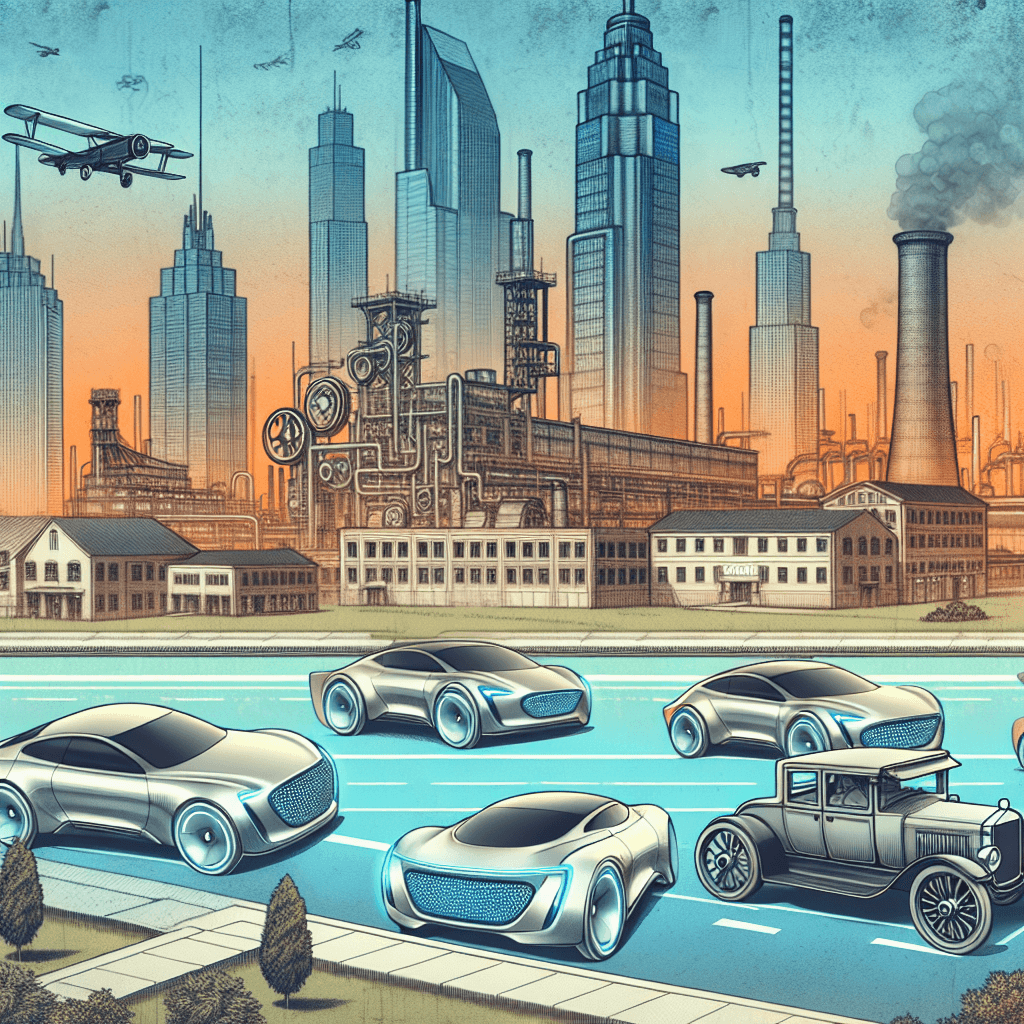
Cars of the Future: Henry Ford's Impact
Inquiry Framework
Question Framework
Driving Question
The overarching question that guides the entire project.How can we design a car of the future, inspired by Henry Ford's innovations, that addresses environmental concerns and societal needs, while using textual evidence to support our understanding of the key components, functions, and historical context of automobiles?Essential Questions
Supporting questions that break down major concepts.- How did Henry Ford's innovations impact the automotive industry and society?
- What are the key components and systems that make a car function?
- How can we apply principles of engineering and design to create a car of the future that addresses environmental concerns and societal needs?
- How can we use textual evidence to support our understanding of historical figures, scientific concepts, and technological advancements related to automobiles?
Standards & Learning Goals
Learning Goals
By the end of this project, students will be able to:- Understand Henry Ford's impact on the automotive industry and society.
- Identify and explain the key components and systems of a car.
- Apply engineering and design principles to create a car of the future that addresses environmental concerns and societal needs.
- Use textual evidence to support understanding of historical figures, scientific concepts, and technological advancements related to automobiles.
Common Core Standards
Entry Events
Events that will be used to introduce the project to studentsLetters from the Future: Responding to Tomorrow's Needs
Students receive 'letters' from fictional citizens in the future describing their transportation needs and challenges (e.g., environmental concerns, accessibility, urban congestion). They must research Henry Ford's vision and apply it to design a car that addresses these future needs, prompting them to consider both historical context and future possibilities for car design and societal impact.Portfolio Activities
Portfolio Activities
These activities progressively build towards your learning goals, with each submission contributing to the student's final portfolio.Car Part Pioneers: Identifying Key Components
Students will research and identify the main parts and systems of a car, explaining their functions. This activity will provide the foundational knowledge needed to design their own car of the future.Steps
Here is some basic scaffolding to help students complete the activity.Final Product
What students will submit as the final product of the activityA detailed guide to the key components of a car, including descriptions of their functions and visual representations.Alignment
How this activity aligns with the learning objectives & standardsAligns with RI.4.1 (refer to details), RI.4.3 (explaining technical concepts), and RI.4.4 (domain-specific vocabulary).Future Car Brainstorm: Needs and Solutions
Students will analyze the 'letters from the future' and brainstorm potential design solutions for a car that addresses the needs and challenges described in the letters.Steps
Here is some basic scaffolding to help students complete the activity.Final Product
What students will submit as the final product of the activityA detailed design proposal outlining the features of the future car and explaining how they address the needs identified in the letters.Alignment
How this activity aligns with the learning objectives & standardsAligns with RI.4.1 (drawing inferences), RI.4.2 (identifying main ideas), and RI.4.3 (explaining ideas and concepts).Design Details: Text-Based Justification
Students will revisit their research on Henry Ford and car components to find textual evidence that supports their design choices for the car of the future.Steps
Here is some basic scaffolding to help students complete the activity.Final Product
What students will submit as the final product of the activityA well-supported paragraph that explains how the design of the future car is informed by historical context and technical knowledge, using textual evidence.Alignment
How this activity aligns with the learning objectives & standardsAligns with RI.4.1 (refer to details and examples), RI.4.2 (key details), RI.4.3 (explaining events and ideas), and RI.4.4 (domain-specific words).Rubric & Reflection
Portfolio Rubric
Grading criteria for assessing the overall project portfolioFuture Car Design Project Rubric
Research and Textual Analysis
Evaluates the ability to extract, interpret, and apply information from historical, scientific, and technical texts in designing a future car.Use of Textual Evidence
Ability to refer to specific details and examples in texts to support design decisions.
Exemplary
4 PointsUses a wide range of specific examples from the text to thoroughly support design decisions, demonstrating sophisticated understanding.
Proficient
3 PointsUses relevant examples from the text to support most design decisions, showing a solid understanding.
Developing
2 PointsUses some relevant examples from the text but support for design decisions is incomplete or unclear.
Beginning
1 PointsStruggles to find and use relevant examples from the text to support design decisions.
Understanding of Key Concepts
Ability to determine main ideas and explain historical and technical concepts relevancy to the design project.
Exemplary
4 PointsIdentifies and clearly explains all main ideas, effectively connecting them to the design project.
Proficient
3 PointsIdentifies most main ideas and adequately explains their connection to the design project.
Developing
2 PointsIdentifies few main ideas with partial or unclear explanations of their relevance.
Beginning
1 PointsStruggles to identify main ideas and explain their relevance to the project.
Design and Innovation
Assesses the creativity, practicality, and integration of innovative solutions in the future car design.Creativity and Innovation
Ability to brainstorm and develop innovative design solutions that address future needs.
Exemplary
4 PointsDemonstrates exceptional creativity with highly innovative solutions deeply addressing future needs.
Proficient
3 PointsShows creativity with innovative solutions that adequately address future needs.
Developing
2 PointsOffers limited creativity with solutions that partially address future needs.
Beginning
1 PointsShows minimal creativity with solutions that hardly address future needs.
Technical Detail and Execution
Skill in integrating technical knowledge into coherent and functional design proposals.
Exemplary
4 PointsIntegrates technical knowledge accurately and creatively into a highly detailed, coherent design proposal.
Proficient
3 PointsAccurately integrates technical knowledge into a detailed design proposal.
Developing
2 PointsShows partial integration of technical knowledge with a somewhat detailed design proposal.
Beginning
1 PointsShows minimal integration of technical knowledge with little detail in the design proposal.
Communication and Collaboration
Assesses the ability to communicate design ideas clearly and collaborate effectively with peers.Clarity and Coherence of Communication
Quality of written and visual communication in presenting the design proposal.
Exemplary
4 PointsCommunicates ideas clearly and coherently with well-structured written and visual elements.
Proficient
3 PointsCommunicates ideas clearly with structured written and visual elements.
Developing
2 PointsCommunicates ideas with some clarity but needs better structure in written and visual elements.
Beginning
1 PointsStruggles to communicate ideas clearly and lacks structure in written and visual elements.
Collaborative Engagement
Effectiveness of collaboration with peers during the design process.
Exemplary
4 PointsDemonstrates leadership and consistently contributes to peer collaboration in meaningful ways.
Proficient
3 PointsActively participates in collaboration, contributing to group success.
Developing
2 PointsParticipates in collaboration but contributions are inconsistent.
Beginning
1 PointsRarely participates or contributes to collaboration efforts.