
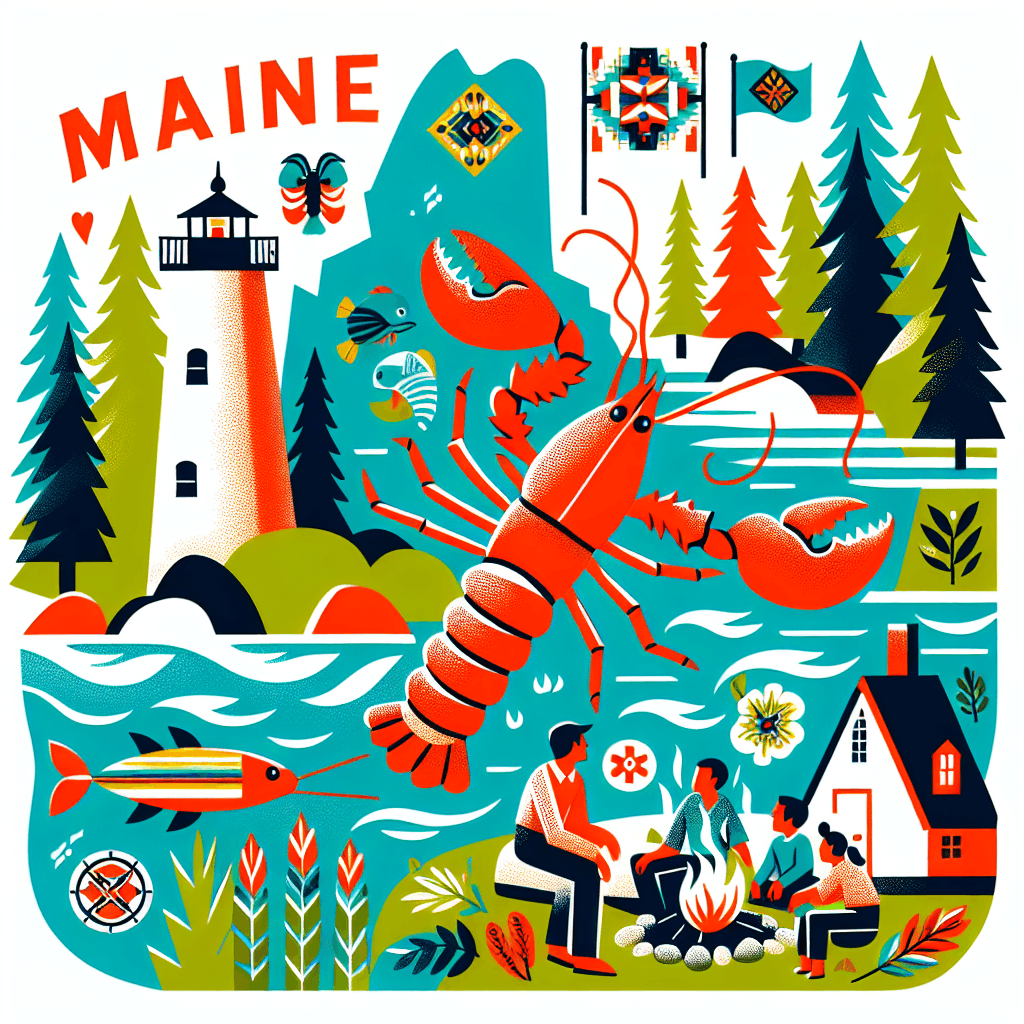
Celebrating Maine: Traditions Through Art and Story
Inquiry Framework
Question Framework
Driving Question
The overarching question that guides the entire project.How can we celebrate and share Maine's unique traditions to connect our classroom community to the past and to each other?Essential Questions
Supporting questions that break down major concepts.- How do traditions connect us to the past?
- Why are traditions important to families and communities?
- How are Maine traditions the same as or different from other traditions?
Standards & Learning Goals
Learning Goals
By the end of this project, students will be able to:- Students will be able to identify and describe various Maine traditions, including those of Maine Native Americans and immigrant groups.
- Students will be able to explain how traditions connect individuals and communities to the past.
- Students will be able to compare and contrast different Maine traditions, identifying commonalities and differences.
- Students will be able to organize and present information about Maine traditions using oral and visual examples.
Maine Social Studies Standards
Entry Events
Events that will be used to introduce the project to students'Tradition Keepers' Guest Speaker
Invite a 'Tradition Keeper' (e.g., a local artisan, a member of a Maine Native American tribe, or a long-time Maine resident) to class to share a personal story about a Maine tradition. The speaker brings in objects or images related to the tradition, prompting student questions and discussions about its significance and how it has changed over time.'Maine Tradition Road Trip' Simulation
Transform the classroom into a 'Maine Tradition Road Trip,' with different stations representing various traditions and regions of Maine. At each station, students engage in a short activity (e.g., examining Wabanaki basketry, listening to a Maine folk song, tasting maple syrup). This immersive experience exposes students to a diverse range of traditions and encourages exploration through multiple senses.Portfolio Activities
Portfolio Activities
These activities progressively build towards your learning goals, with each submission contributing to the student's final portfolio.'My Maine Tradition' Introduction
Students choose a Maine tradition that interests them to investigate and present on. They will create an introductory presentation slide.Steps
Here is some basic scaffolding to help students complete the activity.Final Product
What students will submit as the final product of the activityA presentation slide with a drawing and a sentence describing their chosen Maine tradition.Alignment
How this activity aligns with the learning objectives & standardsAligns with History 2: understanding cultural uniqueness through traditions and sharing information using visual examples.'Tradition Timeline' Creation
Students create a timeline showing the past, present, and possible future of their chosen Maine tradition.Steps
Here is some basic scaffolding to help students complete the activity.Final Product
What students will submit as the final product of the activityA timeline visually representing the past, present, and future of their chosen Maine tradition.Alignment
How this activity aligns with the learning objectives & standardsAligns with History 1: identifying past, present, and future in visual representations and stories.'Community Connection' Interview
Students interview a family member or community member about their experience with the chosen Maine tradition.Steps
Here is some basic scaffolding to help students complete the activity.Final Product
What students will submit as the final product of the activityA written summary of the interview responses and a drawing of the interviewee engaging in the tradition.Alignment
How this activity aligns with the learning objectives & standardsAligns with History 2: explaining how individuals and families share aspects of culture, values, and beliefs through traditions.'Tradition Comparison' Chart
Students compare their chosen Maine tradition with another tradition from a different culture or group.Steps
Here is some basic scaffolding to help students complete the activity.Final Product
What students will submit as the final product of the activityA comparison chart or Venn diagram highlighting the similarities and differences between two traditions, along with a sentence explaining their learning.Alignment
How this activity aligns with the learning objectives & standardsAligns with History 3: describing traditions of Maine Native Americans and various historical and recent immigrant groups and traditions common to all.'Celebrating Traditions' Presentation
Students combine their previous work to create a presentation sharing what they have learned about their chosen Maine tradition.Steps
Here is some basic scaffolding to help students complete the activity.Final Product
What students will submit as the final product of the activityA short oral and visual presentation sharing their knowledge of a Maine tradition, its history, personal connections, and comparisons to other traditions.Alignment
How this activity aligns with the learning objectives & standardsAligns with History 2: organizing findings at a developmentally appropriate manner and share gathered information using oral and visual examples. Also aligns with History 3: describing traditions of Maine Native Americans and various historical and recent immigrant groups and traditions common to all.Rubric & Reflection
Portfolio Rubric
Grading criteria for assessing the overall project portfolioMaine Traditions Exploration Rubric
Historical Understanding
Evaluates students' ability to identify and describe the historical aspects of Maine traditions, including past, present, and future contexts.Time Identification
Assesses the student's ability to distinguish between past, present, and future events related to a tradition.
Exemplary
4 PointsClearly identifies past, present, and future contexts with accurate details in all sections of the timeline.
Proficient
3 PointsIdentifies past, present, and future contexts with generally accurate details.
Developing
2 PointsShows emerging ability to distinguish time contexts, with some inaccuracies or missing details.
Beginning
1 PointsStruggles to identify time contexts; timeline is incomplete or largely inaccurate.
Tradition Description
Assesses the student's ability to clearly describe a Maine tradition.
Exemplary
4 PointsProvides a clear, detailed, and insightful description of their chosen tradition, supported with evidential examples.
Proficient
3 PointsDescribes the tradition with clarity and includes supporting details.
Developing
2 PointsProvides a basic description of the tradition, with some important details missing or unclear.
Beginning
1 PointsGives an unclear or incomplete description of the tradition.
Cultural Connection
Assesses students’ ability to connect Maine traditions to cultural stories and personal/community values.Interview Insights
Evaluates the student's depth of understanding gathered from the interview.
Exemplary
4 PointsGenerates insightful and meaningful connections between interviewee responses and tradition significance.
Proficient
3 PointsEffectively links interview responses to the tradition's significance.
Developing
2 PointsIdentifies some connections, but lacks depth or clear linkages in responses.
Beginning
1 PointsRequires assistance to identify connections or connections are missing.
Comparative Analysis
Evaluates students' ability to compare and contrast traditions, identifying similarities and differences effectively.Comparison Clarity
Assesses clarity and depth in comparing two traditions.
Exemplary
4 PointsClearly articulates similarities and differences with precision using a detailed Venn diagram or chart.
Proficient
3 PointsExplains similarities and differences clearly, using an organized chart or diagram.
Developing
2 PointsIdentifies some similarities and differences but lacks depth or organization.
Beginning
1 PointsStruggles to identify meaningful comparisons or lacks organization in the chart.
Presentation Skills
Evaluates oral presentation skills, focusing on organization, clarity, and engagement.Content Delivery
Assesses the effectiveness of presenting material and engaging the audience.
Exemplary
4 PointsPresents information clearly and engagingly with well-organized visuals and confident delivery.
Proficient
3 PointsPresents information clearly, using organized visuals and effective delivery.
Developing
2 PointsDelivers content with some clarity issues or lacks organization at times.
Beginning
1 PointsStruggles to deliver content clearly or consistently, with disorganized support materials.