
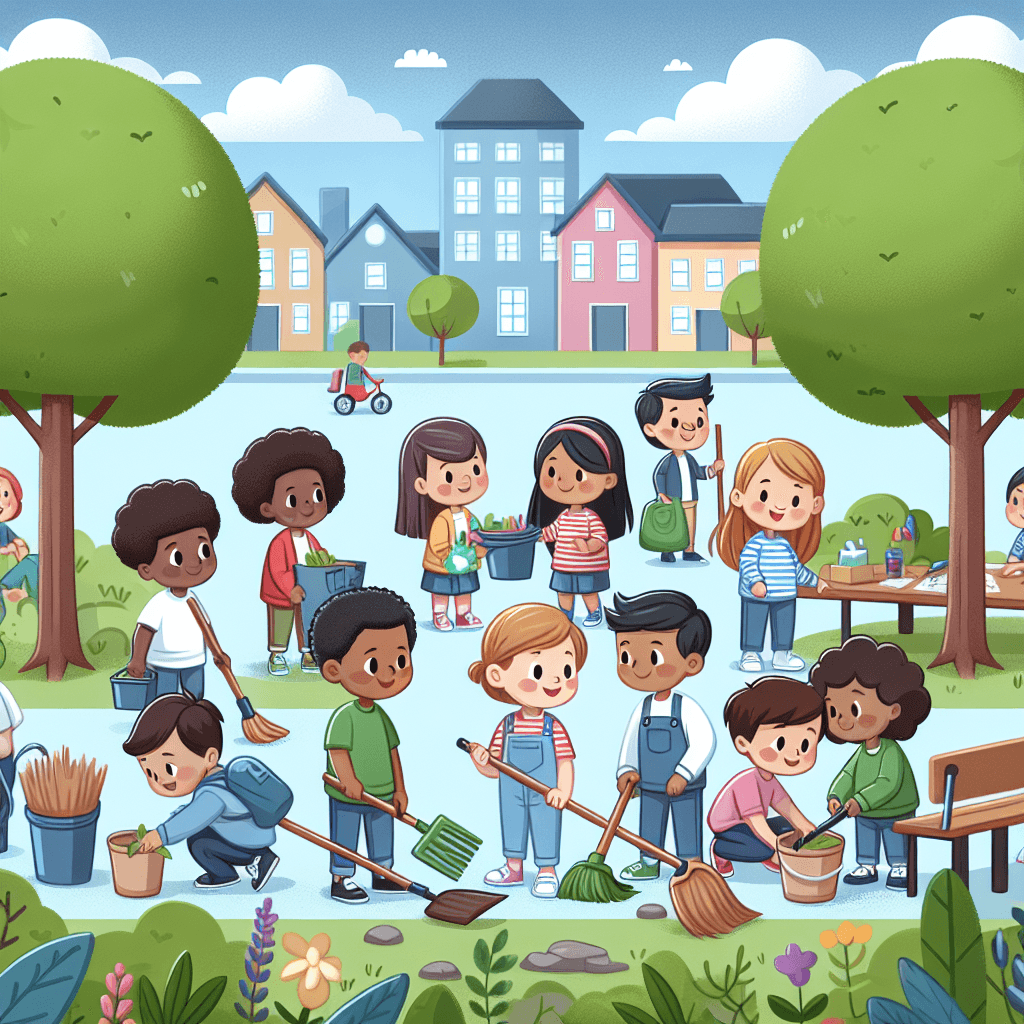
Civic Responsibility: Building Our Community
Inquiry Framework
Question Framework
Driving Question
The overarching question that guides the entire project.How can we, as responsible citizens, contribute to the well-being of our diverse communities?Essential Questions
Supporting questions that break down major concepts.- What is a community?
- What are the different types of communities?
- What is a citizen?
- What are the roles and responsibilities of a citizen?
- How can citizens contribute to their community?
Standards & Learning Goals
Learning Goals
By the end of this project, students will be able to:- Students will define community and identify different types of communities.
- Students will understand the role and responsibilities of a citizen.
- Students will explore ways citizens can contribute to their community.
- Students will propose and design a project to contribute to the well-being of their community.
Entry Events
Events that will be used to introduce the project to studentsCommunity Time Capsule
As a class, create a time capsule representing your community today. Students select items and write letters to future citizens, prompting reflection on their current roles and hopes for the future.Portfolio Activities
Portfolio Activities
These activities progressively build towards your learning goals, with each submission contributing to the student's final portfolio.Citizen Superheroes
Students will explore the roles and responsibilities of a citizen by creating a 'Citizen Superhero.' This activity encourages students to think about positive actions they can take to help their community.Steps
Here is some basic scaffolding to help students complete the activity.Final Product
What students will submit as the final product of the activityA drawing or model of a 'Citizen Superhero' with a short story illustrating their positive actions within the community.Alignment
How this activity aligns with the learning objectives & standardsAddresses the learning goal: Students will understand the role and responsibilities of a citizen.Community Contribution Challenge
Students will propose and design a small project to contribute to their community. This activity allows students to apply their understanding of citizenship and community needs in a practical way.Steps
Here is some basic scaffolding to help students complete the activity.Final Product
What students will submit as the final product of the activityA detailed proposal for a community contribution project, including a description of the problem, proposed solution, and steps for implementation.Alignment
How this activity aligns with the learning objectives & standardsAddresses the learning goal: Students will propose and design a project to contribute to the well-being of their community.A Letter to a Community Helper
Students will write a thank-you letter to a community helper, expressing their appreciation for the helper's contributions. This activity reinforces the idea that many people contribute to the well-being of a community.Steps
Here is some basic scaffolding to help students complete the activity.Final Product
What students will submit as the final product of the activityA handwritten thank-you letter to a community helper, expressing appreciation for their contributions and explaining the benefits of their work.Alignment
How this activity aligns with the learning objectives & standardsAddresses the learning goal: Students will explore ways citizens can contribute to their community.My Community Map
Students will create a map of their local community, identifying key locations and landmarks. This activity helps students understand the physical aspects of their community and their place within it.Steps
Here is some basic scaffolding to help students complete the activity.Final Product
What students will submit as the final product of the activityA colorful and labeled map of the student's local community, with a paragraph describing its unique characteristics.Alignment
How this activity aligns with the learning objectives & standardsAddresses the learning goal: Students will define community and identify different types of communities.Rubric & Reflection
Portfolio Rubric
Grading criteria for assessing the overall project portfolioCommunity Explorers Portfolio Rubric - Grade 2
Understanding of Community
Demonstrates understanding of what a community is, its different types, and its unique characteristics.Defining Community
Ability to define the concept of 'community' and identify its key components.
Exemplary
4 PointsProvides a comprehensive and nuanced definition of community, accurately identifying diverse community types and their interconnectedness.
Proficient
3 PointsDefines community accurately and identifies several different types of communities with clear examples.
Developing
2 PointsProvides a basic definition of community but struggles to identify different types or provide clear examples.
Beginning
1 PointsStruggles to define community and cannot identify different types of communities.
Community Mapping
Accuracy and detail in mapping the local community, including key landmarks and unique features.
Exemplary
4 PointsCreates a detailed and accurate map of the community, including all key locations, landmarks, and unique features. Map is visually appealing and well-organized.
Proficient
3 PointsCreates an accurate map of the community, including most key locations and landmarks. Map is generally clear and easy to understand.
Developing
2 PointsCreates a basic map of the community, but some key locations or landmarks are missing or inaccurately placed. Map may be difficult to understand.
Beginning
1 PointsStruggles to create a map of the community, with many locations missing or inaccurately placed. Map is difficult to understand.
Citizenship and Responsibility
Demonstrates understanding of the roles and responsibilities of a citizen and explores ways to contribute to the community.Qualities of a Good Citizen
Identification and embodiment of the qualities of a good citizen through the 'Citizen Superhero' activity.
Exemplary
4 PointsClearly articulates and embodies multiple qualities of a good citizen in the 'Citizen Superhero,' demonstrating a sophisticated understanding of civic responsibility and creatively portraying these qualities in the story.
Proficient
3 PointsIdentifies and embodies several qualities of a good citizen in the 'Citizen Superhero,' with a clear story illustrating their positive actions.
Developing
2 PointsIdentifies some qualities of a good citizen, but the connection to the 'Citizen Superhero' or their actions may be unclear.
Beginning
1 PointsStruggles to identify the qualities of a good citizen and the 'Citizen Superhero' does not demonstrate these qualities.
Community Contribution
Thoughtfulness and feasibility of the proposed community contribution project.
Exemplary
4 PointsProposes a highly thoughtful, creative, and feasible community contribution project that addresses a significant community need. Proposal demonstrates exceptional planning and consideration of potential impact.
Proficient
3 PointsProposes a feasible community contribution project that addresses a real community need. Proposal includes clear steps for implementation.
Developing
2 PointsProposes a community contribution project, but the need or feasibility may be unclear. Proposal may lack detail.
Beginning
1 PointsStruggles to propose a community contribution project or the proposed project is unrealistic or unrelated to community needs.
Appreciation of Community Helpers
Expression of appreciation for community helpers and understanding of their contributions.
Exemplary
4 PointsWrites a heartfelt and insightful letter to a community helper, expressing sincere appreciation and clearly explaining the significant benefits of their work to the community with specific examples.
Proficient
3 PointsWrites a thank-you letter to a community helper, expressing appreciation for their contributions and explaining how their work benefits the community.
Developing
2 PointsWrites a basic thank-you letter to a community helper, but the expression of appreciation or explanation of benefits may be limited.
Beginning
1 PointsStruggles to write a thank-you letter to a community helper or express appreciation for their work.