
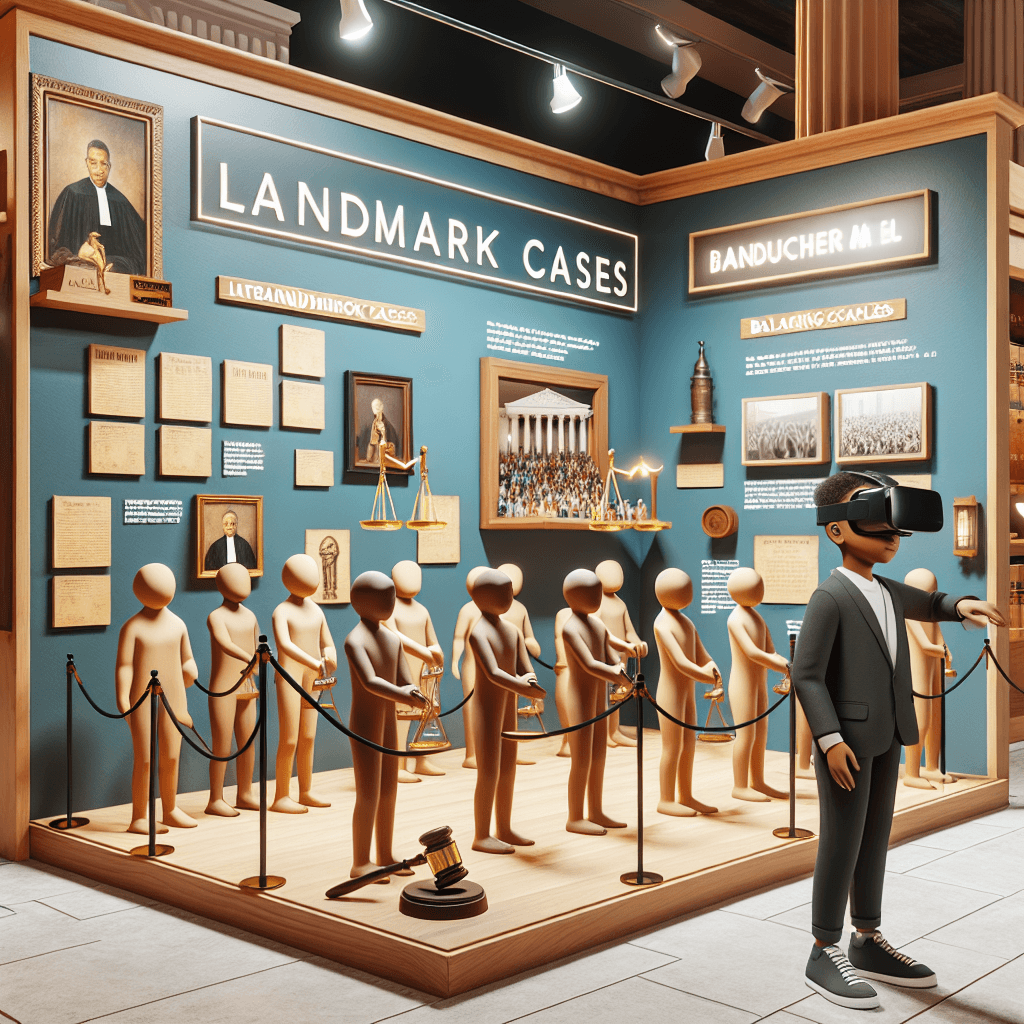
Civil Rights Museum: Landmark Cases Interactive Virtual Exhibit
Inquiry Framework
Question Framework
Driving Question
The overarching question that guides the entire project.How can we design a virtual museum exhibit that effectively communicates the evolving interpretations of the Bill of Rights and their impact on civil rights, while also exploring the balance between individual rights and societal needs?Essential Questions
Supporting questions that break down major concepts.- How have interpretations of the Bill of Rights evolved through legislative action and court decisions, and what impact has this had on civil rights?
- In what ways do the Fourth, Fifth, Sixth, Eighth, and Fourteenth Amendments protect individuals accused of crimes, and what are the limitations of these protections?
- How can digital communication tools be used to effectively educate the public about landmark civil rights cases and their significance?
- What is the role of museums in preserving and interpreting history, and how can technology enhance the museum experience?
- How do we balance individual rights with the needs of society, and how has this balance been negotiated in civil rights cases?
Standards & Learning Goals
Learning Goals
By the end of this project, students will be able to:- Students will be able to explain the historical context and significance of landmark civil rights cases.
- Students will be able to analyze the evolving interpretations of the Bill of Rights and their impact on civil rights.
- Students will be able to evaluate the balance between individual rights and societal needs in the context of civil rights.
- Students will be able to design an engaging and informative virtual museum exhibit using digital communication tools.
- Students will be able to communicate effectively, tailoring their message to a specific audience and purpose, while adhering to ethical communication practices.
- Students will be able to explain the scope and limits of rights of the accused during trial and punishment under the Sixth and Eighth Amendments.
- Students will be able to explain the scope and limits of rights of the accused pretrial under the Fourth and Fifth Amendments.
- Students will be able to explain the scope and limits of rights protected by the First and Second Amendments.
- Students will be able to evaluate the current and historical interpretations of the principles of due process and equal protection of the law in the 14th Amendment.
- Students will be able to create, share and present, individually or in a collaborative group, a piece of digital work or digital communication, which may include ethical remixing or transformation of work, for a specific purpose; publish work, considering audience, demonstrating understanding of digital footprint
Teacher Provided
Entry Events
Events that will be used to introduce the project to studentsVoices of Change
A local civil rights activist visits the class to share their personal experiences and challenges in fighting for equality. This firsthand account provides students with a powerful connection to the subject matter and motivates them to create museum exhibits that honor the struggles and triumphs of the civil rights movement.Portfolio Activities
Portfolio Activities
These activities progressively build towards your learning goals, with each submission contributing to the student's final portfolio.Amendment Rights Breakdown
This activity requires students to become familiar with the specific rights guaranteed by the Fourth, Fifth, Sixth, and Eighth Amendments. They will then summarize these rights in clear, concise language, suitable for inclusion in their museum exhibit.Steps
Here is some basic scaffolding to help students complete the activity.Final Product
What students will submit as the final product of the activityA written summary of the key aspects of the Fourth, Fifth, Sixth, and Eighth Amendments, focusing on the rights of the accused.Alignment
How this activity aligns with the learning objectives & standardsAddresses SS.9-12.Civics.6th and 8th, SS.9-12.Civics.4th and 5th, SS.9-12.Civics.1st and 2nd: Students will research and summarize key aspects of the Fourth, Fifth, Sixth, and Eighth Amendments related to the rights of the accused.Landmark Cases Deep Dive
Students delve into the complexities of the 14th Amendment by examining landmark Supreme Court cases. This activity encourages critical thinking about how the courts have interpreted due process and equal protection, and how these interpretations have shaped civil rights.Steps
Here is some basic scaffolding to help students complete the activity.Final Product
What students will submit as the final product of the activityA detailed analysis of at least three landmark Supreme Court cases related to civil rights and the 14th Amendment, presented in a format suitable for a museum exhibit (e.g., informational panels, interactive displays).Alignment
How this activity aligns with the learning objectives & standardsAddresses SS.9-12.Civics.14th: Students will research and analyze landmark Supreme Court cases related to civil rights and the 14th Amendment, focusing on due process and equal protection.Virtual Museum Exhibit Design Studio
This activity brings together the research and analysis from the previous activities to create a cohesive and engaging virtual museum exhibit. Students will apply their understanding of the Bill of Rights and civil rights cases to design an informative and interactive experience for museum visitors. They will also learn to tailor their communication style to suit the audience and purpose of the exhibit.Steps
Here is some basic scaffolding to help students complete the activity.Final Product
What students will submit as the final product of the activityA functional virtual museum exhibit, using digital tools, that educates visitors about landmark civil rights cases and the evolving interpretations of the Bill of Rights. The exhibit should include informational content, interactive elements, and multimedia resources.Alignment
How this activity aligns with the learning objectives & standardsAddresses ELA.11-12.W.4, CS.9-12.DWA.b: Students will design and develop a virtual museum exhibit showcasing their research on civil rights cases and the Bill of Rights, using digital communication tools.Rubric & Reflection
Portfolio Rubric
Grading criteria for assessing the overall project portfolioCivil Rights Museum Exhibit Rubric
Amendment Summarization and Clarity
This category assesses the students' understanding of the assigned amendment, their ability to communicate it in a clear way for a museum audience, and how well they incorporated class feedback.Amendment Comprehension
Accuracy and depth of research on the assigned Amendment.
Exemplary
4 PointsDemonstrates a sophisticated understanding of the Amendment, including its historical context, key provisions, and relevant court cases. Research is thorough and accurate, going beyond basic information.
Proficient
3 PointsDemonstrates a thorough understanding of the Amendment, including its key provisions and relevant court cases. Research is accurate and covers all essential information.
Developing
2 PointsShows an emerging understanding of the Amendment, but may have some inaccuracies or omissions. Research is basic and may not cover all essential information.
Beginning
1 PointsShows a limited understanding of the Amendment, with significant inaccuracies or omissions. Research is minimal and insufficient.
Audience Accessibility
Clarity and accessibility of the summary for a museum audience.
Exemplary
4 PointsThe summary is exceptionally clear, concise, and engaging, effectively communicating complex legal concepts in a way that is easily understood by a general audience. Language is precise and avoids jargon.
Proficient
3 PointsThe summary is clear, concise, and engaging, effectively communicating legal concepts in a way that is easily understood by a general audience. Language is generally precise and avoids most jargon.
Developing
2 PointsThe summary is generally clear, but may contain some jargon or complex language that is difficult for a general audience to understand. Some sections may lack clarity or conciseness.
Beginning
1 PointsThe summary is unclear, confusing, or contains excessive jargon. It is difficult for a general audience to understand the key concepts.
Feedback Integration
Incorporation of feedback from class discussions and revisions.
Exemplary
4 PointsDemonstrates exceptional responsiveness to feedback, with significant and meaningful revisions that substantially improve the accuracy, clarity, and overall quality of the summary. All feedback is thoughtfully addressed and integrated.
Proficient
3 PointsDemonstrates good responsiveness to feedback, with revisions that improve the accuracy, clarity, and overall quality of the summary. Most feedback is addressed and integrated.
Developing
2 PointsShows some responsiveness to feedback, but revisions are limited or do not fully address the concerns raised. Some feedback may be ignored or misinterpreted.
Beginning
1 PointsDemonstrates minimal responsiveness to feedback, with few or no revisions made to the summary. Feedback is largely ignored or misunderstood.
Landmark Case Analysis
This category assesses the students' research on landmark supreme court cases, their analysis of the cases, and the suitability of their analysis for a museum exhibit.Case Comprehension
Accuracy and depth of research on the assigned Supreme Court case.
Exemplary
4 PointsDemonstrates a sophisticated understanding of the case, including its historical context, legal issues, and lasting impact. Research is thorough and accurate, going beyond basic information.
Proficient
3 PointsDemonstrates a thorough understanding of the case, including its historical context, legal issues, and lasting impact. Research is accurate and covers all essential information.
Developing
2 PointsShows an emerging understanding of the case, but may have some inaccuracies or omissions. Research is basic and may not cover all essential information.
Beginning
1 PointsShows a limited understanding of the case, with significant inaccuracies or omissions. Research is minimal and insufficient.
Civil Rights Significance
Analysis of the case's significance in the context of civil rights and the 14th Amendment.
Exemplary
4 PointsProvides an insightful and nuanced analysis of the case's significance, demonstrating a deep understanding of its impact on civil rights and the interpretation of the 14th Amendment. Analysis goes beyond surface-level observations.
Proficient
3 PointsProvides a clear and comprehensive analysis of the case's significance, demonstrating a good understanding of its impact on civil rights and the interpretation of the 14th Amendment. Analysis covers all essential points.
Developing
2 PointsShows an emerging understanding of the case's significance, but the analysis may be superficial or incomplete. Some key points may be missed or misunderstood.
Beginning
1 PointsDemonstrates a limited understanding of the case's significance, with significant inaccuracies or omissions in the analysis. The connection to civil rights and the 14th Amendment is unclear.
Exhibit Suitability
Suitability of the analysis for a museum exhibit (e.g., informational panels, interactive displays).
Exemplary
4 PointsThe analysis is exceptionally well-suited for a museum exhibit, presented in a visually appealing and engaging format that effectively communicates the key information to visitors. Creative and innovative presentation methods are used.
Proficient
3 PointsThe analysis is well-suited for a museum exhibit, presented in a clear and organized format that effectively communicates the key information to visitors. Presentation methods are appropriate and effective.
Developing
2 PointsThe analysis is generally suitable for a museum exhibit, but the presentation may be somewhat disorganized or lack visual appeal. Some information may be difficult for visitors to access or understand.
Beginning
1 PointsThe analysis is poorly suited for a museum exhibit, presented in a disorganized and unappealing format that fails to effectively communicate the key information to visitors. Presentation methods are inappropriate or ineffective.
Virtual Museum Exhibit Development
This category assesses the student's ability to design and develop a vitual museum exhibit using digital communication tools.Exhibit Design
Clarity and coherence of the overall design and layout of the virtual museum exhibit.
Exemplary
4 PointsThe exhibit design is exceptionally clear, coherent, and visually appealing, creating a seamless and engaging experience for visitors. The layout is intuitive and easy to navigate, with a clear sense of flow and purpose.
Proficient
3 PointsThe exhibit design is clear, coherent, and visually appealing, creating a positive experience for visitors. The layout is organized and easy to navigate, with a clear sense of purpose.
Developing
2 PointsThe exhibit design is generally clear, but may lack coherence or visual appeal. The layout may be somewhat confusing or difficult to navigate, with a less clear sense of purpose.
Beginning
1 PointsThe exhibit design is unclear, incoherent, and visually unappealing, creating a negative experience for visitors. The layout is disorganized and difficult to navigate, with no clear sense of purpose.
Digital Tool Proficiency
Effectiveness of the use of digital communication tools to build the exhibit.
Exemplary
4 PointsDemonstrates masterful use of digital communication tools, leveraging their full potential to create a highly interactive and engaging exhibit. Tools are used in innovative and creative ways to enhance the visitor experience.
Proficient
3 PointsDemonstrates effective use of digital communication tools, creating an interactive and engaging exhibit. Tools are used appropriately and efficiently to achieve the desired results.
Developing
2 PointsShows some competence in using digital communication tools, but the exhibit may lack interactivity or engagement. Tools may be used ineffectively or inefficiently.
Beginning
1 PointsDemonstrates limited competence in using digital communication tools, with significant difficulties in creating an interactive and engaging exhibit. Tools are used inappropriately or ineffectively.
Content Impact
Informativeness, engagement, and accessibility of the exhibit content.
Exemplary
4 PointsThe exhibit content is exceptionally informative, engaging, and accessible, providing visitors with a deep understanding of the topic in a way that is both intellectually stimulating and emotionally resonant. Content is tailored to a diverse audience.
Proficient
3 PointsThe exhibit content is informative, engaging, and accessible, providing visitors with a good understanding of the topic. Content is generally tailored to the target audience.
Developing
2 PointsThe exhibit content is generally informative, but may lack engagement or accessibility for some visitors. Content may not be fully tailored to the target audience.
Beginning
1 PointsThe exhibit content is uninformative, unengaging, or inaccessible, failing to provide visitors with a meaningful understanding of the topic. Content is poorly tailored to the target audience.