
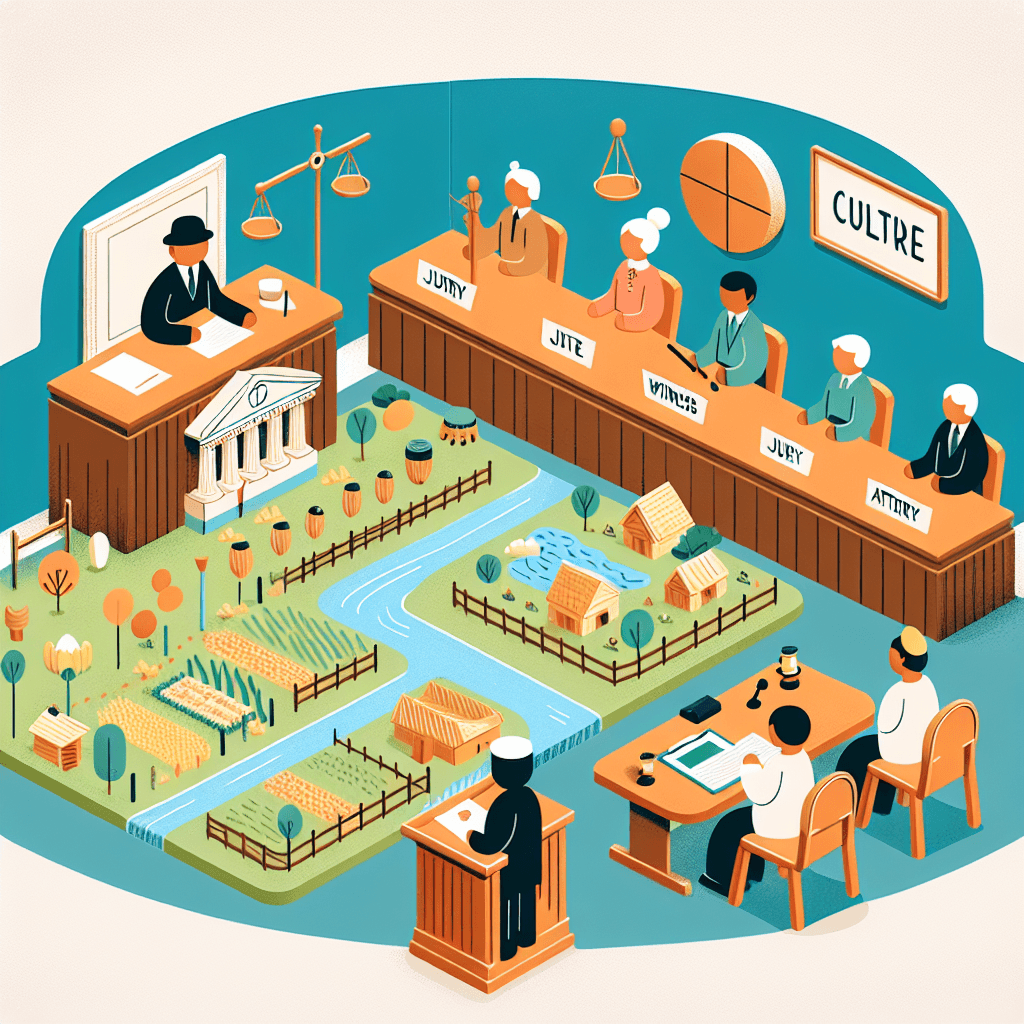
Civilization Mock Trial: Was the Settlement a Civilization?
Inquiry Framework
Question Framework
Driving Question
The overarching question that guides the entire project.Based on archaeological evidence and historical interpretations, does the newly discovered settlement meet the established criteria to be considered a civilization, and how does our understanding of its characteristics shape its place in history?Essential Questions
Supporting questions that break down major concepts.- What defines a civilization?
- How do historians interpret evidence from the past?
- What are the key differences between hunter-gatherer societies and early agricultural communities?
- How did agriculture and metallurgy lead to the rise of civilizations?
- How can we use primary and secondary sources to understand past societies?
- What criteria should be used to determine if a settlement is a civilization?
- How do different interpretations of historical evidence affect our understanding of a civilization?
Standards & Learning Goals
Learning Goals
By the end of this project, students will be able to:- Analyze archaeological evidence to determine societal characteristics.
- Evaluate historical interpretations to understand different perspectives on civilizations.
- Compare and contrast hunter-gatherer societies and early agricultural communities.
- Define the characteristics of a civilization.
- Interpret primary and secondary sources to reconstruct past societies.
- Debate whether a settlement meets civilization criteria using evidence.
- Understand the impact of agriculture and metallurgy on civilization development.
Florida Standards
Entry Events
Events that will be used to introduce the project to studentsUrgent Archaeological Discovery
Students receive an urgent message from a team of archaeologists who have discovered a new settlement. The archaeologists are seeking the students' expertise to determine if the settlement qualifies as a civilization based on the evidence found. This entry event immediately thrusts students into the role of historical analysts and connects directly to the project's core goal of understanding the characteristics of civilization.The News Report
Students watch a short, fictional news report about the discovery of the settlement, focusing on the debate surrounding its classification as a civilization. The report includes interviews with 'experts' holding differing opinions, prompting students to critically evaluate the information presented and form their own judgments. This relates to student experiences with media and encourages them to think critically about sources of information.Portfolio Activities
Portfolio Activities
These activities progressively build towards your learning goals, with each submission contributing to the student's final portfolio.Settlement Timeline Creation
Students create a timeline of the discovered settlement, placing significant events in chronological order. This helps visualize the settlement's development and its place in history.Steps
Here is some basic scaffolding to help students complete the activity.Final Product
What students will submit as the final product of the activityA detailed timeline of the settlement’s key events, including estimated dates and descriptions.Alignment
How this activity aligns with the learning objectives & standardsAligns with SS.6.W.1.1 by creating a timeline of the settlement's key events to understand its historical context.Historical Time Designation
Students will learn and apply historical terms to categorize the settlement’s timeline. This activity reinforces their understanding of how time periods are designated and helps contextualize the settlement's age and duration.Steps
Here is some basic scaffolding to help students complete the activity.Final Product
What students will submit as the final product of the activityAn annotated timeline that includes designations of time periods (decade, century, etc.) relevant to the settlement's history.Alignment
How this activity aligns with the learning objectives & standardsAligns with SS.6.W.1.2 by applying terms like decade, century, and era to the settlement's timeline.Source Analysis Portfolio
Students analyze both primary and secondary sources related to the settlement to gather evidence and understand different interpretations of its history.Steps
Here is some basic scaffolding to help students complete the activity.Final Product
What students will submit as the final product of the activityA source analysis portfolio, including summaries and interpretations of primary sources (e.g., artifact descriptions, site maps) and secondary sources (e.g., historical articles, expert opinions).Alignment
How this activity aligns with the learning objectives & standardsAligns with SS.6.W.1.3 and SS.6.W.1.4 by analyzing archaeological reports (primary sources) and historical analyses (secondary sources) to understand the settlement.Comparative Societies Analysis
Students compare the settlement's characteristics (e.g., social structure, economy, technology) with those of hunter-gatherer societies and early agricultural communities to understand its place in the development of civilization.Steps
Here is some basic scaffolding to help students complete the activity.Final Product
What students will submit as the final product of the activityA comparative analysis chart that highlights the similarities and differences between the settlement, hunter-gatherer societies, and early agricultural communities.Alignment
How this activity aligns with the learning objectives & standardsAligns with SS.6.W.2.1 and SS.6.W.2.2 by comparing the settlement's characteristics with those of hunter-gatherer and early agricultural communities.Civilization Characteristics Report
Students research the key characteristics of civilization (e.g., organized government, social structure, writing system) and gather evidence from the settlement to determine if these characteristics are present.Steps
Here is some basic scaffolding to help students complete the activity.Final Product
What students will submit as the final product of the activityAn evidence-based report detailing whether the settlement exhibits the characteristics of a civilization, with specific examples from archaeological findings.Alignment
How this activity aligns with the learning objectives & standardsAligns with SS.6.W.2.3 by researching and presenting evidence related to the characteristics of civilization found (or not found) in the settlement.The Mock Trial: Civilization Verdict
Students participate in a mock trial, presenting arguments and evidence to support their position on whether the settlement should be classified as a civilization.Steps
Here is some basic scaffolding to help students complete the activity.Final Product
What students will submit as the final product of the activityParticipation in the mock trial, presenting well-researched arguments and evidence, and a written reflection on the trial process and outcome.Alignment
How this activity aligns with the learning objectives & standardsCulminates in SS.6.W.1.5 and SS.6.W.2.3 as students use their research and analysis to argue for or against the settlement being classified as a civilization in a mock trial setting.Rubric & Reflection
Portfolio Rubric
Grading criteria for assessing the overall project portfolioCivilization Inquiry Portfolio Rubric
Timeline Analysis
Assessment of the Settlement Timeline Creation and Historical Time Designation activities, focusing on timeline accuracy, detail, and the application of historical terms.Timeline Accuracy and Detail
Accuracy and completeness of the timeline, including correct dates and detailed descriptions of key events.
Exemplary
4 PointsTimeline is meticulously accurate, comprehensively detailed, and creatively presented, demonstrating a deep understanding of the settlement's historical development.
Proficient
3 PointsTimeline is accurate, well-detailed, and clearly presented, showing a solid understanding of the settlement's historical development.
Developing
2 PointsTimeline contains some inaccuracies or omissions, and descriptions lack detail, indicating a basic understanding of the settlement's historical development.
Beginning
1 PointsTimeline is largely inaccurate, incomplete, and poorly presented, suggesting a limited understanding of the settlement's historical development.
Historical Term Application
Application of appropriate historical terms (decade, century, era) to the timeline, demonstrating understanding of time period designations.
Exemplary
4 PointsConsistently and accurately applies historical terms with insightful explanations, demonstrating a sophisticated understanding of time period designations and their relevance to the settlement.
Proficient
3 PointsAccurately applies historical terms to the timeline with clear explanations, demonstrating a strong understanding of time period designations.
Developing
2 PointsApplies historical terms with some inaccuracies or incomplete explanations, indicating a basic understanding of time period designations.
Beginning
1 PointsStruggles to apply historical terms correctly or provide adequate explanations, suggesting a limited understanding of time period designations.
Comparative and Analytical Skills
Assessment of the Source Analysis Portfolio and Comparative Societies Analysis activities, focusing on the quality of source analysis and the comparative analysis of different types of societies.Source Analysis Quality
Quality of source analysis, including summaries, identification of biases, and interpretation of the settlement's characteristics and historical context.
Exemplary
4 PointsProvides exceptionally insightful and comprehensive analyses of sources, expertly identifying biases and offering nuanced interpretations of the settlement's characteristics and context.
Proficient
3 PointsProvides thorough and well-reasoned analyses of sources, accurately identifying biases and offering clear interpretations of the settlement's characteristics and context.
Developing
2 PointsProvides basic analyses of sources with some identification of biases and interpretations of the settlement's characteristics, though some aspects may be superficial or incomplete.
Beginning
1 PointsProvides limited or superficial analyses of sources, struggling to identify biases or interpret the settlement's characteristics and context effectively.
Comparative Societies Analysis
Comparative analysis of the settlement with hunter-gatherer and early agricultural communities, highlighting similarities and differences in social structure, economy, and technology.
Exemplary
4 PointsDemonstrates an exceptionally sophisticated understanding of the nuances between the settlement, hunter-gatherer societies, and early agricultural communities, presenting a comparative analysis that is insightful, thorough, and innovative.
Proficient
3 PointsPresents a clear and comprehensive comparative analysis, accurately highlighting the key similarities and differences between the settlement, hunter-gatherer societies, and early agricultural communities.
Developing
2 PointsPresents a basic comparative analysis, identifying some similarities and differences but lacking depth or detail in the comparison of the settlement with other types of societies.
Beginning
1 PointsPresents a limited or superficial comparative analysis, struggling to identify or explain the similarities and differences between the settlement and other types of societies.
Evidence and Argumentation
Assessment of the Civilization Characteristics Report and the Mock Trial: Civilization Verdict activities, focusing on the use of evidence to support claims and the quality of arguments presented in the mock trial.Civilization Characteristics Evidence
Evidence-based report detailing whether the settlement exhibits characteristics of a civilization, with specific examples from archaeological findings.
Exemplary
4 PointsCrafts a compelling, evidence-based report that demonstrates a profound understanding of civilization characteristics, supporting claims with specific, insightful examples from archaeological findings, and presenting a nuanced argument.
Proficient
3 PointsProvides a well-supported, evidence-based report that clearly articulates whether the settlement exhibits characteristics of a civilization, using specific examples from archaeological findings to justify claims.
Developing
2 PointsPresents a report that attempts to address whether the settlement exhibits characteristics of a civilization, but may lack sufficient evidence or specific examples from archaeological findings to fully support claims.
Beginning
1 PointsSubmits a report that inadequately addresses whether the settlement exhibits characteristics of a civilization, providing minimal evidence or irrelevant examples from archaeological findings.
Mock Trial Performance and Reflection
Presentation of well-researched arguments and evidence in the mock trial, and reflection on the trial process.
Exemplary
4 PointsDelivers an exceptionally persuasive and thoroughly researched presentation in the mock trial, demonstrating mastery of the evidence, and provides a reflective analysis that offers profound insights into the trial process.
Proficient
3 PointsPresents well-researched arguments and evidence effectively in the mock trial, actively participating and demonstrating a solid understanding of the case, and provides a thoughtful reflection on the trial process.
Developing
2 PointsParticipates in the mock trial, presenting some arguments and evidence, but may lack thorough research or clear articulation, and provides a superficial or incomplete reflection on the trial process.
Beginning
1 PointsShows limited participation in the mock trial, struggling to present coherent arguments or relevant evidence, and provides a minimal or irrelevant reflection on the trial process.