
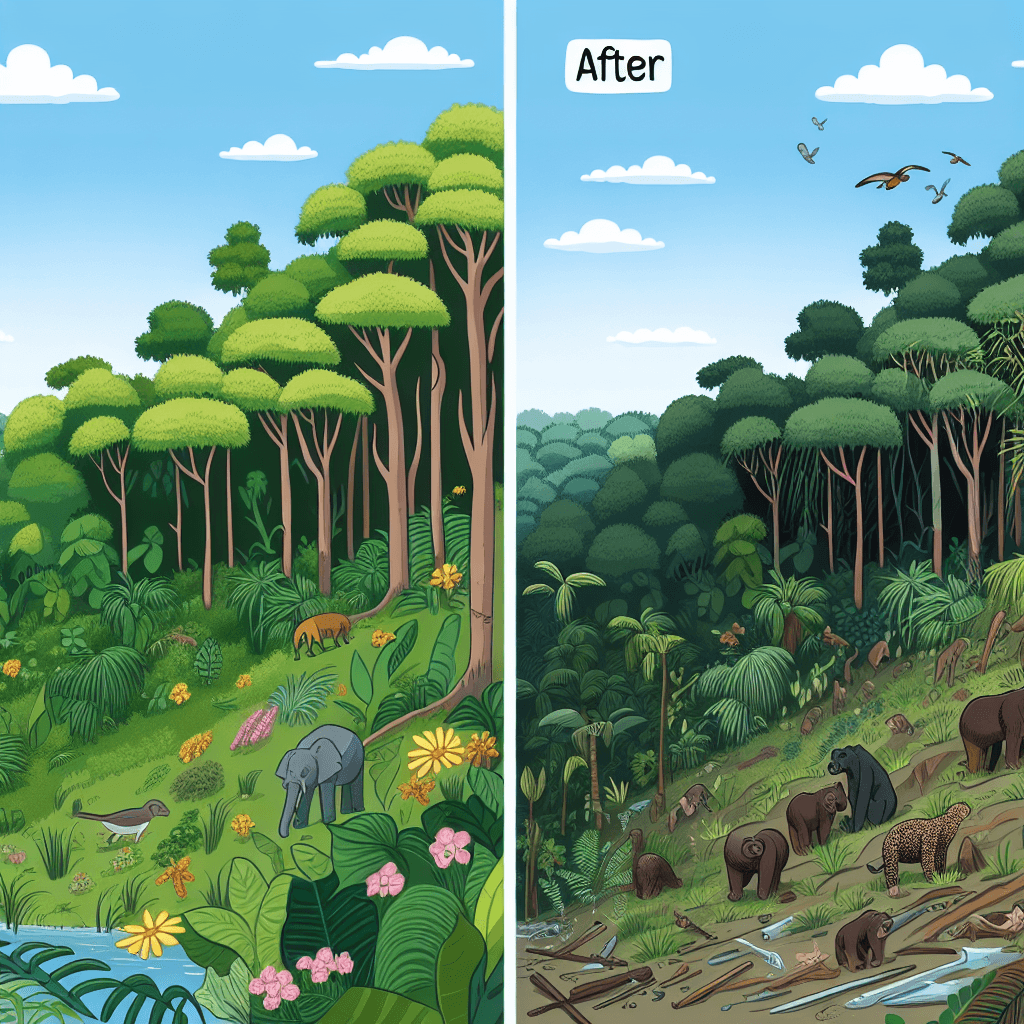
Climate Change Impact on Pacific Rim Indigenous Resources
Inquiry Framework
Question Framework
Driving Question
The overarching question that guides the entire project.How can we, as documentary filmmakers, tell the story of how climate change is impacting resources and economies of indigenous communities in the Pacific Rim, and what solutions are being developed?Essential Questions
Supporting questions that break down major concepts.- How does climate change affect indigenous communities in the Pacific Rim?
- What resources are most threatened by climate change in these communities?
- How do these environmental changes impact the economies of indigenous peoples?
- What are the cultural and social implications of resource loss due to climate change?
- What solutions are indigenous communities and others developing to combat these challenges?
Standards & Learning Goals
Learning Goals
By the end of this project, students will be able to:- Understand the effects of climate change on indigenous communities in the Pacific Rim.
- Identify resources threatened by climate change and their importance to indigenous communities.
- Analyze the economic and cultural impacts of resource loss on indigenous communities.
- Evaluate solutions developed by indigenous communities to combat climate change.
- Develop documentary filmmaking skills, including research, interviewing, and storytelling.
- Communicate findings effectively through a documentary film format.
- Understand the relationship between climate change, resource management, and economic stability in indigenous communities of the Pacific Rim
Teacher-Provided Standards
Entry Events
Events that will be used to introduce the project to studentsA World in Transition
The teacher shows a short, powerful film featuring time-lapse footage of melting glaciers, shrinking coastlines, and extreme weather events in the Pacific Rim, juxtaposed with interviews of Indigenous elders sharing their traditional knowledge and concerns. This visual and emotional experience serves as a springboard for discussion and inquiry into the project's focus.Portfolio Activities
Portfolio Activities
These activities progressively build towards your learning goals, with each submission contributing to the student's final portfolio.Lights, Camera, Action Plan: Documentary Proposal
Students synthesize their research and findings from previous activities to create a documentary film proposal. This activity focuses on refining their understanding and preparing for the practical filmmaking stage.Steps
Here is some basic scaffolding to help students complete the activity.Final Product
What students will submit as the final product of the activityA detailed documentary film proposal including: A synopsis of the film's narrative, Identification of key themes and messages, A preliminary outline or storyboard, A list of potential interview subjects, and A plan for filming locations and logistics.Alignment
How this activity aligns with the learning objectives & standardsRW7.2 (Investigate the influence of resources upon economic conditions of peoples in circumpolar and Pacific Rim countries.) Culminates the project by synthesizing research and presenting a comprehensive view of the resource-economy relationship under climate change, fulfilling the standard's requirements.Rubric & Reflection
Portfolio Rubric
Grading criteria for assessing the overall project portfolioDocumentary Film Proposal Rubric
Documentary Proposal Quality
Assesses the student's ability to develop a coherent, well-researched, and feasible documentary film proposal that addresses the driving and essential questions of the inquiry framework.Narrative Clarity and Structure
The clarity and coherence of the documentary's narrative structure, including a logical flow of ideas and a compelling storyline.
Exemplary
4 PointsThe narrative is exceptionally clear, engaging, and logically structured, creating a compelling and insightful viewing experience. The storyline expertly weaves together different elements to create a cohesive and impactful message.
Proficient
3 PointsThe narrative is clear, well-structured, and engaging. The storyline is logical and easy to follow, effectively conveying the film's message.
Developing
2 PointsThe narrative shows some coherence, but may lack clarity or logical flow in certain parts. The storyline may be difficult to follow at times.
Beginning
1 PointsThe narrative lacks clarity and coherence, making it difficult to understand the film's intended message. The storyline is disjointed and lacks logical flow.
Research Quality and Depth
The depth and breadth of research conducted to support the documentary's content, including the use of credible sources and accurate information.
Exemplary
4 PointsDemonstrates exceptionally thorough and insightful research, drawing on a wide range of credible sources to provide a comprehensive and nuanced understanding of the topic. Information is meticulously accurate and effectively integrated into the proposal.
Proficient
3 PointsDemonstrates thorough research, drawing on credible sources to provide a solid understanding of the topic. Information is accurate and well-integrated into the proposal.
Developing
2 PointsDemonstrates some research, but may rely on limited or less credible sources. Information may contain minor inaccuracies or be poorly integrated into the proposal.
Beginning
1 PointsDemonstrates minimal research, relying on unreliable sources or lacking sufficient information. Information is inaccurate or irrelevant to the proposal.
Feasibility and Logistics
The feasibility and practicality of the proposed filming locations, logistics, and interview subjects, considering budget, time constraints, and environmental impact.
Exemplary
4 PointsThe plan for filming locations, logistics, and interviews is exceptionally well-developed, demonstrating a keen understanding of practical constraints and a commitment to sustainability. All aspects are feasible and thoughtfully considered.
Proficient
3 PointsThe plan for filming locations, logistics, and interviews is well-developed and feasible, demonstrating a good understanding of practical constraints. Sustainability is considered.
Developing
2 PointsThe plan for filming locations, logistics, and interviews is partially developed, but may lack feasibility or consideration of practical constraints. Sustainability is not adequately addressed.
Beginning
1 PointsThe plan for filming locations, logistics, and interviews is poorly developed and lacks feasibility. Practical constraints and sustainability are not considered.
Alignment with Inquiry Framework
The extent to which the documentary proposal addresses the driving and essential questions related to climate change, indigenous communities, and resource economics.
Exemplary
4 PointsThe proposal comprehensively and insightfully addresses the driving and essential questions, demonstrating a deep understanding of the complex issues at hand. The film's focus is sharply aligned with the inquiry framework.
Proficient
3 PointsThe proposal thoroughly addresses the driving and essential questions, demonstrating a strong understanding of the key issues. The film's focus is clearly aligned with the inquiry framework.
Developing
2 PointsThe proposal partially addresses the driving and essential questions, but may lack depth or clarity in certain areas. The film's focus is loosely aligned with the inquiry framework.
Beginning
1 PointsThe proposal fails to adequately address the driving and essential questions, demonstrating a limited understanding of the key issues. The film's focus is not aligned with the inquiry framework.