
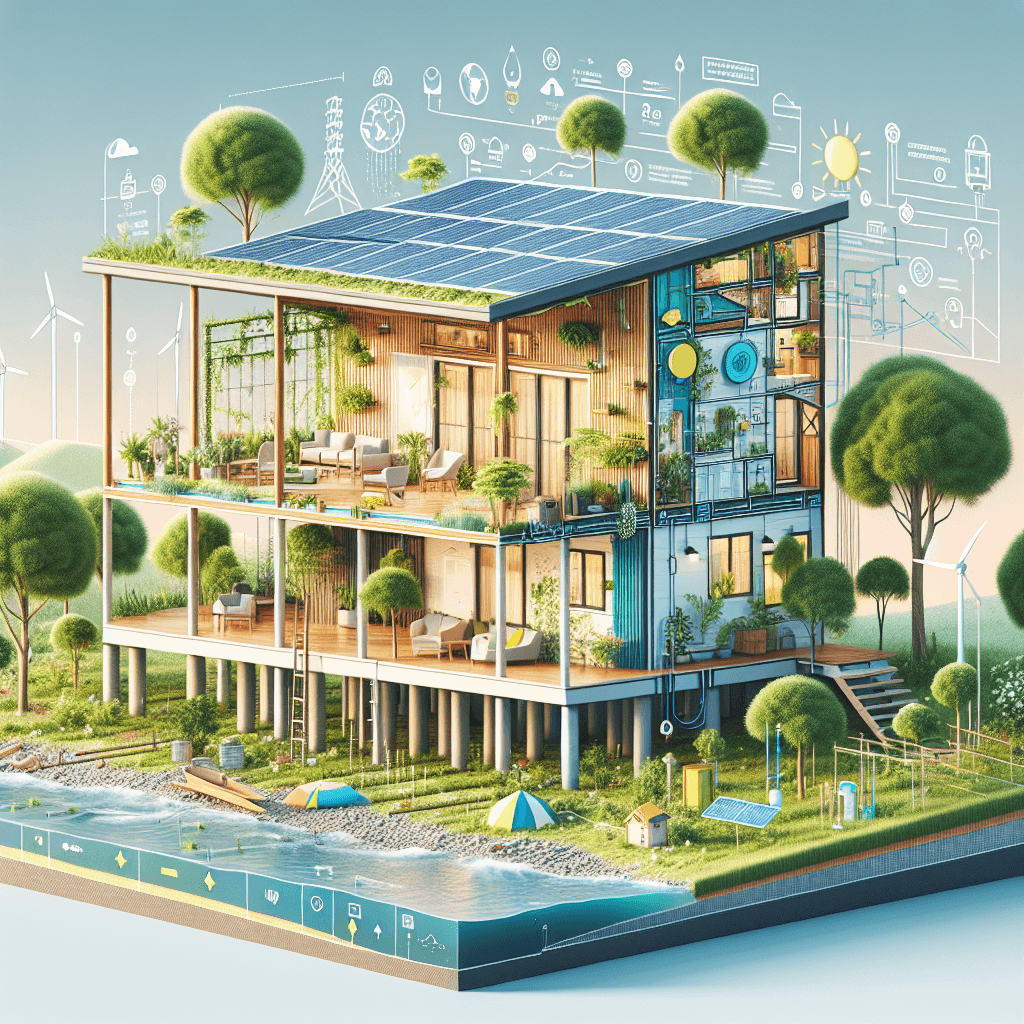
Climate-Resilient Homes: Design for a Changing World
Inquiry Framework
Question Framework
Driving Question
The overarching question that guides the entire project.How can we design climate-resilient homes that reflect diverse cultures and address the challenges of different climates around the world?Essential Questions
Supporting questions that break down major concepts.- How does climate influence the way people live in different regions of the world?
- What are the main climate challenges in specific regions?
- What features make a home climate-resilient?
- How can we design homes to be sustainable and environmentally friendly?
- How do different cultures build homes to adapt to their environment?
Standards & Learning Goals
Learning Goals
By the end of this project, students will be able to:- Students will be able to identify and describe different climate zones around the world.
- Students will be able to explain how climate influences human activities, including housing design.
- Students will be able to design a climate-resilient home for a specific region, considering both environmental challenges and cultural factors.
- Students will be able to evaluate the sustainability and environmental impact of their home design.
- Students will be able to present their home design and explain its climate-resilient features and cultural relevance.
- Students will understand the relationship between climate, culture, and sustainable building practices.
- Students will be able to use research skills to gather information about different climates, cultures, and building techniques.
- Students will be able to work collaboratively to design and present their climate-resilient home project.
- Students will demonstrate an understanding of spatial variations in climates around the world.
- Students will be able to connect climate to human decisions about food, clothing, and shelter globally.
- Students will be able to define what makes a home climate-resilient.
- Students will be able to discuss how to make home design sustainable and environmentally friendly.
- Students will be able to describe how different cultures build homes to adapt to their environment.
- Students will be able to identify and describe specific climate challenges in different regions.
- Students will understand how building materials and design can mitigate climate-related risks.
- Students will be able to compare and contrast different climate-resilient building techniques from around the world.
- Students will learn about the importance of considering cultural context in architectural design.
- Students will be able to apply their knowledge of climate science and cultural awareness to a practical design project.
- Students will develop critical thinking skills by analyzing climate challenges and evaluating design solutions.
- Students will enhance their communication skills by presenting their designs and explaining their reasoning to others.
- Students will learn about sustainability and environmental responsibility in the context of home design.
- Students will explore the intersection of geography, culture, and environmental science in the context of climate-resilient housing.
- Students will use creativity and problem-solving skills to design innovative and culturally sensitive housing solutions.
- Students will work in teams to foster collaboration and teamwork skills throughout the project.
- Students will research and learn about various cultures and their unique approaches to home building.
- Students will develop a sense of global awareness and understanding of the challenges faced by different communities around the world.
- Students will appreciate the importance of adapting to climate change and finding sustainable solutions.
- Students will use technology and digital tools to research, design, and present their projects.
- Students will develop a passion for learning and a desire to contribute to a more sustainable future.
- Students will gain confidence in their ability to solve real-world problems through creative and innovative design.
- Students will learn the importance of collaboration and effective communication in achieving common goals.
- Students will foster a sense of empathy and understanding towards different cultures and communities.
- Students will understand the concept of spatial variations in climates around the world.
- Students will recognize the relationship between climate and human activities.
- Students will inquire about how climate affects decision-making regarding such factors as food, clothing, and shelter around the world.
- Students will understand climate affects decision-making regarding such factors as food, clothing, and shelter around the world.
- Students will explore spatial variations in climates around the world.
- Students will recognize the relationship between climate and human activities and understand how climate affects decision-making regarding factors such as food, clothing, and shelter.
- Students will apply the concepts of climate resilience and cultural adaptation to real-world housing design.
- Students will explore how climate influences the design and construction of homes in different cultures.
- Students will consider the sustainability and environmental impact of their housing designs.
- Students will analyze the relationship between climate, culture, and sustainable building practices.
- Students will develop a global perspective on climate change and its impact on housing.
Teacher-Provided Standards
Entry Events
Events that will be used to introduce the project to studentsThe House of the Future
**'Future Home' Design Challenge:** Present students with a futuristic 'living' structure that has to respond to the user's needs as well as adapt to the changing environment. This activity encourages students to think creatively about how architecture can evolve to meet future climate challenges.Global Climate Crisis: A Call to Action
**Extreme Weather News Report:** Students watch a simulated news report detailing the increasing frequency and intensity of extreme weather events globally. They then brainstorm how these events impact homes and communities, setting the stage for designing climate-resilient solutions.Portfolio Activities
Portfolio Activities
These activities progressively build towards your learning goals, with each submission contributing to the student's final portfolio.Climate Zone Investigator: Region Research
Students will research and select a specific climate region around the world (e.g., desert, rainforest, arctic). They will then create a climate profile for that region, detailing its temperature ranges, precipitation levels, common weather events, and typical vegetation. This profile will serve as the foundation for understanding the challenges and opportunities for housing in that region.Steps
Here is some basic scaffolding to help students complete the activity.Final Product
What students will submit as the final product of the activityA detailed climate profile of a chosen region, including temperature ranges, precipitation levels, common weather events, and typical vegetation, presented as a written report or infographic.Alignment
How this activity aligns with the learning objectives & standardsAligns with standard 3.2.3.ER by prompting students to identify how climate affects shelter decisions. It also introduces the concept of spatial variations in climate by focusing on a specific region.Cultural Architects: Traditional Home Exploration
Students will investigate traditional housing styles in their selected climate region. They will research the types of materials used, the design features of the homes, and how these elements help the inhabitants adapt to the climate. This research will highlight the ingenuity of different cultures in responding to their environment.Steps
Here is some basic scaffolding to help students complete the activity.Final Product
What students will submit as the final product of the activityA presentation (oral, poster, or digital) showcasing traditional housing styles in the chosen climate region, including materials, design features, and climate adaptations.Alignment
How this activity aligns with the learning objectives & standardsThis activity builds upon the previous one, furthering standard 3.2.3.ER by requiring students to recognize the relationship between climate and human activities, specifically how traditional homes are adapted to climate.Future Home Designers: Climate-Resilient Creation
Based on their research, students will now design their own climate-resilient home for the selected region. They will incorporate sustainable materials, innovative design features, and cultural considerations to create a home that can withstand the challenges of the climate while minimizing environmental impact. They will need to explain how each design choice contributes to climate resilience.Steps
Here is some basic scaffolding to help students complete the activity.Final Product
What students will submit as the final product of the activityA detailed design (drawing, model, or digital rendering) of a climate-resilient home, accompanied by a written explanation of its features and how they address the climate challenges of the selected region.Alignment
How this activity aligns with the learning objectives & standardsDirectly aligns with standard 3.2.3.ER by having students design a climate-resilient home, connecting climate understanding with human decision-making about shelter. It also encourages considering spatial variations in climates.Rubric & Reflection
Portfolio Rubric
Grading criteria for assessing the overall project portfolioClimate-Resilient Home Design Rubric
Climate Profile Quality
Assesses the quality of the climate profile created by the student, focusing on its accuracy, completeness, and presentation.Climate Data Accuracy
Accuracy and thoroughness of climate data including temperature ranges, precipitation levels, common weather events, and vegetation.
Beginning
1 PointsClimate profile is incomplete or contains significant inaccuracies. Key climate data is missing or misinterpreted.
Developing
2 PointsClimate profile includes some basic climate data but lacks detail or contains minor inaccuracies. Some key climate elements are addressed, but not comprehensively.
Proficient
3 PointsClimate profile is accurate and includes detailed climate data. Temperature ranges, precipitation levels, common weather events, and typical vegetation are clearly described.
Exemplary
4 PointsClimate profile is exceptionally thorough, accurate, and insightful. It demonstrates a sophisticated understanding of the region's climate and its impact. Includes nuanced details and demonstrates synthesis of information.
Profile Clarity and Organization
Clarity and organization of the climate profile. How well is the information presented and communicated?
Beginning
1 PointsClimate profile is disorganized and difficult to understand. Information is presented in a confusing manner.
Developing
2 PointsClimate profile is somewhat organized, but there are areas where clarity could be improved. Some information may be difficult to locate or understand.
Proficient
3 PointsClimate profile is well-organized and easy to understand. Information is presented clearly and logically.
Exemplary
4 PointsClimate profile is exceptionally clear, visually appealing, and effectively communicates complex climate information. Demonstrates exceptional attention to detail and presentation.
Traditional Home Exploration
Evaluates the student's exploration of traditional housing styles in their chosen climate region, focusing on research depth and presentation effectiveness.Research Depth
Identification of traditional housing styles in the selected region. Depth of research into materials, design features, and climate adaptations.
Beginning
1 PointsResearch is minimal and lacks key details about traditional housing styles. Materials, design features, and climate adaptations are not adequately identified.
Developing
2 PointsResearch identifies some traditional housing styles, but lacks depth in explaining materials, design features, and climate adaptations. Some elements are missing or incomplete.
Proficient
3 PointsResearch is thorough and accurately identifies traditional housing styles, materials, design features, and climate adaptations.
Exemplary
4 PointsResearch is exceptionally comprehensive and insightful, demonstrating a deep understanding of the relationship between traditional housing styles and the regional climate. Includes nuanced details and insightful analysis.
Presentation Effectiveness
Effectiveness of the presentation in showcasing traditional housing styles and their adaptations to the climate.
Beginning
1 PointsPresentation is poorly organized and difficult to understand. Fails to effectively showcase traditional housing styles or their climate adaptations.
Developing
2 PointsPresentation is somewhat organized but lacks clarity in showcasing traditional housing styles and their climate adaptations. Some aspects may be unclear or missing.
Proficient
3 PointsPresentation is well-organized and effectively showcases traditional housing styles and their adaptations to the climate. Key elements are clearly presented.
Exemplary
4 PointsPresentation is exceptionally engaging, informative, and visually appealing. Demonstrates a sophisticated understanding of traditional housing styles and their climate adaptations. High level of creativity and attention to detail.
Climate-Resilient Home Design
Assesses the student's ability to design a climate-resilient home, incorporating sustainable materials, innovative features, and cultural considerations.Sustainability Integration
Integration of sustainable materials in the home design. Consideration of environmental impact and resource efficiency.
Beginning
1 PointsDesign lacks sustainable materials or consideration of environmental impact. Materials chosen are not appropriate for climate resilience or sustainability.
Developing
2 PointsDesign includes some sustainable materials, but the explanation of their environmental benefits is limited. Consideration of environmental impact is basic.
Proficient
3 PointsDesign effectively integrates sustainable materials and clearly explains their environmental benefits. Demonstrates a good understanding of resource efficiency.
Exemplary
4 PointsDesign innovatively integrates sustainable materials and demonstrates a sophisticated understanding of environmental impact and resource efficiency. Goes beyond basic requirements to explore cutting-edge sustainable solutions.
Design Innovation
Incorporation of innovative design features to enhance climate resilience (e.g., rainwater harvesting, natural ventilation, green roofs).
Beginning
1 PointsDesign lacks innovative features to enhance climate resilience. The design does not address the specific climate challenges of the region.
Developing
2 PointsDesign includes some basic features to enhance climate resilience, but their effectiveness is not well explained. The design addresses some climate challenges, but not comprehensively.
Proficient
3 PointsDesign effectively incorporates innovative features to enhance climate resilience, and their benefits are clearly explained. The design comprehensively addresses the climate challenges of the region.
Exemplary
4 PointsDesign demonstrates exceptional innovation and creativity in incorporating features to enhance climate resilience. The design anticipates future climate challenges and offers sophisticated solutions. Shows leadership in innovative design.
Cultural Integration
Consideration of cultural factors and integration of elements from traditional housing styles into the design.
Beginning
1 PointsDesign does not consider cultural factors or incorporate elements from traditional housing styles. The design is culturally insensitive or inappropriate.
Developing
2 PointsDesign includes some cultural elements, but their integration is superficial or lacks understanding of their significance. Cultural factors are acknowledged but not thoughtfully incorporated.
Proficient
3 PointsDesign thoughtfully integrates cultural elements from traditional housing styles, demonstrating an understanding of their significance and relevance.
Exemplary
4 PointsDesign seamlessly blends cultural elements with modern climate-resilient features, demonstrating exceptional sensitivity and creativity. Shows a deep understanding of cultural context and its impact on design.
Design Clarity and Detail
Clarity and detail of the home design (drawings, models, or digital renderings) and the written explanation of its features.
Beginning
1 PointsDesign is incomplete, unclear, or lacks detail. The written explanation is missing or inadequate.
Developing
2 PointsDesign is somewhat complete and clear, but lacks detail in some areas. The written explanation is basic and lacks depth.
Proficient
3 PointsDesign is detailed, clear, and well-presented. The written explanation effectively highlights the features and benefits of the design.
Exemplary
4 PointsDesign is exceptionally detailed, visually stunning, and professionally presented. The written explanation is comprehensive, insightful, and persuasive. Demonstrates mastery of design principles and communication skills.