
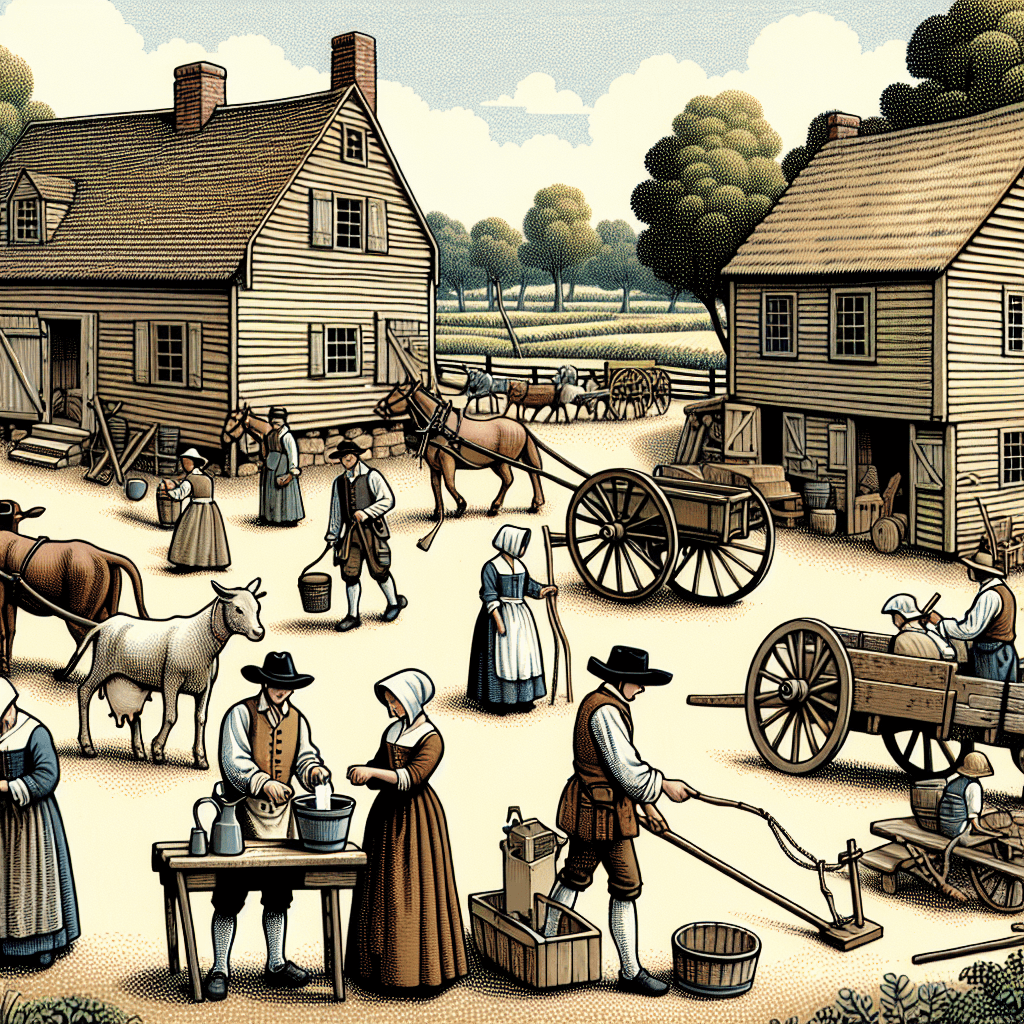
Colonial New York: Revolutionary War Living History
Inquiry Framework
Question Framework
Driving Question
The overarching question that guides the entire project.How can we create a museum exhibit to depict the diverse experiences of people living in colonial New York during the Revolutionary War, considering their daily lives, the war's impact on families, the role of geography, and changes in communication and community life?Essential Questions
Supporting questions that break down major concepts.- What was daily life like for different groups of people in colonial New York during the Revolutionary War?
- How did the Revolutionary War impact families living in New York State?
- What roles did geography and location play in how people lived and fought during the Revolutionary War in New York?
- How did communication and community change during the Revolutionary War period in New York?
- In what ways did children contribute to family and community life during the Revolutionary War?
Standards & Learning Goals
Learning Goals
By the end of this project, students will be able to:- Students will understand the daily lives of different groups of people in colonial New York during the Revolutionary War.
- Students will analyze the impact of the Revolutionary War on families living in New York State.
- Students will investigate the roles that geography and location played in the lifestyles and military strategies during the Revolutionary War in New York.
- Students will identify and describe changes in communication and community dynamics during the Revolutionary War period in New York.
- Students will explore the contributions of children to family and community life during the Revolutionary War.
New York State Social Studies Standards
Common Core Standards
Entry Events
Events that will be used to introduce the project to studentsColonial Escape Room Challenge
An immersive escape room set in a colonial NYS homestead during the revolutionary war. Students solve clues about colonial life to 'escape', each clue tied to daily activities such as farming, schooling, and trade, encouraging them to draw parallels to their current lifestyle.Message in a Bottle Discovery
On a class field trip to a local historical site, students discover a 'message in a bottle' from a child their age from the colonial period. This triggers an investigation into the differences and similarities between the student's current lives and those of their colonial counterparts.Portfolio Activities
Portfolio Activities
These activities progressively build towards your learning goals, with each submission contributing to the student's final portfolio.Colonial Character Portrait
In this activity, students will create a detailed character sketch of a fictional person living in colonial New York during the Revolutionary War. They will explore aspects such as occupation, family life, and challenges faced during this period.Steps
Here is some basic scaffolding to help students complete the activity.Final Product
What students will submit as the final product of the activityA detailed character sketch that includes a descriptive paragraph about the character's daily life and challenges.Alignment
How this activity aligns with the learning objectives & standardsAligns with 4.1 (Explain how events during the Revolutionary War impacted New York State and its inhabitants).Timeline of Change
Students will develop a timeline highlighting significant events and changes in New York during the Revolutionary War, focusing on the impact on daily life and community dynamics.Steps
Here is some basic scaffolding to help students complete the activity.Final Product
What students will submit as the final product of the activityA visual timeline illustrating significant events and changes in New York during the Revolutionary War.Alignment
How this activity aligns with the learning objectives & standardsAligns with 4.H.3 (Understand how cooperation and conflict among people influence the division and control of resources).Comparative Life Diaries
Students will write diary entries from the perspective of a colonial child, comparing and contrasting their life with modern-day experiences.Steps
Here is some basic scaffolding to help students complete the activity.Final Product
What students will submit as the final product of the activityA series of diary entries that highlight the differences and similarities between colonial and modern-day life.Alignment
How this activity aligns with the learning objectives & standardsAligns with 4.RI.9 (Integrate information from two texts on the same topic).Colonial News Broadcast
This activity involves creating and presenting a news broadcast covering a major event from the Revolutionary War, providing historical context and perspectives.Steps
Here is some basic scaffolding to help students complete the activity.Final Product
What students will submit as the final product of the activityA recorded or live news broadcast script that covers a major Revolutionary War event and its impacts.Alignment
How this activity aligns with the learning objectives & standardsAligns with 4.SL.4 (Report on a topic with appropriate facts and descriptive details).Museum Exhibit Blueprint
In the culminating activity, students will design a blueprint for a museum exhibit that depicts colonial life in New York during the Revolutionary War. This will include displays, artifacts, and informational text.Steps
Here is some basic scaffolding to help students complete the activity.Final Product
What students will submit as the final product of the activityA detailed blueprint for a museum exhibit, showcasing colonial life during the Revolutionary War with planned displays and explanatory texts.Alignment
How this activity aligns with the learning objectives & standardsAligns with 4.W.2 (Write informative/explanatory texts to examine a topic and convey ideas and information clearly).Rubric & Reflection
Portfolio Rubric
Grading criteria for assessing the overall project portfolioColonial New York Museum Exhibit Rubric
Historical Accuracy and Understanding
Assessing students' ability to research and accurately present historical facts and understanding of colonial life in New York during the Revolutionary War.Character Realism
The extent to which the student's character portrayal accurately reflects the daily life and challenges of their chosen character type during the Revolutionary War.
Exemplary
4 PointsCharacter sketch demonstrates extensive research and an insightful and authentic portrayal of daily life, showing deep understanding of historical context and challenges faced.
Proficient
3 PointsCharacter sketch is well-researched and presents a clear and realistic portrayal of colonial daily life, capturing essential elements of the period.
Developing
2 PointsCharacter sketch provides a basic portrayal of colonial life with some research evident but may lack depth or clarity.
Beginning
1 PointsCharacter sketch shows minimal research and understanding of colonial life, with limited portrayal of historical context and daily challenges.
Event Impact Analysis
Analyze and describe the impact of significant Revolutionary War events on New York's daily life and communities.
Exemplary
4 PointsTimeline includes detailed, well-researched descriptions, connections, and visuals illustrating profound understanding of events and their impacts.
Proficient
3 PointsTimeline clearly presents key events and their impact on New York's communities, using appropriate descriptions and visuals.
Developing
2 PointsTimeline highlights major events but may lack depth in analysis or visualization of impacts.
Beginning
1 PointsTimeline offers limited or unclear information about events and their impacts on communities.
Integration and Expression
The ability to integrate historical information into creative formats and effectively express insights through writing and presentations.Descriptive Writing and Communication
Effectiveness of conveying historical information through detailed, structured, and clear written communication.
Exemplary
4 PointsWriting is highly descriptive, engaging, and clear, with a strong structure that effectively conveys historical information and insights.
Proficient
3 PointsWriting is clear and structured, effectively conveying historical information and relevance to the topic.
Developing
2 PointsWriting is basic with some structure, but may lack clarity or detail in conveying historical insights.
Beginning
1 PointsWriting lacks clarity and structure, providing minimal historical information or insight.
Visual and Oral Presentation
Ability to present historical topics engagingly and informatively through visual displays or oral reports.
Exemplary
4 PointsPresentation is thoroughly planned, using visuals or scripts to engage and inform clearly, showing leadership in communication.
Proficient
3 PointsPresentation is well-organized, using visuals or scripts to inform the audience effectively.
Developing
2 PointsPresentation is organized but may lack clarity or depth in engagement and information delivery.
Beginning
1 PointsPresentation lacks organization and depth, providing minimal information or engagement.
Creativity and Innovation
Assessing students' creativity in designing and planning innovative historical presentations, such as the museum exhibit.Exhibit Design Creativity
Assess how creatively students integrate historical facts and narratives into their museum exhibit design.
Exemplary
4 PointsExhibit design demonstrates exceptional creativity, effectively integrating historical facts with innovative presentation methods.
Proficient
3 PointsExhibit design is creative and effectively integrates historical facts in a clear and engaging manner.
Developing
2 PointsExhibit design shows some creativity and basic integration of historical facts, but lacks complete engagement.
Beginning
1 PointsExhibit design shows limited creativity and minimal integration of historical information.