
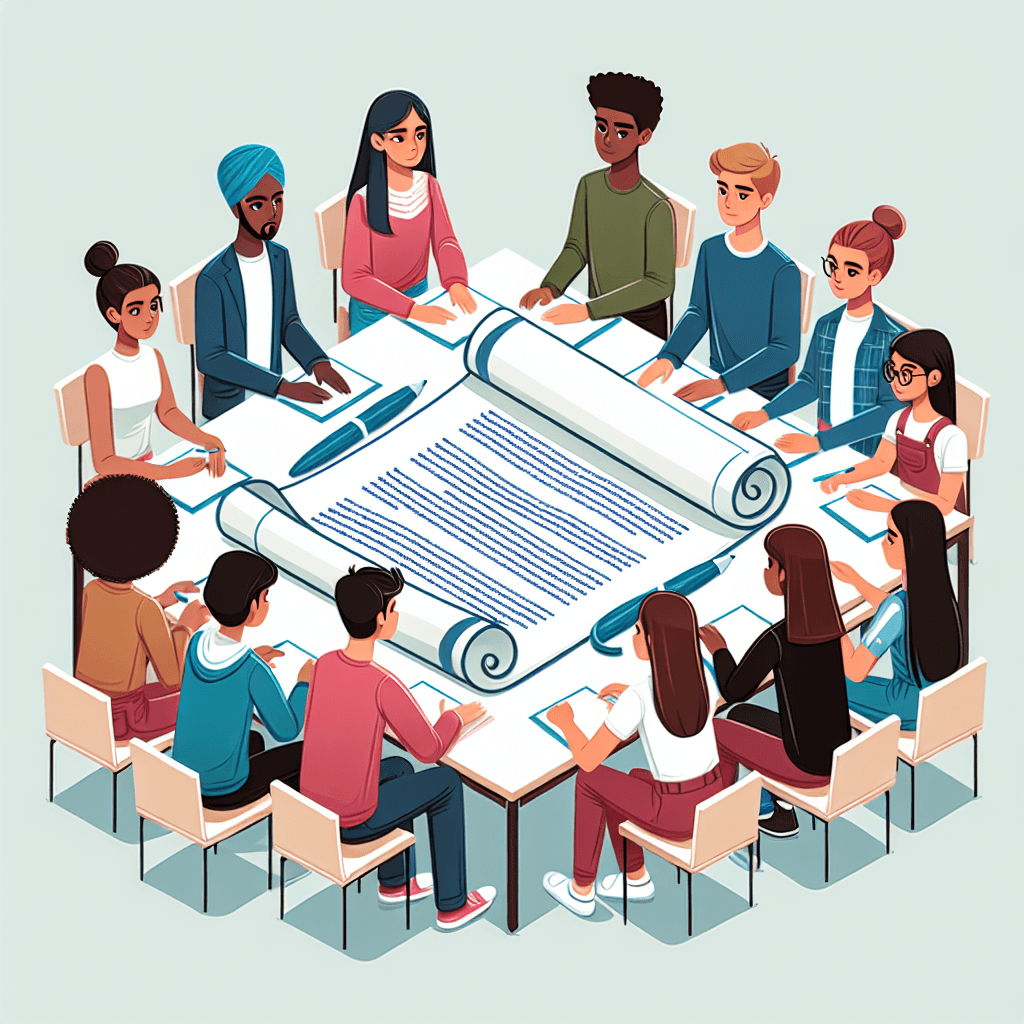
Creating Our Own Bill of Rights
Inquiry Framework
Question Framework
Driving Question
The overarching question that guides the entire project.How can we, as informed citizens, create a bill of rights that reflects the most essential rights and responsibilities for a just and democratic society, drawing inspiration from historical documents and addressing contemporary challenges to individual liberties?Essential Questions
Supporting questions that break down major concepts.- What rights are most important to citizens?
- How does a bill of rights protect individual liberties?
- What responsibilities do citizens have in a democracy?
- How can historical documents influence modern society?
Standards & Learning Goals
Learning Goals
By the end of this project, students will be able to:- I can name and explain the rights in past bills of rights, like the English Bill of Rights and the U.S. Bill of Rights.
- I can decide which rights are most important for freedom and a fair society.
- I can write my own bill of rights that deals with today's issues and fits the needs of different people.
- I can explain why my bill of rights is important, using what I know about history and the ideas behind individual rights.
Entry Events
Events that will be used to introduce the project to studentsA Letter from the Future
Students receive a 'letter from the future' detailing a world where certain rights have been eroded. They must analyze the letter, identify the missing rights, and debate their importance, connecting it to the project of creating their own bill of rights.Portfolio Activities
Portfolio Activities
These activities progressively build towards your learning goals, with each submission contributing to the student's final portfolio.Rights Recognition Report
Students will explore foundational documents like the English Bill of Rights and the U.S. Bill of Rights to identify and explain key rights. This activity builds a base understanding for later activities.Steps
Here is some basic scaffolding to help students complete the activity.Final Product
What students will submit as the final product of the activityAn individual report of rights found in a historical bill of rights, with explanations and context for each.Alignment
How this activity aligns with the learning objectives & standardsAddresses the learning goal: 'I can name and explain the rights in past bills of rights, like the English Bill of Rights and the U.S. Bill of Rights.'My Top Five Rights
Students individually decide which rights are most important to them and justify their choices in a personal essay. This activity encourages critical thinking and justification of opinions.Steps
Here is some basic scaffolding to help students complete the activity.Final Product
What students will submit as the final product of the activityA written justification for the selection of the top five rights, reflecting on different viewpoints and considering societal needs.Alignment
How this activity aligns with the learning objectives & standardsAddresses the learning goal: 'I can decide which rights are most important for freedom and a fair society.'Drafting My Own Bill of Rights
Students individually draft their own bill of rights, tailored to address contemporary issues and diverse needs, using knowledge gained in prior activities.Steps
Here is some basic scaffolding to help students complete the activity.Final Product
What students will submit as the final product of the activityAn individually written bill of rights that addresses contemporary issues and reflects the diverse needs of society.Alignment
How this activity aligns with the learning objectives & standardsAddresses the learning goal: 'I can write my own bill of rights that deals with today's issues and fits the needs of different people.'Defense of My Bill of Rights
Students will write persuasive essays defending their created bill of rights, drawing on historical context and philosophical underpinnings. Students will reflect on the entire process of creating a bill of rights.Steps
Here is some basic scaffolding to help students complete the activity.Final Product
What students will submit as the final product of the activityA persuasive essay defending the student's own bill of rights, along with a reflective journal entry on the learning process.Alignment
How this activity aligns with the learning objectives & standardsAddresses the learning goal: 'I can explain why my bill of rights is important, using what I know about history and the ideas behind individual rights.'Rubric & Reflection
Portfolio Rubric
Grading criteria for assessing the overall project portfolioCreating a Bill of Rights
Historical Understanding
Demonstrates knowledge and understanding of historical bills of rights (e.g., English Bill of Rights, U.S. Bill of Rights).Identification of Rights
Accurately identifies and explains key rights in historical documents.
Exemplary
4 PointsIdentifies and comprehensively explains a wide range of rights from historical documents, demonstrating a deep understanding of their context.
Proficient
3 PointsIdentifies and explains several key rights from historical documents, showing a good understanding of their context.
Developing
2 PointsIdentifies some rights from historical documents but struggles to explain their meaning or context fully.
Beginning
1 PointsStruggles to identify rights from historical documents and provides limited or inaccurate explanations.
Historical Context
Provides accurate and relevant historical context for the identified rights.
Exemplary
4 PointsProvides insightful and detailed historical context, demonstrating a sophisticated understanding of the rights' origins and evolution.
Proficient
3 PointsProvides accurate and relevant historical context, showing a clear understanding of the rights' origins.
Developing
2 PointsProvides some historical context, but it may be incomplete or lack relevance.
Beginning
1 PointsProvides minimal or inaccurate historical context.
Justification and Prioritization
Articulates and justifies the selection of the most important rights for a fair and free society.Selection of Key Rights
Chooses the most essential rights and provides clear justifications for their importance.
Exemplary
4 PointsSelects the most essential rights with compelling and insightful justifications, demonstrating a nuanced understanding of their impact on freedom and fairness.
Proficient
3 PointsSelects key rights and provides clear justifications for their importance, reflecting a solid understanding of their role in a free society.
Developing
2 PointsSelects some relevant rights but struggles to fully justify their importance or connect them to broader societal values.
Beginning
1 PointsStruggles to select essential rights and provides weak or unclear justifications.
Consideration of Perspectives
Considers different perspectives and societal needs in the selection and justification of rights.
Exemplary
4 PointsDemonstrates a sophisticated understanding of diverse perspectives and societal needs, integrating them seamlessly into the justification of selected rights.
Proficient
3 PointsConsiders different perspectives and societal needs when justifying the selected rights, showing a good understanding of diverse viewpoints.
Developing
2 PointsAcknowledges different perspectives and societal needs but does not fully integrate them into the justification of selected rights.
Beginning
1 PointsFails to adequately consider different perspectives and societal needs.
Bill of Rights Creation
Creates an original bill of rights that addresses contemporary issues and diverse needs.Addressing Contemporary Issues
Effectively addresses contemporary issues and challenges through the proposed rights.
Exemplary
4 PointsAddresses contemporary issues with innovative and highly relevant rights, demonstrating a deep understanding of current challenges.
Proficient
3 PointsAddresses contemporary issues with relevant and well-articulated rights, showing a good understanding of current challenges.
Developing
2 PointsAttempts to address contemporary issues, but the proposed rights may be vague or not fully relevant.
Beginning
1 PointsFails to adequately address contemporary issues.
Language and Justification
Uses clear and specific language to define each right and provides sound justifications for its inclusion.
Exemplary
4 PointsUses precise and impactful language to define each right and provides comprehensive and persuasive justifications for its inclusion.
Proficient
3 PointsUses clear and specific language to define each right and provides sound justifications for its inclusion.
Developing
2 PointsUses language that is sometimes vague or unclear and provides justifications that are not fully developed.
Beginning
1 PointsUses unclear language and provides minimal or weak justifications.
Defense and Reflection
Explains the importance of their bill of rights, referencing historical documents and philosophical ideas, and reflects on the learning process.Persuasive Argumentation
Constructs a persuasive argument for the importance of their bill of rights.
Exemplary
4 PointsConstructs a highly persuasive and compelling argument, drawing on historical documents and philosophical ideas with sophistication and originality.
Proficient
3 PointsConstructs a persuasive argument, referencing historical documents and philosophical ideas effectively.
Developing
2 PointsAttempts to construct a persuasive argument, but the connections to historical documents and philosophical ideas are weak or unclear.
Beginning
1 PointsFails to construct a persuasive argument and makes minimal connections to historical documents or philosophical ideas.
Reflective Insight
Demonstrates reflective insight on the learning process and evolution of understanding.
Exemplary
4 PointsDemonstrates profound reflective insight, articulating a clear and nuanced understanding of how their perspective on rights evolved throughout the learning process.
Proficient
3 PointsDemonstrates thoughtful reflective insight on the learning process and how their understanding of rights evolved.
Developing
2 PointsShows some reflection on the learning process, but the insights are limited or superficial.
Beginning
1 PointsProvides minimal or no reflection on the learning process.