
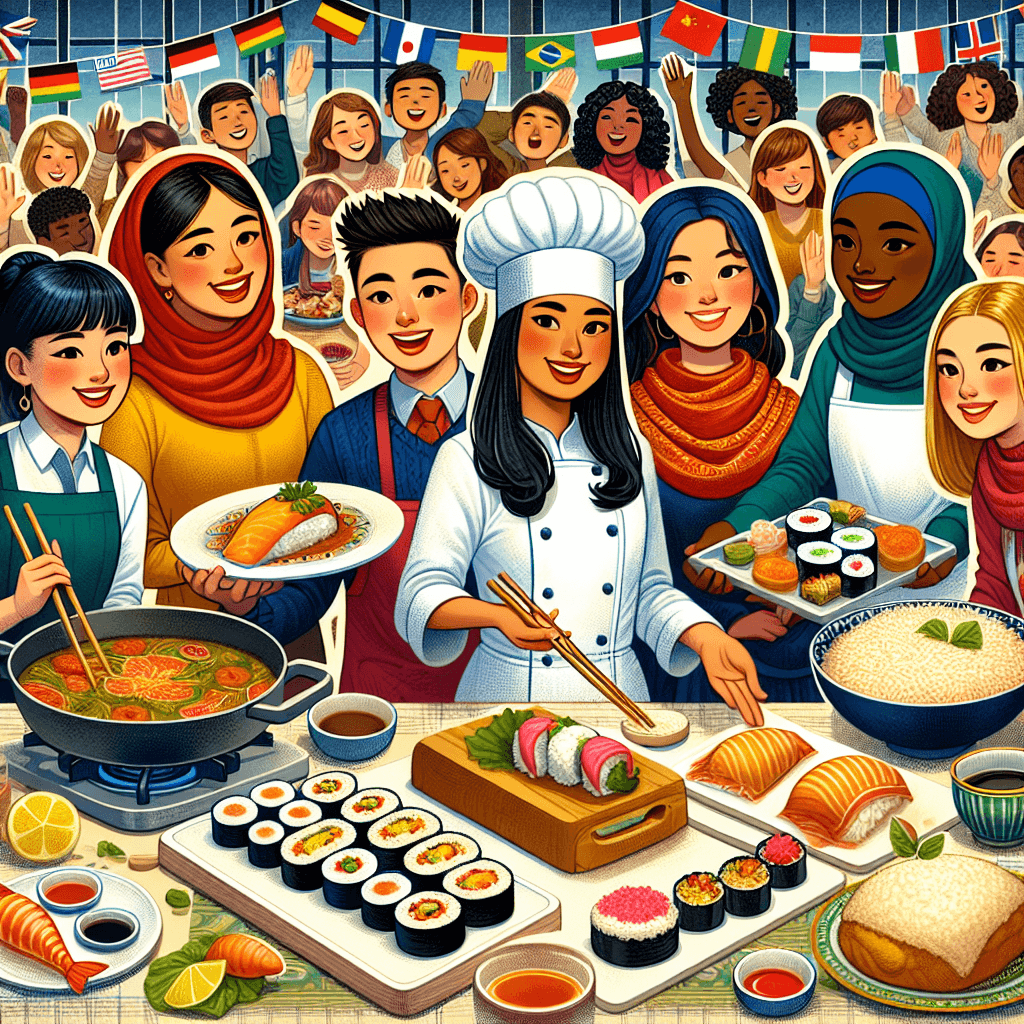
Cultural Cuisine Exchange
Inquiry Framework
Question Framework
Driving Question
The overarching question that guides the entire project.How can we design a cultural exchange program centered around food that effectively compares and contrasts the culinary traditions of Spanish-speaking cultures with another culture, highlighting the role of food in daily life, celebrations, and cultural expression, while also exploring the intersection of language and cuisine?Essential Questions
Supporting questions that break down major concepts.- How does food reflect cultural values and traditions?
- What are the similarities and differences in food preparation techniques across cultures?
- How can learning about another culture's cuisine enhance intercultural understanding?
- What is the role of food in celebrations and daily life in different cultures?
- How do language and food intersect in cultural expression?
Standards & Learning Goals
Learning Goals
By the end of this project, students will be able to:- Students will be able to compare and contrast culinary traditions of Spanish-speaking cultures with another culture, analyzing the role of food in daily life, celebrations, and cultural expression.
Entry Events
Events that will be used to introduce the project to studentsFood Fight
A 'news report' reveals a heated debate: Which culture's cuisine reigns supreme? Students choose sides and engage in a friendly debate, sparking interest in exploring the nuances of each culture's food.Portfolio Activities
Portfolio Activities
These activities progressively build towards your learning goals, with each submission contributing to the student's final portfolio.Dish Detective: A Culinary Showdown
Students will research and present a specific dish from a Spanish-speaking culture and another culture, highlighting ingredients, preparation, and cultural significance.Steps
Here is some basic scaffolding to help students complete the activity.Final Product
What students will submit as the final product of the activityA presentation (PowerPoint, poster, oral presentation) comparing and contrasting two dishes.Alignment
How this activity aligns with the learning objectives & standardsCompares culinary traditions and analyzes the role of food in daily life and cultural expression.Bilingual Bites: Designing a Cultural Menu
Students will create a bilingual menu featuring dishes from both cultures, incorporating relevant vocabulary related to food and dining.Steps
Here is some basic scaffolding to help students complete the activity.Final Product
What students will submit as the final product of the activityA bilingual menu with accurate translations and cultural descriptions.Alignment
How this activity aligns with the learning objectives & standardsExplores the intersection of language and cuisine.Fiesta Fusion: Planning a Cultural Exchange
Students will plan a hypothetical cultural exchange event featuring food from both cultures, considering appropriate timing, setting, and activities.Steps
Here is some basic scaffolding to help students complete the activity.Final Product
What students will submit as the final product of the activityA detailed event plan outlining the cultural exchange, including menu, activities, and cultural considerations.Alignment
How this activity aligns with the learning objectives & standardsFocuses on the role of food in celebrations and daily life.Culinary Crossroads: Reflections on Culture and Cuisine
Students will reflect on their learning and discuss how exploring different cuisines can broaden perspectives and promote intercultural understanding.Steps
Here is some basic scaffolding to help students complete the activity.Final Product
What students will submit as the final product of the activityA reflective essay or discussion summarizing key insights and personal growth.Alignment
How this activity aligns with the learning objectives & standardsEnhances intercultural understanding through cuisine.Rubric & Reflection
Portfolio Rubric
Grading criteria for assessing the overall project portfolioIntercambio Culinario Assessment Rubric
Cultural Analysis and Understanding
Evaluates the depth of cultural insight and comparison in the understanding of culinary traditions and cultural significance of food.Comparative Analysis
Ability to compare and contrast culinary traditions of Spanish-speaking cultures with another culture.
Exemplary
4 PointsThoroughly compares and contrasts the culinary traditions with in-depth analysis and insightful connections to cultural aspects.
Proficient
3 PointsEffectively compares and contrasts the culinary traditions with clear understanding and some cultural insights.
Developing
2 PointsProvides basic comparison and contrast with limited cultural insight.
Beginning
1 PointsStruggles to compare and contrast effectively with minimal cultural connections.
Cultural Significance
Understanding of the cultural significance and role of food in daily life and celebrations.
Exemplary
4 PointsShows exceptional understanding of cultural significance, demonstrating high-level connections to daily life and celebrations.
Proficient
3 PointsShows clear understanding of cultural significance with appropriate connections to daily life and celebrations.
Developing
2 PointsShows basic understanding of cultural significance with limited connections.
Beginning
1 PointsStruggles to demonstrate understanding of cultural significance.
Language Integration
Assesses the student's ability to effectively integrate Spanish language into their research and project deliverables.Bilingual Communication
Accuracy and effectiveness in translating and using Spanish in project components.
Exemplary
4 PointsExhibits exceptional accuracy and creativity in integrating Spanish into project work.
Proficient
3 PointsExhibits good accuracy and appropriate integration of Spanish into project work.
Developing
2 PointsAttempts to integrate Spanish with some errors and inconsistencies.
Beginning
1 PointsStruggles to effectively integrate Spanish, with numerous errors.
Creative Expression and Presentation
Evaluates the creativity, coherence, and clarity of project presentation and design.Project Presentation
Quality, creativity, and coherence of the project presentation.
Exemplary
4 PointsProject is exceptionally presented, highly creative, and coherently organized.
Proficient
3 PointsProject is well-presented, creative, and coherent.
Developing
2 PointsProject presentation shows some creativity but lacks coherence.
Beginning
1 PointsProject presentation lacks creativity and coherence.
Reflective Insights
Assesses the depth of reflective insights on the intercultural learning experience.Reflection and Insight
Depth of understanding and personal insight in the reflective component.
Exemplary
4 PointsProvides deep, insightful reflections demonstrating strong personal and cultural learning.
Proficient
3 PointsProvides clear and thoughtful reflections with good personal insights.
Developing
2 PointsProvides basic reflections with limited insight.
Beginning
1 PointsProvides minimal reflections with little personal insight.