
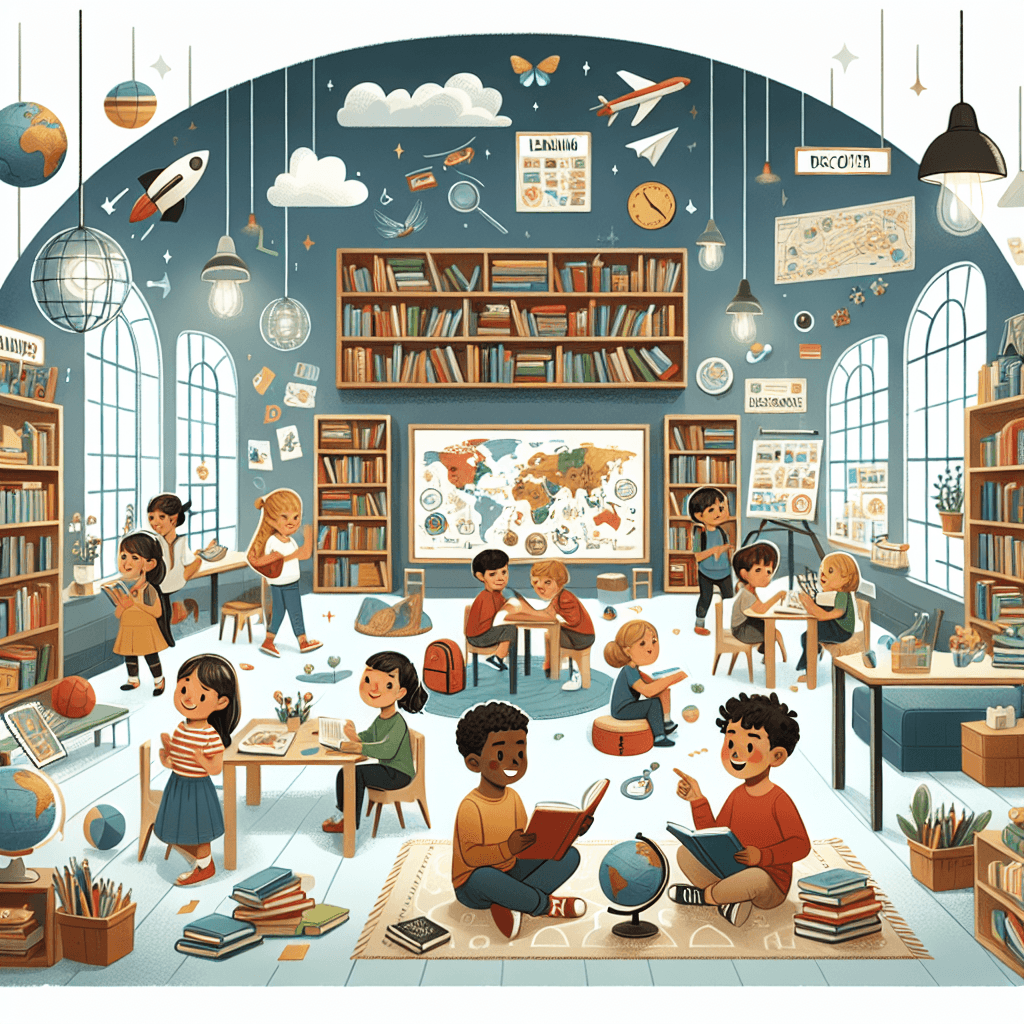
Design Our Classroom Library: A Place for Books!
Inquiry Framework
Question Framework
Driving Question
The overarching question that guides the entire project.How can we design a fun and organized classroom library and book return system that uses technology to help everyone find, enjoy, and return books easily?Essential Questions
Supporting questions that break down major concepts.- How can we organize books in a way that makes it easy for everyone to find what they are looking for?
- What makes a library space inviting and fun to use?
- How can technology help us keep track of books and who has them?
- How can we create a system for returning books so they don't get lost or damaged?
Standards & Learning Goals
Learning Goals
By the end of this project, students will be able to:- Students will design a classroom library layout that promotes organization and accessibility.
- Students will create a book return system that is easy to use and maintain.
- Students will integrate technology into the library design to track books and manage borrowing.
- Students will apply art and design principles to create an inviting and functional library space.
- Students will understand the importance of organization and responsibility in managing shared resources (books).
Entry Events
Events that will be used to introduce the project to studentsClassroom Chaos Rescue
**Classroom Chaos!** The classroom is a mess with books everywhere! The teacher dramatically declares they need the students' help to create a classroom library. This immediately establishes a need for their design skills and taps into their experience with classroom organization (or lack thereof!).Dream Library Design Challenge
**Dream Library Challenge.** Show pictures of amazing libraries around the world (or even fantastical libraries from movies/books). Challenge students to design their own 'dream classroom library,' no limits! This sparks creativity and encourages them to think big about what a library could be.Portfolio Activities
Portfolio Activities
These activities progressively build towards your learning goals, with each submission contributing to the student's final portfolio.Library Ambiance Design
Students focus on the aesthetic aspects of the library, such as color schemes, decorations, and furniture choices. They will create a mood board to visualize the desired atmosphere and design elements.Steps
Here is some basic scaffolding to help students complete the activity.Final Product
What students will submit as the final product of the activityA 'Library Mood Board' that includes color samples, images of furniture, and examples of decorations that create an inviting atmosphere.Alignment
How this activity aligns with the learning objectives & standardsLearning Goal: Students will apply art and design principles to create an inviting and functional library space.Book Return System Challenge
Students design a system for returning books to the library, considering factors like ease of use, organization, and preventing damage to books. They will create a prototype of the return system using recycled materials.Steps
Here is some basic scaffolding to help students complete the activity.Final Product
What students will submit as the final product of the activityA prototype of the book return system, made from recycled materials, along with a set of instructions for how to use it.Alignment
How this activity aligns with the learning objectives & standardsLearning Goal: Students will create a book return system that is easy to use and maintain.Library Layout Brainstorm
Students brainstorm different layouts for the classroom library, considering factors like space, accessibility, and organization. They will use simple drawings and models to represent their ideas.Steps
Here is some basic scaffolding to help students complete the activity.Final Product
What students will submit as the final product of the activityA set of initial library layout sketches, showing different arrangements of bookshelves, reading areas, and technology integration.Alignment
How this activity aligns with the learning objectives & standardsLearning Goal: Students will design a classroom library layout that promotes organization and accessibility.Rubric & Reflection
Portfolio Rubric
Grading criteria for assessing the overall project portfolioClassroom Library Design Rubric
Library Ambiance Design
Focuses on the aesthetic quality and design choices of the library ambiance mood board.Aesthetic Appeal
Demonstrates creativity and thoughtfulness in the selection of colors, images, and materials.
Exemplary
4 PointsMood board demonstrates exceptional creativity, originality, and a sophisticated understanding of design principles. Choices are highly intentional and well-justified, creating a truly unique and inspiring atmosphere.
Proficient
3 PointsMood board effectively conveys a cohesive and inviting atmosphere with thoughtful choices of colors, images, and materials.
Developing
2 PointsMood board shows some effort in selecting colors, images, and materials, but lacks cohesiveness or clear intention.
Beginning
1 PointsMood board is incomplete or lacks clear evidence of design choices. Selection of colors, images, and materials is random or irrelevant.
Explanation of Design Choices
Clearly explains the design choices and their connection to creating an inviting library space.
Exemplary
4 PointsPresentation is exceptionally clear, engaging, and insightful. Student articulates design choices with confidence and provides compelling reasons for their selections, demonstrating a deep understanding of their impact on the library environment.
Proficient
3 PointsPresentation is clear and explains the design choices effectively. Student connects choices to the goal of creating an inviting library space.
Developing
2 PointsPresentation is somewhat unclear and struggles to explain the connection between design choices and the desired atmosphere.
Beginning
1 PointsPresentation is unclear, incomplete, or does not address the design choices or their purpose.
Book Return System Design
Focuses on the functionality, usability, and construction of the book return system prototype.Functionality and Usability
Book return prototype is functional, easy to use, and protects books from damage.
Exemplary
4 PointsPrototype is exceptionally well-designed, highly functional, and demonstrates a sophisticated understanding of ergonomics and book protection. The design is innovative and exceeds expectations for ease of use and durability.
Proficient
3 PointsPrototype is functional, easy to use, and effectively protects books from damage.
Developing
2 PointsPrototype has some functionality but may be difficult to use or may not adequately protect books from damage.
Beginning
1 PointsPrototype is non-functional, difficult to use, or does not protect books from damage.
Clarity of Instructions
Instructions are clear, concise, and easy to follow.
Exemplary
4 PointsInstructions are exceptionally clear, concise, and meticulously detailed, leaving no room for ambiguity. They are presented in a visually appealing and easy-to-understand format, demonstrating a strong command of communication skills.
Proficient
3 PointsInstructions are clear, concise, and easy to follow.
Developing
2 PointsInstructions are somewhat unclear or difficult to follow.
Beginning
1 PointsInstructions are missing, incomplete, or incomprehensible.
Use of Recycled Materials
Demonstrates effective use of recycled materials.
Exemplary
4 PointsPrototype demonstrates highly creative and resourceful use of recycled materials, transforming them into a functional and aesthetically pleasing book return system. The choice of materials is thoughtful and maximizes sustainability.
Proficient
3 PointsPrototype makes good use of recycled materials.
Developing
2 PointsPrototype uses some recycled materials, but the selection or application is limited.
Beginning
1 PointsPrototype uses few or no recycled materials.
Library Layout Brainstorm
Focuses on the variety, clarity, and analysis of the library layout sketches.Understanding of Space and Organization
Layout sketches demonstrate a clear understanding of space, accessibility, and organization.
Exemplary
4 PointsSketches demonstrate an exceptional understanding of spatial relationships, accessibility principles, and organizational strategies. Layouts are innovative, well-considered, and optimized for a functional and engaging library environment.
Proficient
3 PointsLayout sketches demonstrate a clear understanding of space, accessibility, and organization.
Developing
2 PointsLayout sketches show some understanding of space, accessibility, or organization, but may be lacking in one or more areas.
Beginning
1 PointsLayout sketches are unclear or demonstrate little understanding of space, accessibility, or organization.
Number of Layout Ideas
Includes at least three distinct layout ideas.
Exemplary
4 PointsProvides four or more distinct and well-developed layout ideas, demonstrating a comprehensive exploration of design possibilities.
Proficient
3 PointsIncludes at least three distinct layout ideas.
Developing
2 PointsIncludes only two distinct layout ideas.
Beginning
1 PointsIncludes only one or no layout ideas.
Analysis of Layout Ideas
Identifies and discusses the pros and cons of each layout effectively.
Exemplary
4 PointsProvides a highly insightful and comprehensive analysis of the pros and cons of each layout, demonstrating a deep understanding of the trade-offs and considerations involved in library design. Analysis is well-reasoned and supported by clear evidence.
Proficient
3 PointsIdentifies and discusses the pros and cons of each layout effectively.
Developing
2 PointsIdentifies some pros and cons of each layout, but the discussion is superficial or incomplete.
Beginning
1 PointsFails to identify or discuss the pros and cons of each layout.