
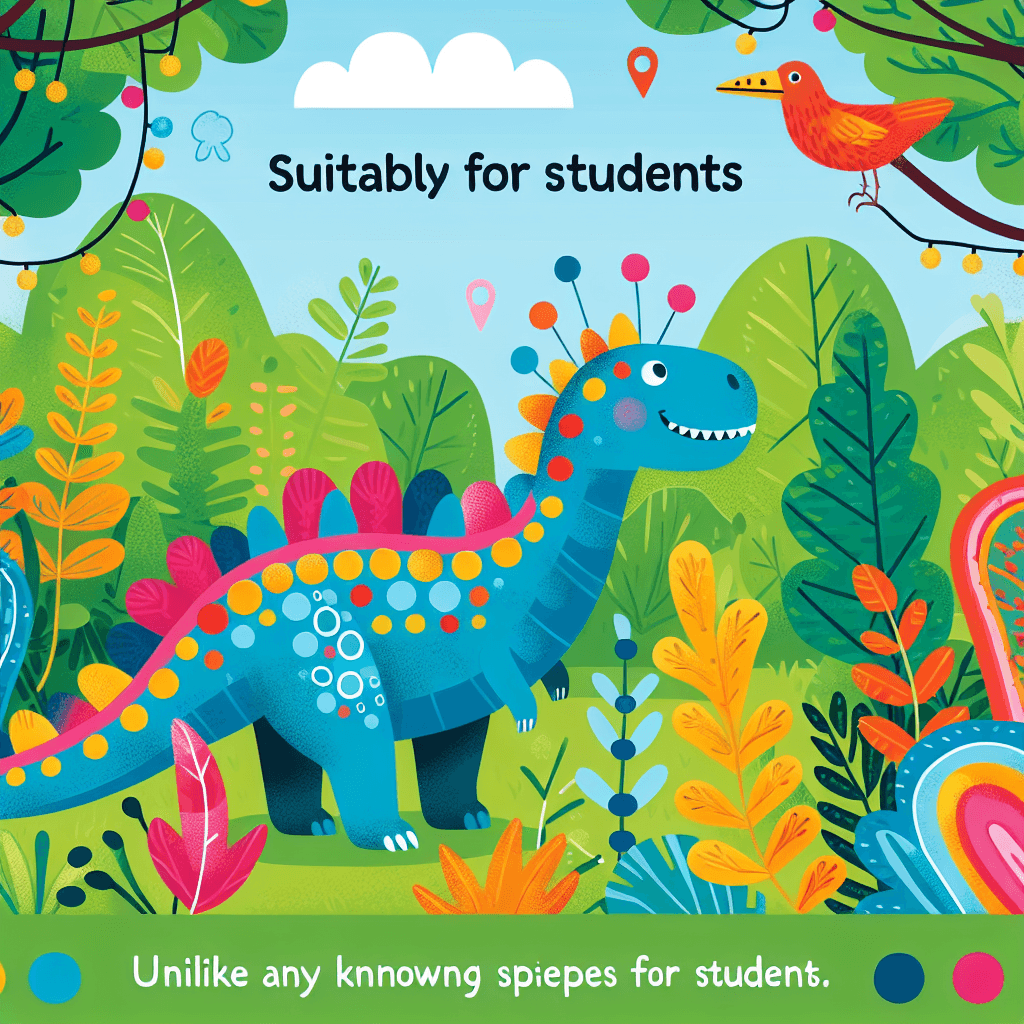
Dino-World: Create a New Dinosaur
Inquiry Framework
Question Framework
Driving Question
The overarching question that guides the entire project.If you were a paleontologist who discovered a new dinosaur, how would you describe it and its habitat so that other scientists could understand it?Essential Questions
Supporting questions that break down major concepts.- What are the different parts of an animal?
- What do animals need to survive?
- How do scientists discover new animals?
- How can we describe an animal's appearance and behavior using words?
- Where do different animals live?
Standards & Learning Goals
Learning Goals
By the end of this project, students will be able to:- Students will be able to describe the physical characteristics of a newly imagined dinosaur.
- Students will be able to explain the dinosaur's habitat and diet.
- Students will understand the role of a paleontologist and the process of discovering and describing new species.
- Students will use descriptive language to communicate scientific information about their dinosaur to others.
Entry Events
Events that will be used to introduce the project to studentsA Letter from Dinosaur Land
Students receive a letter from a fictional 'Dinosaur Land' asking for help. A new, undiscovered dinosaur has appeared, and the residents need expert advice from the students to understand it. This creates a sense of purpose and connects the project to a narrative.Portfolio Activities
Portfolio Activities
These activities progressively build towards your learning goals, with each submission contributing to the student's final portfolio.Habitat and Feast: Diorama Time!
Students determine where their dinosaur lives (habitat) and what it eats (diet). They create a mini diorama showcasing the dinosaur in its environment and include a food chain diagram illustrating what the dinosaur eats and what might eat it.Steps
Here is some basic scaffolding to help students complete the activity.Final Product
What students will submit as the final product of the activityA diorama showing the dinosaur's habitat and a food chain diagram.Alignment
How this activity aligns with the learning objectives & standardsFocuses on understanding habitat and diet, linking to survival needs.Paleo-Presentation: Announcing Your Discovery!
Students write a short report about their dinosaur, including its name, physical description, habitat, diet, and any interesting behaviors. They present their findings to the class as if they were real paleontologists.Steps
Here is some basic scaffolding to help students complete the activity.Final Product
What students will submit as the final product of the activityA written report and oral presentation about their new dinosaur.Alignment
How this activity aligns with the learning objectives & standardsAims to communicate scientific information and reinforces descriptive language.Rubric & Reflection
Portfolio Rubric
Grading criteria for assessing the overall project portfolioDinosaur Discovery Portfolio Rubric
Habitat and Diet Representation
Focuses on the accuracy and creativity of the habitat diorama and the food chain diagram.Habitat Diorama Accuracy
How well the student has created a diorama that accurately represents the dinosaur's chosen habitat, including appropriate details and environmental elements.
Exemplary
4 PointsThe diorama is exceptionally detailed and accurately represents the dinosaur's habitat, including a wide range of appropriate elements and textures. The dinosaur is seamlessly integrated into its environment.
Proficient
3 PointsThe diorama accurately represents the dinosaur's habitat with good attention to detail, including several appropriate elements. The dinosaur is well-integrated into its environment.
Developing
2 PointsThe diorama shows a basic representation of the dinosaur's habitat but lacks detail and includes only a few appropriate elements. The dinosaur's integration into the environment is not well-executed.
Beginning
1 PointsThe diorama does not adequately represent the dinosaur's habitat and lacks appropriate elements. The dinosaur appears disconnected from its environment.
Food Chain Diagram Accuracy
How effectively the student has created a food chain diagram that accurately represents the dinosaur's diet and its position within the ecosystem.
Exemplary
4 PointsThe food chain diagram is exceptionally clear, accurate, and complete, showing a comprehensive understanding of the dinosaur's diet and its relationships with other organisms in the ecosystem. The diagram demonstrates advanced knowledge of ecological concepts.
Proficient
3 PointsThe food chain diagram is clear and accurate, showing a good understanding of the dinosaur's diet and its relationships with other organisms in the ecosystem.
Developing
2 PointsThe food chain diagram is somewhat unclear or contains minor inaccuracies, showing a basic understanding of the dinosaur's diet and its relationships with other organisms in the ecosystem.
Beginning
1 PointsThe food chain diagram is unclear or inaccurate, showing a limited understanding of the dinosaur's diet and its relationships with other organisms in the ecosystem.
Presentation and Report Quality
Evaluates the clarity, detail, and scientific accuracy of the written report and the effectiveness of the oral presentation.Written Report Clarity and Detail
How well the student describes the dinosaur's physical appearance, habitat, and diet in their written report, using descriptive language and scientific terminology.
Exemplary
4 PointsThe written report provides an exceptionally detailed and vivid description of the dinosaur's physical appearance, habitat, and diet, using sophisticated descriptive language and accurate scientific terminology. Demonstrates an advanced understanding of the dinosaur's characteristics and environment.
Proficient
3 PointsThe written report provides a detailed description of the dinosaur's physical appearance, habitat, and diet, using descriptive language and accurate scientific terminology. Demonstrates a good understanding of the dinosaur's characteristics and environment.
Developing
2 PointsThe written report provides a basic description of the dinosaur's physical appearance, habitat, and diet, but lacks detail and may contain some inaccuracies in language or terminology. Demonstrates a developing understanding of the dinosaur's characteristics and environment.
Beginning
1 PointsThe written report provides a limited description of the dinosaur's physical appearance, habitat, and diet, lacking detail and containing inaccuracies in language or terminology. Demonstrates a beginning understanding of the dinosaur's characteristics and environment.
Oral Presentation Effectiveness
How effectively the student presents their dinosaur discovery to the class, including clear communication, engaging delivery, and accurate scientific information.
Exemplary
4 PointsThe oral presentation is exceptionally clear, engaging, and informative, demonstrating a deep understanding of the dinosaur and its environment. The student presents with confidence and effectively answers questions from the audience. The presentation style is captivating and demonstrates leadership.
Proficient
3 PointsThe oral presentation is clear, engaging, and informative, demonstrating a good understanding of the dinosaur and its environment. The student presents with confidence and answers questions from the audience effectively.
Developing
2 PointsThe oral presentation is somewhat unclear or lacks engagement, demonstrating a basic understanding of the dinosaur and its environment. The student may struggle to answer questions from the audience.
Beginning
1 PointsThe oral presentation is unclear, disengaging, and lacks key information, demonstrating a limited understanding of the dinosaur and its environment. The student is unable to answer questions from the audience.