
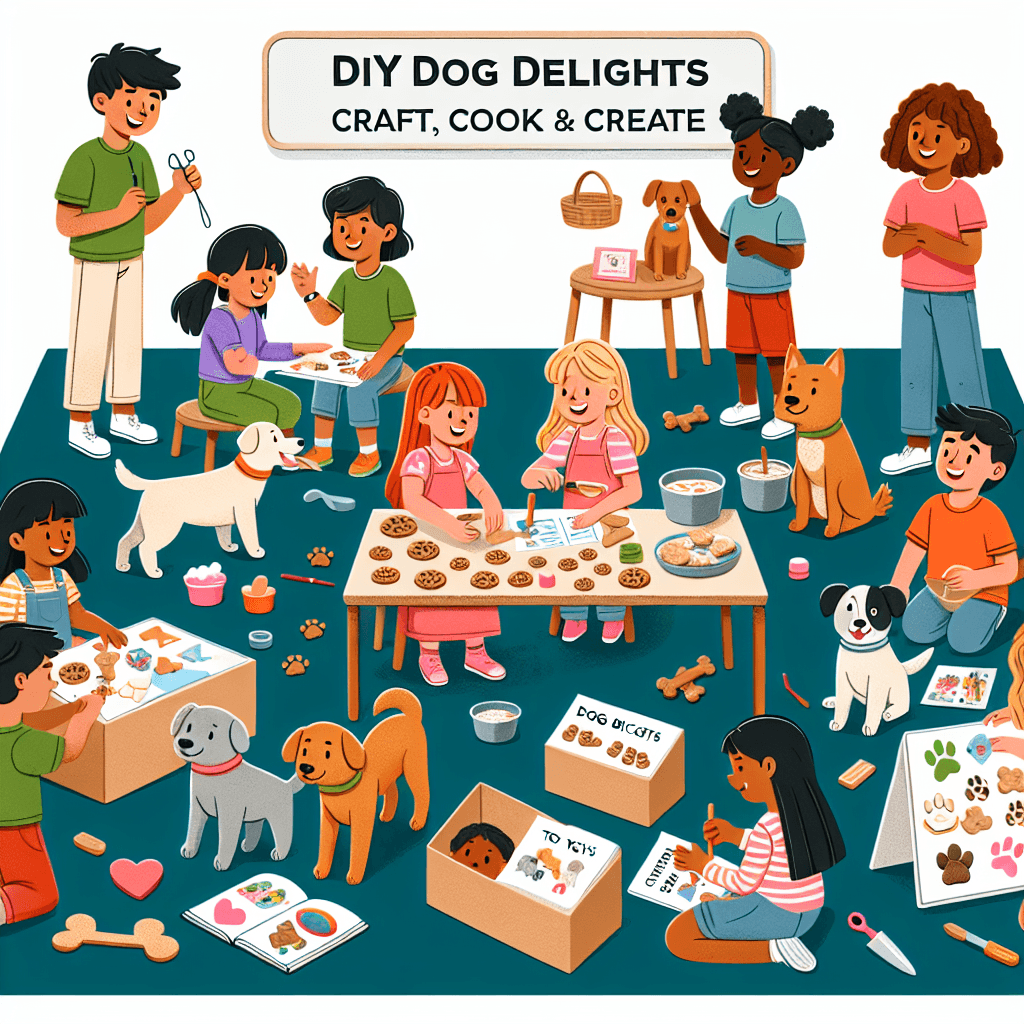
DIY Dog Delights: Craft, Cook & Create
Inquiry Framework
Question Framework
Driving Question
The overarching question that guides the entire project.How can understanding measurements, fractions, and artistic techniques help us in designing and creating tie blankets, dog treats, and dog-themed art and stories?Essential Questions
Supporting questions that break down major concepts.- How can I create a tie blanket with accurate measurements using the metric system?
- What fractions can I use to divide ingredients when making dog treats?
- How do I write and illustrate a story about dogs that is engaging and informative?
- What artistic techniques can be used to create visually appealing dog-themed art?
- How does understanding measurements and fractions enhance my ability to create various projects?
Standards & Learning Goals
Learning Goals
By the end of this project, students will be able to:- Students will be able to convert between different metric units to create accurately sized tie blankets.
- Students will learn to add and subtract fractions with unlike denominators for dividing ingredients in dog treat recipes.
- Students will develop the ability to write narratives with clear sequences, engaging details, and dialogue through creating dog stories.
- Students will explore artistic techniques to produce visually appealing and expressive dog-themed artwork.
- Students will synthesize understanding of measurements and fractions in multi-step projects, enhancing their overall problem-solving abilities.
Common Core Standards for Mathematics
Common Core Standards for English Language Arts
National Core Arts Standards
Entry Events
Events that will be used to introduce the project to studentsDog Shelter Visit
Students will kick off the project by visiting a local dog shelter, where they will learn about the different needs of the dogs. They'll interact with the animals, talk to volunteers, and jot down observations, inspiring ideas for creating blankets, treats, and stories.Guest Speaker: Canine Expert
A canine expert visits the classroom to discuss the types of blankets and treats that are beneficial to dogs, sparking curiosity about how various textures, measurements, and ingredients impact dog comfort and health.DIY Dog Treat Kitchen
Set up a DIY dog treat kitchen where students experiment with different recipes and measurements to create healthy snacks for dogs, fostering skills in fractions and metric systems while appreciating cultural food preferences.Artistic Storytelling Workshop
Conduct an artistic storytelling workshop where students use art to express their narratives about dogs they've researched or interacted with, allowing them to merge visual art techniques with descriptive writing and measurement-related challenges.Portfolio Activities
Portfolio Activities
These activities progressively build towards your learning goals, with each submission contributing to the student's final portfolio.Blanket Blueprinting Bonanza
Students will design a blueprint for their tie blankets using the metric system, ensuring accurate measurements by converting units as needed.Steps
Here is some basic scaffolding to help students complete the activity.Final Product
What students will submit as the final product of the activityA detailed blueprint of a tie blanket with metric conversions and measurements.Alignment
How this activity aligns with the learning objectives & standardsAligns with 5.MD.A.1 by focusing on converting measurement units within the metric system.Fractional Feast for Fido
Engage students in dividing ingredients into fractions to create healthy dog treats, emphasizing understanding and application of fractions.Steps
Here is some basic scaffolding to help students complete the activity.Final Product
What students will submit as the final product of the activityA batch of homemade dog treats prepared using fractional measurements.Alignment
How this activity aligns with the learning objectives & standardsSupports 5.NF.A.1 by having students add and subtract fractions with unlike denominators.Paws and Prose: Creative Canine Narratives
Students write and illustrate a narrative story inspired by their experience at the dog shelter, focusing on developing technique, details, and sequence.Steps
Here is some basic scaffolding to help students complete the activity.Final Product
What students will submit as the final product of the activityA written and illustrated story about a dog, showcasing narrative techniques and descriptive details.Alignment
How this activity aligns with the learning objectives & standardsCorresponds with CCSS.ELA-LITERACY.W.5.3 for writing narratives and CCSS.ELA-LITERACY.RL.5.2 for summarizing themes and narratives.Artistic Anatomy of a Canine
Explore artistic techniques by creating a dog-themed art piece, learning to develop and organize artistic ideas.Steps
Here is some basic scaffolding to help students complete the activity.Final Product
What students will submit as the final product of the activityAn expressive dog-themed artwork crafted using chosen techniques and mediums.Alignment
How this activity aligns with the learning objectives & standardsAligns with Anchor Standard #2 for organizing and developing artistic ideas.Rubric & Reflection
Portfolio Rubric
Grading criteria for assessing the overall project portfolioCreative Canine Creations Rubric
Measurement and Fractions
Assesses students' ability to convert measurements and manipulate fractions for practical applications.Measurement Conversion
Evaluates the accuracy and understanding of metric conversions for the crafting of tie blankets.
Exemplary
4 PointsDisplays exact conversions with complete accuracy and demonstrates understanding by explaining the process effectively to peers.
Proficient
3 PointsAccurately converts measurements with minor errors, showing clear understanding of the process.
Developing
2 PointsConverts measurements with frequent errors and demonstrates a partial understanding of conversion processes.
Beginning
1 PointsStruggles to convert measurements accurately and shows minimal understanding of metric conversions.
Fraction Application
Assesses ability to apply and manipulate fractions when preparing dog treat recipes.
Exemplary
4 PointsDemonstrates precise use of fractions, illustrating complete understanding and explaining application in recipe context.
Proficient
3 PointsEffectively uses fractions with occasional inaccuracies and shows a strong grasp of the concept.
Developing
2 PointsUses fractions with notable errors, indicating an emerging understanding of their applications.
Beginning
1 PointsRarely uses fractions correctly and has limited understanding of their application in recipes.
Narrative Writing and Artistry
Evaluates narrative writing skills, including storytelling and artistic expression through illustration.Narrative Development
Measures the ability to construct a coherent and engaging narrative sequence with descriptive details.
Exemplary
4 PointsCrafts compelling stories with rich detail, vivid dialogue, and a flawless narrative sequence.
Proficient
3 PointsDevelops clear and engaging stories with effective use of dialogue and narrative structure.
Developing
2 PointsCreates basic stories with essential elements but lacks depth and coherence in narrative structure.
Beginning
1 PointsProduces disjointed narratives with minimal details and unclear sequencing.
Artistic Expression
Assesses creativity and technique in producing dog-themed artwork.
Exemplary
4 PointsShows exceptional creativity and mastery of techniques, producing highly expressive artwork.
Proficient
3 PointsDisplays clear creativity and solid technique, resulting in effectively expressive artwork.
Developing
2 PointsPresents artwork with some creativity and basic technique, showing potential for improvement.
Beginning
1 PointsCreates art with limited creativity and technique, needing substantial development.