
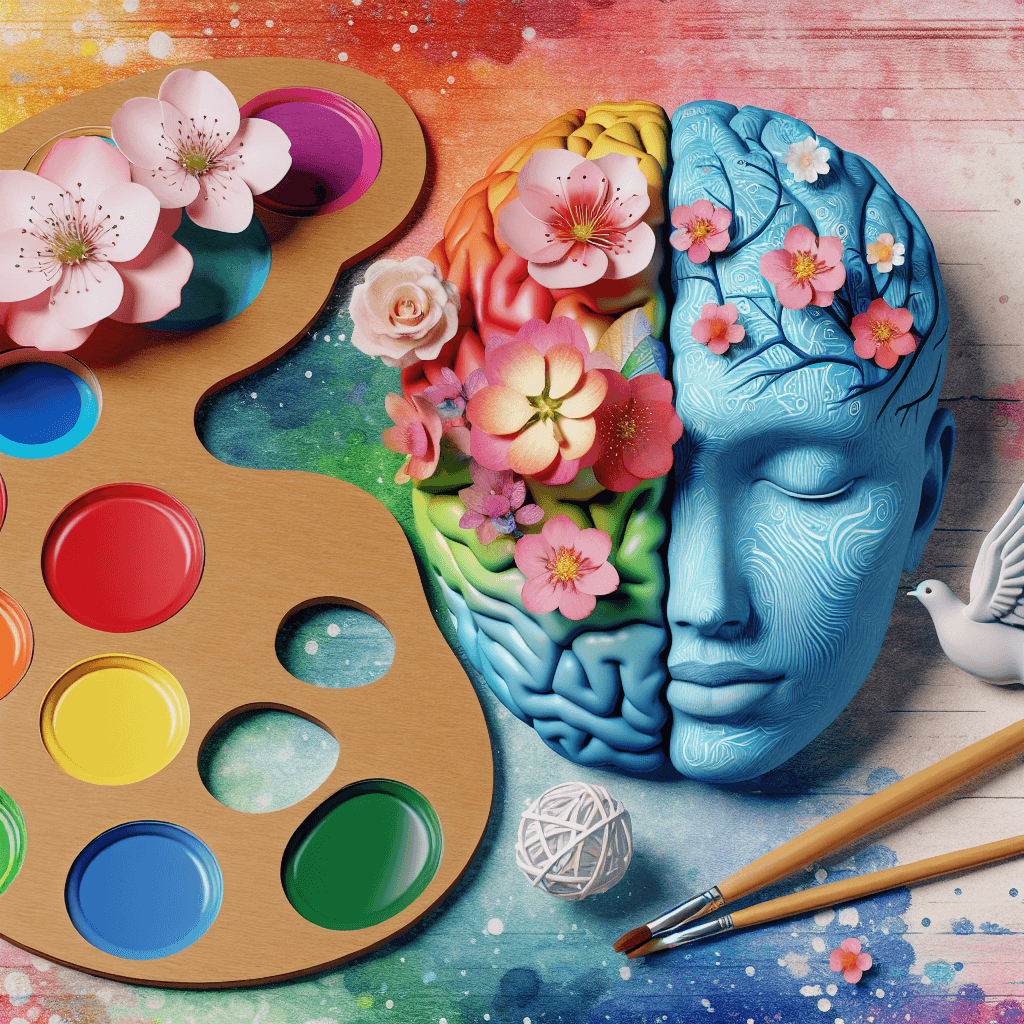
Doodles to Destress: How Art Boosts Mental Health
Inquiry Framework
Question Framework
Driving Question
The overarching question that guides the entire project.How can we prepare a community effort to understand, improve, and spread awareness about mental health through art, technology, and the environment?Essential Questions
Supporting questions that break down major concepts.- What is mental health and why is it important?
- How can art influence mental health?
- What are different forms of art that can be used to express emotions?
- What are the various mental health issues and their symptoms?
- How can technology facilitate art therapy for mental health improvement?
- What role does the environment play in influencing mental health?
- How can art be utilized to raise awareness about mental health issues in our community?
- What are simple ways to assess and improve one's mental health?
- How do various colors and shapes affect our mental and emotional state?
- What are some famous artworks that highlight mental health themes and what can we learn from them?
Standards & Learning Goals
Learning Goals
By the end of this project, students will be able to:- Students will understand the concept of mental health and its significance through multidisciplinary perspectives.
- Students will explore and analyze how art can be used as a tool for expressing emotions and raising awareness about mental health.
- Learners will investigate scientific principles underlying mental health, including causes and symptoms.
- Participants will develop skills in utilizing technology to create artworks that focus on mental health themes.
- Students will examine the role of the environment in mental health and ways to improve it.
- Learners will engage with community to create a collaborative project promoting mental health awareness.
- Participants will reflect on famous artworks related to mental health and draw lessons from these pieces.
Arts Education Standards
Science Standards
English Language Arts Standards
Health Education Standards
Technology Education Standards
Environmental Science Standards
Entry Events
Events that will be used to introduce the project to studentsMindful Art Gallery
Transform the classroom into an interactive art gallery where each piece of art embodies a different emotion. Students walk around, reflect on how each piece makes them feel, and choose one that speaks to them as they start their journey into exploring how art impacts mental health.Portfolio Activities
Portfolio Activities
These activities progressively build towards your learning goals, with each submission contributing to the student's final portfolio.Canvas of Well-being
Students explore how different forms of art can convey emotions and influence mental states, aligning with the Arts Education Standards (ART-08.1).Steps
Here is some basic scaffolding to help students complete the activity.Final Product
What students will submit as the final product of the activityAn individual art piece reflecting a specific emotion and a presentation explaining its emotional impact.Alignment
How this activity aligns with the learning objectives & standardsAlignment with ART-08.1, focusing on artistic expression of emotions.मानसिक स्वास्थ्य विज्ञान की खोज (Exploration of Mental Health Science)
This activity involves students understanding the scientific basis of mental health, including its importance and impact, aligning with the Science Standards (SCI-08.2).Steps
Here is some basic scaffolding to help students complete the activity.Final Product
What students will submit as the final product of the activityA group presentation summarizing scientific findings on mental health.Alignment
How this activity aligns with the learning objectives & standardsAlignment with SCI-08.2, covering scientific basis of mental health.तकनीक और कला चिकित्सा (Tech and Art Therapy)
Students learn to utilize technology in creating art for mental health awareness, aligning with Technology Education Standards (TECH-08.5).Steps
Here is some basic scaffolding to help students complete the activity.Final Product
What students will submit as the final product of the activityA digital artwork on mental health awareness, showcased in a virtual gallery.Alignment
How this activity aligns with the learning objectives & standardsAlignment with TECH-08.5, focusing on using technology for art creation.सामुुदायिक कला पहल (Community Art Initiative)
Engage students in creating art to promote community mental health awareness, aligning with Health Education Standards (HLTH-08.4).Steps
Here is some basic scaffolding to help students complete the activity.Final Product
What students will submit as the final product of the activityA community art project displayed publicly to raise mental health awareness.Alignment
How this activity aligns with the learning objectives & standardsAlignment with HLTH-08.4, focusing on community initiatives for mental health awareness.पर्यावरणीय रंगस्पर्श (Environmental Hue Impact)
Students analyze how environmental colors and shapes affect mental well-being, aligning with Environmental Science Standards (ES-08.6).Steps
Here is some basic scaffolding to help students complete the activity.Final Product
What students will submit as the final product of the activityA visual report on the effects of environmental colors and shapes on mental well-being.Alignment
How this activity aligns with the learning objectives & standardsAlignment with ES-08.6, focusing on environmental impact on mental health.Rubric & Reflection
Portfolio Rubric
Grading criteria for assessing the overall project portfolioArt and Mental Health Portfolio Rubric
Artistic Expression and Emotional Impact
Evaluates the student's ability to convey emotions through art and explain its impact on mental health.Emotion Conveyance
Measures how effectively the student's art piece conveys an emotion.
Exemplary
4 PointsThe art piece uniquely and powerfully conveys a complex emotion, showing sophistication and depth in artistic expression.
Proficient
3 PointsThe art piece effectively conveys a clear emotion, showing thorough understanding and use of artistic techniques.
Developing
2 PointsThe art piece conveys a general sense of emotion, but lacks depth or clarity in expression.
Beginning
1 PointsThe art piece minimally conveys emotion, with limited or unclear artistic expression.
Presentation of Art
Assesses the clarity and insightfulness of the student's presentation explaining the emotional representation in their art.
Exemplary
4 PointsThe presentation is clear, insightful, and provides comprehensive analysis of the emotional impact of the art piece.
Proficient
3 PointsThe presentation is clear and provides a solid analysis of the emotional impact of the art piece.
Developing
2 PointsThe presentation provides a basic explanation of the emotional impact of the art piece, but lacks depth or clarity.
Beginning
1 PointsThe presentation lacks clarity or fails to adequately explain the emotional impact of the art piece.
Scientific Understanding of Mental Health
Evaluates the student's ability to research, understand, and present scientific concepts related to mental health.Research and Understanding
Measures the depth of student's research and understanding of mental health issues and their scientific basis.
Exemplary
4 PointsThe student demonstrates a thorough and nuanced understanding of mental health issues and their scientific foundations.
Proficient
3 PointsThe student demonstrates a clear and accurate understanding of mental health issues and their scientific foundations.
Developing
2 PointsThe student demonstrates a basic understanding of mental health issues, but with some inaccuracies or omissions.
Beginning
1 PointsThe student demonstrates minimal understanding of mental health issues, with significant inaccuracies or omissions.
Group Presentation Skills
Assesses the effectiveness and cohesion of the group presentation summarizing their scientific findings.
Exemplary
4 PointsThe presentation is highly effective, cohesive, and engages the audience with clear and comprehensive findings.
Proficient
3 PointsThe presentation is effective and presents clear findings, though with minor lapses in cohesion or audience engagement.
Developing
2 PointsThe presentation conveys basic findings but lacks cohesion or effective audience engagement.
Beginning
1 PointsThe presentation is unclear and lacks cohesive findings or audience engagement.
Technology and Art Creation
Evaluates the student's use of technology as a tool for creating art focused on mental health themes.Innovative Use of Technology
Assesses creativity and proficiency in using technology to create art.
Exemplary
4 PointsThe student utilizes technology in innovative and sophisticated ways, creating art that is engaging and thematically strong.
Proficient
3 PointsThe student effectively utilizes technology, creating art that is thematically strong.
Developing
2 PointsThe student uses technology in basic ways to create art, but lacks creativity or thematic strength.
Beginning
1 PointsThe student minimally uses technology, with limited creativity or thematic relevance in the art.
Digital Artwork Presentation
Evaluates the effectiveness of presenting the digital artwork in a virtual gallery setting.
Exemplary
4 PointsThe virtual presentation is highly engaging, with clear communication of the art's mental health theme.
Proficient
3 PointsThe virtual presentation is clear and effectively communicates the art's mental health theme.
Developing
2 PointsThe virtual presentation communicates the mental health theme, but lacks engagement or clarity.
Beginning
1 PointsThe virtual presentation is unclear or fails to effectively communicate the mental health theme.
Community Engagement and Initiative
Evaluates the student's participation and effectiveness in community art initiatives focused on mental health.Role Fulfillment and Initiative
Assesses how well the student fulfilled their assigned role and showed initiative in the community project.
Exemplary
4 PointsThe student excelled in their role, demonstrating exceptional initiative and contribution to the project.
Proficient
3 PointsThe student fulfilled their role effectively, contributing significantly to the project.
Developing
2 PointsThe student partially fulfilled their role, contributing to some aspects of the project.
Beginning
1 PointsThe student minimally fulfilled their role, with limited contribution or initiative.
Public Impact and Awareness
Measures the effectiveness of the community project in raising mental health awareness.
Exemplary
4 PointsThe project achieved widespread impact, successfully raising awareness about mental health issues.
Proficient
3 PointsThe project effectively raised awareness about mental health issues, with some impact.
Developing
2 PointsThe project raised some awareness, but had limited impact.
Beginning
1 PointsThe project had minimal impact on raising awareness about mental health issues.
Analysis of Environmental Influences
Evaluates the student's understanding of how environmental factors influence mental health through colors and shapes.Environmental Analysis
Measures the depth of analysis in understanding the psychological impact of colors and shapes.
Exemplary
4 PointsThe analysis is in-depth, showing a comprehensive understanding of environmental influences on mental health.
Proficient
3 PointsThe analysis is clear and demonstrates a good understanding of environmental influences.
Developing
2 PointsThe analysis shows basic understanding but lacks depth.
Beginning
1 PointsThe analysis is minimal and does not demonstrate clear understanding.
Visual Report Presentation
Assesses the clarity and comprehensiveness of the visual report on environmental impacts.
Exemplary
4 PointsThe visual report is highly comprehensive, clear, and effectively communicates the findings.
Proficient
3 PointsThe visual report is clear and communicates the findings well.
Developing
2 PointsThe visual report communicates findings but lacks clarity or comprehensiveness.
Beginning
1 PointsThe visual report is unclear and does not effectively communicate the findings.