
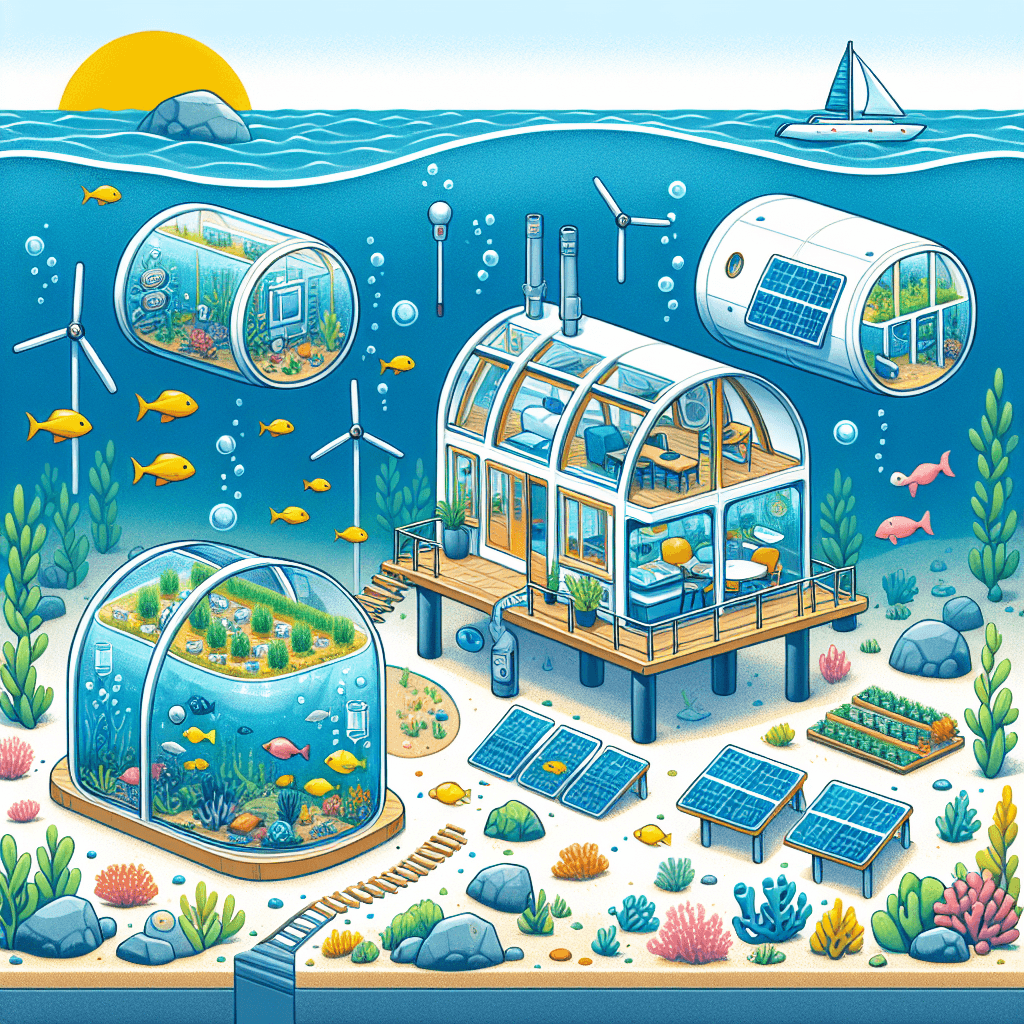
Dream Habitat: Design Sustainable Ocean Homes
Inquiry Framework
Question Framework
Driving Question
The overarching question that guides the entire project.How can we design a sustainable ocean habitat for endangered marine animals that addresses the impacts of climate change and human involvement while ensuring their survival and thriving in the future?Essential Questions
Supporting questions that break down major concepts.- What does 'habitat' mean and why is it important for marine animals?
- How does climate change impact the ocean and the animals that live in it?
- What are some endangered marine animals and how do they rely on their ocean habitats?
- How can we design solutions to protect endangered marine animals and their habitats?
- What role do humans play in affecting marine environments and how can we contribute positively?
Standards & Learning Goals
Learning Goals
By the end of this project, students will be able to:- Students will understand the concept of habitats and why they are important for marine animals.
- Students will explore the effects of climate change on ocean environments and marine life.
- Students will identify endangered marine animals and their specific habitat needs.
- Students will design and propose solutions for sustainable ocean habitats for endangered species.
- Students will evaluate the role of humans in affecting and protecting marine environments.
NGSS
Common Core Standards
Entry Events
Events that will be used to introduce the project to studentsVirtual Dive Experience
Students embark on a virtual reality tour of various ocean environments, from coral reefs to the icy waters of the Arctic, meeting the marine animals that inhabit them. This immersive experience encourages questions about habitat preservation and introduces the concept of human impact on these environments.Portfolio Activities
Portfolio Activities
These activities progressively build towards your learning goals, with each submission contributing to the student's final portfolio.Habitat Architects
Engage students in designing a sustainable ocean habitat to protect and support endangered marine species.Steps
Here is some basic scaffolding to help students complete the activity.Final Product
What students will submit as the final product of the activityA collaboratively designed model or sketch of a sustainable ocean habitat with explanatory brief.Alignment
How this activity aligns with the learning objectives & standardsAligns with 3-ESS3-1 (Design solutions for climate impacts) and CCSS.ELA-LITERACY.W.3.7 (Research projects in design).Rubric & Reflection
Portfolio Rubric
Grading criteria for assessing the overall project portfolioSustainable Ocean Habitat Design Rubric
Understanding of Habitats and Species
Assessment of student's grasp of habitat concepts and knowledge of species needs in relation to climate change and endangered status.Conceptual Understanding
Measures the depth of understanding of what habitats are and why they are crucial for marine animals' survival.
Exemplary
4 PointsDemonstrates an in-depth understanding of ocean habitats and clearly articulates why they are essential for marine species' survival, utilizing rich examples and terminology.
Proficient
3 PointsShows a thorough understanding of ocean habitats and communicates their importance for marine species with relevant examples.
Developing
2 PointsExhibits a basic understanding of ocean habitats with some connection to marine species' needs.
Beginning
1 PointsShows limited understanding of habitats and their relation to marine life, with minimal examples.
Impact of Climate Change on Marine Life
Evaluates awareness and understanding of how climate change affects ocean environments and marine animals.
Exemplary
4 PointsProvides a comprehensive explanation of climate change impacts on specific marine animals and their habitats, supported by evidence from research.
Proficient
3 PointsDescribes climate change effects on marine habitats and species sufficiently, with supportive details.
Developing
2 PointsIdentifies basic climate change effects on marine environments with some examples.
Beginning
1 PointsMentions climate change impacts on marine life without detailed connections or examples.
Design and Innovation
Evaluates creativity and practicality in designing a sustainable habitat that accommodates species needs and addresses climate challenges.Creative and Practical Design Solutions
Assesses the originality and realism of the habitat design, including adaptability and use of sustainable materials.
Exemplary
4 PointsPresents an innovative and well-reasoned habitat design featuring adaptive strategies and eco-friendly materials, demonstrating exceptional creativity and problem-solving.
Proficient
3 PointsProposes a practical habitat design with creative elements, incorporating sustainable practices and materials.
Developing
2 PointsOffers a basic habitat design with limited creative solutions, using some sustainable materials.
Beginning
1 PointsProvides a simplistic habitat design lacking innovative or sustainable features.
Research and Presentation Skills
Assessment of ability to conduct research, synthesize information, and present findings clearly and effectively.Research and Evidence Use
Evaluates the use of research to inform design decisions and the ability to back claims with appropriate evidence.
Exemplary
4 PointsConducts thorough research, utilizing multiple sources to inform design and supports all claims with robust evidence.
Proficient
3 PointsConducts effective research with some variety in sources and mostly supports claims with evidence.
Developing
2 PointsDemonstrates incomplete research with limited sources, providing partial support for claims.
Beginning
1 PointsShows minimal research with lacking or insufficiently linked evidence to claims.
Clarity and Collaboration in Presentation
Measures the effectiveness of communication in presenting the design and the ability to collaborate with peers.
Exemplary
4 PointsPresents findings clearly with excellent articulation and visual aids; shows leadership and effective teamwork.
Proficient
3 PointsCommunicates design rationale clearly and works well with others, contributing constructively to the group.
Developing
2 PointsPresents ideas with variable clarity and participates in group efforts with moderate contribution.
Beginning
1 PointsProvides unclear presentation with minimal collaboration and contribution to discussions.