
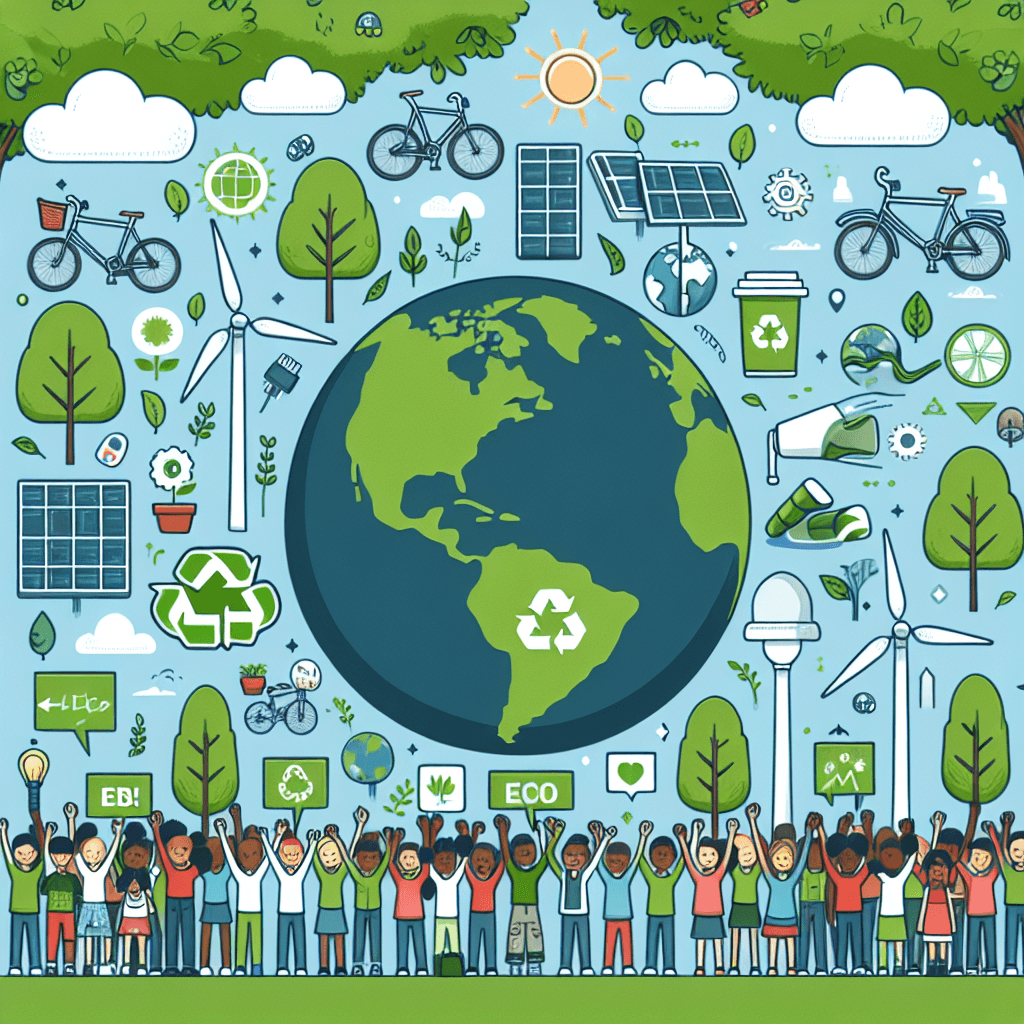
Eco-Action: Design a Greenhouse Gas Reduction Campaign
Inquiry Framework
Question Framework
Driving Question
The overarching question that guides the entire project.How can we, as environmental scientists and activists, design and implement a campaign to significantly reduce greenhouse gas emissions, minimize carbon footprints, and mitigate the effects of global warming in our community and beyond?Essential Questions
Supporting questions that break down major concepts.- What are the primary sources of greenhouse gas emissions in our community and globally?
- How does the greenhouse effect work, and what role does it play in regulating Earth's temperature?
- What is a carbon footprint, and how can individuals and communities measure and reduce their impact?
- What are the potential consequences of unchecked greenhouse gas emissions and global warming on ecosystems and human societies?
- What are some viable strategies and technologies for reducing greenhouse gas emissions and transitioning to a low-carbon economy?
- How can we effectively communicate the urgency of climate action and motivate individuals and communities to take meaningful steps?
- What are the obstacles to reducing greenhouse gas emissions, and how can we overcome them through policy, technology, and individual action?
Standards & Learning Goals
Learning Goals
By the end of this project, students will be able to:- Students will be able to identify and analyze the primary sources of greenhouse gas emissions at local and global scales.
- Students will be able to explain the greenhouse effect and its impact on Earth's temperature.
- Students will be able to assess and reduce personal and community carbon footprints.
- Students will be able to evaluate the consequences of global warming on ecosystems and human societies.
- Students will be able to design and propose strategies for reducing greenhouse gas emissions and transitioning to a low-carbon economy.
- Students will be able to develop and implement communication strategies to advocate for climate action.
- Students will be able to analyze the obstacles to reducing greenhouse gas emissions and propose solutions through policy, technology, and individual action.
Entry Events
Events that will be used to introduce the project to studentsGlobal Warming 'Trial'
Students participate in a mock trial where they prosecute (or defend) major contributors to greenhouse gas emissions (e.g., industries, governments). This entry event promotes critical thinking about responsibility, accountability, and the complexities of addressing climate change on a global scale.Portfolio Activities
Portfolio Activities
These activities progressively build towards your learning goals, with each submission contributing to the student's final portfolio.Greenhouse Gas Detective: Source Identification
Students will investigate and identify the primary sources of greenhouse gas emissions in their community and globally. This activity lays the groundwork for understanding the scope and sources of the problem they aim to address in their campaign.Steps
Here is some basic scaffolding to help students complete the activity.Final Product
What students will submit as the final product of the activityAn infographic or chart detailing the primary sources of greenhouse gas emissions at the local and global levels, with cited sources.Alignment
How this activity aligns with the learning objectives & standardsAddresses the learning goal: 'Students will be able to identify and analyze the primary sources of greenhouse gas emissions at local and global scales.'The Greenhouse Effect: Unveiled
Students will create a model or presentation to explain the greenhouse effect and its impact on Earth's temperature. This activity ensures they have a solid understanding of the scientific principles underlying global warming.Steps
Here is some basic scaffolding to help students complete the activity.Final Product
What students will submit as the final product of the activityA physical or digital model of the greenhouse effect, accompanied by a presentation explaining its scientific principles.Alignment
How this activity aligns with the learning objectives & standardsAddresses the learning goal: 'Students will be able to explain the greenhouse effect and its impact on Earth's temperature.'Carbon Footprint Calculator: Assess Your Impact
Students will calculate their personal and/or their school's carbon footprint and identify strategies for reducing it. This activity makes the abstract concept of carbon emissions tangible and empowers students to take action.Steps
Here is some basic scaffolding to help students complete the activity.Final Product
What students will submit as the final product of the activityA report detailing the calculated carbon footprint, analysis of contributing factors, and a list of actionable strategies for reduction.Alignment
How this activity aligns with the learning objectives & standardsAddresses the learning goal: 'Students will be able to assess and reduce personal and community carbon footprints.'Global Warming's Ripple Effect: Consequence Analysis
Students will investigate and present on the potential consequences of global warming on specific ecosystems and human societies. This activity helps students understand the real-world impacts of climate change and the urgency of addressing it.Steps
Here is some basic scaffolding to help students complete the activity.Final Product
What students will submit as the final product of the activityA presentation, report, or multimedia project detailing the potential consequences of global warming on a specific ecosystem or human society.Alignment
How this activity aligns with the learning objectives & standardsAddresses the learning goal: 'Students will be able to evaluate the consequences of global warming on ecosystems and human societies.'Campaign Blueprint: Strategy Design
Students will develop a comprehensive campaign strategy for reducing greenhouse gas emissions and transitioning to a low-carbon economy in their community or beyond. This activity requires them to synthesize their knowledge and apply it to a real-world problem.Steps
Here is some basic scaffolding to help students complete the activity.Final Product
What students will submit as the final product of the activityA detailed campaign blueprint outlining the goals, strategies, action plan, and resource requirements for reducing greenhouse gas emissions and transitioning to a low-carbon economy.Alignment
How this activity aligns with the learning objectives & standardsAddresses the learning goal: 'Students will be able to design and propose strategies for reducing greenhouse gas emissions and transitioning to a low-carbon economy.'Voices for Change: Communication & Advocacy
Students will create and implement a communication strategy to advocate for climate action, targeting a specific audience (e.g., local government, school administration, community members).Steps
Here is some basic scaffolding to help students complete the activity.Final Product
What students will submit as the final product of the activityA portfolio of communication materials designed to advocate for climate action, along with a plan for dissemination and evaluation.Alignment
How this activity aligns with the learning objectives & standardsAddresses the learning goal: 'Students will be able to develop and implement communication strategies to advocate for climate action.'Overcoming Obstacles: Solution Proposal
Students will analyze the obstacles to reducing greenhouse gas emissions and propose solutions through policy, technology, and individual action. This activity encourages critical thinking and problem-solving skills.Steps
Here is some basic scaffolding to help students complete the activity.Final Product
What students will submit as the final product of the activityA report outlining the identified obstacles to reducing greenhouse gas emissions, analysis of their causes, and proposed solutions through policy, technology, and individual action.Alignment
How this activity aligns with the learning objectives & standardsAddresses the learning goal: 'Students will be able to analyze the obstacles to reducing greenhouse gas emissions and propose solutions through policy, technology, and individual action.'Rubric & Reflection
Portfolio Rubric
Grading criteria for assessing the overall project portfolioEnvironmental Action Campaign Rubric
Scientific Understanding
Demonstrates understanding of the science behind greenhouse gas emissions and global warming.Greenhouse Gas Sources
Identifies and analyzes primary sources of greenhouse gas emissions.
Exemplary
4 PointsDemonstrates a comprehensive understanding of local and global greenhouse gas sources, providing detailed data and analysis.
Proficient
3 PointsIdentifies and analyzes the major local and global greenhouse gas sources with supporting evidence.
Developing
2 PointsIdentifies some local and global greenhouse gas sources but lacks detailed analysis.
Beginning
1 PointsStruggles to identify local and global greenhouse gas sources.
Greenhouse Effect
Explains the greenhouse effect and its impact on Earth's temperature.
Exemplary
4 PointsProvides a sophisticated explanation of the greenhouse effect, including the roles of different gases and feedback mechanisms.
Proficient
3 PointsClearly explains the greenhouse effect and its impact on Earth's temperature.
Developing
2 PointsShows a basic understanding of the greenhouse effect, but the explanation is incomplete.
Beginning
1 PointsStruggles to explain the greenhouse effect.
Analytical & Problem-Solving Skills
Demonstrates ability to analyze the problem, assess impact, and propose viable strategies.Carbon Footprint Assessment
Assesses personal or community carbon footprint and identifies reduction strategies.
Exemplary
4 PointsConducts a thorough carbon footprint assessment, identifies key contributing factors, and proposes innovative and practical reduction strategies.
Proficient
3 PointsCalculates carbon footprint, identifies contributing factors, and suggests actionable reduction strategies.
Developing
2 PointsAttempts to calculate carbon footprint but lacks detailed analysis or practical reduction strategies.
Beginning
1 PointsStruggles to calculate carbon footprint or identify reduction strategies.
Consequence Analysis
Evaluates the consequences of global warming on ecosystems and human societies.
Exemplary
4 PointsProvides a comprehensive and nuanced analysis of the consequences of global warming on specific ecosystems and human societies, supported by strong evidence.
Proficient
3 PointsPresents a clear overview of the consequences of global warming on ecosystems and human societies.
Developing
2 PointsIdentifies some consequences of global warming but lacks detailed evidence or analysis.
Beginning
1 PointsStruggles to identify consequences of global warming.
Obstacle Solutions
Analyzes obstacles to reducing greenhouse gas emissions and proposes solutions.
Exemplary
4 PointsDemonstrates a deep understanding of the obstacles to reducing greenhouse gas emissions and proposes innovative, well-reasoned solutions at policy, technological, and individual levels.
Proficient
3 PointsIdentifies obstacles to reducing greenhouse gas emissions and suggests solutions through policy, technology, and individual action.
Developing
2 PointsLists some obstacles to reducing greenhouse gas emissions but lacks detailed solutions.
Beginning
1 PointsStruggles to identify obstacles or propose solutions.
Campaign Design & Communication
Demonstrates ability to design a comprehensive campaign and communicate effectively.Strategy Design
Designs and proposes strategies for reducing greenhouse gas emissions and transitioning to a low-carbon economy.
Exemplary
4 PointsDevelops a detailed and innovative campaign blueprint with specific, measurable, achievable, relevant, and time-bound (SMART) goals and actionable strategies.
Proficient
3 PointsCreates a comprehensive campaign strategy with clear goals, strategies, and action plan.
Developing
2 PointsProposes a basic campaign strategy but lacks detailed goals or action plan.
Beginning
1 PointsStruggles to develop a campaign strategy.
Communication & Advocacy
Develops and implements communication strategies to advocate for climate action.
Exemplary
4 PointsCreates compelling and targeted communication materials, using a variety of channels, and outlines a clear plan for dissemination and evaluation.
Proficient
3 PointsDevelops and implements communication strategies to advocate for climate action, targeting a specific audience.
Developing
2 PointsCreates some communication materials but lacks a clear strategy or target audience.
Beginning
1 PointsStruggles to create communication materials or develop a strategy.