
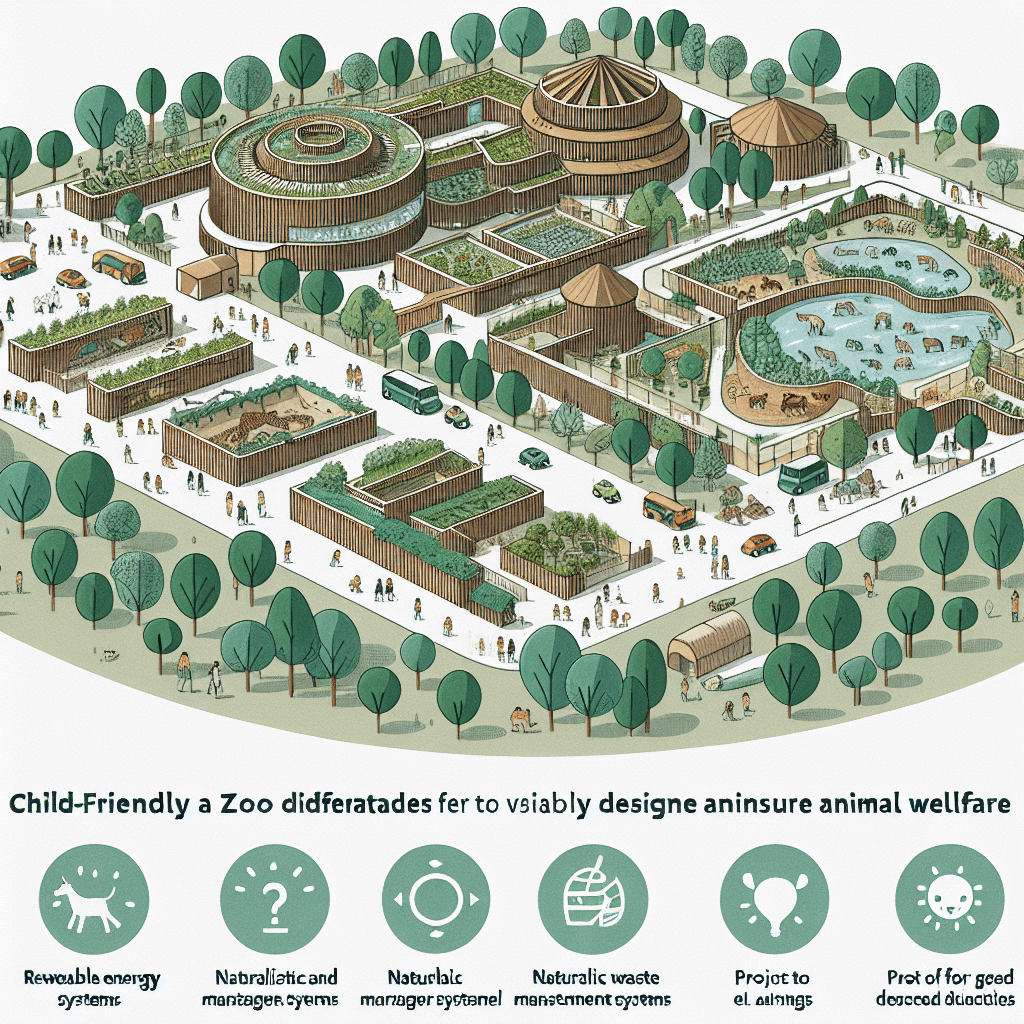
Eco-Friendly Zoo Design: Habitats for Happy Animals
Inquiry Framework
Question Framework
Driving Question
The overarching question that guides the entire project.How can we design an eco-friendly zoo that meets the needs of different animals while protecting them and educating visitors?Essential Questions
Supporting questions that break down major concepts.- How can we design a habitat that meets the needs of a specific animal?
- How do different animals depend on their habitats?
- How can we build structures that are safe for animals and visitors?
- How can we use math to measure and plan our zoo habitats?
- How can we use recycled materials to build our zoo?
- How can we describe the animals and their habitats using descriptive language?
Standards & Learning Goals
Learning Goals
By the end of this project, students will be able to:- Identify the basic needs of animals (food, water, shelter, space).
- Design a habitat that meets the needs of a specific animal.
- Understand how different animals depend on their habitats.
- Use math to measure and plan zoo habitats.
- Build structures that are safe for animals and visitors using recycled materials.
- Use descriptive language to describe animals and their habitats.
- Classify animals into groups based on their similarities.
- Explain how zoo design can protect animals and educate visitors.
- Understand the concept of an eco-friendly design and its benefits.
- Develop problem-solving and collaboration skills through group work and design challenges.
- Communicate design ideas effectively through drawings, models, and presentations.
- Apply knowledge of animal adaptations to habitat design.
- Learn about different types of ecosystems and their importance.
- Explore the use of sustainable materials in construction.
- Analyze the impact of human activities on animal habitats.
- Practice measurement and data analysis skills through habitat planning.
- Develop research skills by gathering information about animal needs and habitats.
- Use critical thinking skills to evaluate and improve zoo designs.
- Foster empathy and respect for animals and their environments.
- Connect classroom learning to real-world applications in zoo design.
- Explore the roles of zookeepers, conservationists, and other professionals in animal care and environmental protection.
- Develop an understanding of the importance of biodiversity and conservation.
- Learn about the ethical considerations involved in keeping animals in captivity.
- Compare and contrast different zoo designs and their effectiveness.
- Examine the challenges and opportunities of creating sustainable zoos in urban environments.
- Design educational exhibits to inform visitors about animal behavior and conservation efforts.
- Create a plan for managing resources and waste in the zoo.
- Evaluate the economic and social impacts of zoos on local communities.
- Explore the use of technology in zoo design and animal management.
- Develop a sense of personal responsibility for protecting animals and their habitats.
- Encourage lifelong learning and curiosity about the natural world.
- Promote collaboration and teamwork among students.
- Foster creativity and innovation in design thinking.
- Enhance problem-solving and critical-thinking skills.
- Develop effective communication and presentation skills.
- Increase student engagement and motivation through hands-on learning experiences.
- Provide opportunities for students to apply their knowledge and skills in a meaningful context.
- Promote student ownership of learning and project outcomes.
- Develop a deeper understanding of the interconnectedness of living things.
- Cultivate a sense of wonder and appreciation for the diversity of life on Earth.
- Encourage students to become responsible and informed citizens who advocate for animal welfare and environmental protection.
- Facilitate interdisciplinary learning across math, science, and language arts.
- Create a positive and supportive learning environment where students can take risks and learn from their mistakes.
- Provide differentiated instruction to meet the needs of all learners.
- Assess student learning through a variety of methods, including observation, participation, and project presentations.
- Celebrate student accomplishments and share their work with the wider community.
- Establish clear expectations and guidelines for student behavior and project completion.
- Provide regular feedback and support to students throughout the project.
- Encourage students to reflect on their learning and identify areas for improvement.
- Promote self-directed learning and independent inquiry.
- Create a culture of collaboration and mutual respect in the classroom.
- Foster a sense of community and shared purpose among students.
- Connect the project to relevant real-world issues and current events.
- Provide opportunities for students to interact with experts and professionals in the field.
- Celebrate diversity and inclusivity in the classroom and in the zoo design.
- Encourage students to think critically about the social and ethical implications of their designs.
- Promote a growth mindset and a belief in the power of learning.
- Cultivate a passion for lifelong learning and a desire to make a positive impact on the world.
- Facilitate student leadership and decision-making in the project.
- Provide opportunities for students to showcase their talents and creativity.
- Encourage students to challenge assumptions and question conventional wisdom.
- Promote a sense of humor and playfulness in the learning environment.
- Create a safe and supportive space for students to express their ideas and opinions.
- Celebrate the unique contributions of each student to the project.
- Foster a sense of wonder and awe at the complexity and beauty of the natural world.
- Encourage students to connect with nature and develop a sense of stewardship for the environment.
- Promote a culture of continuous improvement and innovation in the classroom.
- Create a learning environment that is both challenging and rewarding for students.
- Provide opportunities for students to collaborate with other classrooms and schools.
- Encourage students to share their knowledge and expertise with others.
- Promote a global perspective and an understanding of different cultures and perspectives.
- Celebrate the diversity of life on Earth and the importance of preserving it.
- Foster a sense of responsibility for the well-being of all living things.
- Encourage students to become advocates for animal welfare and environmental protection.
- Promote a culture of peace and understanding in the world.
- Create a learning environment that is transformative and empowering for students.
- Provide opportunities for students to develop their full potential and achieve their dreams.
- Encourage students to become leaders and change-makers in their communities.
- Promote a more just and sustainable world for all.
- Create a world where all living things can thrive.
- Design a zoo that is both educational and entertaining for visitors.
- Create a zoo that is accessible and inclusive for all members of the community.
- Design a zoo that is economically viable and sustainable.
- Create a zoo that is a source of pride and inspiration for the community.
- Design a zoo that is a model for other zoos around the world.
- Create a zoo that is a legacy for future generations.
Teacher-Provided Standards
Entry Events
Events that will be used to introduce the project to studentsBlueprint Rescue
Students receive a mysterious package containing blueprints for a new zoo exhibit, but crucial parts are missing or flawed. They must investigate animal habitats and needs to complete the designs, turning them into junior zoo architects.Portfolio Activities
Portfolio Activities
These activities progressively build towards your learning goals, with each submission contributing to the student's final portfolio.Animal Group Explorers
Students will research different animal groups (mammals, birds, reptiles, amphibians, fish, insects) and identify common characteristics within each group. They will create visual aids to represent each group.Steps
Here is some basic scaffolding to help students complete the activity.Final Product
What students will submit as the final product of the activityA chart or poster illustrating different animal groups with labeled characteristics and examples of animals within each group.Alignment
How this activity aligns with the learning objectives & standardsAligns with classifying animals based on similarities (SCI-123) and introduces the basic needs of animals.Habitat Designers
Students choose an animal and design a habitat that meets its specific needs (food, water, shelter, space). They will create a model of the habitat and label the key features.Steps
Here is some basic scaffolding to help students complete the activity.Final Product
What students will submit as the final product of the activityA model of an animal habitat with labeled features and a written description of how the habitat meets the animal’s needs.Alignment
How this activity aligns with the learning objectives & standardsCovers SCI-123 (classifying animals), focuses on designing habitats meeting specific animal needs, and using descriptive language.Eco-Architects
Students use math to measure and plan their zoo habitats, focusing on using recycled materials to build structures that are safe for animals and visitors.Steps
Here is some basic scaffolding to help students complete the activity.Final Product
What students will submit as the final product of the activityA scaled plan of a zoo habitat using mathematical measurements and a proposal detailing the use of recycled materials.Alignment
How this activity aligns with the learning objectives & standardsBuilds on previous activities by incorporating mathematical concepts (measuring and planning) and sustainable materials. It aligns with SCI-123 by requiring students to consider the classification of animals within their habitats.Zoo Exhibit Designers
Students combine their knowledge and skills from the previous activities to design an eco-friendly zoo exhibit that educates visitors about animal behavior and conservation efforts.Steps
Here is some basic scaffolding to help students complete the activity.Final Product
What students will submit as the final product of the activityA comprehensive design plan for an eco-friendly zoo exhibit, including a model, scaled plan, proposal for recycled materials, and educational signage.Alignment
How this activity aligns with the learning objectives & standardsIntegrates all previous skills to design an eco-friendly zoo exhibit, focusing on educating visitors. Aligns with SCI-123 by emphasizing the importance of classifying animals and understanding their needs in the zoo environment.Rubric & Reflection
Portfolio Rubric
Grading criteria for assessing the overall project portfolioEco-Friendly Zoo Design Assessment Rubric
Animal Group Classification
Evaluation of how well students classify animals into groups and describe their characteristics.Understanding Animal Groups
Measures the student's ability to classify animals into the correct groups and explain their characteristics.
Exemplary
4 PointsStudent classifies animals accurately into all major groups and provides detailed explanations of each group's characteristics, demonstrating a sophisticated understanding.
Proficient
3 PointsStudent accurately classifies most animals into their correct groups, providing clear explanations of each group's characteristics.
Developing
2 PointsStudent classifies some animals correctly, with partial explanations of group characteristics, showing an emerging understanding.
Beginning
1 PointsStudent struggles to classify animals correctly and provides minimal explanations, indicating initial understanding.
Visual Representation
Assesses the quality and clarity of the visual aids created to represent animal groups.
Exemplary
4 PointsVisual aid is creatively designed with clear labels and comprehensive examples, providing extensive information about animal groups.
Proficient
3 PointsVisual aid is well-organized with clear labels and examples, accurately representing animal groups.
Developing
2 PointsVisual aid includes labels and examples with some organization issues, partially representing animal groups.
Beginning
1 PointsVisual aid lacks clarity and organization with few labels and examples, inadequately representing animal groups.
Habitat Design and Model Construction
Evaluates the design and construction of an animal habitat model, considering the needs of the selected animal and usage of recycled materials.Design Alignment with Animal Needs
Measures how well the habitat design meets the specific needs of the chosen animal.
Exemplary
4 PointsDesigned habitat comprehensively meets all needs of the chosen animal, with innovative and thoughtful features.
Proficient
3 PointsHabitat design meets most of the needs of the chosen animal with effective features.
Developing
2 PointsHabitat meets some needs of the chosen animal with few effective features.
Beginning
1 PointsHabitat design lacks alignment with the animal's needs and features minimal consideration.
Use of Recycled Materials
Assesses the creativity and effectiveness of using recycled materials in habitat construction.
Exemplary
4 PointsUses recycled materials resourcefully to enhance habitat functionality and aesthetic, demonstrating innovative use.
Proficient
3 PointsUses recycled materials effectively, contributing to the habitat's functionality and aesthetics.
Developing
2 PointsIncorporates recycled materials with limited effectiveness in enhancing the habitat.
Beginning
1 PointsMinimal use of recycled materials contributing little to habitat effectiveness.
Mathematical Application in Habitat Planning
Analyzes the precision and correctness of mathematical measurements and the creation of scaled plans for zoo habitats.Accuracy of Mathematical Measurements
Evaluates the precision and accuracy of the measurements taken and used in the habitat model and plan.
Exemplary
4 PointsMathematical measurements are precise and consistently accurate, reflecting thorough understanding and application.
Proficient
3 PointsMeasurements are accurate and effectively applied with minor errors.
Developing
2 PointsMeasurements are partially accurate with several noticeable errors affecting the plan.
Beginning
1 PointsMeasurements lack accuracy and contain significant errors, hindering effective planning.
Creation of Scaled Plan
Evaluates the quality of the scaled habitat plan created using mathematical principles.
Exemplary
4 PointsScaled plan is detailed, accurate, and creatively demonstrates a thorough understanding of mathematical principles.
Proficient
3 PointsScaled plan is clear and generally accurate, demonstrating good understanding of mathematical concepts.
Developing
2 PointsScaled plan shows basic understanding but lacks some accuracy and detail.
Beginning
1 PointsScaled plan is unclear with significant inaccuracies, reflecting limited understanding of mathematical scaling.
Presentation and Communication Skills
Assesses the effectiveness of students' presentation of their zoo designs and ability to communicate ideas clearly.Clarity of Presentation
Measures the student's ability to clearly communicate their design ideas and plans.
Exemplary
4 PointsPresentation is exceptionally clear, engaging, and comprehensive, effectively communicating all required information.
Proficient
3 PointsPresentation is clear and informative, effectively communicating most key points.
Developing
2 PointsPresentation is partially clear and informative, with some key points missing or unclear.
Beginning
1 PointsPresentation lacks clarity, organization, and omits many key points, reflecting minimal planning.
Educational Signage and Descriptions
Evaluates the content quality and effectiveness of educational materials created for the zoo exhibit.
Exemplary
4 PointsEducational materials are well-researched, accurately written, and provide educational depth and insight into animal behavior and conservation.
Proficient
3 PointsEducational materials are clear, accurate, and informative, effectively supporting the exhibit.
Developing
2 PointsEducational materials are informative but occasionally unclear or lacking depth.
Beginning
1 PointsEducational materials are unclear, inaccurate, and lack sufficient information, minimizing educational impact.