
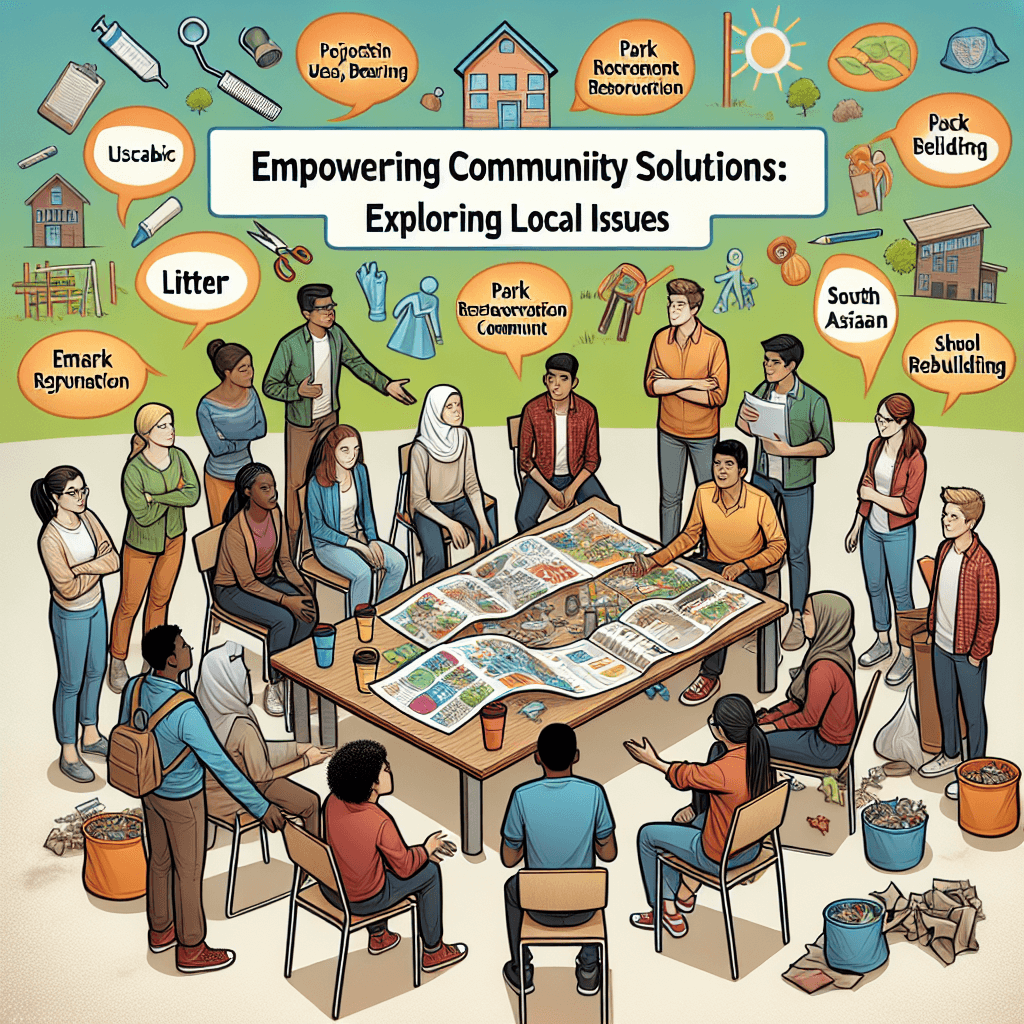
Empowering Community Solutions: Exploring Local Issues
Inquiry Framework
Question Framework
Driving Question
The overarching question that guides the entire project.How do the government, economy, history, and geography of Reading, Berks County, and Southeastern Pennsylvania shape the way people live, work, and make decisions in our community today?Essential Questions
Supporting questions that break down major concepts.- What are the main functions of local government in our community and how do they influence the way we live?
- How do elections impact our community, and why are they important?
- What are the key resources, wants, and needs in our community, and how do they affect our daily lives?
- Who are considered as consumers and producers in our community, and what goods do they exchange or produce?
- What are the physical characteristics of Reading, Berks County, and Southeastern Pennsylvania, and how do these affect daily life?
- How do the population, culture, and settlement patterns in our community shape our local economy and politics?
- What impact have individuals and groups from Pennsylvania had on the social, political, cultural, and economic development of our community?
- In what ways do historical events and decisions continue to influence our community today?
Standards & Learning Goals
Learning Goals
By the end of this project, students will be able to:- Students will be able to explain the role and importance of local government functions and processes, including elections, in shaping community life.
- Students will understand and articulate the principles and ideals that shape local government and how these principles influence decision-making and community standards.
- Students will identify and analyze the community's key resources, wants, and needs to propose feasible solutions to local issues.
- Students will recognize the roles of consumers and producers in their local economy and how goods and services flow within the community.
- Students will describe the physical and human characteristics of Reading, Berks County, and Southeastern Pennsylvania and assess their impact on daily life and decision-making.
- Students will evaluate the social, political, cultural, and economic contributions of individuals and groups in Pennsylvania, relating these to potential community improvements.
- Students will distinguish between fact and opinion, assess multiple points of view, and utilize primary sources to form well-reasoned project proposals addressing community challenges.
Common Core Standards
Entry Events
Events that will be used to introduce the project to studentsCommunity Leaders' Time Capsule
Students are presented with a time capsule that contains letters from historic community leaders alongside objects symbolizing their contributions. Analyzing these items reveals the impact of historical decisions and challenges students to envision future societal needs and their roles as emerging community leaders.Role-Playing Town Hall Meeting
Simulation of a town hall meeting in which students will receive role cards, each describing a community stakeholder's perspective on a local issue. They'll need to debate and propose solutions, learning firsthand about democracy, justice, and equality through the lens of local issues, guiding them toward contextual research and community engagement.Portfolio Activities
Portfolio Activities
These activities progressively build towards your learning goals, with each submission contributing to the student's final portfolio.Election Exploration Adventure
In this activity, students explore the purpose and importance of elections within their community. They will take on the role of researchers to investigate how elections have shaped local government and why they're crucial for democracy.Steps
Here is some basic scaffolding to help students complete the activity.Final Product
What students will submit as the final product of the activityA visual timeline of key local elections and a report on their importance.Alignment
How this activity aligns with the learning objectives & standards5.3.3.E (Explain the purpose for elections) and 8.1.3.B (Identify fact, opinion, multiple points of view, and primary sources).Principles of Governance Gallery
Students delve into the principles shaping local government by creating a 'gallery' of displays that illustrate Liberty, Freedom, Democracy, Justice, and Equality. They'll examine how these ideals influence community decisions and governance.Steps
Here is some basic scaffolding to help students complete the activity.Final Product
What students will submit as the final product of the activityInformational posters and a 'gallery walk' presentation on governance principles.Alignment
How this activity aligns with the learning objectives & standards5.1.3.C (Define the principles and ideals shaping local government).Scarcity Sleuths
Students investigate the concept of scarcity and its impact on community resources, wants, and needs. They will think critically about resource allocation by examining local examples.Steps
Here is some basic scaffolding to help students complete the activity.Final Product
What students will submit as the final product of the activityA community resource analysis and report discussing scarcity impacts.Alignment
How this activity aligns with the learning objectives & standards6.1.3.A (Define scarcity and identify examples of resources, wants, and needs).Marketplace Explorers
In this interactive activity, students explore their local community's economy by identifying consumers and producers, and understanding the flow of goods and services.Steps
Here is some basic scaffolding to help students complete the activity.Final Product
What students will submit as the final product of the activityA diagram illustrating the community's economic flow of goods and services.Alignment
How this activity aligns with the learning objectives & standards6.2.3.A (Identify goods, consumers, and producers in the community).Geography & Community Interactive Map
Students create interactive maps that detail the physical and human characteristics of Reading, Berks County, and Southeastern Pennsylvania, showing how these characteristics influence daily life and decision-making.Steps
Here is some basic scaffolding to help students complete the activity.Final Product
What students will submit as the final product of the activityAn interactive map showcasing the region's geographic and human characteristics.Alignment
How this activity aligns with the learning objectives & standards7.2.3.A (Identify the physical characteristics of places and regions) and 7.3.3.A (Identify the human characteristics of places and regions).Historical Hero Profiles
Students research and create profiles on significant individuals or groups from Pennsylvania, highlighting their contributions to the community’s social, political, cultural, and economic fabric.Steps
Here is some basic scaffolding to help students complete the activity.Final Product
What students will submit as the final product of the activityProfiles or biographies of influential Pennsylvanian figures and a classroom exhibit.Alignment
How this activity aligns with the learning objectives & standards8.2.3.A (Identify the social, political, cultural, and economic contributions of individuals and groups from Pennsylvania).Rubric & Reflection
Portfolio Rubric
Grading criteria for assessing the overall project portfolioCommunity Context Portfolio Assessment Rubric
Inquiry and Research Skills
This domain assesses students' ability to conduct research, gather information, and present findings from multiple viewpoints with appropriate use of primary and secondary sources.Primary and Secondary Source Integration
Evaluates the use of primary and secondary sources to support research findings and conclusions.
Exemplary
4 PointsConsistently identifies and effectively uses a wide range of both primary and secondary sources to support clear and compelling conclusions in project work.
Proficient
3 PointsIdentifies and uses a variety of primary and secondary sources to support conclusions in project work consistently.
Developing
2 PointsUses limited primary and secondary sources, with some inconsistencies in supporting conclusions in project work.
Beginning
1 PointsStruggles to identify or use primary and secondary sources effectively in supporting project conclusions.
Critical Thinking and Analysis
Measures the ability to analyze civic, economic, historical, and geographic information critically to construct logical arguments or project proposals.
Exemplary
4 PointsDemonstrates sophisticated critical thinking in analyzing information, consistently offering innovative and well-justified arguments and proposals.
Proficient
3 PointsShows thorough critical thinking, effectively analyzing information to present justified and logical arguments and proposals.
Developing
2 PointsExhibits basic critical thinking with emerging skills in analyzing information, resulting in some logical arguments and proposals.
Beginning
1 PointsShows minimal critical thinking and struggles to analyze information or construct logical arguments.
Communication and Collaboration
Assesses students' ability to effectively convey ideas and collaborate with peers in presenting project findings or solutions.Presentation Clarity
Assesses the clarity and effectiveness of communication in presenting project findings and solutions.
Exemplary
4 PointsConsistently presents information clearly and compellingly, using varied formats to engage the audience effectively.
Proficient
3 PointsPresents information clearly and effectively, with occasional use of varied formats to engage the audience.
Developing
2 PointsPresents information with some clarity, but lacks effective engagement techniques or varied formats.
Beginning
1 PointsStruggles to present information clearly or effectively, often causing confusion or disengagement.
Collaborative Contribution
Evaluates the ability to work well with others in group settings, sharing responsibilities and respecting diverse perspectives.
Exemplary
4 PointsDemonstrates leadership in collaborations, consistently contributing ideas and respecting all group members' perspectives.
Proficient
3 PointsContributes effectively to group activities, sharing responsibilities and considering diverse perspectives.
Developing
2 PointsParticipates in group settings, but with limited contribution and integration of diverse perspectives.
Beginning
1 PointsNeeds assistance to contribute in group settings, often ignoring or dismissing diverse perspectives.
Creativity and Innovation
Evaluates originality and creativity in presenting ideas, proposing solutions, and engaging with project content.Innovative Solution Proposals
Assesses creativity and originality in proposing well-reasoned solutions to community issues.
Exemplary
4 PointsDevelops highly original and well-reasoned solutions, demonstrating innovation and profound understanding of community issues.
Proficient
3 PointsProposes original and well-reasoned solutions, demonstrating substantial understanding of community issues.
Developing
2 PointsProposes basic solutions lacking originality and depth of understanding of community issues.
Beginning
1 PointsStruggles to propose solutions, showing minimal originality or understanding of community issues.
Creative Presentation Techniques
Evaluates the originality and creativity displayed in the presentation of ideas and project results.
Exemplary
4 PointsConsistently uses creative presentation techniques that enhance understanding and audience engagement.
Proficient
3 PointsUses creative presentation techniques effectively to enhance understanding with some engagement.
Developing
2 PointsOccasionally uses creative techniques, but lacks consistent effectiveness in enhancing understanding and engagement.
Beginning
1 PointsRarely uses creative techniques, often failing to enhance understanding or engagement.