
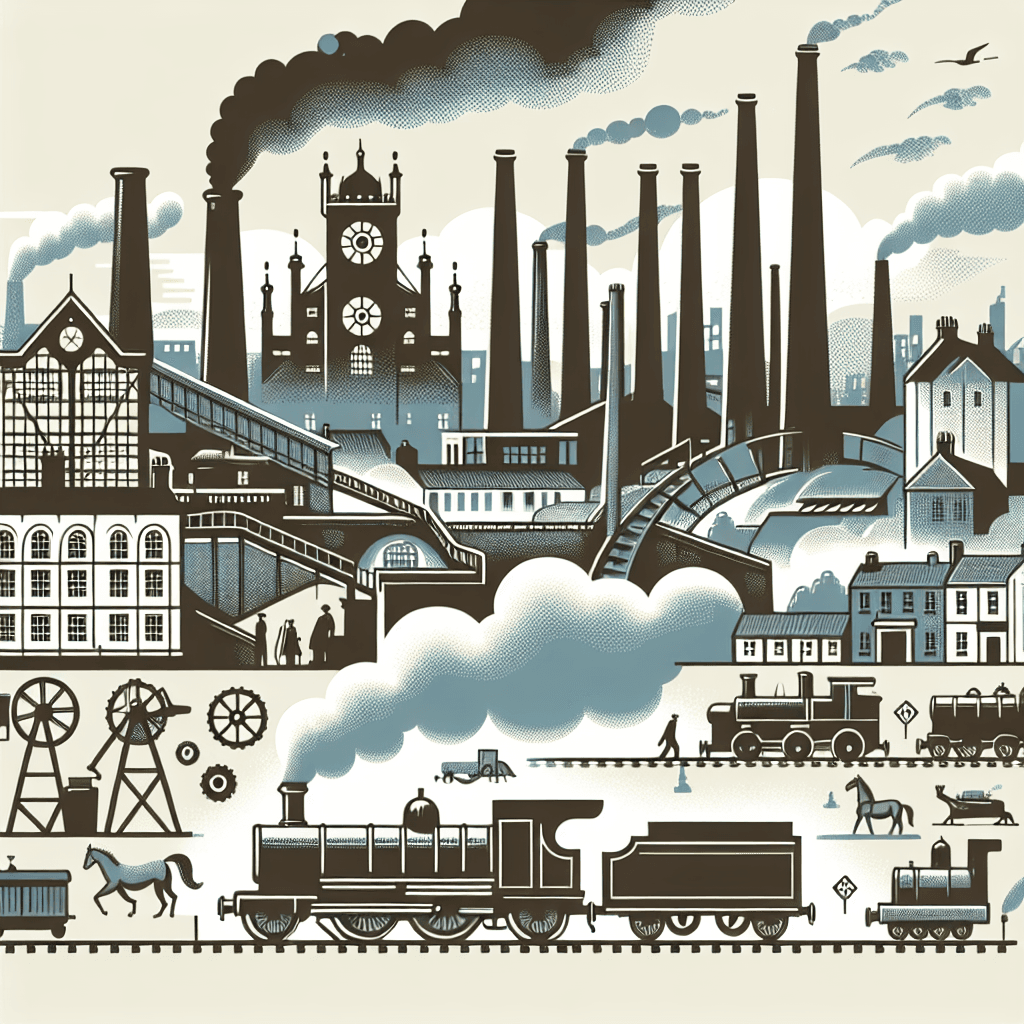
Inquiry Framework
Question Framework
Driving Question
The overarching question that guides the entire project.Considering England's unique combination of resources, geography, technological advancements, and social-political conditions, how did these factors converge to make it the birthplace of the Industrial Revolution, and what lessons can we learn from this historical transformation?Essential Questions
Supporting questions that break down major concepts.- What resources did England have that were needed for industrialization?
- How did England's geography help it to industrialize first?
- What was the role of technology and innovation in England's industrialization?
- How did social and political factors contribute to England's industrialization?
Standards & Learning Goals
Learning Goals
By the end of this project, students will be able to:- Students will be able to identify and explain the key factors that contributed to England's early industrialization, including its resources, geography, technological advancements, and socio-political conditions.
- Students will be able to analyze the convergence of these factors and their impact on England becoming the birthplace of the Industrial Revolution.
- Students will be able to evaluate the lessons that can be learned from England's industrial transformation and apply them to contemporary contexts.
- Students will be able to understand the perspectives of people in England at this time, and write a persuasive essay arguing for or against industrialization.
Entry Events
Events that will be used to introduce the project to students"Dear Future Economist" Letter
Students receive a fictional letter from a young English inventor/worker in 1760, describing their life, challenges, and hopes for the future amidst early industrial changes. Students respond as modern-day economists, advising them on potential solutions and analyzing the broader economic implications.Portfolio Activities
Portfolio Activities
These activities progressively build towards your learning goals, with each submission contributing to the student's final portfolio.Geography's Gift: Mapping the Landscape
Students will analyze England's geographical advantages, such as its island location, navigable rivers, and access to the sea, and how they facilitated trade and industrial development.Steps
Here is some basic scaffolding to help students complete the activity.Final Product
What students will submit as the final product of the activityAn essay and oral presentation explaining the impact of geography on England's industrialization.Alignment
How this activity aligns with the learning objectives & standardsAddresses Learning Goal 1: identifying key factors (geography) contributing to England's early industrialization.Society's Spark: The People's Role
Students will examine the social and political factors in England, such as property rights, the availability of capital, and the social mobility that fostered innovation and entrepreneurship.Steps
Here is some basic scaffolding to help students complete the activity.Final Product
What students will submit as the final product of the activityA play that illustrates social and political factors driving industrialization.Alignment
How this activity aligns with the learning objectives & standardsAddresses Learning Goal 1: identifying key factors (socio-political conditions) contributing to England's early industrialization.Convergence Chronicle: England's Perfect Storm
Students will synthesize their knowledge of resources, geography, technology, and society to explain how these factors converged to make England the birthplace of the Industrial Revolution.Steps
Here is some basic scaffolding to help students complete the activity.Final Product
What students will submit as the final product of the activityA comprehensive essay explaining the convergence of factors in England's industrialization.Alignment
How this activity aligns with the learning objectives & standardsAddresses Learning Goal 2: analyzing the convergence of factors and their impact on England becoming the birthplace of the Industrial Revolution.Legacy Lessons: Echoes of the Revolution
Students will evaluate the lessons that can be learned from England's industrial transformation and apply them to contemporary contexts, such as modern technological revolutions or economic shifts.Steps
Here is some basic scaffolding to help students complete the activity.Final Product
What students will submit as the final product of the activityA comparative analysis essay and discussion on the relevance of the Industrial Revolution today.Alignment
How this activity aligns with the learning objectives & standardsAddresses Learning Goal 3: evaluating the lessons that can be learned from England's industrial transformation and apply them to contemporary contexts.Voices of Change: Persuasive Perspectives
Students will explore the perspectives of different people living in England during the Industrial Revolution and write a persuasive essay arguing for or against industrialization from a specific viewpoint.Steps
Here is some basic scaffolding to help students complete the activity.Final Product
What students will submit as the final product of the activityA persuasive essay arguing a position on industrialization from a particular viewpoint.Alignment
How this activity aligns with the learning objectives & standardsAddresses Learning Goal 4: understanding the perspectives of people in England at this time, and write a persuasive essay arguing for or against industrialization.Resource Roundup: England's Assets
Students will investigate England's natural resources (coal, iron ore, rivers) and evaluate their importance to early industrialization.Steps
Here is some basic scaffolding to help students complete the activity.Final Product
What students will submit as the final product of the activityA visual display and written analysis detailing England's resources.Alignment
How this activity aligns with the learning objectives & standardsAddresses Learning Goal 1: identifying key factors (resources) contributing to England's early industrialization.Tech Tree: Innovations that Ignited
Students will explore key technological advancements like the steam engine, cotton gin, and power loom, evaluating their impact on productivity and industrial growth.Steps
Here is some basic scaffolding to help students complete the activity.Final Product
What students will submit as the final product of the activityA diagram/model and report on a selected invention and its impact.Alignment
How this activity aligns with the learning objectives & standardsAddresses Learning Goal 1: identifying key factors (technological advancements) contributing to England's early industrialization.Rubric & Reflection
Portfolio Rubric
Grading criteria for assessing the overall project portfolioIndustrial Revolution Portfolio Rubric
Content Knowledge and Understanding
Demonstrates accurate and comprehensive understanding of the key factors contributing to England's industrialization, including resources, geography, technology, and socio-political conditions.Accuracy of Information
Presents factual information accurately and demonstrates a deep understanding of the material.
Exemplary
4 PointsPresents information with exceptional accuracy and depth, demonstrating a sophisticated understanding of the complexities of the Industrial Revolution.
Proficient
3 PointsPresents accurate information and demonstrates a thorough understanding of the key concepts and factors.
Developing
2 PointsPresents mostly accurate information, but demonstrates some gaps in understanding of key concepts and factors.
Beginning
1 PointsPresents inaccurate information and demonstrates a limited understanding of the key concepts and factors.
Depth of Analysis
Analyzes the interconnectedness of various factors and their impact on England's industrialization.
Exemplary
4 PointsProvides an insightful and comprehensive analysis of the interconnectedness of factors, demonstrating a sophisticated understanding of their combined impact.
Proficient
3 PointsProvides a thorough analysis of the interconnectedness of factors and their impact on England's industrialization.
Developing
2 PointsProvides a basic analysis of the interconnectedness of factors, but may lack depth and detail.
Beginning
1 PointsProvides a superficial analysis of the interconnectedness of factors and demonstrates a limited understanding of their combined impact.
Critical Thinking and Analysis
Demonstrates critical thinking skills through the evaluation of historical evidence, consideration of multiple perspectives, and synthesis of information.Evaluation of Evidence
Critically evaluates historical evidence and sources to support claims and arguments.
Exemplary
4 PointsCritically evaluates evidence with exceptional insight and demonstrates a nuanced understanding of historical sources and their limitations.
Proficient
3 PointsCritically evaluates evidence and uses it effectively to support claims and arguments.
Developing
2 PointsEvaluates evidence with some critical thinking, but may not fully support claims and arguments.
Beginning
1 PointsDemonstrates limited critical thinking in the evaluation of evidence and struggles to support claims and arguments.
Perspective Taking
Considers multiple perspectives and viewpoints related to the Industrial Revolution.
Exemplary
4 PointsDemonstrates exceptional perspective-taking abilities, considering a wide range of viewpoints and showing empathy for different groups affected by the Industrial Revolution.
Proficient
3 PointsConsiders multiple perspectives and viewpoints related to the Industrial Revolution and demonstrates an understanding of their complexities.
Developing
2 PointsConsiders some perspectives related to the Industrial Revolution, but may lack depth or nuance.
Beginning
1 PointsDemonstrates limited perspective-taking abilities and struggles to understand different viewpoints.
Communication and Presentation
Effectively communicates ideas and analysis through written and oral presentations, demonstrating clarity, organization, and persuasive reasoning.Clarity and Organization
Presents ideas clearly and logically, with effective organization and structure.
Exemplary
4 PointsPresents ideas with exceptional clarity, conciseness, and organization, creating a compelling and engaging presentation.
Proficient
3 PointsPresents ideas clearly and logically, with effective organization and structure.
Developing
2 PointsPresents ideas with some clarity and organization, but may lack focus or coherence.
Beginning
1 PointsPresents ideas in a disorganized and unclear manner, making it difficult to understand the main points.
Use of Evidence and Examples
Uses specific evidence and examples to support claims and arguments effectively.
Exemplary
4 PointsUses evidence and examples with exceptional skill, selecting the most relevant and impactful information to strengthen claims and arguments.
Proficient
3 PointsUses specific evidence and examples to support claims and arguments effectively.
Developing
2 PointsUses some evidence and examples to support claims, but may lack specificity or relevance.
Beginning
1 PointsUses little or no evidence to support claims, or the evidence is irrelevant or inaccurate.
Application and Synthesis
Applies lessons learned from the Industrial Revolution to contemporary contexts and synthesizes information from various sources to create a cohesive understanding.Relevance to Contemporary Contexts
Applies lessons learned from the Industrial Revolution to relevant contemporary contexts and issues.
Exemplary
4 PointsDemonstrates exceptional ability to connect lessons from the Industrial Revolution to contemporary contexts, offering insightful and original applications.
Proficient
3 PointsApplies lessons learned from the Industrial Revolution to relevant contemporary contexts and issues.
Developing
2 PointsAttempts to apply lessons learned from the Industrial Revolution to contemporary contexts, but may lack depth or relevance.
Beginning
1 PointsStruggles to apply lessons learned from the Industrial Revolution to contemporary contexts and issues.
Synthesis of Information
Synthesizes information from various sources to create a cohesive and comprehensive understanding of the Industrial Revolution.
Exemplary
4 PointsDemonstrates exceptional ability to synthesize information from diverse sources, creating a seamless and insightful understanding of the Industrial Revolution.
Proficient
3 PointsSynthesizes information from various sources to create a cohesive and comprehensive understanding of the Industrial Revolution.
Developing
2 PointsSynthesizes information from some sources, but may lack depth or integration.
Beginning
1 PointsStruggles to synthesize information from various sources and demonstrates a fragmented understanding of the Industrial Revolution.