
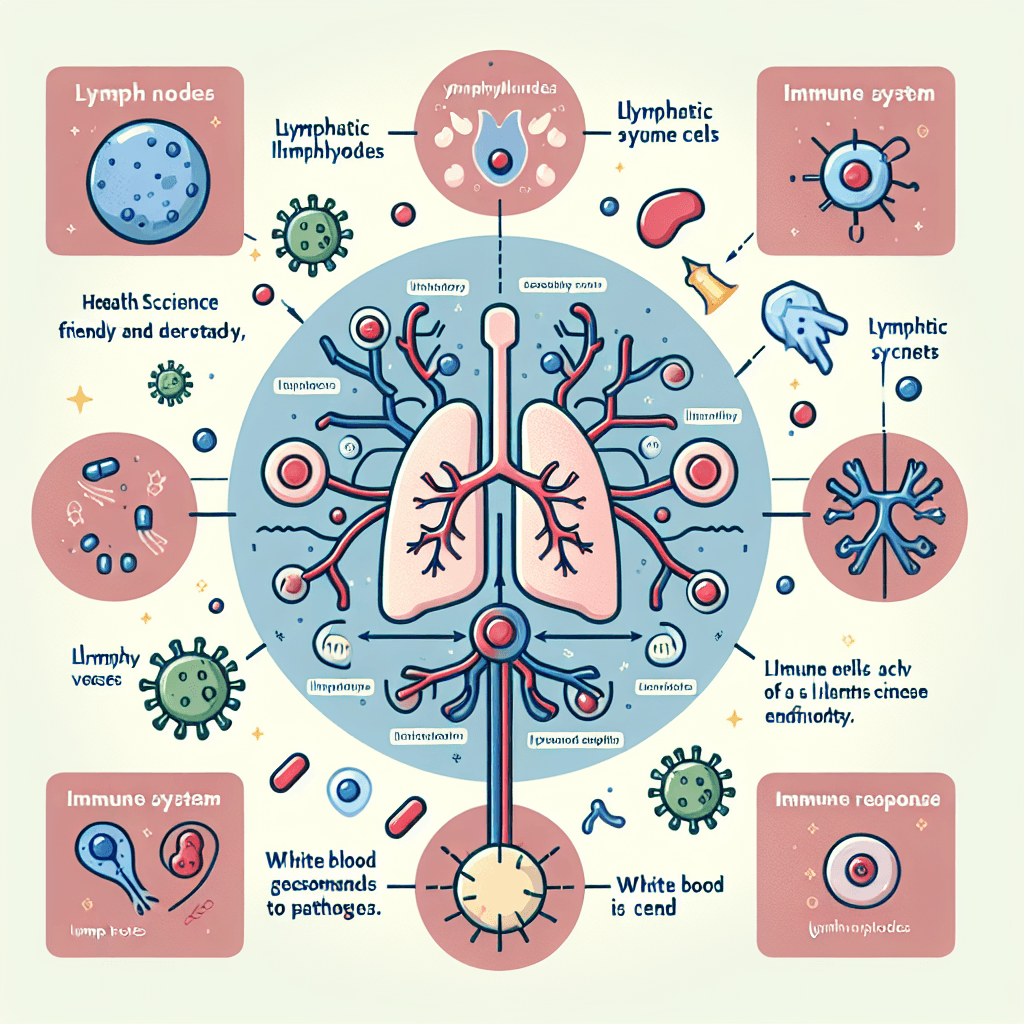
Exploring Lymphatic & Immune System: Proficiency in Health Science
Inquiry Framework
Question Framework
Driving Question
The overarching question that guides the entire project.How can we, as healthcare professionals, understand and illustrate the critical role of the lymphatic and immune systems in human health, the prevention of infectious diseases, and their interdependence with other body systems?Essential Questions
Supporting questions that break down major concepts.- Why is the lymphatic and immune system considered a critical component of human health?
- In what ways does immunity function to prevent the spread of infectious diseases?
- How do the structures and functions of the lymphatic system demonstrate interdependence with other body systems?
Standards & Learning Goals
Learning Goals
By the end of this project, students will be able to:- Students will be able to describe body systems' organization and relevance to health care.
- Students will understand infection control and its implications for disease prevention.
- Students will examine methods of measuring and interpreting health data for clinical purposes.
Academic Foundations
Safety Practices
Health Maintenance Practices
Technical Skills
Entry Events
Events that will be used to introduce the project to studentsVaccine Innovation Shark Tank
Students become 'Entrepreneur Scientists', tasked with developing a new vaccine. They pitch their ideas to a 'Shark Tank' panel comprised of classmates and teachers. Through this process, they learn about the immune system, immunity, and entrepreneurial skills, driving creativity and critical thinking.Disease Detective Escape Room
Students are placed in a virtual 'Disease Detective' escape room where they explore the lymphatic and immune systems to solve real-world medical mysteries. Clues are based on diagrams, charts, and case studies from healthcare environments, providing an engaging way to connect biology concepts with healthcare practice.Portfolio Activities
Portfolio Activities
These activities progressively build towards your learning goals, with each submission contributing to the student's final portfolio.Body System Architecture Exploration
Students will create a detailed diagram illustrating the basic levels of organization within the human body, focusing on the lymphatic and immune systems. This foundational activity will help students understand how these systems are organized and interrelated.Steps
Here is some basic scaffolding to help students complete the activity.Final Product
What students will submit as the final product of the activityA comprehensive diagram that details the levels of organization in the body with a focus on the lymphatic and immune systems.Alignment
How this activity aligns with the learning objectives & standardsThis activity aligns with standard 1.4 by helping students identify basic levels of organization within the human body, specifically focusing on the lymphatic and immune systems.Lymphatic System Deep Dive
In this activity, students will examine the structures and functions of the lymphatic system through hands-on activities and research, fostering a deeper understanding of its role in health.Steps
Here is some basic scaffolding to help students complete the activity.Final Product
What students will submit as the final product of the activityA detailed 3D model or diagram, along with a presentation explaining the lymphatic system.Alignment
How this activity aligns with the learning objectives & standardsThis activity is in alignment with the standard 1.6e as it focuses on identifying basic structures and functions of the lymphatic system, including the movement of lymph fluid.Immunity Champions
Students will investigate how the immune system functions to prevent the spread of infectious diseases by examining specific immune responses and infection control principles.Steps
Here is some basic scaffolding to help students complete the activity.Final Product
What students will submit as the final product of the activityA report or infographic on immune response mechanisms and infection control standards.Alignment
How this activity aligns with the learning objectives & standardsThis activity aligns with standard 7.1 by engaging students in demonstrating principles of infection control as they relate to disease prevention through the immune system's function.Disease Prevention Strategies
Students will focus on strategies for disease prevention related to the lymphatic and immune systems, exploring the importance of health screenings, examinations, and vaccinations.Steps
Here is some basic scaffolding to help students complete the activity.Final Product
What students will submit as the final product of the activityAn educational pamphlet or video to encourage the understanding of disease prevention strategies.Alignment
How this activity aligns with the learning objectives & standardsThis activity supports standard 9.1 by describing strategies for prevention of diseases, including health screenings and examinations to promote wellness.Vital Signs and Body Systems Connect
In this activity, students learn to integrate skills for measuring and recording vital signs and explore how these relate to the lymphatic and immune systems' health status.Steps
Here is some basic scaffolding to help students complete the activity.Final Product
What students will submit as the final product of the activityA report reflecting the findings on the importance of vital signs in assessing lymphatic and immune systems health.Alignment
How this activity aligns with the learning objectives & standardsThis activity aligns with standard 10.1 by integrating procedures for measuring and recording vital signs focused on the health of the lymphatic and immune systems.Rubric & Reflection
Portfolio Rubric
Grading criteria for assessing the overall project portfolioLymphatic and Immune Systems Portfolio Rubric
Understanding of Body Systems
Assessment of knowledge about the levels of organization in the human body and specific focus on the lymphatic and immune systems.Identification of Body System Levels
Ability to accurately identify and illustrate the levels of organization within the body, focusing specifically on the lymphatic and immune systems.
Exemplary
4 PointsDemonstrates a sophisticated understanding of body system levels, with detailed and accurate illustrations that highlight interrelationships between systems.
Proficient
3 PointsThoroughly identifies body system levels with clear illustrations focusing on the lymphatic and immune systems.
Developing
2 PointsShows basic understanding and attempts to illustrate body system levels, with some inaccuracies or omissions.
Beginning
1 PointsStruggles to identify and illustrate body system levels; lacks clarity and detail.
Functionality and Importance of Systems
Evaluates the understanding of the lymphatic and immune systems' functions and their significance in health and disease prevention.
Exemplary
4 PointsProvides an in-depth explanation of system functions with innovative insights on their critical roles in health and disease prevention.
Proficient
3 PointsExplains system functions and their importance in disease prevention clearly and effectively.
Developing
2 PointsGives a basic explanation of system functions, with limited connections to health and disease prevention.
Beginning
1 PointsPresents minimal understanding of system functions and significance.
Integration and Application
Assesses how students apply their understanding to practical scenarios in healthcare settings, focusing on disease prevention and infection control.Practical Application in Infection Control
Demonstrates the ability to apply knowledge of the immune system to infection control practices.
Exemplary
4 PointsInnovatively applies immune system knowledge to infection control, showing leadership in scenario-based problem-solving.
Proficient
3 PointsEffectively applies immune system knowledge to infection control in practical scenarios.
Developing
2 PointsApplies immune system knowledge to infection control with limited effectiveness.
Beginning
1 PointsStruggles to apply immune system knowledge to infection control effectively.
Impact and Outreach in Disease Prevention
Evaluates the effectiveness and creativity in promoting disease prevention strategies related to the lymphatic and immune systems.
Exemplary
4 PointsDemonstrates exceptional creativity and effectiveness in promoting disease prevention through detailed, informative, and engaging materials.
Proficient
3 PointsCreates effective and informative materials that clearly promote disease prevention strategies.
Developing
2 PointsDevelops basic materials for disease prevention promotion with limited engagement.
Beginning
1 PointsStruggles to produce effective materials for disease prevention promotion.
Evaluation and Reflection
Evaluates the student's ability to measure and interpret health data for clinical purposes and reflect on the significance of their findings.Accuracy in Measuring and Interpreting Vital Signs
Ability to accurately measure, record, and interpret vital signs related to the lymphatic and immune systems.
Exemplary
4 PointsDemonstrates precision and insights in measuring and interpreting vital signs, with clear connections to system health.
Proficient
3 PointsAccurately measures and interprets vital signs, effectively relating findings to system health.
Developing
2 PointsMeasures and interprets vital signs with some accuracy but limited depth of understanding.
Beginning
1 PointsShows significant inaccuracies in measuring and interpreting vital signs.
Reflective Analysis
Quality and depth of reflection on the findings related to vital signs and system health.
Exemplary
4 PointsProvides insightful and comprehensive reflection on the implications of vital signs on system health, showing a deep understanding.
Proficient
3 PointsOffers clear and detailed reflection on vital signs and system health.
Developing
2 PointsReflects on vital signs with basic understanding and limited depth.
Beginning
1 PointsOffers superficial or minimal reflection on vital signs and system health.