
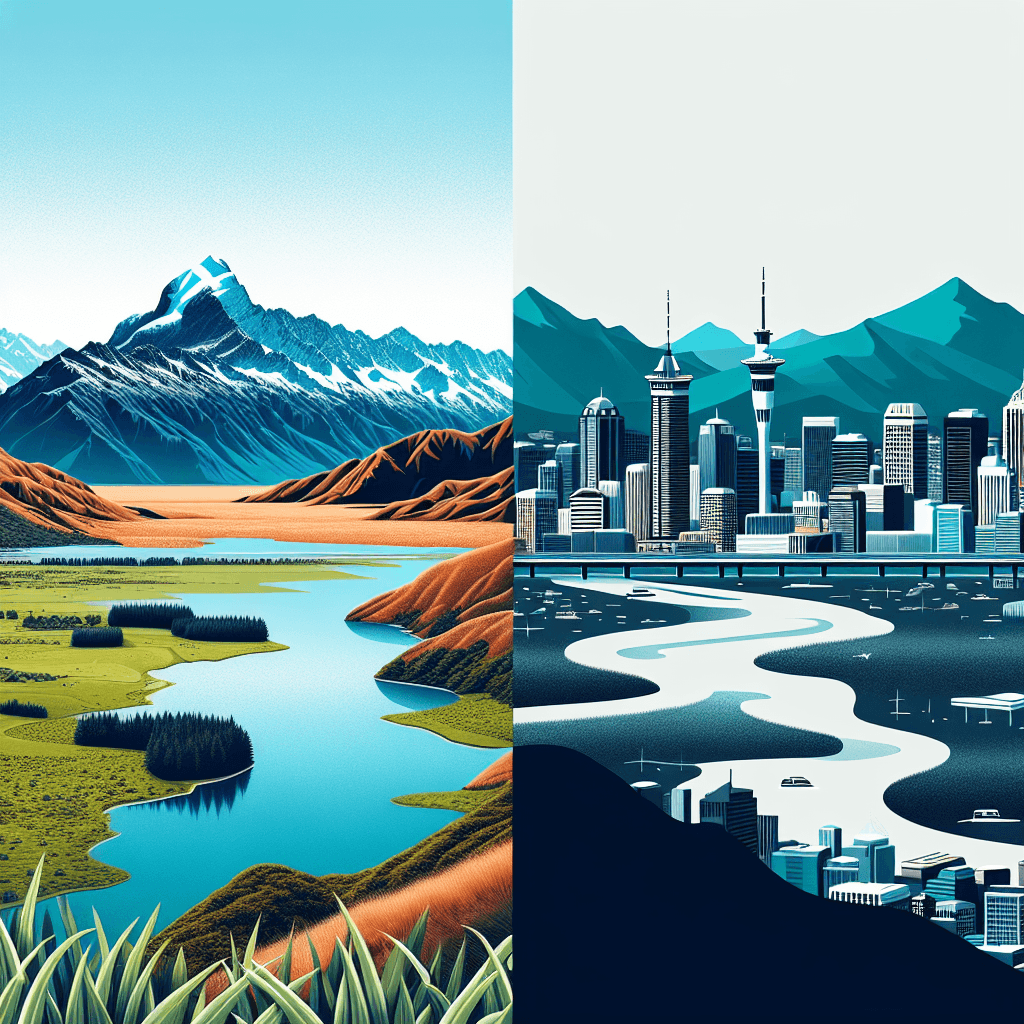
Exploring 'Te Whenua': New Zealand vs Another Land
Inquiry Framework
Question Framework
Driving Question
The overarching question that guides the entire project.How can we as students create a multi-disciplinary, hands-on activity that explores 'te whenua' (the land) in New Zealand, its cultural importance, and its comparison with another country's land through art, technology, and storytelling?Essential Questions
Supporting questions that break down major concepts.- What does 'te whenua' (the land) mean in New Zealand culture and why is it important?
- How can we use art to show our understanding of landscapes and their significance?
- Which tools and technologies can help us explore and understand different lands?
- In what ways can we compare our land to another country's land in terms of history and significance?
- How can storytelling be used to share knowledge about the land and its history?
Standards & Learning Goals
Learning Goals
By the end of this project, students will be able to:- Students will understand the cultural significance of 'te whenua' (the land) in New Zealand and another country, and express this through storytelling and art.
- Students will utilize geographic and historical tools to compare and contrast the landscapes and significance of 'te whenua' in New Zealand with those of another country.
- Students will create a hands-on, multi-disciplinary project incorporating art, technology, and storytelling to showcase their understanding of 'te whenua'.
- Students will develop skills in using technology to research and present geographic and cultural information about different lands.
- Students will learn how to use storytelling to communicate insights about cultural and historical aspects of land significance.
NZ Curriculum
Entry Events
Events that will be used to introduce the project to studentsGeo-art Mapping Adventure
Turn the classroom into an interactive map where students use art and technology to plot significant geographical and cultural points from New Zealand and another country. Through this creative and tactile approach, students are able to see and explore the interconnectedness of geography, culture, and history.Portfolio Activities
Portfolio Activities
These activities progressively build towards your learning goals, with each submission contributing to the student's final portfolio.Te Whenua Storybook Creation
Students will create a vibrant storybook that explores 'te whenua' (the land) in New Zealand through tales, legends, and personal interpretations. This activity emphasizes the cultural significance and historical perspectives of the land by allowing students to participate in storytelling, fostering both comprehension and creativity.Steps
Here is some basic scaffolding to help students complete the activity.Final Product
What students will submit as the final product of the activityA collective storybook from the class with each student contributing a page that includes a drawing and a caption about 'te whenua'.Alignment
How this activity aligns with the learning objectives & standardsAligns with SS1 (Understand that people view and interpret places differently, based on identity and experience) and SS2 (Develop visual and oral messages in a variety of media).Global Landscape Comparison Chart
In this activity, students will explore and compare the landscapes of New Zealand and another country through geography and history. Students will use simple comparison charts that help them visually sort and understand the differences and similarities between the two lands.Steps
Here is some basic scaffolding to help students complete the activity.Final Product
What students will submit as the final product of the activityA classroom comparison chart showcasing two countries' landscapes and cultural features as understood by the students.Alignment
How this activity aligns with the learning objectives & standardsAligns with SS3 (Identify how environments influence people, change over time, and place).Tech Tools Showcase
Students will engage with digital tools to showcase their findings and create a digital presentation about 'te whenua'. This activity emphasizes using technology in exploring and sharing cultural insights and fosters digital literacy from a young age.Steps
Here is some basic scaffolding to help students complete the activity.Final Product
What students will submit as the final product of the activityA class digital presentation, where students each contribute a slide or image sequence about their interpretation of 'te whenua'.Alignment
How this activity aligns with the learning objectives & standardsAligns with SS4 (Use digital technologies to create and share ideas with others).Artful Expressions of Land
Students will use various art techniques to create pieces that express their understanding of 'te whenua'. By experimenting with colors and materials, students learn to convey how the land is represented in New Zealand culture and what it means to them personally.Steps
Here is some basic scaffolding to help students complete the activity.Final Product
What students will submit as the final product of the activityA gallery of art pieces created by students that visually represent 'te whenua' through their chosen medium.Alignment
How this activity aligns with the learning objectives & standardsAligns with SS5 (Develop an understanding of the arts and their contribution to cultures, society, and communities).Rubric & Reflection
Portfolio Rubric
Grading criteria for assessing the overall project portfolioTe Whenua Project Rubric
Cultural Understanding of 'Te Whenua'
Assesses the student's grasp of the cultural significance and historical perspectives of 'te whenua' in New Zealand and one other country.Understanding of Cultural Significance
Evaluates the student's comprehension of 'te whenua' and its importance in New Zealand and another country's culture.
Exemplary
4 PointsDemonstrates an advanced understanding of 'te whenua', highlighting deep insights into its cultural significance in both New Zealand and the chosen comparison country.
Proficient
3 PointsShows a thorough understanding of 'te whenua' and its cultural importance, providing clear and relevant examples from both countries.
Developing
2 PointsDisplays a basic understanding of 'te whenua' with some relevant examples but lacks depth in cultural insights.
Beginning
1 PointsShows minimal understanding of 'te whenua' with limited or inaccurate examples and insights.
Storytelling and Expression
Assesses how effectively the student uses storytelling to convey understanding of 'te whenua'.
Exemplary
4 PointsCreates compelling stories that vividly convey the significance of 'te whenua', using multiple storytelling techniques creatively.
Proficient
3 PointsTells clear and engaging stories that effectively highlight the cultural importance of 'te whenua'.
Developing
2 PointsPresents basic stories that convey the main idea of 'te whenua' but with limited detail and creative expression.
Beginning
1 PointsStruggles to convey the significance of 'te whenua' in stories, with unclear narrative structure and limited content.
Artistic Representation
Evaluates the student's ability to use art to represent 'te whenua' and its cultural significance.Creativity and Technique in Art
Assesses creativity and the use of techniques to visually express 'te whenua'.
Exemplary
4 PointsShows exceptional creativity and technical skill in art, presenting a powerful visual narrative that captures 'te whenua'.
Proficient
3 PointsEmploys adequate creativity and techniques to effectively represent 'te whenua' through art.
Developing
2 PointsUses basic art techniques with some creativity, but the representation of 'te whenua' lacks depth and detail.
Beginning
1 PointsApplies minimal creativity and basic techniques, resulting in a simplistic and unclear artistic representation of 'te whenua'.
Integration of Art with Cultural Themes
Evaluates how well the art piece integrates cultural themes of 'te whenua'.
Exemplary
4 PointsArticulates cultural themes through art powerfully and cohesively, with deep connections between art form and cultural narrative.
Proficient
3 PointsEffectively integrates cultural themes into art with clear connections between the visual elements and cultural narratives.
Developing
2 PointsAttempts to incorporate cultural themes into art but lacks clear connections and thematic focus.
Beginning
1 PointsShows minimal integration of cultural themes in art, with unclear or missing connections.
Technology Use and Digital Presentation
Focuses on the student's ability to use technology to create and present ideas related to 'te whenua'.Proficiency in Digital Tools
Measures student's skills in using digital tools to create and present information.
Exemplary
4 PointsDemonstrates advanced skill in digital tools, creating a highly organized and impactful digital presentation on 'te whenua'.
Proficient
3 PointsUses digital tools competently to produce a clear and effective presentation about 'te whenua'.
Developing
2 PointsShows basic ability in using digital tools to create a presentation, but the output lacks detail and clarity.
Beginning
1 PointsStruggles with using digital tools effectively, resulting in an incomplete or unclear presentation.
Creativity in Digital Presentation
Evaluates the creativity and design of the digital presentation, focusing on 'te whenua'.
Exemplary
4 PointsExhibits exceptional creativity and design in digital presentation, effectively engaging the audience with unique elements related to 'te whenua'.
Proficient
3 PointsEmploys creative design elements that effectively enhance the presentation of 'te whenua'.
Developing
2 PointsShows some creativity in digital presentation, but lacks cohesion and impactful design elements.
Beginning
1 PointsPresents a basic and minimally creative digital presentation with insignificant visual or design impact.
Collaborative Participation
Assesses student engagement and contributions in collaborative project activities.Teamwork and Engagement
Measures the student's participation and contribution in collaborative project activities.
Exemplary
4 PointsDemonstrates leadership and consistent engagement in collaborative activities, facilitating group success in project tasks.
Proficient
3 PointsContributes effectively to group work with consistent participation and support for peers.
Developing
2 PointsParticipates in group work with occasional contributions but lacks consistency and initiative.
Beginning
1 PointsParticipates minimally in group activities, requiring support to engage and contribute.