
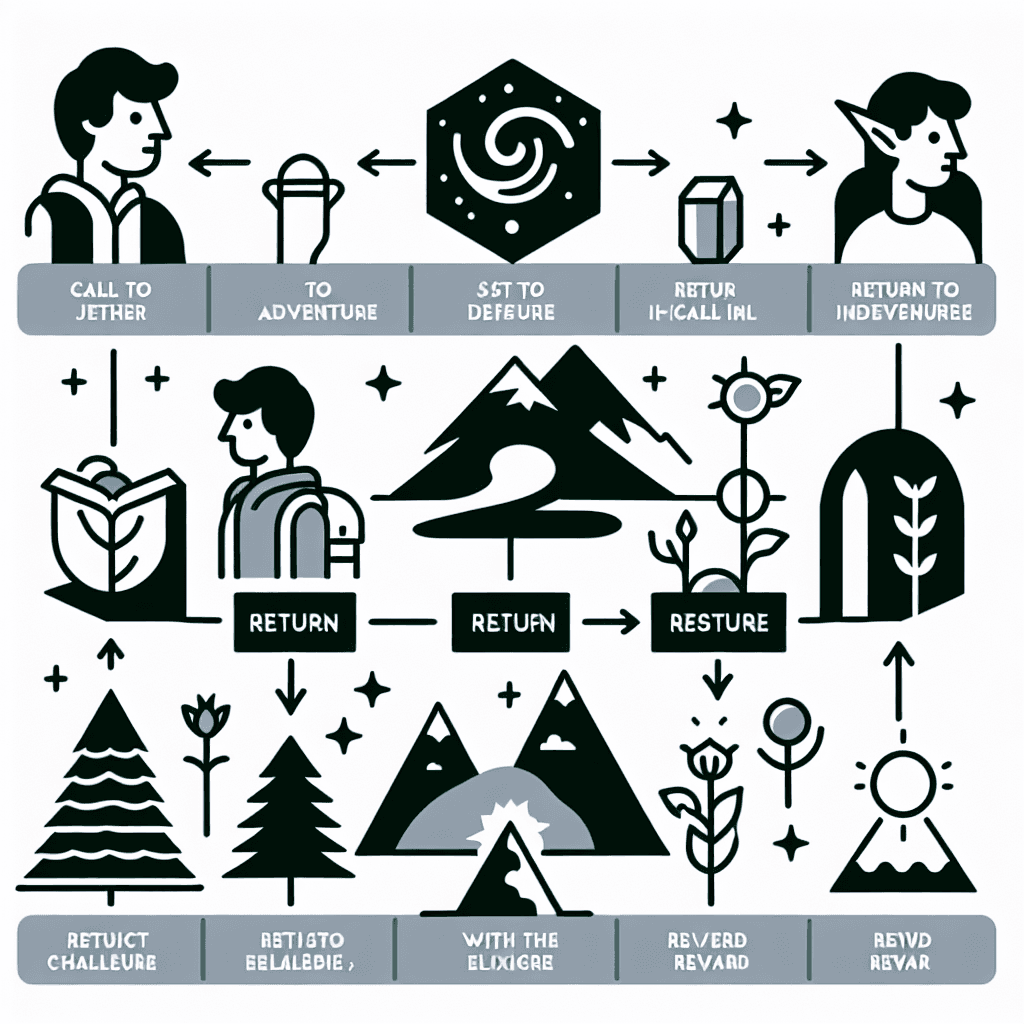
Exploring the Hero's Journey in Literature
Inquiry Framework
Question Framework
Driving Question
The overarching question that guides the entire project.How do protagonists in the Hero's Journey, as depicted in novels like Speak, Curious Incident with the Dog in the Nighttime, I am Malala, and All Quiet on the Western Front, demonstrate resilience and courage, and how do narrative techniques, settings, and cultural contexts shape their journeys?Essential Questions
Supporting questions that break down major concepts.- What is the Hero's Journey and how is it represented in the various novels like Speak, Curious Incident with the Dog in the Nighttime, I am Malala, and All Quiet on the Western Front?
- In what ways do the protagonists in these novels demonstrate resilience and courage in the face of challenges?
- How do different authors use narrative techniques to convey the themes of heroism and self-discovery?
- What role does the setting play in shaping the journeys of the characters in these novels?
- How do cultural, social, and historical contexts influence the characters' journeys in each novel?
Standards & Learning Goals
Learning Goals
By the end of this project, students will be able to:- Understand and articulate the concept of the Hero's Journey and its application to various novels.
- Analyze the narrative techniques used by authors to depict resilience and courage in fiction.
- Evaluate the impact of cultural, social, and historical contexts on the characters' journeys.
- Compare and contrast the protagonists' journeys and their strategies for overcoming challenges.
- Develop critical thinking and analytical writing skills through essays and discussions related to the theme of heroism in literature.
Common Core Standards
Entry Events
Events that will be used to introduce the project to studentsCommunity Hero Search
Students are tasked to identify community figures who embody the hero’s journey, prompting real-world connections and engaging storytelling around everyday heroes.Portfolio Activities
Portfolio Activities
These activities progressively build towards your learning goals, with each submission contributing to the student's final portfolio.Hero's Journey Map
Students create a visual map of the Hero's Journey stages using a chosen novel from the study. This activity helps students understand the progression and elements of the Hero's Journey template.Steps
Here is some basic scaffolding to help students complete the activity.Final Product
What students will submit as the final product of the activityA detailed visual map that illustrates the Hero's Journey stages within the novel.Alignment
How this activity aligns with the learning objectives & standardsAligns with CCSS.ELA-LITERACY.RL.9-10.2 by determining a theme or central idea of a text and analyzing its development.Resilience and Courage Character Diary
Students compose a diary from the perspective of the protagonist, focusing on moments of resilience and courage.Steps
Here is some basic scaffolding to help students complete the activity.Final Product
What students will submit as the final product of the activityA character diary with multiple entries featuring analysis and perspective on key events.Alignment
How this activity aligns with the learning objectives & standardsSupports CCSS.ELA-LITERACY.RL.9-10.1 through citing strong and thorough textual evidence.Narrative Technique Illustrator
Students analyze how authors use narrative techniques to convey themes and character development, illustrated through a creative project.Steps
Here is some basic scaffolding to help students complete the activity.Final Product
What students will submit as the final product of the activityAn illustrated guide explaining the role of narrative techniques in the novel.Alignment
How this activity aligns with the learning objectives & standardsFulfills CCSS.ELA-LITERACY.RL.9-10.1 by supporting analysis using textual evidence and RL.9-10.2 by analyzing theme development.Archetypes & Journey Plot Explorer
Students delve into the archetypal roles and plot structures within their selected novel, examining how these elements exemplify the common experiences shared by heroes across different narratives.Steps
Here is some basic scaffolding to help students complete the activity.Final Product
What students will submit as the final product of the activityA comprehensive analysis that explores the archetypes and plot structure within the novel focusing on common hero experiences.Alignment
How this activity aligns with the learning objectives & standardsSupports CCSS.ELA-LITERACY.RL.9-10.2 by analyzing themes and archetypes, as well as plot structure.Protagonist Debate
Students participate in a debate defending or challenging the protagonist’s decisions as indicative of heroism.Steps
Here is some basic scaffolding to help students complete the activity.Final Product
What students will submit as the final product of the activityA structured debate presenting varied perspectives on the protagonist's heroism.Alignment
How this activity aligns with the learning objectives & standardsAligns with CCSS.ELA-LITERACY.SL.9-10.1 by initiating and participating effectively in collaborative discussions and CCSS.ELA-LITERACY.W.9-10.1 by writing arguments based on text analysis.Rubric & Reflection
Portfolio Rubric
Grading criteria for assessing the overall project portfolioHero's Journey Literary Analysis Rubric
Understanding of Hero's Journey
Evaluates students' grasp of the Hero's Journey concept and its application to their chosen novel.Identification of Hero's Journey Stages
Assesses the accurate identification and understanding of the stages of the Hero's Journey within the text.
Exemplary
4 PointsIdentifies all stages of the Hero’s Journey accurately and provides insightful examples from the text.
Proficient
3 PointsCorrectly identifies most stages of the Hero’s Journey with appropriate examples from the text.
Developing
2 PointsIdentifies some stages of the Hero’s Journey but examples are incomplete or lack clarity.
Beginning
1 PointsStruggles to identify stages of the Hero’s Journey with minimal examples.
Application of Textual Evidence
Evaluates the use of evidence in demonstrating the Hero's Journey stages and themes.
Exemplary
4 PointsProvides substantial and relevant textual evidence to support each identified stage and theme.
Proficient
3 PointsProvides appropriate textual evidence to support most identified stages and themes.
Developing
2 PointsIncludes limited textual evidence, some of which may not fully support stages or themes.
Beginning
1 PointsMinimal textual evidence is provided, with little connection to identified stages or themes.
Critical Analysis and Reflection
Assesses students' ability to critically evaluate and reflect on the themes of heroism, resilience, and courage in their chosen novel.Depth of Analysis
Measures the student's depth of understanding and insight into themes such as resilience and courage in the novel.
Exemplary
4 PointsDemonstrates exceptional insight and understanding of themes, with nuanced analysis supported by evidence.
Proficient
3 PointsShows a clear and thorough understanding of key themes, with supported analysis.
Developing
2 PointsPresents a basic understanding of themes with some analysis; may lack depth or support.
Beginning
1 PointsLimited analysis and understanding of themes, with minimal evidence of reflection.
Reflective Insight
Assesses how well the student reflects on personal understanding and learning process in relation to character experiences and themes.
Exemplary
4 PointsProvides profound personal reflection and insightful connections to character experiences and thematic implications.
Proficient
3 PointsOffers meaningful reflection and clear connections to character experiences and themes.
Developing
2 PointsIncludes some reflective thought regarding character experiences and themes; limited in depth or clarity.
Beginning
1 PointsMinimal reflection on character experiences or theme connections; lacks clarity.
Creative Expression and Presentation
Evaluates the quality and creativity of students' visual, written, and oral presentations related to portfolio activities.Creative Representation
Assesses the creativity and clarity of visual representations and projects reflecting the Hero's Journey and narrative analysis.
Exemplary
4 PointsProduces highly creative and exceptionally clear visual representations that illustrate deep understanding.
Proficient
3 PointsProduces creative and clear visual representations that effectively communicate concepts.
Developing
2 PointsCreates visual representations that show emerging creativity; clarity may vary.
Beginning
1 PointsProduces basic visual representations with limited creativity or unclear concepts.
Oral and Written Presentation
Evaluates clarity, engagement, and the coherence of oral and written presentations in class activities such as the debate and essays.
Exemplary
4 PointsCohesively presents ideas with exceptional clarity and engagement both orally and written.
Proficient
3 PointsCommunicates ideas clearly and engagingly in oral and written formats.
Developing
2 PointsPresents ideas with basic clarity; may lack consistent engagement or coherence.
Beginning
1 PointsStruggles to present ideas clearly or engagingly; presentations lack coherence.