
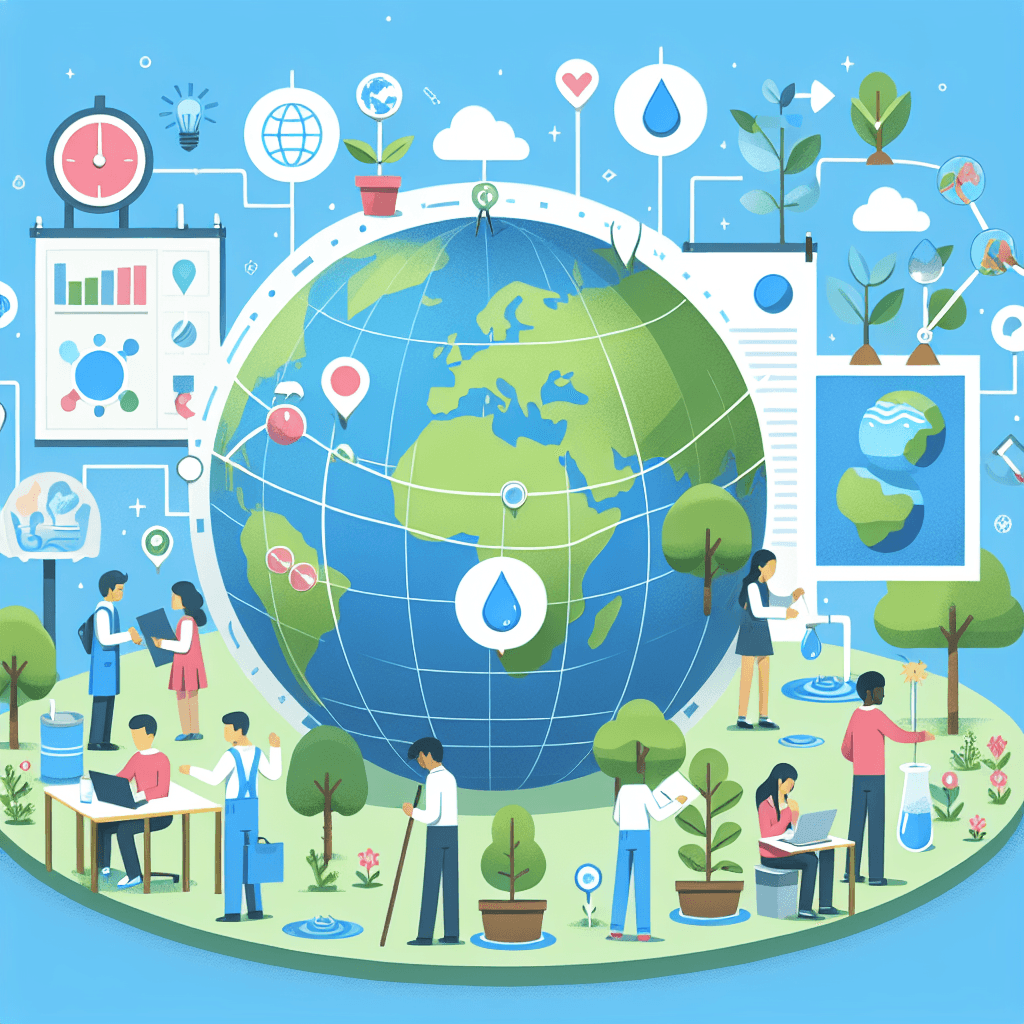
Exploring Water Sustainability: A Global Research Project
Inquiry Framework
Question Framework
Driving Question
The overarching question that guides the entire project.How can we integrate scientific discoveries, cultural knowledge, and community practices to develop sustainable solutions for fresh water scarcity in a specific region?Essential Questions
Supporting questions that break down major concepts.- What are the causes and consequences of fresh water scarcity in the specific place being studied?
- How can different communities, including First Nations, Métis, and Inuit, contribute their perspectives and practices towards water sustainability?
- What scientific discoveries and technological innovations can be used to address water sustainability issues?
- How does the management of water resources influence environmental and social systems?
- What role does cultural knowledge play in understanding and addressing water sustainability?
Standards & Learning Goals
Learning Goals
By the end of this project, students will be able to:- Students will analyze and assess the social and environmental impacts of fresh water scarcity.
- Students will learn and articulate First Nations, Métis, and Inuit traditional knowledge and practices regarding water sustainability.
- Students will evaluate and present the impacts of scientific and technological advancements on water systems.
- Students will develop a comprehensive action plan to address water sustainability challenges in a selected region.
- Students will evaluate the role of cultural knowledge in managing and sustaining water resources.
Science Grade 8
Entry Events
Events that will be used to introduce the project to studentsWater Detectives: Solving Our River's Mystery
Invite students to simulate a water-related mystery scenario where a local river is drying up unexpectedly. Provide multimedia evidence such as news clips, expert interviews, and river data graphs, prompting students to investigate using scientific methods. This connects directly to the core project goals and encourages students to explore the scarcity and sustainability of water resources innovatively.Indigenous Voices and Water Stories
Begin with a storytelling session featuring videos or live talks from Indigenous elders and water specialists sharing their traditional knowledge and personal experiences of water management. Encourage students to reflect on these perspectives and explore how traditional and modern methods can work together toward sustainable outcomes. This will foster inquiry into diverse knowledge systems and cultural appreciation.Community Water Warriors
Inspire students by introducing local 'water warriors' who have successfully initiated sustainability projects within their communities. Through guest speakers or recorded testimonials, students learn firsthand about practical steps taken towards water sustainability. This grounded insight encourages them to think critically and envision themselves as agents of change within their own community.Portfolio Activities
Portfolio Activities
These activities progressively build towards your learning goals, with each submission contributing to the student's final portfolio.Water Issue Mapping
Students begin by mapping out the specific water sustainability issues of their chosen region. This gives them a concrete geographic focus for their research and allows them to visualize the connections between location, resources, and scarcity.Steps
Here is some basic scaffolding to help students complete the activity.Final Product
What students will submit as the final product of the activityA detailed map showcasing water resources and scarcity issues in a region.Alignment
How this activity aligns with the learning objectives & standardsAligns with E1.1 by having students assess the geographic impact of water scarcity.Cultural Perspectives Journal
Encourage students to keep a reflective journal where they document and analyze First Nations, Métis, and Inuit perspectives on water management. This fosters an understanding of traditional knowledge and cultural significance of water.Steps
Here is some basic scaffolding to help students complete the activity.Final Product
What students will submit as the final product of the activityA reflective journal analyzing Indigenous water practices and their relevance today.Alignment
How this activity aligns with the learning objectives & standardsCovers E1.2 by exploring Indigenous knowledge and values about water.Innovation Impact Assessment
In this activity, students investigate recent scientific discoveries and technological innovations and evaluate their potential impact on water systems both locally and globally.Steps
Here is some basic scaffolding to help students complete the activity.Final Product
What students will submit as the final product of the activityA comprehensive report evaluating the impact of new technologies on water sustainability.Alignment
How this activity aligns with the learning objectives & standardsAddresses E1.3 by assessing scientific and technological impacts on water systems.Action Plan Development
After thorough research, students will develop an actionable plan to address water sustainability issues in their chosen region, integrating scientific discoveries and cultural practices.Steps
Here is some basic scaffolding to help students complete the activity.Final Product
What students will submit as the final product of the activityAn action plan presentation incorporating scientific and cultural strategies to address water sustainability.Alignment
How this activity aligns with the learning objectives & standardsMeets E1.1 and E1.2 by proposing a actionable plan integrating diverse knowledge/values.Rubric & Reflection
Portfolio Rubric
Grading criteria for assessing the overall project portfolioWater Sustainability Exploration Rubric
Geographic Analysis
Assessment of students' ability to map and analyze geographical data related to water scarcity.Data Collection and Mapping
Evaluates the completeness and accuracy of data gathering and mapping related to water resources and scarcity.
Exemplary
4 PointsGathers comprehensive and precise data; the map is highly detailed and accurately represents resource locations and scarcity issues.
Proficient
3 PointsGathers relevant and accurate data; the map is clear and correctly represents resource locations and scarcity.
Developing
2 PointsGathers some relevant data but misses key details; the map shows basic resource and scarcity representation but lacks clarity.
Beginning
1 PointsStruggles to gather relevant data; the map is incomplete and lacks coherent representation of resources and scarcity.
Impact Analysis
Evaluates understanding of the social and environmental impacts of water scarcity within the geographic context.
Exemplary
4 PointsPresents an insightful and profound analysis of societal and ecological impacts of water scarcity, integrating well-researched evidence.
Proficient
3 PointsPresents a thorough analysis with clear evidence of societal and ecological impacts of water scarcity.
Developing
2 PointsPresents a basic analysis with limited evidence of the impacts of water scarcity.
Beginning
1 PointsStruggles to analyze the impacts of water scarcity; minimal evidence provided.
Cultural Insight
Assessment of students' exploration and understanding of Indigenous perspectives and cultural knowledge on water management.Understanding Indigenous Knowledge
Evaluates comprehension of First Nations, Métis, and Inuit water practices and their cultural significance.
Exemplary
4 PointsDemonstrates profound understanding and respectful articulation of Indigenous water practices and their significance.
Proficient
3 PointsShows thorough understanding and respect in discussing Indigenous water practices and significance.
Developing
2 PointsDescribes Indigenous water practices with some understanding, but lacks depth.
Beginning
1 PointsShows limited comprehension of Indigenous water practices and their cultural significance.
Technological Evaluation
Assesses students’ ability to evaluate and interpret the impact of scientific discoveries and technological innovations on water sustainability.Innovation Analysis
Evaluates the ability to critique and assess scientific and technological solutions for water issues.
Exemplary
4 PointsProvides an insightful and comprehensive evaluation of technological solutions, showing deep understanding of their pros and cons.
Proficient
3 PointsProvides a clear evaluation of technological solutions with well-reasoned pros and cons.
Developing
2 PointsProvides a basic evaluation of technological solutions with some identified pros and cons.
Beginning
1 PointsStruggles to evaluate technological solutions; minimal pros and cons discussed.
Action Plan Development
Assessment of students' synthesis and integration of diverse perspectives into a strategic action plan for water sustainability.Integration of Diverse Knowledge
Evaluates the extent to which students integrate scientific, cultural, and community insights into their action plan.
Exemplary
4 PointsIntegrates comprehensive scientific, cultural, and community insights into an innovative and actionable plan for water sustainability.
Proficient
3 PointsIntegrates relevant scientific, cultural, and community inputs into a coherent and actionable plan.
Developing
2 PointsIntegrates some scientific and cultural inputs into a basic plan with notable gaps.
Beginning
1 PointsStruggles to integrate diverse inputs; the plan is vague and lacks actionable detail.