
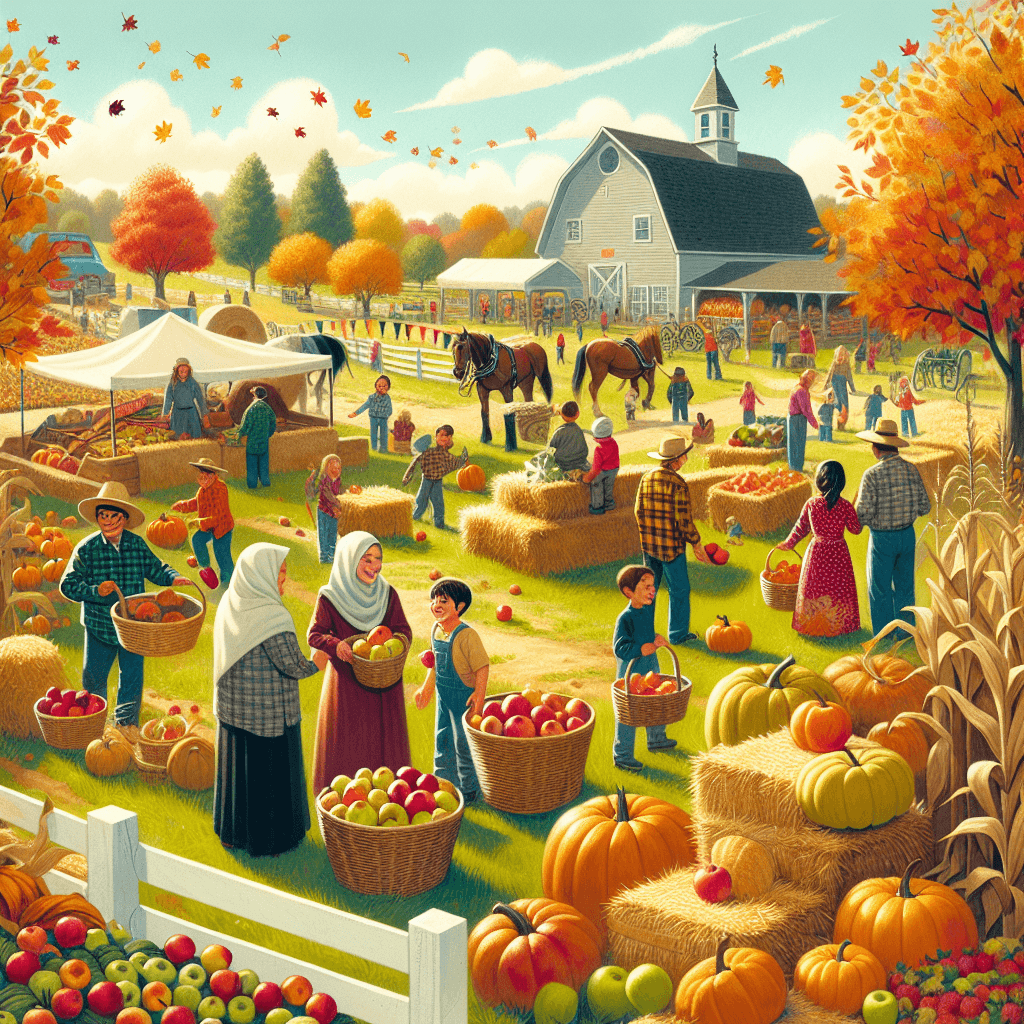
Fall Farms: Community Harvest Fair
Inquiry Framework
Question Framework
Driving Question
The overarching question that guides the entire project.How can we, as second-grade agricultural experts, design a Fall Farm Fair to showcase the importance of local farms and the seasonal changes they undergo, while demonstrating the math, science, and community connections involved in fall harvesting?Essential Questions
Supporting questions that break down major concepts.- What happens on farms in the fall?
- What kinds of crops do farms grow in the fall?
- How do farms help people in our town?
- Why is it important to buy food from local farms?
- What jobs do people do on farms in the fall?
- How do the seasons change what happens on a farm?
- How do farms use math and science?
- How can we show others what we learned about farms?
Standards & Learning Goals
Learning Goals
By the end of this project, students will be able to:- Students will be able to describe the operations of farms during the fall season.
- Students will be able to identify crops harvested in the fall and explain their uses.
- Students will be able to explain how farms support their local communities.
- Students will be able to collect and represent data related to farm products using graphs.
- Students will be able to present their research findings in an informative and engaging Fall Farm Fair.
ELA Standards
Math Standards
Science Standards
Social Studies Standards
Entry Events
Events that will be used to introduce the project to studentsFarm-to-Table Challenge
Present students with a 'mystery box' containing locally sourced fall produce. The challenge: create a dish using only those ingredients and share the recipe and nutritional information. This event introduces students to the concept of local food systems, seasonal eating, and the connection between farms and their meals.Portfolio Activities
Portfolio Activities
These activities progressively build towards your learning goals, with each submission contributing to the student's final portfolio.Crop Circle Data Collectors
Students will collect and represent data on different crops harvested in the fall. This involves counting, sorting, and graphing common fall crops like apples, pumpkins, and corn.Steps
Here is some basic scaffolding to help students complete the activity.Final Product
What students will submit as the final product of the activityA picture graph or bar graph displaying data on fall crops, along with a written summary of the findings.Alignment
How this activity aligns with the learning objectives & standardsAligns with 2.MD.D.10 (Draw a picture graph and a bar graph to represent data) and 2.NBT.A.1 (Understand place value within 1,000).Community Connection Creators
Students investigate how local farms support the community by providing food, jobs, and resources. They will explore the role of farms in meeting community needs during the fall.Steps
Here is some basic scaffolding to help students complete the activity.Final Product
What students will submit as the final product of the activityA visual representation (drawing, collage) demonstrating the connection between local farms and community needs, accompanied by a short explanation.Alignment
How this activity aligns with the learning objectives & standardsAligns with SS.2.1.2 (Identify ways people in the community meet their needs).Science of the Season Experimenters
Students conduct simple experiments to understand the science behind farming, such as the importance of water and light for plant growth. They will document their experiments and findings.Steps
Here is some basic scaffolding to help students complete the activity.Final Product
What students will submit as the final product of the activityA science journal documenting experiments on plant growth, including observations and conclusions.Alignment
How this activity aligns with the learning objectives & standardsAligns with 2-LS2-1 (Plants depend on water and light to grow) and 2-ESS1-1 (Use information from several sources to provide evidence that Earth events occur quickly or slowly (weather, seasons)).Seasonal Storytellers
Students will create a presentation about seasonal changes on a farm. Students will present how the farm changes from season to season.Steps
Here is some basic scaffolding to help students complete the activity.Final Product
What students will submit as the final product of the activityA presentation describing seasonal changes and how they affect people’s activities.Alignment
How this activity aligns with the learning objectives & standardsAligns with SL.2.4 (Tell a story or recount an experience with appropriate facts and relevant details) and SS.2.4.2 (Describe seasonal changes and how they affect people’s activities).Fall Farm Fact Finders
Students become 'Fact Finders' by researching what happens on farms during the fall season. They will use books, websites, and videos to gather information about fall harvesting and farm activities.Steps
Here is some basic scaffolding to help students complete the activity.Final Product
What students will submit as the final product of the activityA detailed fact sheet about fall farms, including sections on crops, animals, and activities with cited sources.Alignment
How this activity aligns with the learning objectives & standardsAligns with RI.2.1 (Ask and answer questions to demonstrate understanding of key details) and W.2.2 (Write informative texts about a topic using facts and definitions).Rubric & Reflection
Portfolio Rubric
Grading criteria for assessing the overall project portfolioFall Farm Fair Portfolio Rubric - Grade 2
Data Collection and Representation (Crop Circle Data Collectors)
Assesses students' ability to collect, organize, and represent data about fall crops using appropriate graphing techniques.Data Accuracy
Accuracy in counting and recording data on fall crops.
Exemplary
4 PointsData is meticulously collected and recorded with no errors. Demonstrates a thorough understanding of data collection methods.
Proficient
3 PointsData is collected and recorded with minimal errors. Shows a good understanding of data collection.
Developing
2 PointsData collection and recording contain some errors, but overall trends are identifiable. Shows a basic understanding of data collection.
Beginning
1 PointsData collection and recording are incomplete and contain significant errors. Struggles to understand data collection.
Graphing Skills
Effectiveness and clarity of the picture graph or bar graph in representing data.
Exemplary
4 PointsGraph is exceptionally clear, accurate, and effectively represents the data. Labels are precise and informative. Demonstrates excellent graphing skills.
Proficient
3 PointsGraph is clear, accurate, and represents the data well. Labels are present and easy to understand. Shows good graphing skills.
Developing
2 PointsGraph is somewhat unclear or contains minor inaccuracies. Labels may be missing or difficult to understand. Shows developing graphing skills.
Beginning
1 PointsGraph is unclear, inaccurate, and poorly represents the data. Labels are missing or incorrect. Struggles with graphing concepts.
Data Summary
Quality and insightfulness of the written summary of findings.
Exemplary
4 PointsSummary provides insightful analysis of the data, drawing clear and accurate conclusions about fall crops. Demonstrates sophisticated understanding.
Proficient
3 PointsSummary provides a clear and accurate overview of the data and identifies key trends in fall crops. Shows thorough understanding.
Developing
2 PointsSummary is basic and provides a limited overview of the data. Some conclusions may be inaccurate or incomplete. Shows emerging understanding.
Beginning
1 PointsSummary is incomplete, inaccurate, or missing. Fails to draw meaningful conclusions from the data. Shows initial understanding.
Community Connections (Community Connection Creators)
Evaluates students' understanding of the relationship between local farms and their community, as demonstrated through their visual representation and explanation.Visual Representation
Clarity and effectiveness of the drawing or collage in demonstrating the connection between local farms and the community.
Exemplary
4 PointsVisual representation is exceptionally clear, detailed, and creatively illustrates the connection between local farms and community needs. Demonstrates sophisticated understanding.
Proficient
3 PointsVisual representation is clear, well-organized, and effectively demonstrates the connection between local farms and community needs. Shows thorough understanding.
Developing
2 PointsVisual representation is somewhat unclear or lacks detail in demonstrating the connection between local farms and community needs. Shows emerging understanding.
Beginning
1 PointsVisual representation is unclear, incomplete, or fails to demonstrate the connection between local farms and community needs. Shows initial understanding.
Explanation Quality
Depth and clarity of the written explanation accompanying the visual representation.
Exemplary
4 PointsExplanation is comprehensive, insightful, and clearly articulates the various ways local farms support the community. Demonstrates sophisticated understanding.
Proficient
3 PointsExplanation is clear, concise, and accurately describes the ways local farms support the community. Shows thorough understanding.
Developing
2 PointsExplanation is basic and provides a limited description of how local farms support the community. Shows emerging understanding.
Beginning
1 PointsExplanation is incomplete, inaccurate, or missing. Fails to adequately describe the connection between local farms and community needs. Shows initial understanding.
Scientific Understanding (Science of the Season Experimenters)
Assesses students' understanding of the scientific principles behind farming, specifically the importance of water and light for plant growth, as evidenced by their documented experiments.Experiment Documentation
Completeness and organization of the science journal, including clear descriptions of procedures, observations, and results.
Exemplary
4 PointsScience journal is exceptionally complete, well-organized, and provides detailed descriptions of procedures, observations, and results. Demonstrates meticulous attention to detail.
Proficient
3 PointsScience journal is complete, well-organized, and provides clear descriptions of procedures, observations, and results. Shows good documentation skills.
Developing
2 PointsScience journal is somewhat incomplete or disorganized. Descriptions of procedures, observations, or results may be lacking. Shows developing documentation skills.
Beginning
1 PointsScience journal is incomplete, disorganized, and lacks essential information about procedures, observations, or results. Struggles with documentation.
Scientific Conclusions
Accuracy and clarity of the conclusions drawn from the experiments regarding the importance of water and light for plant growth.
Exemplary
4 PointsConclusions are insightful, accurate, and clearly demonstrate a thorough understanding of the importance of water and light for plant growth. Demonstrates sophisticated understanding.
Proficient
3 PointsConclusions are clear, accurate, and demonstrate a good understanding of the importance of water and light for plant growth. Shows thorough understanding.
Developing
2 PointsConclusions are basic and provide a limited understanding of the importance of water and light for plant growth. Some conclusions may be inaccurate. Shows emerging understanding.
Beginning
1 PointsConclusions are incomplete, inaccurate, or missing. Fails to demonstrate an understanding of the importance of water and light for plant growth. Shows initial understanding.
Presentation Skills (Seasonal Storytellers)
Evaluates the quality of the presentation regarding seasonal changes on a farm and how they affect people's activities.Content Accuracy
Accuracy and relevance of the information presented about seasonal changes on the farm.
Exemplary
4 PointsContent is exceptionally accurate, detailed, and provides a comprehensive overview of seasonal changes on the farm and their impact. Demonstrates sophisticated understanding.
Proficient
3 PointsContent is accurate, well-organized, and provides a clear overview of seasonal changes on the farm and their impact. Shows thorough understanding.
Developing
2 PointsContent contains some inaccuracies or lacks detail in describing seasonal changes on the farm and their impact. Shows emerging understanding.
Beginning
1 PointsContent is inaccurate, incomplete, or fails to adequately describe seasonal changes on the farm and their impact. Shows initial understanding.
Presentation Clarity
Clarity, organization, and engagement of the presentation delivery.
Exemplary
4 PointsPresentation is exceptionally clear, engaging, and well-organized. Speaker maintains eye contact, speaks clearly, and uses visuals effectively. Demonstrates advanced communication skills.
Proficient
3 PointsPresentation is clear, engaging, and well-organized. Speaker speaks clearly and uses visuals effectively. Shows effective communication skills.
Developing
2 PointsPresentation is somewhat unclear or disorganized. Speaker may struggle to maintain eye contact or speak clearly. Visuals may be ineffective. Shows developing communication skills.
Beginning
1 PointsPresentation is unclear, disorganized, and lacks engagement. Speaker struggles to speak clearly or use visuals effectively. Struggles with communication.
Research and Information Gathering (Fall Farm Fact Finders)
Assesses students' ability to research and gather information about fall farms, as demonstrated by their detailed fact sheet.Information Gathering
Breadth and depth of information gathered about fall farms from various resources.
Exemplary
4 PointsFact sheet demonstrates extensive research using a variety of reliable sources. Information is comprehensive and insightful. Demonstrates sophisticated research skills.
Proficient
3 PointsFact sheet demonstrates thorough research using multiple sources. Information is accurate and well-organized. Shows good research skills.
Developing
2 PointsFact sheet demonstrates basic research using a limited number of sources. Information may be incomplete or lack detail. Shows emerging research skills.
Beginning
1 PointsFact sheet demonstrates minimal research and relies on limited or unreliable sources. Information is incomplete and inaccurate. Struggles with research.
Organization and Detail
Organization of the fact sheet into clear categories (Crops, Animals, Activities) with relevant details.
Exemplary
4 PointsFact sheet is exceptionally well-organized into clear categories with detailed and relevant information in each section. Demonstrates excellent organizational skills.
Proficient
3 PointsFact sheet is well-organized into clear categories with relevant information in each section. Shows good organizational skills.
Developing
2 PointsFact sheet is somewhat disorganized or lacks detail in some categories. Shows developing organizational skills.
Beginning
1 PointsFact sheet is disorganized and lacks essential information in most categories. Struggles with organization.
Source Citation
Proper citation of sources used in the fact sheet.
Exemplary
4 PointsAll sources are properly cited with accurate and complete information, demonstrating a strong understanding of academic honesty.
Proficient
3 PointsMost sources are cited correctly, with only minor errors or omissions. Shows a good understanding of source citation.
Developing
2 PointsSome sources are cited, but there are significant errors or omissions. Demonstrates a basic understanding of source citation.
Beginning
1 PointsSources are not cited or are cited incorrectly. Struggles to understand the importance of source citation.