
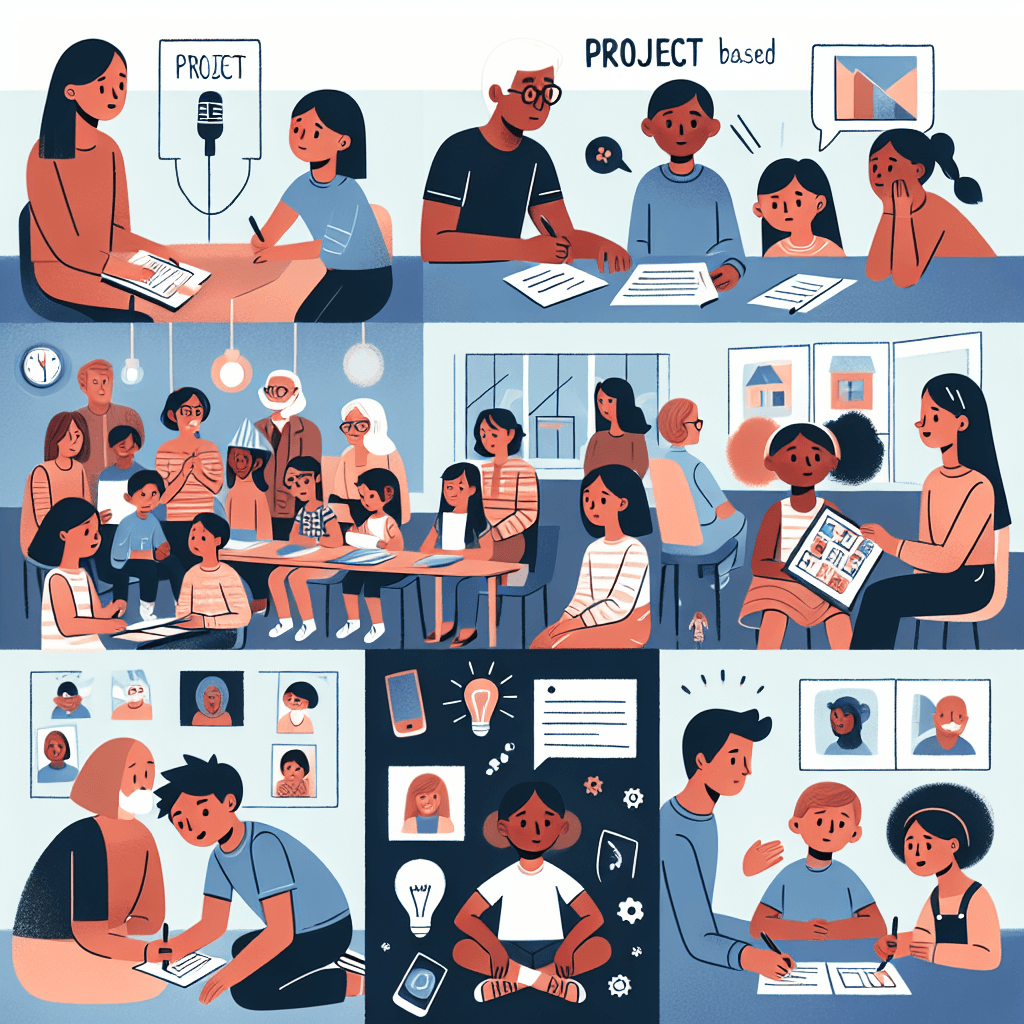
Family Voices: Amplifying Parent Stories
Inquiry Framework
Question Framework
Driving Question
The overarching question that guides the entire project.How can we, as future educators, create stronger, more empathetic, and inclusive school environments by understanding and amplifying the diverse educational experiences and histories of parents, particularly in light of the legacy of residential schools?Essential Questions
Supporting questions that break down major concepts.- How can understanding parents' educational experiences foster stronger teacher-parent relationships?
- In what ways does the history of residential schools impact contemporary parent-school relationships, and how can educators address these impacts?
- How can collecting and sharing parent stories cultivate empathy and compassion in future teachers?
- What strategies can educators employ to create a welcoming and inclusive environment for parents from diverse backgrounds?
Standards & Learning Goals
Learning Goals
By the end of this project, students will be able to:- Develop understanding of parent-teacher relationships
- Understand the impact of historical events, such as residential schools, on parent-school relationships
- Develop the ability to create stronger, more empathetic, and inclusive school environments
- Learn to amplify the diverse educational experiences and histories of parents
Teacher Development
Historical Education
Social-Emotional Learning
Entry Events
Events that will be used to introduce the project to students"Hidden Histories: A Parent's Perspective"
Students participate in a simulated truth and reconciliation circle where they hear pre-recorded, anonymized stories from parents reflecting on their own schooling experiences, both positive and negative, particularly focusing on experiences with cultural bias or systemic barriers. This event sparks immediate empathy and challenges students' assumptions about the 'typical' parent perspective, prompting them to consider the historical context influencing family-school relationships.Portfolio Activities
Portfolio Activities
These activities progressively build towards your learning goals, with each submission contributing to the student's final portfolio.Parent Interview Preparation
Students prepare for conducting respectful and empathetic interviews with parents about their educational experiences. This activity focuses on developing active listening skills, crafting open-ended questions, and creating a safe and supportive environment for sharing personal stories.Steps
Here is some basic scaffolding to help students complete the activity.Final Product
What students will submit as the final product of the activityA detailed interview protocol including a set of well-crafted interview questions, guidelines for active listening, and procedures for obtaining informed consent and ensuring confidentiality.Alignment
How this activity aligns with the learning objectives & standardsContributes to the 'develop-empathy' and 'compassionate-teacher' standards by preparing students to engage with parents in a respectful and empathetic manner. It also supports the 'educator-parent-relationships' standard by equipping students with the skills to build positive relationships with parents through effective communication.Parent Story Collection and Analysis
Students conduct interviews with parents, collect their stories, and analyze the common themes and perspectives that emerge. This activity provides students with firsthand insights into the diverse educational experiences of parents and helps them develop a deeper understanding of the challenges and opportunities facing families in the education system.Steps
Here is some basic scaffolding to help students complete the activity.Final Product
What students will submit as the final product of the activityA comprehensive report summarizing the key findings from the parent interviews, including anonymized excerpts from the interviews to illustrate the diverse experiences and perspectives of parents.Alignment
How this activity aligns with the learning objectives & standardsDirectly addresses the 'develop-empathy' and 'compassionate-teacher' standards by providing students with firsthand exposure to the diverse experiences of parents. It also reinforces the 'educator-parent-relationships' standard by fostering a deeper understanding of the factors that influence parent-teacher relationships.Action Plan for Empathetic Engagement
Based on their research and interviews, students develop an action plan outlining strategies for creating stronger, more empathetic, and inclusive school environments for parents. This activity encourages students to apply their learning to real-world situations and develop practical solutions for fostering positive parent-teacher relationships.Steps
Here is some basic scaffolding to help students complete the activity.Final Product
What students will submit as the final product of the activityA detailed action plan outlining concrete strategies for creating stronger, more empathetic, and inclusive school environments for parents, including specific steps, timelines, and resources.Alignment
How this activity aligns with the learning objectives & standardsIntegrates all four standards by requiring students to apply their knowledge of residential school history, empathy, and compassion to develop practical strategies for building positive relationships with parents and creating inclusive school environments. This activity demonstrates a comprehensive understanding of the project's learning goals and standards.Rubric & Reflection
Portfolio Rubric
Grading criteria for assessing the overall project portfolioFamily Voices Assessment Rubric
Understanding and Amplifying Parent Stories
Evaluates students' ability to comprehend and accurately represent parents' narratives and experiences.Interview Preparation and Execution
Assesses the quality of interview preparation, including crafting culturally sensitive and open-ended questions, and executing interviews respectfully.
Exemplary
4 PointsCrafted highly sensitive, insightful, and open-ended questions that effectively elicited diverse parent narratives; executed interviews with exceptional respect and active listening.
Proficient
3 PointsPrepared thoughtful, open-ended questions and conducted interviews with respect and active listening, capturing diverse narratives.
Developing
2 PointsPrepared mostly open-ended questions; attempted respectful interviews but showed inconsistent active listening.
Beginning
1 PointsCrafted questions with limited sensitivity, struggled with open-ended formats, and conducted interviews with minimal respect or active listening.
Data Analysis and Theme Identification
Evaluates ability to transcribe, anonymize, and analyze collected data to identify key themes and insights.
Exemplary
4 PointsSuccessfully transcribed and anonymized data, identifying insightful themes and creating a nuanced understanding of parents' experiences.
Proficient
3 PointsTranscribed and anonymized data correctly, identifying relevant themes and insights into parents' experiences.
Developing
2 PointsAttempted transcription and anonymization, identified themes with basic insights, but with some gaps.
Beginning
1 PointsTranscription and anonymization were incomplete or inaccurate with difficulty identifying themes or insights.
Empathy and Compassion Development
Measures students' growth in empathy and compassion towards parents' diverse educational experiences and challenges.Reflective Insight
Assesses depth of reflection on interviews and historical context, showing progression in empathy and understanding.
Exemplary
4 PointsDemonstrated profound reflective insight with deep historical context understanding, showing exceptional growth in empathy.
Proficient
3 PointsReflected well on the historical context and interviews, showing clear empathy growth.
Developing
2 PointsSome reflection evident with emerging understanding of context and empathy.
Beginning
1 PointsMinimal reflection on contexts or interviews with limited empathy development.
Action Plan for Inclusive Environment
Evaluates students' ability to create actionable strategies for fostering inclusive and empathetic school environments.Strategy Development and Implementation
Assesses ability to develop practical, empathetic strategies for school inclusivity based on parents' stories and historical insights.
Exemplary
4 PointsDeveloped innovative, practical strategies with detailed implementation plans for inclusivity, informed by parent stories and historical insights.
Proficient
3 PointsCreated practical and empathetic strategies with feasible implementation plans for inclusive environments.
Developing
2 PointsProposed basic strategies with partial implementation plans, exhibiting some understanding of inclusivity.
Beginning
1 PointsDeveloped limited strategies lacking practicality or clear implementation based on inadequate understanding.