
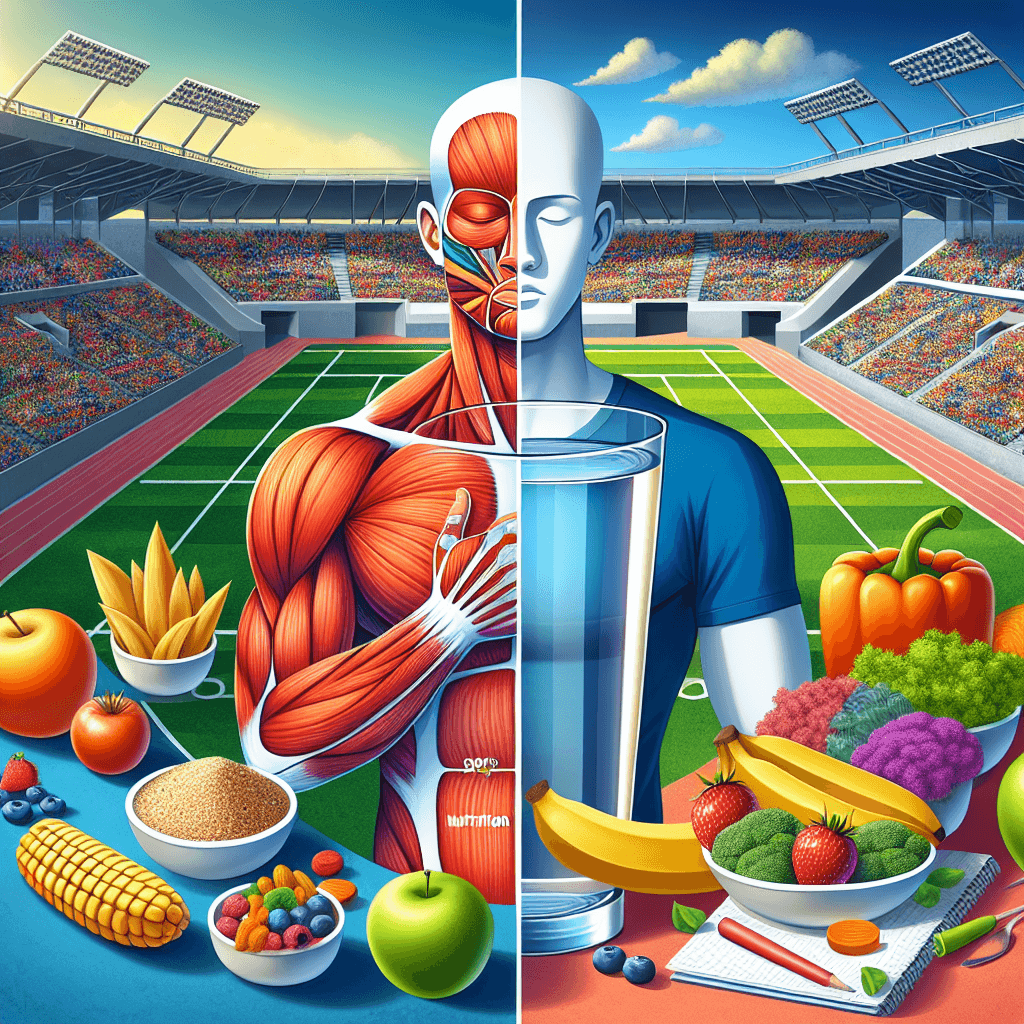
Fueling Performance: A Sports Nutrition Project
Inquiry Framework
Question Framework
Driving Question
The overarching question that guides the entire project.How can we optimize our nutrition to fuel athletic performance, enhance recovery, and achieve our fitness goals, considering the impact of different physical activities?Essential Questions
Supporting questions that break down major concepts.- How does nutrition impact athletic performance and recovery?
- What are the key nutrients needed for optimal sports performance?
- How can you make informed food choices to support your fitness goals?
- How do different types of physical activity affect your nutritional needs?
Standards & Learning Goals
Learning Goals
By the end of this project, students will be able to:- Students will be able to identify the impact of nutrition on athletic performance and recovery.
- Students will be able to analyze the key nutrients needed for optimal sports performance.
- Students will be able to evaluate food choices to support fitness goals.
- Students will understand how different types of physical activity affect nutritional needs.
Teacher Specified
Entry Events
Events that will be used to introduce the project to studentsNutritional Mythbusters
Present students with a series of common myths and misconceptions related to sports nutrition (e.g., "Carb loading is only for marathon runners," or "Protein shakes are essential for muscle growth"). Challenge them to critically evaluate each myth based on their current understanding, prompting them to identify areas where their knowledge is lacking and motivating them to seek evidence-based answers throughout the project.Food Label Forensics
Provide students with a variety of food labels from popular sports nutrition products (e.g., energy bars, protein powders, sports drinks). Challenge them to decipher the information, identify potential marketing claims, and evaluate the products' suitability for different athletic activities, fostering critical thinking and media literacy skills.Portfolio Activities
Portfolio Activities
These activities progressively build towards your learning goals, with each submission contributing to the student's final portfolio.Fueling Up: The Nutrient Navigator
Students will start by identifying the key nutrients (carbohydrates, proteins, fats, vitamins, and minerals) and their roles in supporting physical activity, performance, and recovery. They will create a comprehensive guide that explains the importance of each nutrient and its specific benefits for athletes.Steps
Here is some basic scaffolding to help students complete the activity.Final Product
What students will submit as the final product of the activityA detailed 'Nutrient Navigator' guide outlining the importance of each nutrient for athletes, including food sources and benefits.Alignment
How this activity aligns with the learning objectives & standardsAddresses Learning Goal 2: Students will be able to analyze the key nutrients needed for optimal sports performance. Aligns with Standard 2.12.16 by identifying food choices that provide beneficial nutrients for physical activity.Snack Attack: Performance Enhancers vs. Hindrance Heroes
Students will investigate various snack options commonly consumed by athletes and active individuals. They will analyze the nutritional content of these snacks, categorize them as either beneficial or detrimental to performance and recovery, and explain their reasoning based on scientific evidence.Steps
Here is some basic scaffolding to help students complete the activity.Final Product
What students will submit as the final product of the activityA report categorizing common snacks as performance enhancers or hindrance heroes, with detailed explanations for each classification.Alignment
How this activity aligns with the learning objectives & standardsAddresses Learning Goal 1: Students will be able to identify the impact of nutrition on athletic performance and recovery. Directly aligns with Standard 2.12.16 by identifying snacks that help or hinder performance.Activity-Based Nutrition Blueprint
Students will explore how nutritional needs vary depending on the type and intensity of physical activity. They will develop a nutrition blueprint for three different activities (e.g., endurance running, weightlifting, yoga), outlining the specific dietary requirements, meal timing, and hydration strategies for each.Steps
Here is some basic scaffolding to help students complete the activity.Final Product
What students will submit as the final product of the activityThree nutrition blueprints tailored to different physical activities, outlining specific dietary requirements and meal timing strategies.Alignment
How this activity aligns with the learning objectives & standardsAddresses Learning Goal 4: Students will understand how different types of physical activity affect nutritional needs. It also relates to Standard 2.12.16 by specifying food choices that support performance in various activities.Rubric & Reflection
Portfolio Rubric
Grading criteria for assessing the overall project portfolioSports Nutrition Portfolio Rubric
Nutrient Navigator Guide
Assessment of the student's ability to identify and explain the role of key nutrients in athletic performance and recovery.Identification of Key Nutrients
Accuracy and completeness in identifying the six key nutrients (carbohydrates, proteins, fats, vitamins, minerals, and water).
Exemplary
4 PointsIdentifies all six key nutrients accurately and provides a detailed explanation of each.
Proficient
3 PointsIdentifies all six key nutrients accurately.
Developing
2 PointsIdentifies most of the key nutrients with minor inaccuracies.
Beginning
1 PointsIdentifies only a few key nutrients or shows significant inaccuracies.
Role of Nutrients
Explanation of each nutrient's role in athletic performance, recovery, and overall health.
Exemplary
4 PointsProvides a comprehensive and insightful explanation of each nutrient's role, including specific benefits for athletes.
Proficient
3 PointsProvides a clear and accurate explanation of each nutrient's role.
Developing
2 PointsProvides a basic explanation of each nutrient's role with some omissions or inaccuracies.
Beginning
1 PointsProvides a limited or unclear explanation of each nutrient's role.
Food Sources
Examples of food sources rich in each nutrient.
Exemplary
4 PointsProvides diverse and relevant examples of food sources for each nutrient, demonstrating a strong understanding of nutritional content.
Proficient
3 PointsProvides appropriate examples of food sources for each nutrient.
Developing
2 PointsProvides some examples of food sources but may have omissions or inaccuracies.
Beginning
1 PointsProvides limited or irrelevant examples of food sources.
Snack Attack Report
Assessment of the student's ability to analyze snack options and categorize them based on their impact on athletic performance and recovery.Snack Selection
Appropriateness and variety of selected snacks.
Exemplary
4 PointsSelects a diverse range of snacks commonly consumed by athletes, demonstrating a good understanding of typical dietary choices.
Proficient
3 PointsSelects appropriate snacks commonly consumed by athletes.
Developing
2 PointsSelects some appropriate snacks, but the variety is limited.
Beginning
1 PointsSelects inappropriate or irrelevant snacks.
Nutritional Analysis
Accuracy in analyzing the nutritional content of each snack.
Exemplary
4 PointsProvides a detailed and accurate nutritional analysis of each snack, using credible sources and demonstrating a strong understanding of food labels.
Proficient
3 PointsProvides an accurate nutritional analysis of each snack.
Developing
2 PointsProvides a basic nutritional analysis with some omissions or inaccuracies.
Beginning
1 PointsProvides a limited or inaccurate nutritional analysis.
Categorization and Rationale
Justification for categorizing snacks as performance enhancers or hindrance heroes.
Exemplary
4 PointsProvides a well-reasoned and evidence-based justification for each snack's categorization, demonstrating a deep understanding of sports nutrition principles.
Proficient
3 PointsProvides a clear and logical rationale for each snack's categorization.
Developing
2 PointsProvides a basic rationale, but the reasoning may be incomplete or lack strong evidence.
Beginning
1 PointsProvides a weak or unsubstantiated rationale.
Activity-Based Nutrition Blueprints
Assessment of the student's ability to tailor nutrition plans to different physical activities.Activity Selection
Choice of diverse physical activities.
Exemplary
4 PointsSelects three diverse physical activities with varying intensities and durations, demonstrating a broad understanding of different training demands.
Proficient
3 PointsSelects three different physical activities.
Developing
2 PointsSelects two different physical activities or activities with similar demands.
Beginning
1 PointsSelects only one activity or activities that are not clearly defined.
Nutritional Needs Research
Accuracy and depth of research into the specific nutritional needs for each activity.
Exemplary
4 PointsConducts thorough research and accurately identifies the specific nutritional needs for each activity, considering energy expenditure, muscle recovery, and hydration with insightful details.
Proficient
3 PointsAccurately identifies the specific nutritional needs for each activity.
Developing
2 PointsIdentifies some of the nutritional needs, but the research may be incomplete or lack depth.
Beginning
1 PointsProvides limited or inaccurate information about nutritional needs.
Blueprint Creation
Detail and practicality of the nutrition blueprints.
Exemplary
4 PointsCreates detailed and highly practical nutrition blueprints for each activity, including pre-activity meals, during-activity snacks/hydration, and post-activity recovery meals, demonstrating a comprehensive understanding of meal timing and nutrient selection.
Proficient
3 PointsCreates detailed nutrition blueprints for each activity.
Developing
2 PointsCreates basic nutrition blueprints with some omissions or lack of specific details.
Beginning
1 PointsCreates incomplete or impractical nutrition blueprints.