
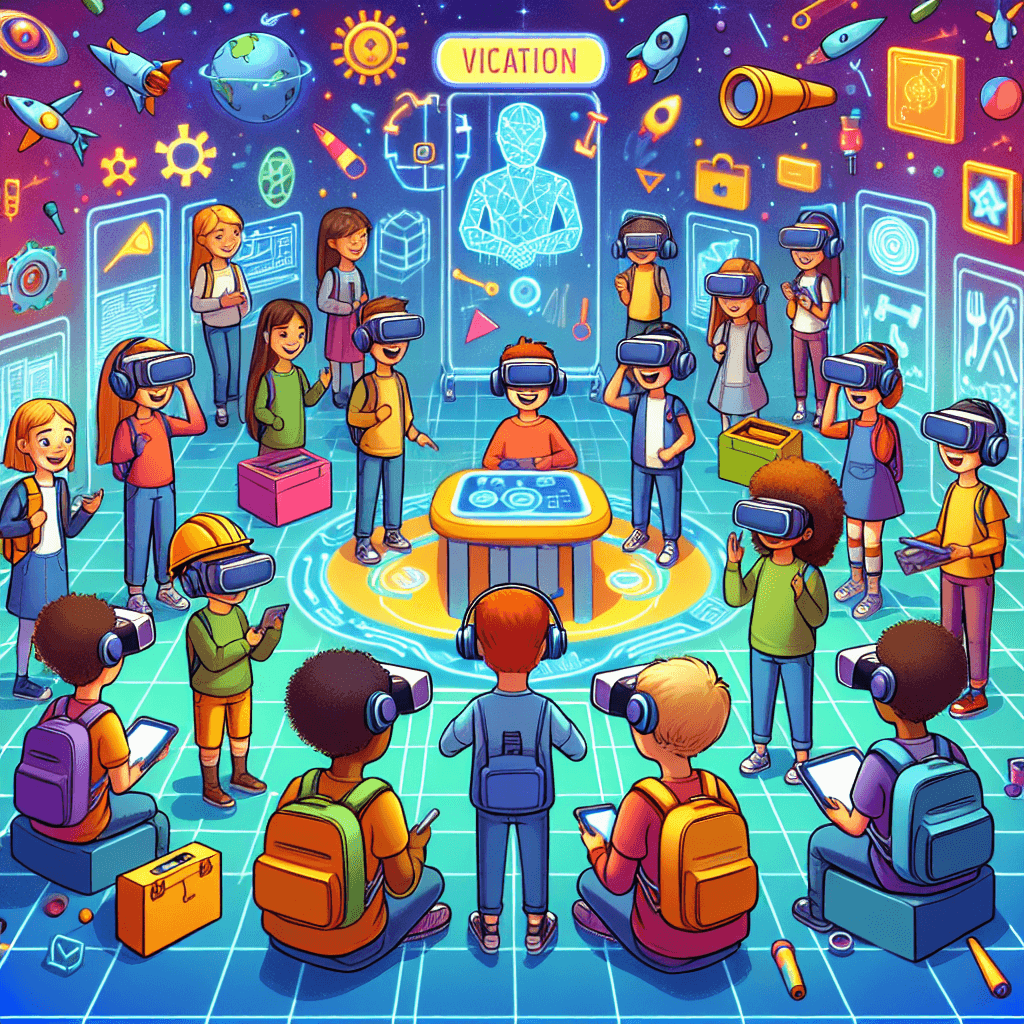
Futuristic VR Job Fair Creation
Inquiry Framework
Question Framework
Driving Question
The overarching question that guides the entire project.How can we create a futuristic job fair using virtual reality to explore how job roles and industries might evolve, and what skills will be needed to adapt to these changes?Essential Questions
Supporting questions that break down major concepts.- What are the current job trends and how might they evolve in the future?
- How does technology, such as virtual reality, impact the job market and job experiences?
- What skills might be needed for future jobs and how can we prepare for them?
- How do we effectively research and evaluate potential employers and industries?
- How can immersive virtual reality experiences be designed to accurately reflect future job roles and environments?
Standards & Learning Goals
Learning Goals
By the end of this project, students will be able to:- Students will investigate potential employers to understand current job roles and project future trends in those industries.
- Students will understand the impact of technology, including virtual reality, on the job market and job experiences.
- Students will identify and evaluate future job skills needed and plan ways to acquire them.
- Students will design and create immersive VR experiences that reflect potential future job roles and environments.
- Students will critically analyze job trends to predict how they may evolve in the future.
Teacher-specified Standard
Common Core State Standards
ISTE Standards for Students
Entry Events
Events that will be used to introduce the project to studentsVR Time Travel Recruitment
Students arrive in the classroom to find a virtual reality setup that transports them to a job fair in the year 2050. Each station showcases a futuristic job opportunity, sparking curiosity about the skills and innovations that drive these future roles, connecting them to modern-day studies and interests.Portfolio Activities
Portfolio Activities
These activities progressively build towards your learning goals, with each submission contributing to the student's final portfolio.Virtual Industry Analyst
Students will analyze how virtual reality and other technologies are affecting their chosen industry. By evaluating these impacts, they can understand the role of technology in shaping future job experiences.Steps
Here is some basic scaffolding to help students complete the activity.Final Product
What students will submit as the final product of the activityA presentation detailing the technological impacts on current and future job roles in the chosen industry.Alignment
How this activity aligns with the learning objectives & standardsAligns with CCSS.ELA-LITERACY.CCRA.R.7 by requiring students to integrate and evaluate content across diverse media and formats.Rubric & Reflection
Portfolio Rubric
Grading criteria for assessing the overall project portfolioFuturistic Job Fair VR Experience Rubric
Research and Analysis
Evaluation of students' ability to research technological advancements and analyze their impact on industries.Research Depth
Assesses the thoroughness and relevance of the research conducted on current technological advancements within the chosen industry.
Exemplary
4 PointsConducts extensive, relevant research using diverse, credible sources, demonstrating full understanding of current technological advancements in the industry.
Proficient
3 PointsConducts thorough research using credible sources, demonstrating a good understanding of current technological advancements in the industry.
Developing
2 PointsConducts limited research using a few sources, demonstrating partial understanding of current technological advancements in the industry.
Beginning
1 PointsConducts minimal research with limited sources, demonstrating little understanding of current technological advancements in the industry.
Impact Analysis
Measures students' ability to analyze and forecast the impact of technology on job roles and industry operations.
Exemplary
4 PointsProvides sophisticated analysis with strong data support, accurately forecasting how technology may reshape job roles and industry operations.
Proficient
3 PointsProvides thorough analysis with clear data support, effectively forecasting how technology may reshape job roles and industry operations.
Developing
2 PointsProvides basic analysis with some data support, with limited forecasting on how technology may reshape job roles.
Beginning
1 PointsProvides minimal analysis with inadequate data support, lacking foresight on how technology may affect job roles.
Presentation
Evaluates the clarity, structure, and creativity of the presentation showcasing technological impacts on job roles.Content Presentation
Assesses the organization, clarity, and relevance of the presentation content.
Exemplary
4 PointsDelivers a highly organized, clear, and engaging presentation with well-integrated visuals and data to support the analysis.
Proficient
3 PointsDelivers an organized and clear presentation with relevant visuals and data to support the analysis.
Developing
2 PointsDelivers a somewhat organized presentation with essential visuals and data, though clarity may be lacking.
Beginning
1 PointsDelivers a disorganized presentation with unclear visuals and insufficient data support.
Creative Design
Assess the innovation and creativity demonstrated in the VR experience design for future job roles.Innovation and Creativity
Measures the creativity and innovation in designing an immersive VR experience relevant to future job roles.
Exemplary
4 PointsDemonstrates exceptional creativity and innovation in VR design, effectively simulating future job roles with immersive elements.
Proficient
3 PointsDemonstrates creativity and innovative ideas in VR design, with relevant elements simulating future job roles.
Developing
2 PointsShows some creativity and innovation in VR design, though elements may not fully simulate future job roles.
Beginning
1 PointsDemonstrates limited creativity and innovation, with VR design lacking elements that simulate future job roles.