
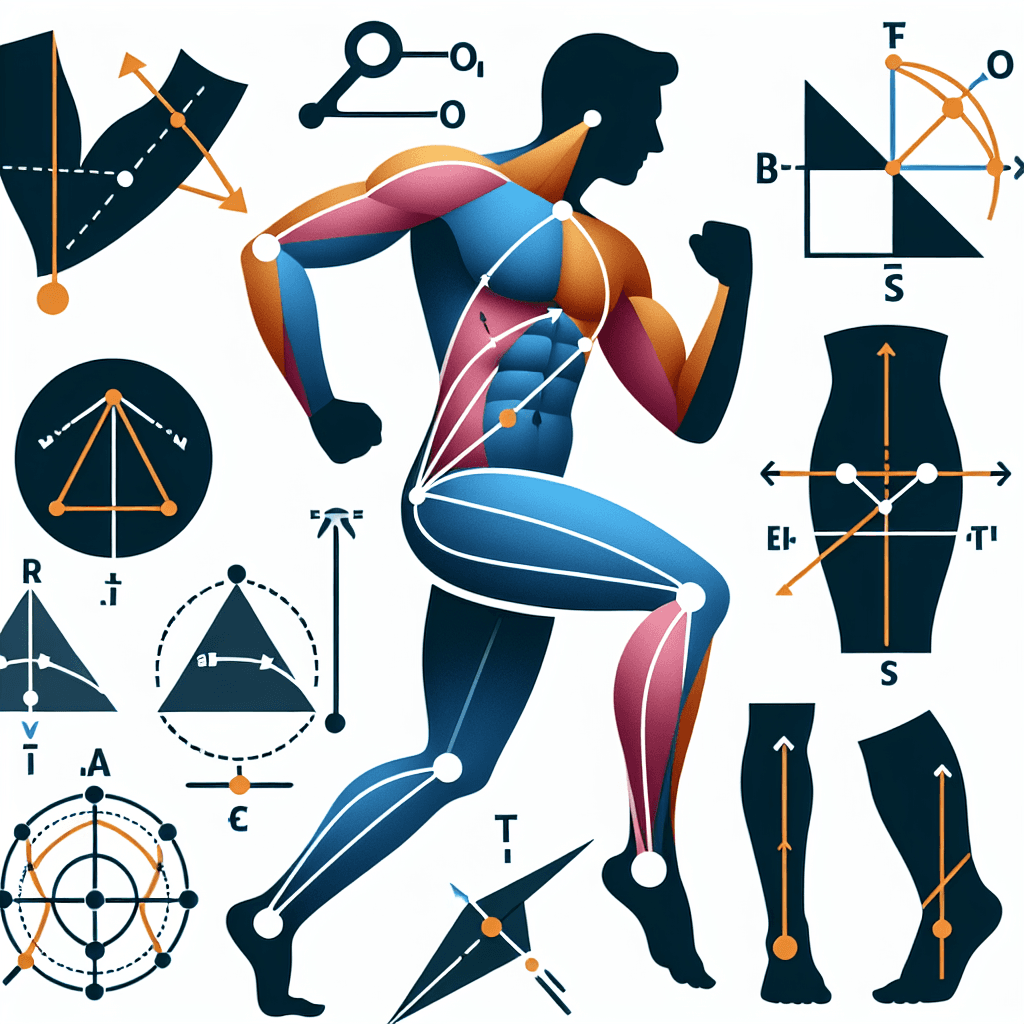
Geometry, Trigonometry, and Forces: Visual Math in the Body
Inquiry Framework
Question Framework
Driving Question
The overarching question that guides the entire project.How can we use geometry, trigonometry, and forces to solve real-world problems in orthopedics, acupuncture, search and rescue, and emergency medical services while ensuring safety and accuracy?Essential Questions
Supporting questions that break down major concepts.- How can mathematical models predict the forces on bones during traction?
- How does trigonometry ensure accuracy and safety in medical procedures like acupuncture?
- In what ways can trigonometry and the law of sines be applied to real-world search and rescue operations?
- How can vector decomposition optimize patient safety when lifting and moving stretchers?
Standards & Learning Goals
Learning Goals
By the end of this project, students will be able to:- Apply the concept of bone levers and torque to calculate the force needed to keep leg bones in alignment during traction.
- Use right triangle trigonometry to select the correct needle and angle for safe acupuncture depth.
- Apply the law of sines to estimate the location of a lost hiker using triangulation and radio bearings.
- Use vector decomposition to calculate strap tensions at different angles when lifting patients on a stretcher ramp.
Entry Events
Events that will be used to introduce the project to studentsThe Broken Leg Challenge: An Orthopedic Simulation
Students are presented with a simulated orthopedic case where a patient requires leg traction. They must use a model leg and weights to experiment with different force and distance combinations, aiming to realign a fractured bone visible via X-ray (provided). This hands-on activity sparks curiosity about bone levers and the role of torque in orthopedic treatment.Distress Signal Decoded: A Search and Rescue Mission
Students receive a coded distress call from a 'lost hiker' including directional bearings. They are tasked with using a map, protractors, and the law of sines to determine the hiker's estimated location. This activity simulates a real search and rescue scenario, highlighting the practical application of trigonometry in emergency situations.The Stretcher Ramp Dilemma: Optimizing Lifting Forces
An engaging video shows an EMS team struggling to lift a patient on a stretcher ramp, emphasizing the physical strain and challenges involved. Students are then presented with a similar scenario on a smaller scale (e.g., using weights and a model ramp) and challenged to find the optimal lifting angle and strap configuration to minimize the force required. This directly relates to their experiences of lifting objects and introduces the relevance of vector decomposition.The Body's Mathematical Mysteries: An Image-Based Inquiry
Students are shown a series of images depicting various injuries and medical procedures related to the skeletal system. They are then challenged to connect the images to mathematical concepts like levers, angles, and force vectors, prompting them to brainstorm how math plays a role in understanding and treating these conditions. This open-ended approach encourages inquiry and challenges preconceived notions about the relevance of math and science in healthcare.Portfolio Activities
Portfolio Activities
These activities progressively build towards your learning goals, with each submission contributing to the student's final portfolio.Lever Basics & Bone Traction
Students will start with basic lever problems and gradually apply them to bone structures.Steps
Here is some basic scaffolding to help students complete the activity.Final Product
What students will submit as the final product of the activityA detailed report on force calculations for leg traction, including diagrams.Alignment
How this activity aligns with the learning objectives & standardsLearning Goal 1: Apply the concept of bone levers and torque to calculate the force needed to keep leg bones in alignment during traction.Lost Hiker Locator
Students will work on triangulation techniques to locate a lost hiker.Steps
Here is some basic scaffolding to help students complete the activity.Final Product
What students will submit as the final product of the activityA map indicating the estimated location of the hiker, along with a report detailing the calculations.Alignment
How this activity aligns with the learning objectives & standardsLearning Goal 3: Apply the law of sines to estimate the location of a lost hiker using triangulation and radio bearings.Stretcher Ramp Optimization
Students will decompose force vectors to optimize lifting techniques.Steps
Here is some basic scaffolding to help students complete the activity.Final Product
What students will submit as the final product of the activityA strategy proposal for optimizing stretcher ramp angles and strap tensions, supported by vector calculations.Alignment
How this activity aligns with the learning objectives & standardsLearning Goal 4: Use vector decomposition to calculate strap tensions at different angles when lifting patients on a stretcher ramp.Rubric & Reflection
Portfolio Rubric
Grading criteria for assessing the overall project portfolioGeometry, Trigonometry & Forces Portfolio Rubric
Lever Mechanics and Bone Traction
Assessment of student's understanding of lever mechanics and its application to bone tractionCalculation Accuracy
Accuracy of lever mechanics and torque calculations
Exemplary
4 PointsCalculations are precise, accurate, and demonstrate a deep understanding of lever mechanics and torque.
Proficient
3 PointsCalculations are mostly accurate with a good understanding of lever mechanics and torque.
Developing
2 PointsCalculations contain some errors, demonstrating a basic understanding of lever mechanics and torque.
Beginning
1 PointsCalculations are inaccurate or incomplete, demonstrating a limited understanding of lever mechanics and torque.
Report Quality
Clarity and completeness of the report, including diagrams
Exemplary
4 PointsReport is exceptionally clear, well-organized, and includes detailed, accurate diagrams that enhance understanding.
Proficient
3 PointsReport is clear, well-organized, and includes accurate diagrams.
Developing
2 PointsReport is somewhat organized, but clarity is lacking in places, and diagrams may be incomplete or have minor inaccuracies.
Beginning
1 PointsReport is disorganized, unclear, and lacks diagrams or includes inaccurate/irrelevant diagrams.
Application of Concepts
Application of lever concepts to the bone traction scenario
Exemplary
4 PointsDemonstrates sophisticated application of lever concepts to the bone traction scenario, with innovative insights.
Proficient
3 PointsApplies lever concepts effectively to the bone traction scenario.
Developing
2 PointsApplies lever concepts to the bone traction scenario inconsistently.
Beginning
1 PointsStruggles to apply lever concepts to the bone traction scenario.
Triangulation and Search & Rescue
Assessment of student's understanding of triangulation and the law of sines in a search and rescue contextCalculation Accuracy
Accuracy of triangulation and law of sines calculations
Exemplary
4 PointsCalculations are precise, accurate, and demonstrate a deep understanding of triangulation and the law of sines.
Proficient
3 PointsCalculations are mostly accurate with a good understanding of triangulation and the law of sines.
Developing
2 PointsCalculations contain some errors, demonstrating a basic understanding of triangulation and the law of sines.
Beginning
1 PointsCalculations are inaccurate or incomplete, demonstrating a limited understanding of triangulation and the law of sines.
Map Quality
Quality and accuracy of the map indicating the hiker's location
Exemplary
4 PointsMap is exceptionally clear, accurate, and effectively indicates the estimated location of the hiker with detailed labeling and scale.
Proficient
3 PointsMap is clear, accurate, and indicates the estimated location of the hiker.
Developing
2 PointsMap is somewhat accurate but lacks clarity or detail in indicating the hiker's location.
Beginning
1 PointsMap is inaccurate, unclear, or does not effectively indicate the hiker's location.
Application of Concepts
Application of triangulation and law of sines to the search and rescue scenario
Exemplary
4 PointsDemonstrates sophisticated application of triangulation and law of sines to the search and rescue scenario, with innovative problem-solving.
Proficient
3 PointsApplies triangulation and law of sines effectively to the search and rescue scenario.
Developing
2 PointsApplies triangulation and law of sines to the search and rescue scenario inconsistently.
Beginning
1 PointsStruggles to apply triangulation and law of sines to the search and rescue scenario.
Vector Decomposition and Patient Safety
Assessment of student's understanding of vector decomposition and its application to optimizing patient safety on a stretcher rampCalculation Accuracy
Accuracy of vector decomposition and strap tension calculations
Exemplary
4 PointsCalculations are precise, accurate, and demonstrate a deep understanding of vector decomposition and its application to strap tension.
Proficient
3 PointsCalculations are mostly accurate with a good understanding of vector decomposition and its application to strap tension.
Developing
2 PointsCalculations contain some errors, demonstrating a basic understanding of vector decomposition and its application to strap tension.
Beginning
1 PointsCalculations are inaccurate or incomplete, demonstrating a limited understanding of vector decomposition.
Strategy Proposal Quality
Feasibility and optimality of the strategy proposal for stretcher ramp angles and strap tensions
Exemplary
4 PointsStrategy proposal is highly feasible, optimized for safety and efficiency, and demonstrates a deep understanding of force dynamics.
Proficient
3 PointsStrategy proposal is feasible, optimized for safety and efficiency.
Developing
2 PointsStrategy proposal is somewhat feasible but may not be fully optimized.
Beginning
1 PointsStrategy proposal is not feasible or shows little understanding of force dynamics.
Application of Concepts
Application of vector decomposition to optimize patient safety when lifting and moving stretchers
Exemplary
4 PointsDemonstrates sophisticated application of vector decomposition to optimize patient safety, with innovative solutions and a deep understanding of biomechanics.
Proficient
3 PointsApplies vector decomposition effectively to optimize patient safety.
Developing
2 PointsApplies vector decomposition to patient safety inconsistently.
Beginning
1 PointsStruggles to apply vector decomposition to patient safety.