
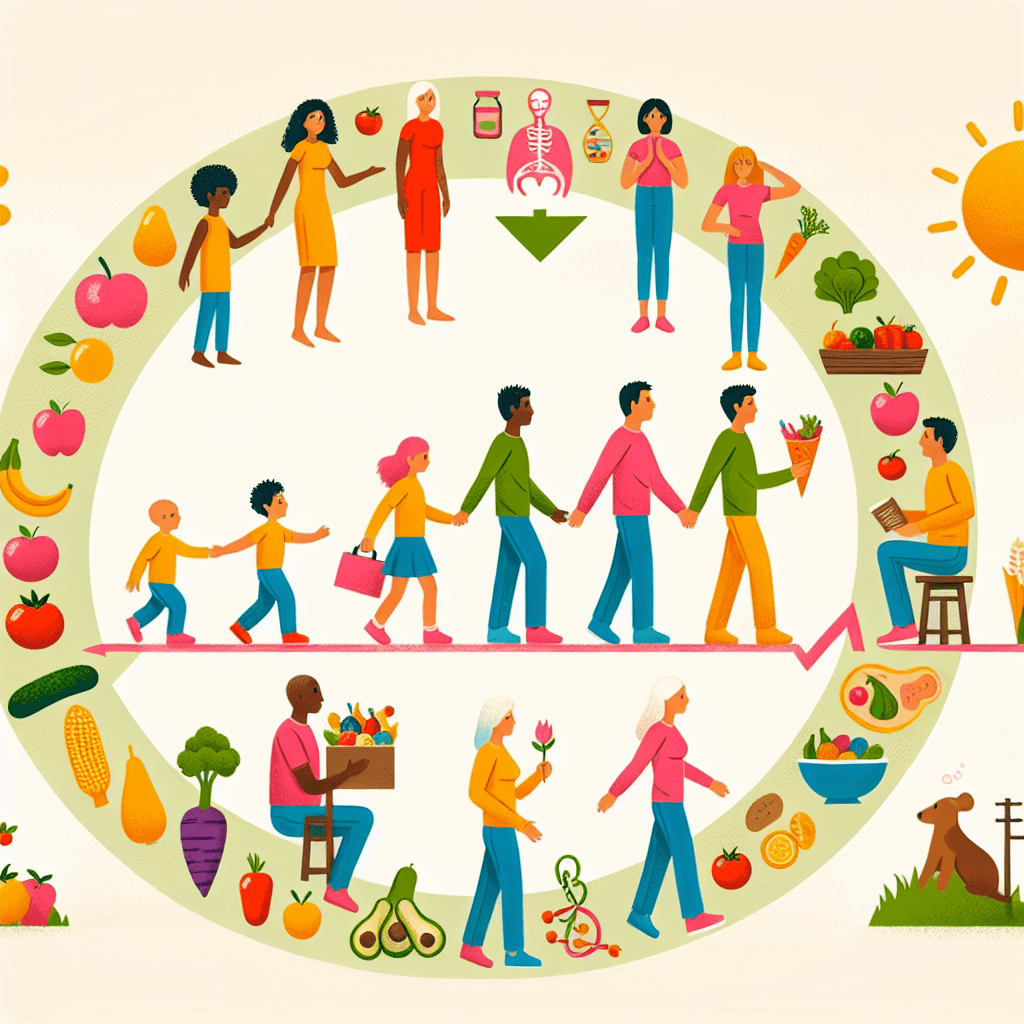
Growing Up Healthy: Life Cycles and Our Food Choices
Inquiry Framework
Question Framework
Driving Question
The overarching question that guides the entire project.How can we as members of different communities use what we know about plant life cycles and healthy habits to teach our community how to grow strong and stay safe?Essential Questions
Supporting questions that break down major concepts.- How does the life cycle of a plant provide us with the food our bodies need to grow?
- What makes a food 'healthy' and how can we choose the right foods for our meals?
- What can we do every day to keep our bodies strong, active, and safe from getting hurt?
- Who are the trusted adults we can talk to when we have questions about staying healthy or safe?
- How can we use our writing and speaking to teach our friends and families how to be wellness champions?
Standards & Learning Goals
Learning Goals
By the end of this project, students will be able to:- Students will explain the life cycle of a plant and describe how plants provide essential nutrients for human growth and wellness.
- Students will identify and categorize various foods from different food groups to construct examples of healthy, balanced meals.
- Students will identify and demonstrate daily behaviors and safety strategies that promote health, prevent illness, and avoid hazards in their community.
- Students will participate in a shared research project to investigate health topics and gather information from trusted resources.
- Students will write and present an informative piece that provides wellness recommendations, using appropriate grammar, spelling, and communication skills to reach a target audience.
Comprehensive Health Standards
Reading, Writing, and Communicating Standards
Next Generation Science Standards
Entry Events
Events that will be used to introduce the project to studentsThe Secret Garden Code
Students arrive to find a mysterious 'Garden of Life' box containing seeds, a tiny sprout, and a fully grown vegetable, alongside a letter from a local farmer who is worried that children are losing their 'fuel' to grow. The class must investigate how these plants grow through their life cycle and why eating them is the 'secret code' to helping a human's own life cycle stay strong and healthy.Portfolio Activities
Portfolio Activities
These activities progressively build towards your learning goals, with each submission contributing to the student's final portfolio.Life Cycle Detectives: From Seed to Strong!
To understand how humans grow, students must first understand how food grows. In this activity, students act as scientists to observe the life cycle of a plant from seed to harvest. They will compare the 'needs' of a plant (water, sun, soil) to the 'needs' of a human child (healthy food, water, movement) to establish that growth is a process that requires the right fuel.Steps
Here is some basic scaffolding to help students complete the activity.Final Product
What students will submit as the final product of the activityA 'Plant to Person' Growth Journal featuring labeled drawings of a plant's life cycle and a corresponding list of what both plants and humans need to stay alive and healthy.Alignment
How this activity aligns with the learning objectives & standardsThis activity aligns with NGSS 1-LS1-1 (using materials to design a solution by mimicking plant needs) and RW&C Std 4.1 (participating in shared research and inquiry). It also supports the teacher's goal of incorporating life cycles by observing growth patterns.The Rainbow Plate Palette
Now that students know how plants grow, they will explore the result: the food! Students will learn about the five food groups, focusing on fruits and vegetables. They will go on a 'Virtual Grocery Store Scavenger Hunt' to find foods that match the colors of the rainbow, learning that eating a variety of colors provides different nutrients for their bodies.Steps
Here is some basic scaffolding to help students complete the activity.Final Product
What students will submit as the final product of the activityA 'Rainbow Plate' collage. Students will cut out or draw different foods, categorize them into the correct food groups, and arrange them on a paper plate to represent a balanced, healthy meal.Alignment
How this activity aligns with the learning objectives & standardsThis activity aligns directly with Health Std 2.1 (identify a variety of foods from different food groups) and RW&C Std 3.2 (naming a topic and providing related details). It builds on Activity 1 by showing students which parts of the plant life cycle become the healthy fuel we eat.My Safety Shield & The Trusted Circle
Wellness isn't just about what we eat; it's about keeping our bodies safe from harm. In this activity, students identify potential hazards in their school and home (like spills, sharp objects, or not wearing a helmet) and learn who to turn to for help. They will identify their 'Wellness Team'—the trusted adults who keep them safe and healthy.Steps
Here is some basic scaffolding to help students complete the activity.Final Product
What students will submit as the final product of the activityA 'Safety Shield' poster. On one side, students draw a safety rule (like wearing a seatbelt); on the other, they draw their 'Trusted Adults' (parents, teachers, doctors) who help them stay well.Alignment
How this activity aligns with the learning objectives & standardsThis activity aligns with Health Std 2.2 (health-enhancing behaviors), Health Std 3.2 (identifying trusted adults), and Health Std 4.2 (strategies to avoid hazards). It expands the definition of wellness from just nutrition to total body safety.The Wellness Champion’s Handbook
In this final activity, students become 'Wellness Champions.' They will use everything they have learned about life cycles, nutrition, and safety to create an informative guide for their peers. This guide will explain how to grow strong and stay safe, acting as the 'Secret Code' mentioned in the entry event. They will then present their recommendations to a 'Junior Wellness Council' (another class or their families).Steps
Here is some basic scaffolding to help students complete the activity.Final Product
What students will submit as the final product of the activityA 'How-To Be a Wellness Champion' Guidebook. This multi-page booklet includes an introduction, sections on healthy eating and safety, and a concluding recommendation for the community.Alignment
How this activity aligns with the learning objectives & standardsThis activity is the cumulative synthesis of the project, aligning with RW&C Std 3.2 (writing informative texts), RW&C Std 3.4 (grammar and spelling), and RW&C Std 1.1 (verbal and nonverbal communication). It uses the research gathered in the previous three activities (RW&C 4.1).Rubric & Reflection
Portfolio Rubric
Grading criteria for assessing the overall project portfolioWellness Champion: Comprehensive Growth and Health Rubric
Biological Foundations and Life Cycles
Focuses on the science of how living things grow and the requirements for survival, specifically comparing plant and human life cycles.Scientific Inquiry: Life Cycles and Growth
The ability to identify, draw, and explain the stages of a plant's life cycle and compare plant needs to human needs for growth.
Exemplary
4 PointsStudent accurately labels all life cycle stages with detail, identifies all plant needs, and makes insightful, specific connections between plant growth and human health needs (e.g., comparing sun to vitamins).
Proficient
3 PointsStudent accurately identifies and draws the plant life cycle stages and lists basic needs for both plants and humans (water, food/soil, sun/warmth).
Developing
2 PointsStudent identifies some life cycle stages correctly but may miss steps or confuse plant/human needs. Drawings show emerging understanding of growth patterns.
Beginning
1 PointsStudent struggles to sequence the life cycle stages and cannot yet identify the basic needs required for plants or humans to grow and survive.
Nutrition and Healthy Habits
Evaluates the student's understanding of nutrition, food groups, and the ability to make health-enhancing dietary choices.Nutritional Literacy and Healthy Choices
The ability to categorize foods into the five food groups and design a balanced meal that supports body wellness.
Exemplary
4 PointsStudent expertly categorizes a wide variety of foods, creates a diverse 'Rainbow Plate,' and explains how different food parts (roots/leaves) relate to the plant life cycle.
Proficient
3 PointsStudent accurately sorts foods into the correct food groups and creates a 'Perfectly Powered Meal' featuring at least three different food groups.
Developing
2 PointsStudent sorts some foods correctly but shows inconsistency in categorizing. The balanced meal is missing key food groups or variety.
Beginning
1 PointsStudent shows significant difficulty identifying food groups or distinguishing between healthy and unhealthy choices for their meal.
Safety and Community Wellness
Assesses the student's ability to navigate their environment safely and seek help from appropriate community members.Safety Strategies and Trusted Resources
The ability to identify community hazards, practice safety behaviors, and recognize trusted adults as health resources.
Exemplary
4 PointsStudent identifies complex hazards, articulates multiple safety rules, and explains exactly how and when to contact specific trusted adults in an emergency.
Proficient
3 PointsStudent identifies common hazards in the school/home, demonstrates health-enhancing behaviors, and names at least three trusted adults for help.
Developing
2 PointsStudent identifies basic safety rules but struggles to explain the reason for them. Names only one or two trusted adults with prompting.
Beginning
1 PointsStudent cannot yet identify common hazards or explain who a trusted adult is in the context of health and safety.
Wellness Champion Communication
Evaluates the student's ability to communicate wellness research and recommendations through structured, evidence-based writing.Informative Writing and Synthesis
The ability to write an informative text with a clear topic, supporting details, and appropriate 1st-grade conventions.
Exemplary
4 PointsThe guidebook is highly organized with an engaging introduction, specific evidence-based wellness tips, and exceptional use of grammar, spelling, and punctuation.
Proficient
3 PointsThe guidebook clearly names the wellness topic, provides related details for each section, and uses readable grammar, spelling, and punctuation.
Developing
2 PointsThe guidebook names a topic but lacks specific details or a sense of closure. Writing conventions sometimes make the message difficult to understand.
Beginning
1 PointsThe writing is incomplete, lacks a clear topic, or uses conventions that make the text largely unreadable without heavy teacher support.
Public Presentation and Leadership
Assesses the student's ability to present their findings and lead their community as a 'Wellness Champion.'Verbal and Non-Verbal Advocacy
The ability to present wellness recommendations using verbal and non-verbal communication skills to influence a target audience.
Exemplary
4 PointsStudent speaks with exceptional clarity, maintains consistent eye contact, and uses persuasive body language to advocate for community wellness.
Proficient
3 PointsStudent communicates recommendations clearly using verbal language, makes some eye contact, and shares their 'Wellness Tip' audibly with the group.
Developing
2 PointsStudent shares information but speaks quietly or relies heavily on reading from the booklet. Non-verbal communication (eye contact) is limited.
Beginning
1 PointsStudent is unable to share recommendations verbally or requires significant scaffolding to communicate even one wellness idea to the audience.