
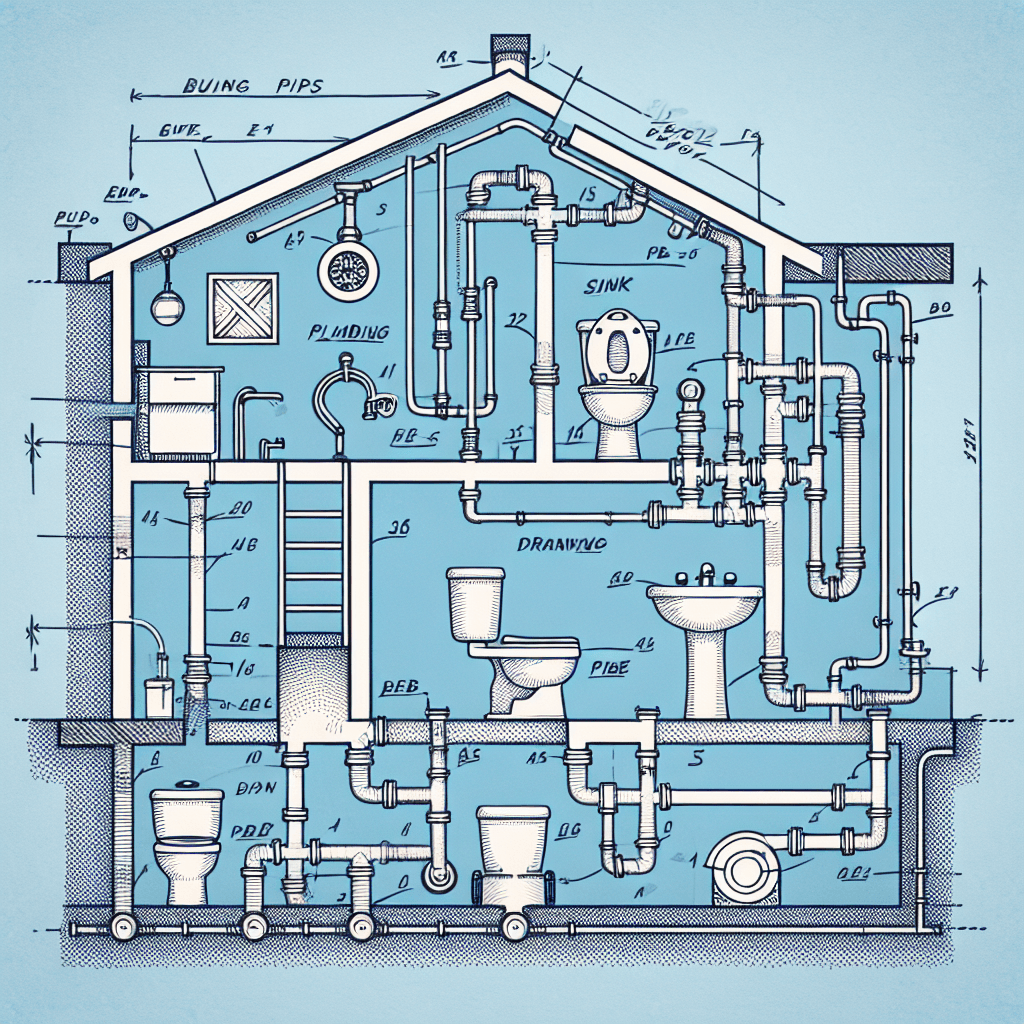
Home Plumbing Design: A Massachusetts Plumbing Code Project
Inquiry Framework
Question Framework
Driving Question
The overarching question that guides the entire project.How can we, as plumbing engineers, design a flexible and code-compliant residential plumbing system for a Massachusetts home that prioritizes public health, safety, and future customization while balancing functionality, cost-effectiveness, and sustainability?Essential Questions
Supporting questions that break down major concepts.- How do plumbing codes ensure public health and safety in residential buildings?
- What are the essential plumbing fixtures required in a Massachusetts home according to 248 CMR?
- How can a plumbing system be designed to accommodate future expansion and customization?
- What factors influence the optimal layout of plumbing fixtures in a residential dwelling?
- How do plumbing engineers balance functionality, cost-effectiveness, and sustainability in their designs?
Standards & Learning Goals
Learning Goals
By the end of this project, students will be able to:- Understand and apply Massachusetts plumbing codes (248 CMR) for residential dwellings.
- Design a residential plumbing system that includes all required fixtures.
- Plan for future expansion and customization of plumbing systems.
- Optimize the layout of plumbing fixtures considering functionality, cost, and sustainability.
- Prioritize public health and safety in plumbing system design.
Entry Events
Events that will be used to introduce the project to studentsThe Case of the Curious Condo Conversion
A local developer is seeking student consultation on converting an old warehouse into luxury condos, but the existing plumbing is a disaster. Students must evaluate the current layout, identify code violations, and propose innovative, cost-effective plumbing designs to meet modern residential demands.Portfolio Activities
Portfolio Activities
These activities progressively build towards your learning goals, with each submission contributing to the student's final portfolio.Code Compliance Challenge: MA Plumbing Regulations
Students delve into the 248 CMR plumbing code to understand the specific regulations for residential dwellings in Massachusetts. They will identify and list all required fixtures, setting the foundation for their plumbing system design.Steps
Here is some basic scaffolding to help students complete the activity.Final Product
What students will submit as the final product of the activityA detailed checklist of required plumbing fixtures and their code specifications in Massachusetts (248 CMR).Alignment
How this activity aligns with the learning objectives & standardsAddresses the learning goal: Understand and apply Massachusetts plumbing codes (248 CMR) for residential dwellings.Fixture Placement Planner: The Residential Layout
Students design a basic home layout incorporating all the mandatory plumbing fixtures identified in Activity 1. This activity focuses on spatial planning and optimal fixture placement to meet functional needs and code requirements.Steps
Here is some basic scaffolding to help students complete the activity.Final Product
What students will submit as the final product of the activityA scaled floor plan showing the placement of all required plumbing fixtures, with justifications for each placement decision.Alignment
How this activity aligns with the learning objectives & standardsAddresses the learning goals: Design a residential plumbing system that includes all required fixtures; Optimize the layout of plumbing fixtures considering functionality, cost, and sustainability.Customization Blueprint: Expanding the Plumbing System
Building upon the basic layout, students design options for future expansion and customization of the plumbing system, such as adding extra bathrooms or upgrading fixtures. This activity emphasizes flexibility and adaptability in plumbing design.Steps
Here is some basic scaffolding to help students complete the activity.Final Product
What students will submit as the final product of the activityA blueprint showcasing options for future plumbing system expansions, with feasibility and cost-effectiveness analyses.Alignment
How this activity aligns with the learning objectives & standardsAddresses the learning goal: Plan for future expansion and customization of plumbing systems.Health & Safety Assurance Report: Plumbing System Design
Students analyze their plumbing system design, focusing on how it addresses public health and safety concerns. They will identify potential hazards and propose solutions to ensure a safe and sanitary plumbing system.Steps
Here is some basic scaffolding to help students complete the activity.Final Product
What students will submit as the final product of the activityA comprehensive report detailing the measures taken to ensure public health and safety in their plumbing system design.Alignment
How this activity aligns with the learning objectives & standardsAddresses the learning goal: Prioritize public health and safety in plumbing system design.Rubric & Reflection
Portfolio Rubric
Grading criteria for assessing the overall project portfolioResidential Plumbing System Design Rubric
Code Compliance
Demonstrates understanding and application of Massachusetts plumbing codes (248 CMR).Accuracy of Code Interpretation
Correctness and completeness of identified code requirements and specifications.
Exemplary
4 PointsAccurately identifies and interprets all relevant sections of 248 CMR, demonstrating a comprehensive understanding of Massachusetts plumbing codes.
Proficient
3 PointsIdentifies and interprets most relevant sections of 248 CMR with minor inaccuracies or omissions.
Developing
2 PointsIdentifies some relevant sections of 248 CMR but demonstrates a limited understanding of the code requirements.
Beginning
1 PointsStruggles to identify relevant sections of 248 CMR and demonstrates a poor understanding of the code requirements.
Completeness of Fixture Checklist
Inclusion of all mandatory plumbing fixtures required by 248 CMR.
Exemplary
4 PointsChecklist includes all mandatory plumbing fixtures with detailed and accurate code specifications for each.
Proficient
3 PointsChecklist includes almost all mandatory plumbing fixtures with mostly accurate code specifications.
Developing
2 PointsChecklist includes some mandatory plumbing fixtures, but several are missing or have inaccurate code specifications.
Beginning
1 PointsChecklist is missing many mandatory plumbing fixtures and contains significant inaccuracies in code specifications.
Spatial Planning & Fixture Placement
Effectiveness of the layout design, considering accessibility, functionality, and code compliance.Optimized Fixture Placement
Strategic placement of fixtures to maximize space and meet user needs.
Exemplary
4 PointsFixture placement is exceptionally well-planned, maximizing space, functionality, and accessibility while exceeding code requirements.
Proficient
3 PointsFixture placement is well-planned, optimizing space and meeting functional needs while adhering to code requirements.
Developing
2 PointsFixture placement is adequate but could be improved to better optimize space, functionality, or accessibility. Meets basic code requirements.
Beginning
1 PointsFixture placement is poorly planned, inefficient, and does not adequately meet functional needs or code requirements.
Justification of Placement Decisions
Clarity and rationale behind the placement of each fixture.
Exemplary
4 PointsProvides thorough and insightful justifications for each fixture placement, demonstrating a deep understanding of spatial planning principles and user needs.
Proficient
3 PointsProvides clear and logical justifications for each fixture placement, demonstrating a good understanding of spatial planning principles and user needs.
Developing
2 PointsProvides basic justifications for some fixture placements, but explanations may lack detail or clarity.
Beginning
1 PointsFails to provide adequate justifications for fixture placements, demonstrating a limited understanding of spatial planning principles or user needs.
Future Customization & Expansion
Consideration of future plumbing system modifications and adaptability.Feasibility of Expansion Options
Realistic and practical expansion plans for future plumbing needs.
Exemplary
4 PointsPresents highly feasible and innovative expansion options, demonstrating a comprehensive understanding of plumbing system adaptability and long-term planning.
Proficient
3 PointsPresents feasible expansion options that address potential future plumbing needs.
Developing
2 PointsPresents some expansion options, but their feasibility or practicality is questionable.
Beginning
1 PointsFails to present viable expansion options or demonstrates a limited understanding of future plumbing needs.
Cost-Effectiveness Analysis
Evaluation of the economic implications of expansion options.
Exemplary
4 PointsProvides a detailed and insightful cost-effectiveness analysis for each expansion option, considering both initial investment and long-term operating costs.
Proficient
3 PointsProvides a clear cost-effectiveness analysis for each expansion option.
Developing
2 PointsProvides a basic cost analysis for some expansion options, but it may lack detail or accuracy.
Beginning
1 PointsFails to provide a meaningful cost analysis for expansion options.
Health & Safety
Measures to ensure a safe and sanitary plumbing system.Hazard Identification
Ability to identify potential health and safety hazards in the plumbing system design.
Exemplary
4 PointsIdentifies all potential health and safety hazards with a comprehensive understanding of associated risks.
Proficient
3 PointsIdentifies most potential health and safety hazards.
Developing
2 PointsIdentifies some potential health and safety hazards, but several are missed.
Beginning
1 PointsFails to identify most potential health and safety hazards.
Mitigation Strategies
Effectiveness of proposed solutions to mitigate identified hazards.
Exemplary
4 PointsProposes highly effective and innovative solutions to mitigate all identified health and safety hazards, exceeding code requirements and best practices.
Proficient
3 PointsProposes effective solutions to mitigate most identified health and safety hazards.
Developing
2 PointsProposes solutions to mitigate some identified health and safety hazards, but their effectiveness may be limited.
Beginning
1 PointsFails to propose adequate solutions to mitigate identified health and safety hazards.