
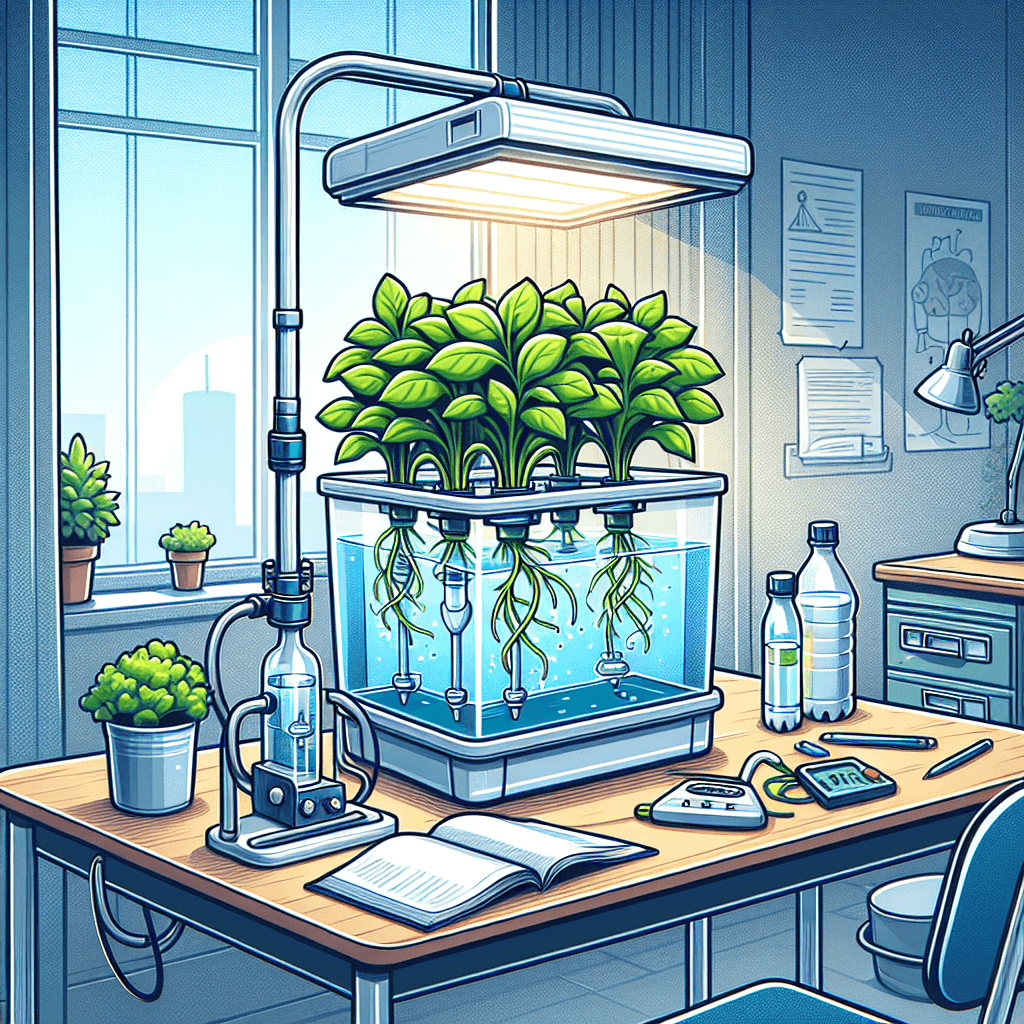
Hydroponics: Growing Food for the Future
Inquiry Framework
Question Framework
Driving Question
The overarching question that guides the entire project.How can we design and build a hydroponic system to address zero hunger in our community, considering the scientific principles, different system designs, advantages, disadvantages, and potential challenges of hydroponics?Essential Questions
Supporting questions that break down major concepts.- How can hydroponics contribute to achieving zero hunger?
- What are the key scientific principles behind hydroponics?
- How do different hydroponic systems work?
- How can we design and build an effective hydroponic system?
- What are the advantages and disadvantages of hydroponics compared to traditional farming?
- What challenges need to be addressed for wider adoption of hydroponics?
- How can hydroponics be implemented in our community to improve food security?
Standards & Learning Goals
Learning Goals
By the end of this project, students will be able to:- Students will be able to explain the concept of zero hunger and its connection to food security.
- Students will be able to design and build a functioning hydroponic system.
- Students will be able to explain the scientific principles underlying hydroponics, including nutrient cycles, plant growth, and water management.
- Students will be able to compare and contrast different hydroponic systems (e.g., deep water culture, nutrient film technique, drip system) and evaluate their advantages and disadvantages.
- Students will be able to identify and analyze the potential challenges of hydroponics, such as cost, energy consumption, and technical expertise.
- Students will be able to propose solutions to address the challenges of hydroponics and advocate for its wider adoption in the community.
Entry Events
Events that will be used to introduce the project to studentsCase Study: Urban Hydroponics Project
Students analyze a case study about a successful urban hydroponics project and brainstorm ways to implement similar initiatives in their community.Guest Speaker: The Future of Farming
A local farmer visits the classroom to discuss the challenges of traditional farming and the potential of hydroponics to address food security issues.Portfolio Activities
Portfolio Activities
These activities progressively build towards your learning goals, with each submission contributing to the student's final portfolio.Hydroponic System Engineers
Students will design and build their own hydroponic systems, applying the scientific principles they have learned. They will document their design process, materials used, and the challenges they encountered.Steps
Here is some basic scaffolding to help students complete the activity.Final Product
What students will submit as the final product of the activityA functioning hydroponic system and a detailed report outlining the design, construction, and scientific principles involved.Alignment
How this activity aligns with the learning objectives & standardsDesigning and building a functioning hydroponic system; explaining the scientific principles underlying hydroponics, including nutrient cycles, plant growth, and water management.Hydroponics System Analysts
Students will research and compare different types of hydroponic systems, analyzing their advantages, disadvantages, and suitability for different contexts.Steps
Here is some basic scaffolding to help students complete the activity.Final Product
What students will submit as the final product of the activityA comparative analysis of various hydroponic systems, including a presentation or report summarizing their findings.Alignment
How this activity aligns with the learning objectives & standardsComparing and contrasting different hydroponic systems (e.g., deep water culture, nutrient film technique, drip system) and evaluating their advantages and disadvantages.Rubric & Reflection
Portfolio Rubric
Grading criteria for assessing the overall project portfolioHydroponics Initiative Evaluation
Scientific Understanding
Measures understanding of scientific principles behind hydroponics and connection to zero hunger.Scientific Principles
Evaluates explanation of nutrient cycles, plant growth, and hydronic systems.
Exemplary
4 PointsProvides comprehensive and accurate explanation of nutrient cycles, plant growth, and hydroponic systems, with insightful connections to real-world applications of zero hunger.
Proficient
3 PointsExplains nutrient cycles, plant growth, and hydroponic systems clearly, with relevant connections to zero hunger.
Developing
2 PointsOffers a basic explanation of nutrient cycles, plant growth, and hydroponic systems, with minimal connection to zero hunger.
Beginning
1 PointsProvides incomplete or inaccurate explanation, with little to no connection to zero hunger.
Community Relevance
Evaluates the ability to apply hydroponics to address community food security.
Exemplary
4 PointsProposes insightful and innovative solutions for implementing hydroponics in the community, addressing food security effectively.
Proficient
3 PointsSuggests feasible solutions for utilizing hydroponics to improve community food security.
Developing
2 PointsOffers basic solutions with limited insight into community food security.
Beginning
1 PointsProvides limited or impractical solutions to community food security through hydroponics.
Design and Construction
Assesses the design and operational aspects of the hydroponic system created by students.System Design
Measures creativity and functionality in the designed hydroponic system.
Exemplary
4 PointsDesigns an innovative and highly functional hydroponic system, integrating advanced techniques and materials.
Proficient
3 PointsCreates a well-functioning hydroponic system, using appropriate techniques and materials.
Developing
2 PointsConstructs a basic hydroponic system with some functional elements.
Beginning
1 PointsStruggles to design a functional hydroponic system, with significant challenges in implementation.
Construction Process
Assesses execution of system building, documentation, and problem-solving.
Exemplary
4 PointsExecutes construction effectively with thorough documentation and innovative problem-solving strategies.
Proficient
3 PointsSuccessfully completes construction with clear documentation and effective problem-solving.
Developing
2 PointsCompletes construction with partial documentation and basic problem-solving.
Beginning
1 PointsStruggles with construction and documentation, requiring frequent support.
Analytical Skills
Evaluates the research, comparison, and analysis of different hydroponic systems.Comparative Analysis
Assesses the ability to research, contrast, and evaluate hydroponic systems.
Exemplary
4 PointsConducts thorough research and provides insightful comparison and evaluation of hydroponic systems, considering multiple perspectives.
Proficient
3 PointsPerforms detailed research with clear comparison and evaluation of systems.
Developing
2 PointsResearches and provides basic comparison of hydroponic systems.
Beginning
1 PointsStruggles with research and lacks clear comparisons and evaluations.