
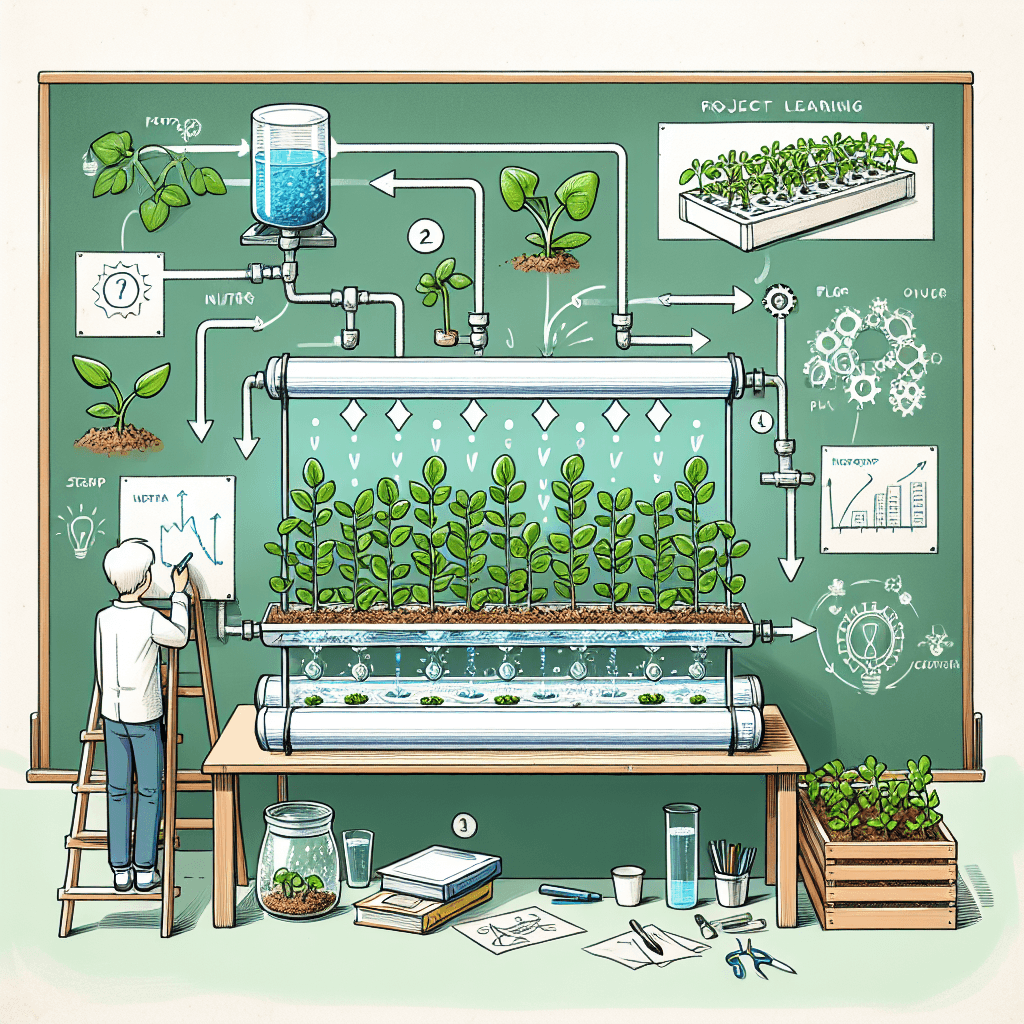
Hydroponics: Solving Food Insecurity Through Innovative Solutions
Inquiry Framework
Question Framework
Driving Question
The overarching question that guides the entire project.How can we design a sustainable hydroponic system that addresses food insecurity while considering historical, technological, environmental, and geographical factors?Essential Questions
Supporting questions that break down major concepts.- What is hydroponics, and how does it differ from traditional soil-based farming?
- How has the history of hydroponics influenced its development and adoption in modern agriculture?
- In what ways can hydroponics contribute to solving food insecurity in different parts of the world?
- What are the environmental impacts of hydroponics compared to traditional agriculture?
- How does the implementation of technology enhance the effectiveness of hydroponic systems?
- What are the potential health benefits and challenges associated with consuming hydroponically grown produce?
- How do geography and climate affect the adoption and successes of hydroponics in different regions?
- How can art and design contribute to the creation and operation of hydroponic systems?
- In what ways does learning about hydroponics intersect with various fields such as science, technology, and environmental studies?
Standards & Learning Goals
Learning Goals
By the end of this project, students will be able to:- Understand the history and development of hydroponics and its role in agriculture today.
- Analyze how hydroponic systems can address food insecurity globally and in local communities.
- Evaluate the environmental impacts of hydroponic systems in comparison to traditional farming methods.
- Design a sustainable hydroponic system considering various scientific, technological, and environmental factors.
- Develop skills to articulate and present research findings and design proposals related to hydroponics.
- Analyze the impact of geography and climate on the feasibility and success of hydroponic farming.
- Explore interdisciplinary connections between hydroponics and fields such as biology, environmental science, technology, and art.
Common Core Standards
Next Generation Science Standards
ISTE Standards for Students
Entry Events
Events that will be used to introduce the project to studentsHydroponic Time Machine Experience
Transform the classroom into a living timeline showcasing the history of farming from traditional methods to modern hydroponics, including live plants and digital projections. As students time travel through different eras, they encounter virtual interviews with historical figures and innovators in agriculture who challenge them to solve present-day food insecurity using hydroponics.Community Hydroponic Heroes
Invite local hydroponic farmers and experts to share their experiences and challenges in a panel discussion. Students are tasked to brainstorm and develop a community-based hydroponic project proposal, drawing inspiration from what they learned to address hunger in their own neighborhoods.Hydroponics Shark Tank Challenge
Students are introduced to the concept of hydroponics by developing a pitch for a 'Shark Tank'-style competition. They research and propose innovative hydroponic solutions to tackle food insecurity, then present their ideas to a panel of 'investor' peers for feedback and potential 'funding'.Portfolio Activities
Portfolio Activities
These activities progressively build towards your learning goals, with each submission contributing to the student's final portfolio.Historical Hydroculture Chronicles
Students will dive into the historical development of hydroponics, exploring its evolution and significance in modern agriculture. This will help them understand the groundwork upon which current hydroponic techniques are built.Steps
Here is some basic scaffolding to help students complete the activity.Final Product
What students will submit as the final product of the activityA timeline poster and a short essay on the evolution and impact of hydroponics.Alignment
How this activity aligns with the learning objectives & standardsSupports CCSS.ELA-LITERACY.W.6.1 by articulating historical claims about hydroponics, and CCSS.ELA-LITERACY.RI.6.7 by integrating various media formats in research.The Science Behind Hydroponics
Through scientific investigation, students will learn how environmental factors affect hydroponic plant growth, compared to traditional farming. This activity focuses on analyzing scientific data to enhance understanding.Steps
Here is some basic scaffolding to help students complete the activity.Final Product
What students will submit as the final product of the activityA comparative data report explaining the effects of environmental factors on hydroponics versus soil-based farming.Alignment
How this activity aligns with the learning objectives & standardsAligns with NGSS.MS-LS1-5 by constructing explanations based on environmental influences on plant growth.Design your Hydroponic Structure
Students are challenged to design a sustainable hydroponic system, considering various scientific, technological, and environmental factors, reflecting their problem-solving skills.Steps
Here is some basic scaffolding to help students complete the activity.Final Product
What students will submit as the final product of the activityA model/prototype and detailed design proposal of a hydroponic system.Alignment
How this activity aligns with the learning objectives & standardsMeets NGSS.MS-ETS1-1 by defining and designing within constraints; reinforces ITSE.6.D.1 by applying technology in design.Geographical Impact Analysis
In this exploration, students will analyze how varying climatic and geographical factors affect hydroponic adoption and success in different regions.Steps
Here is some basic scaffolding to help students complete the activity.Final Product
What students will submit as the final product of the activityA geographical impact report on hydroponics with maps and climate analysis.Alignment
How this activity aligns with the learning objectives & standardsAddresses NGSS.MS-LS1-5 through geographic analysis and aligns with CCSS.ELA-LITERACY.RI.6.7 by integrating different formats of information.Presenting Hydroponic Solutions
Students will learn how to present their findings and system designs logically and coherently, enhancing their ability to communicate scientifically.Steps
Here is some basic scaffolding to help students complete the activity.Final Product
What students will submit as the final product of the activityA multimedia presentation of hydroponic solutions, backed by research and design proposals.Alignment
How this activity aligns with the learning objectives & standardsAligns with CCSS.ELA-LITERACY.SL.6.4 by requiring logical sequencing in presentations.Rubric & Reflection
Portfolio Rubric
Grading criteria for assessing the overall project portfolioHydroponics Mastery Assessment
Historical Research and Synthesis
Assessment of students' ability to research, understand, and synthesize historical developments in hydroponics.Historical Knowledge
Measures understanding of key historical milestones in hydroponics and their influence on modern practices.
Exemplary
4 PointsDemonstrates a comprehensive understanding of hydroponics history by accurately identifying all significant milestones and clearly explaining their modern-day impact.
Proficient
3 PointsShows a thorough understanding by identifying most significant milestones in hydroponics history and articulating their influence on modern applications.
Developing
2 PointsDisplays basic understanding, identifying some milestones, but lacks depth in explaining their significance to modern hydroponics.
Beginning
1 PointsShows limited understanding of historical milestones in hydroponics, with minimal connections to their modern impact.
Integration of Media and Sources
Evaluates the ability to integrate multiple sources and media formats into historical research.
Exemplary
4 PointsSeamlessly integrates an extensive range of media and sources, creating a coherent and rich historical narrative.
Proficient
3 PointsEffectively integrates multiple types of media and sources, creating a coherent historical summary.
Developing
2 PointsInconsistently integrates media and sources, leading to a partially coherent historical account.
Beginning
1 PointsStruggles to integrate media and sources, resulting in a fragmented historical narrative.
Scientific Investigation and Analysis
Evaluation of students' skills in setting up and analyzing hydroponic systems versus soil-based systems.Scientific Method Application
Assesses application of the scientific method in experimental design and data analysis.
Exemplary
4 PointsExpertly applies the scientific method, with a clear hypothesis, detailed experimental procedure, and thorough data analysis.
Proficient
3 PointsUses the scientific method effectively, with a clear hypothesis and detailed data analysis.
Developing
2 PointsApplies the scientific method with gaps in hypothesis clarity or data analysis depth.
Beginning
1 PointsStruggles to apply the scientific method, with unclear hypotheses or inadequate data analysis.
Data Interpretation and Conclusion
Evaluates accuracy and depth in interpreting experimental data and drawing conclusions.
Exemplary
4 PointsInterprets data with exceptional accuracy, drawing insightful, evidence-backed conclusions about plant growth in different systems.
Proficient
3 PointsAccurately interprets data and draws sound, evidence-backed conclusions.
Developing
2 PointsInterprets data with partial accuracy, resulting in basic or partially supported conclusions.
Beginning
1 PointsDemonstrates minimal accuracy in data interpretation, leading to unsupported or inaccurate conclusions.
Design Innovation and Problem Solving
Assessment of innovative design and problem-solving in creating a sustainable hydroponic system.Creativity and Innovation
Measures creativity and innovation in design solutions addressing constraints and criteria.
Exemplary
4 PointsExhibits exceptional creativity and innovation in system design, thoroughly addressing all constraints and criteria with unique approaches.
Proficient
3 PointsDemonstrates creativity and innovative thinking, effectively addressing most constraints and criteria.
Developing
2 PointsShows emerging creativity, addressing constraints and criteria with conventional solutions.
Beginning
1 PointsLimited creativity in design, with minimal consideration of constraints and criteria.
Practicality and Feasibility
Evaluates the practicality and feasibility of the proposed design solution.
Exemplary
4 PointsDesign solution is highly practical and feasible, with comprehensive consideration of real-world applications.
Proficient
3 PointsDemonstrates practical and feasible solutions, considering many real-world factors.
Developing
2 PointsProposes solutions with partial practicality and feasibility, considering few real-world factors.
Beginning
1 PointsDesign lacks practicality and feasibility, with little consideration of real-world applications.
Geographic Analysis and Contextual Understanding
Evaluates understanding of geographical and environmental impacts on hydroponic practices.Geographic Insight
Measures ability to analyze and interpret the impact of geography on hydroponic practices globally.
Exemplary
4 PointsProvides profound geographic insight, accurately analyzing and interpreting the impact of geography on hydroponic practices.
Proficient
3 PointsDemonstrates solid geographic insight, effectively analyzing most aspects of geographic impact.
Developing
2 PointsShows some geographic insight, analyzing certain aspects of geographic impact.
Beginning
1 PointsLimited geographic insight, with minimal analysis of geographic impact.
Evidence-Based Contextual Analysis
Evaluates ability to use evidence for contextual analysis of hydroponic systems in varied environments.
Exemplary
4 PointsConducts exceptional evidence-based analysis, providing deep contextual understanding of hydroponic systems in different regions.
Proficient
3 PointsConducts sound evidence-based contextual analysis, demonstrating understanding of regional systems.
Developing
2 PointsProvides limited evidence-based analysis, giving basic contextual understanding.
Beginning
1 PointsMinimal evidence-based analysis with poor contextual understanding.
Presentation and Communication Skills
Assessment of presentation skills and effectiveness in communicating hydroponic research and design proposals.Presentation Clarity and Organization
Evaluates the clarity, organization, and logical sequencing of multimedia presentations.
Exemplary
4 PointsPresentation is exceptionally clear, organized, and logically sequenced, effectively engaging the audience.
Proficient
3 PointsPresentation is clear, well-organized, and logically sequenced, engaging the audience effectively.
Developing
2 PointsPresentation is somewhat clear and organized, with some logical sequencing issues.
Beginning
1 PointsPresentation lacks clarity and organization, with poor logical sequencing.
Engagement and Persuasiveness
Measures ability to engage the audience and persuasively present hydroponic solutions.
Exemplary
4 PointsEngages the audience exceptionally well, presenting hydroponic solutions with persuasive and compelling arguments.
Proficient
3 PointsEngages the audience well, presenting solutions with clear and persuasive arguments.
Developing
2 PointsEngages the audience minimally, with basic persuasive elements.
Beginning
1 PointsLimited audience engagement, with weak or unpersuasive argumentation.