
Inquiry Framework
Question Framework
Driving Question
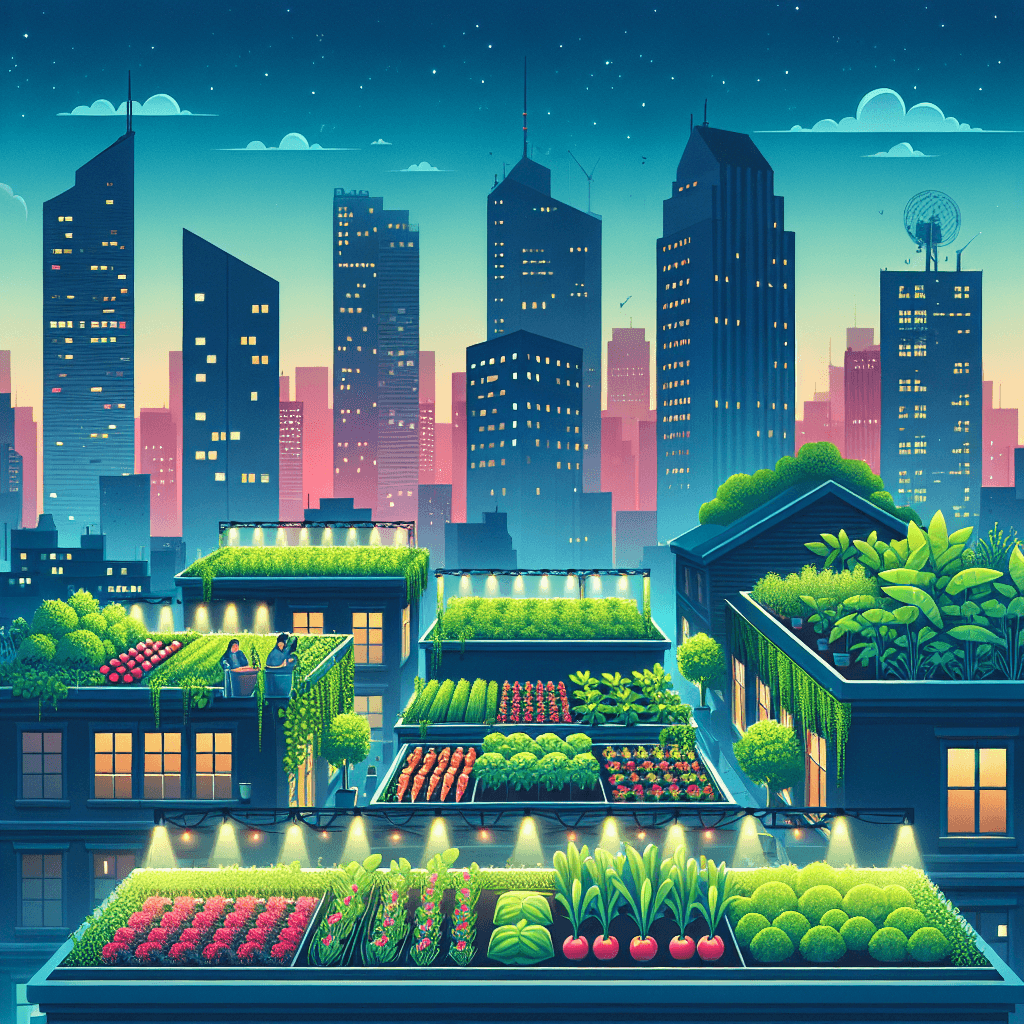
The overarching question that guides the entire project.How can we use our understanding of the effects of light levels on plant growth to design and build a thriving urban farm in a limited-light environment?Essential Questions
Supporting questions that break down major concepts.- How do different light levels affect the growth of plants?
- What are the optimal light conditions for different plant species in an urban environment?
- How can we use our experimental findings to design effective urban farms in areas with limited sunlight?
Standards & Learning Goals
Learning Goals
By the end of this project, students will be able to:- Students will be able to design and conduct an experiment to investigate the impact of different light levels on plant growth.
- Students will be able to analyze and interpret data to draw conclusions about the relationship between light levels and plant growth.
- Students will be able to apply their understanding of plant growth needs to propose solutions for urban farming in limited-light environments.
NGSS
Entry Events
Events that will be used to introduce the project to studentsThe Blackout Challenge
Imagine stepping into a futuristic city where vertical farms tower above, but a sudden energy crisis plunges them into darkness. Your mission: to develop innovative lighting solutions to keep the city fed.Portfolio Activities
Portfolio Activities
These activities progressively build towards your learning goals, with each submission contributing to the student's final portfolio.Illuminating Predictions
Students will predict how different light levels will affect plant growth. They will consider factors like plant type, light intensity, and duration of exposure.Steps
Here is some basic scaffolding to help students complete the activity.Final Product
What students will submit as the final product of the activityA written prediction outlining expected plant growth outcomes under different light conditions, including a rationale based on prior knowledge or research.Alignment
How this activity aligns with the learning objectives & standardsAddresses MS-LS2-1 by focusing on the effects of light (a resource) on plant growth.The Light Architects
Students design a controlled experiment to test their predictions about light's effect on plant growth.Steps
Here is some basic scaffolding to help students complete the activity.Final Product
What students will submit as the final product of the activityA detailed experimental design plan, including materials list, procedure, variables, and data collection methods.Alignment
How this activity aligns with the learning objectives & standardsAddresses MS-LS2-1 through the design and implementation of an experiment to investigate resource availability (light).Growth Journal Chronicles
Students conduct their experiment, meticulously collecting data on plant growth under varying light conditions.Steps
Here is some basic scaffolding to help students complete the activity.Final Product
What students will submit as the final product of the activityA completed data table showing plant growth measurements over time for each light level group.Alignment
How this activity aligns with the learning objectives & standardsAddresses MS-LS2-1 by requiring students to collect and record data on plant growth under different resource (light) conditions.Data Detectives
Students analyze their collected data to draw conclusions about the relationship between light levels and plant growth.Steps
Here is some basic scaffolding to help students complete the activity.Final Product
What students will submit as the final product of the activityA written analysis of the data, including graphs, charts, and explanations of the observed trends.Alignment
How this activity aligns with the learning objectives & standardsAddresses MS-LS2-1 by having students analyze and interpret collected data to determine the effects of resource availability.Urban Farm Innovators
Students apply their findings to propose solutions for urban farming in limited-light environments.Steps
Here is some basic scaffolding to help students complete the activity.Final Product
What students will submit as the final product of the activityA presentation outlining proposed solutions for urban farms, including specific lighting strategies, plant selection, and farm design.Alignment
How this activity aligns with the learning objectives & standardsAddresses MS-LS2-1 by requiring students to apply their understanding of resource impact to propose real-world solutions.Rubric & Reflection
Portfolio Rubric
Grading criteria for assessing the overall project portfolioUrban Farming in Limited Light Rubric
Scientific Research and Hypothesis
Evaluates students' ability to research plant light needs and formulate hypotheses based on this data.Research Quality
Quality and depth of research on plant light requirements.
Exemplary
4 PointsConducts thorough, well-documented research on a wide range of plant types and their light needs.
Proficient
3 PointsConducts thorough research on several plant types and their light needs, with adequate documentation.
Developing
2 PointsConducts limited research on plant light needs with some gaps in knowledge and documentation.
Beginning
1 PointsConducts minimal research with significant gaps and poor documentation.
Hypothesis Formulation
Ability to generate a testable prediction based on research data.
Exemplary
4 PointsDevelops a clear, insightful hypothesis that is well-supported by research data.
Proficient
3 PointsCreates a clear hypothesis supported by research data, though with minor lapses in insight.
Developing
2 PointsGenerates a vague or partially supported hypothesis with some reliance on assumptions.
Beginning
1 PointsDevelops an unclear or unsupported hypothesis, often reliant on assumption.
Experimental Design and Execution
Assesses the planning and conducting of an experiment to test light levels impact on plant growth.Experimental Plan
The completeness and clarity of the experimental setup plan.
Exemplary
4 PointsDesigns a comprehensive, clear experimental plan that controls variables effectively.
Proficient
3 PointsCreates a well-structured plan with mostly clear procedures and variable controls.
Developing
2 PointsDrafts a basic plan with some clear steps but inconsistent variable controls.
Beginning
1 PointsPresents an unclear or incomplete plan, with significant gaps in variable control.
Data Collection Precision
Accuracy and detail in data collection and recording throughout the experiment.
Exemplary
4 PointsConsistently collects and meticulously records comprehensive data, with high accuracy.
Proficient
3 PointsAccurately collects adequate data, recording it clearly in most instances.
Developing
2 PointsCollects basic data with occasional inaccuracies or omissions.
Beginning
1 PointsCollects minimal data with frequent inaccuracies or gaps in records.
Data Analysis and Interpretation
Evaluates students' ability to interpret data and draw conclusions about light impact on growth.Data Visualization
Effectiveness in organizing data into tables and graphs for analysis.
Exemplary
4 PointsCreates precise, clear graphs and tables that effectively illustrate data trends.
Proficient
3 PointsForms clear and mostly accurate graphs and tables to represent data.
Developing
2 PointsProduces basic graphs and tables with some clarity and accuracy issues.
Beginning
1 PointsDevelops unclear or inaccurate graphs and tables, lacking detail.
Conclusion and Reflection
Ability to draw well-supported conclusions and reflect on the hypothesis vs. results.
Exemplary
4 PointsDraws insightful conclusions that are comprehensively supported by precise data analysis.
Proficient
3 PointsReaches logical conclusions supported by clear analysis of most data points.
Developing
2 PointsDraws basic conclusions with partial support, missing some data connections.
Beginning
1 PointsProduces vague or unsupported conclusions, lacking data correlation.
Application and Innovation
Measures students' ability to apply experimental findings creatively to real-world urban farming.Solution Proposal
Creativity and practicality in suggesting urban farm solutions based on findings.
Exemplary
4 PointsProposes innovative, practical solutions directly informed by experiment data.
Proficient
3 PointsOffers practical solutions supported by experimental data, though less original.
Developing
2 PointsSuggests basic, somewhat feasible solutions with limited data linkage.
Beginning
1 PointsProvides unclear solutions with minimal relation to data findings.