
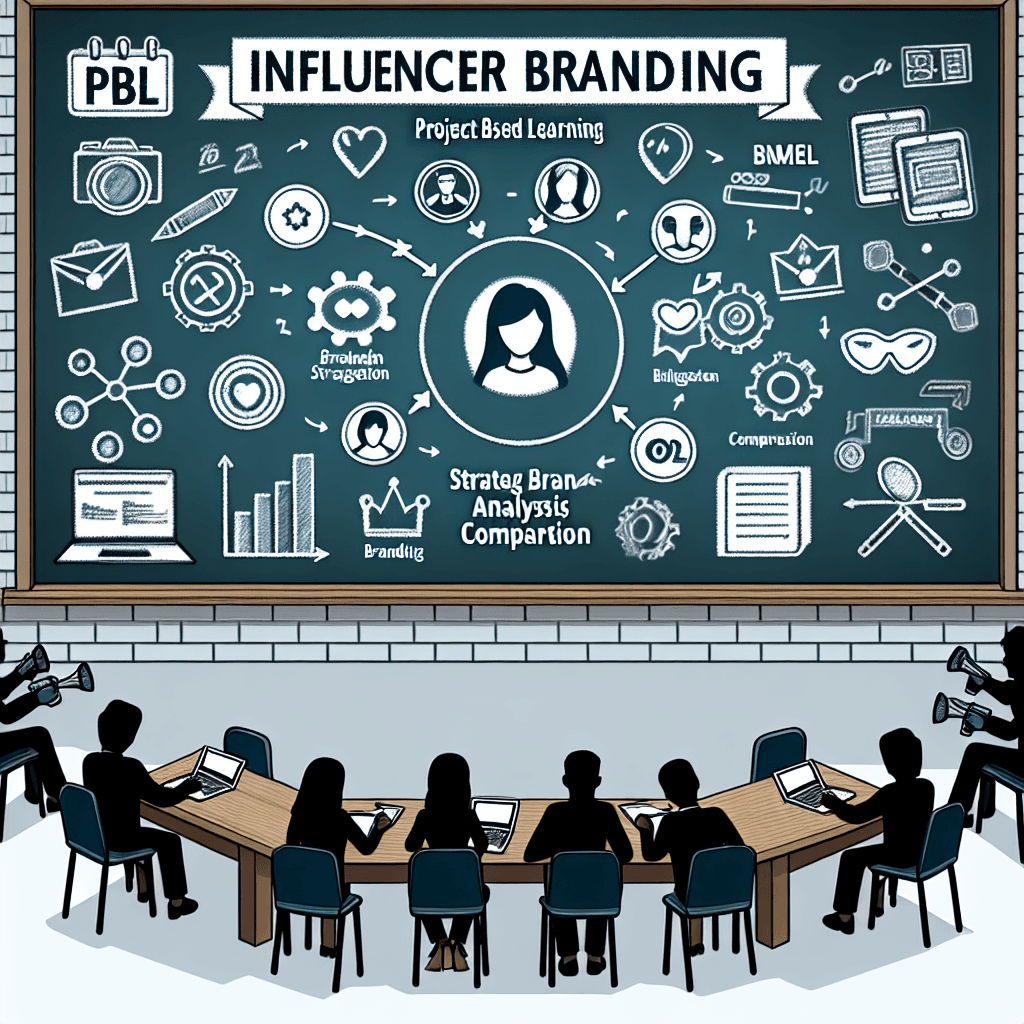
Influencer Branding: Strategy Analysis & Comparison
Inquiry Framework
Question Framework
Driving Question
The overarching question that guides the entire project.How can we analyze the strategies of social media influencers to understand their personal branding techniques, and in what ways do these strategies differ or align across various influencers and platforms?Essential Questions
Supporting questions that break down major concepts.- What are the primary strategies used by social media influencers to build and maintain their personal brand on specific platforms?
- How do the communication styles of different social media influencers compare and contrast in terms of their effectiveness and audience engagement?
- What role does authenticity play in the personal branding of social media influencers, and how is it perceived by their audience?
- In what ways do social media influencers differentiate themselves from one another, and what factors contribute to these differences?
Standards & Learning Goals
Learning Goals
By the end of this project, students will be able to:- Analyze the personal branding strategies of social media influencers to understand how they build and maintain their brand.
- Compare and contrast the techniques used by different influencers, identifying similarities and differences in their approaches.
- Evaluate the effectiveness of communication styles of influencers in terms of audience engagement and reach.
- Examine the role of authenticity in influencer marketing and how it impacts audience perception and brand loyalty.
- Develop critical thinking and analytical skills through the evaluation of diverse media content.
Common Core Standards
Entry Events
Events that will be used to introduce the project to studentsViral Trend Analysis Workshop
Students participate in a workshop where they analyze current viral trends across various platforms and assess how different influencers utilize these trends for brand enhancement. The workshop encourages students to think critically about influence factors and apply inquiry methods to understand influencers' approaches.Influencer Case Study Explore-a-thon
In this entry event, students are provided with interactive case studies of different influencers. They explore these case studies independently, focusing on strategies and brand-building techniques, leading to self-guided discovery and discussion sessions.Portfolio Activities
Portfolio Activities
These activities progressively build towards your learning goals, with each submission contributing to the student's final portfolio.Comparative Argument Architect
In this activity, students construct well-founded arguments regarding the effectiveness of different influencer branding strategies. They will compile evidence garnered from previous activities to support their claims and comparisons.Steps
Here is some basic scaffolding to help students complete the activity.Final Product
What students will submit as the final product of the activityA structured analytical essay presenting arguments about influencer branding strategies.Alignment
How this activity aligns with the learning objectives & standardsAligns with CCSS.ELA-LITERACY.W.11-12.1 by focusing on writing arguments and supporting claims with evidence.Presentation Prodigy
Students will present their findings through an oral presentation, showcasing their insights on influencer strategies and engaging peers in discussion. This activity enhances communication skills and the ability to convey complex analysis clearly.Steps
Here is some basic scaffolding to help students complete the activity.Final Product
What students will submit as the final product of the activityAn oral presentation with visual supports explaining influencer strategies and engaging the audience.Alignment
How this activity aligns with the learning objectives & standardsRelates to CCSS.ELA-LITERACY.SL.11-12.4 by requiring students to present information, findings, and evidence effectively.Influencer Strategy Investigator
Students explore and identify different strategies used by social media influencers to build their personal brand. This activity includes examining how influencers use content, style, and platforms to engage audiences and build brand loyalty.Steps
Here is some basic scaffolding to help students complete the activity.Final Product
What students will submit as the final product of the activityA comparative analysis chart outlining the different strategies used by each influencer.Alignment
How this activity aligns with the learning objectives & standardsAligns with CCSS.ELA-LITERACY.RI.11-12.1 by having students cite thorough evidence in their analysis.Media Content Connoisseur
Students gather and evaluate multimedia content from their chosen influencers to identify patterns and techniques used in their branding strategies. This step focuses on integrating various media types to provide a comprehensive understanding of influencer impact on audiences.Steps
Here is some basic scaffolding to help students complete the activity.Final Product
What students will submit as the final product of the activityAn evaluation report detailing media integration strategies used by influencers.Alignment
How this activity aligns with the learning objectives & standardsSupports CCSS.ELA-LITERACY.RI.11-12.7 by requiring students to integrate information from different sources and formats.Rubric & Reflection
Portfolio Rubric
Grading criteria for assessing the overall project portfolioSocial Media Influencer Branding Strategy Analysis Rubric
Critical Analysis and Argument
Assesses the student's ability to construct well-founded arguments about influencer branding strategies using concrete evidence and valid reasoning as per CCSS.ELA-LITERACY.W.11-12.1.Argument Development
Measures how well the student develops and articulates arguments regarding influencer branding strategies, supported by evidence.
Exemplary
4 PointsDemonstrates sophisticated argumentation with strong, nuanced evidence and insightful reasoning.
Proficient
3 PointsConstructs clear arguments with relevant evidence and sound reasoning.
Developing
2 PointsPresents basic arguments with inconsistent evidence and reasoning.
Beginning
1 PointsStruggles to develop coherent arguments; lacks sufficient evidence and reasoning.
Use of Evidence
Evaluates the appropriateness and integration of evidence to support the student's arguments.
Exemplary
4 PointsIntegrates diverse evidence seamlessly, enhancing arguments and demonstrating deep analytical engagement.
Proficient
3 PointsUses appropriate evidence to support arguments, demonstrating a solid level of analysis.
Developing
2 PointsUses limited or fragmented evidence, impacting the strength of arguments.
Beginning
1 PointsFails to provide or correctly integrate evidence in support of arguments.
Comparative Techniques
Focuses on the student's ability to effectively compare and contrast influencers' branding strategies, as per CCSS.ELA-LITERACY.RI.11-12.7.Comparison Depth
Assesses the depth of comparative analysis between influencers' strategies.
Exemplary
4 PointsProvides a detailed and nuanced comparison with substantial insights into the similarities and differences of branding strategies.
Proficient
3 PointsOffers a clear comparison with pertinent examples highlighting key strategic differences.
Developing
2 PointsAttempts comparison but lacks depth and specific examples needed to highlight strategic differences.
Beginning
1 PointsStruggles to articulate differences or similarities clearly; comparisons are superficial.
Clarity of Communication
Measures the student's clarity and precision in communicating their comparative findings.
Exemplary
4 PointsArticulates comparisons with exceptional clarity and precision, employing advanced communication strategies.
Proficient
3 PointsCommunicates comparisons clearly with logical organization and effective language use.
Developing
2 PointsConveys comparisons with limited clarity, affecting overall understanding.
Beginning
1 PointsStruggles significantly in conveying comparisons clearly; lacks organization and coherence.
Presentation and Engagement
Evaluates students' oral presentation skills, including clarity, engagement, and handling of audience interaction, aligned with CCSS.ELA-LITERACY.SL.11-12.4.Presentation Delivery
Assesses how effectively students deliver their presentations, focusing on systematic delivery and audience engagement.
Exemplary
4 PointsDelivers presentations with exceptional clarity, confidence, and audience engagement showing advanced preparation.
Proficient
3 PointsProvides clear, well-organized presentations with solid audience connection.
Developing
2 PointsPresents content with minimal organization and variable engagement, occasionally losing audience attention.
Beginning
1 PointsStruggles with presentation delivery; lacks organization and fails to engage the audience effectively.
Response to Feedback
Measures students' ability to handle audience questions and incorporate feedback into their understanding.
Exemplary
4 PointsExcellently addresses audience questions, demonstrating deep understanding and adaptability.
Proficient
3 PointsSucceeds in addressing questions adequately, with useful clarifications and relevant feedback incorporation.
Developing
2 PointsHandles questions with varying success, occasionally providing unclear or incomplete responses.
Beginning
1 PointsFails to adequately address audience questions, lacking clarity and adaptability in responses.