
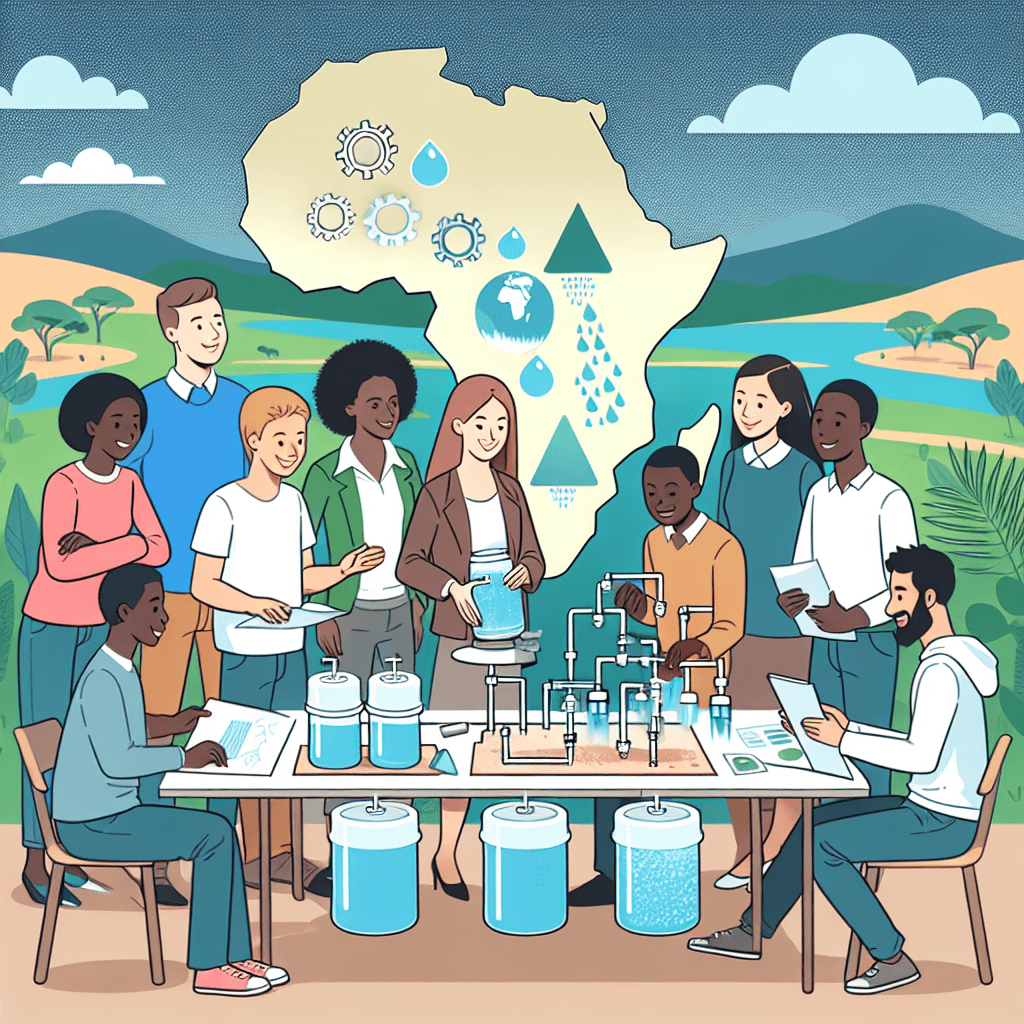
Innovative Water Solutions for Africa: A PBL Challenge
Inquiry Framework
Question Framework
Driving Question
The overarching question that guides the entire project.How might we develop and implement innovative solutions to address the multifaceted issue of water scarcity in African communities, considering its causes, effects, and the various cultural, political, and economic factors involved?Essential Questions
Supporting questions that break down major concepts.- What are the main causes of water scarcity in African communities?
- How does water scarcity affect African economies, environments, and communities?
- What innovative solutions have been developed or can be developed to address water scarcity?
- How do cultural, political, and economic factors influence water management in Africa?
- In what ways can individuals and communities in Africa contribute to mitigating water scarcity?
- How can global cooperation and policy impact water scarcity solutions in Africa?
- What lessons can be learned from successful water scarcity interventions in other regions?
Standards & Learning Goals
Learning Goals
By the end of this project, students will be able to:- Understand and analyze the main causes of water scarcity in African communities.
- Evaluate the effects of water scarcity on African economies, environments, and societies.
- Investigate and propose innovative solutions to address water scarcity challenges.
- Examine the role of cultural, political, and economic factors in water management in Africa.
- Explore how individuals and communities can contribute to resolving water scarcity issues.
- Understand the significance of global cooperation and policies in addressing water scarcity.
- Analyze successful interventions for water scarcity in various regions and apply lessons learned to African communities.
Subset of Social Studies Standards
C3 Framework for Social Studies State Standards
NGSS
Entry Events
Events that will be used to introduce the project to studentsDesert Survival Simulation
Begin the project with an immersive desert simulation experience where the classroom is transformed into a desert environment. Students will experience firsthand what it feels like to live in a water-scarce environment and will be challenged to think about innovative solutions to access water.Water Crisis News Broadcast
Launch the project with a mock news broadcast about a fictional water crisis in an African community. Students will act as investigative journalists tasked with examining the causes, consequences, and potential solutions to the crisis. This multi-perspective approach encourages comprehensive inquiry.Water Conservation Challenge
Initiate the project with a hands-on water conservation challenge where students must limit their water usage for a week and document their experiences. This activity will help students understand the daily struggles faced by those in water-scarce regions and the importance of conservation.Virtual Journey Through African Communities
Kick off with a virtual reality tour of African communities affected by water scarcity. This experience will put students in the shoes of those living without easy access to clean water, prompting them to ask questions and explore viable solutions.Portfolio Activities
Portfolio Activities
These activities progressively build towards your learning goals, with each submission contributing to the student's final portfolio.Water Scarcity Cause Detective
Students will research and investigate the main causes of water scarcity in different African regions to build an understanding of environmental and human-induced factors.Steps
Here is some basic scaffolding to help students complete the activity.Final Product
What students will submit as the final product of the activityGroup presentations on the main causes of water scarcity in selected African regions.Alignment
How this activity aligns with the learning objectives & standardsAligns with standard 1.3 by investigating causes and consequences of choices leading to contemporary issues like water scarcity.Impact Explorer
Students will analyze the effects of water scarcity on African economies, environments, and communities by assessing case studies and creating visual infographics.Steps
Here is some basic scaffolding to help students complete the activity.Final Product
What students will submit as the final product of the activityInfographics depicting the impact of water scarcity on various aspects of life in affected regions.Alignment
How this activity aligns with the learning objectives & standardsSupports standard 1.3 by evaluating consequences of water resource decisions; also relates to D2.Geo.12.6-8 by connecting economic impacts.Innovation Brainstorm Lab
Students will brainstorm and research existing innovative solutions and develop new ideas for tackling water scarcity, encouraging critical thinking and creativity.Steps
Here is some basic scaffolding to help students complete the activity.Final Product
What students will submit as the final product of the activityProposed innovative solutions to water scarcity, supported by research and creative brainstorming.Alignment
How this activity aligns with the learning objectives & standardsAligns with standard MS-ESS3-3 by applying scientific principles to propose environmental interventions.Cultural and Political Factors Forum
Students will explore how cultural, political, and economic elements influence water management in Africa, developing insight into diverse regional approaches.Steps
Here is some basic scaffolding to help students complete the activity.Final Product
What students will submit as the final product of the activityReflective essays on the influence of cultural, political, and economic factors in water management.Alignment
How this activity aligns with the learning objectives & standardsAddresses 1.3 through understanding decision-making impact; utilizes concepts from D2.Geo.12.6-8 regarding political/economic interdependence.Community Contribution Showcase
Students identify and develop ways that individuals and communities in Africa can actively contribute to resolving water scarcity issues, creating campaigns for awareness and action.Steps
Here is some basic scaffolding to help students complete the activity.Final Product
What students will submit as the final product of the activityAwareness campaigns or action plans showcasing local community solutions to water scarcity.Alignment
How this activity aligns with the learning objectives & standardsSupports 1.3 and MS-ESS3-3 by connecting local community actions to scientific/environmental principles of conservation.Global Connection Collaboration
Students collaborate to investigate how global cooperation and international policies can influence water scarcity solutions, fostering a sense of global responsibility and interconnectedness.Steps
Here is some basic scaffolding to help students complete the activity.Final Product
What students will submit as the final product of the activityPolicy recommendations developed through a simulated international summit on water scarcity.Alignment
How this activity aligns with the learning objectives & standardsAligns with standard D2.Geo.12.6-8 by exploring global economic interdependence related to resource management.Lessons from Success
A reflective activity where students study past successful interventions for water scarcity and synthesize lessons applicable to African contexts.Steps
Here is some basic scaffolding to help students complete the activity.Final Product
What students will submit as the final product of the activitySummary reports detailing lessons from successful interventions and their application to African contexts.Alignment
How this activity aligns with the learning objectives & standardsReinforces 1.3 by connecting historical data to contemporary problem-solving; also supports MS-ESS3-3 through design thinking in environmental contexts.Rubric & Reflection
Portfolio Rubric
Grading criteria for assessing the overall project portfolioWater Scarcity Solutions Rubric
Research and Analysis
Assessment of the students' ability to conduct thorough research and analysis of water scarcity causes and its impacts.Identification of Causes
Evaluates the ability to identify and explain the main causes of water scarcity in African regions.
Exemplary
4 PointsComprehensively identifies multiple causes of water scarcity, with detailed explanations and supporting evidence from a variety of sources.
Proficient
3 PointsIdentifies several causes of water scarcity, with clear explanations and supporting evidence from multiple sources.
Developing
2 PointsIdentifies some causes of water scarcity, with basic explanations and limited supporting evidence.
Beginning
1 PointsIdentifies few causes of water scarcity with minimal explanation and little to no supporting evidence.
Impact Assessment
Evaluates the ability to assess the socio-economic and environmental impacts of water scarcity.
Exemplary
4 PointsThoroughly evaluates the impacts with comprehensive analysis and uses well-researched data to support claims.
Proficient
3 PointsEvaluates impacts with clear analysis and uses researched data for support.
Developing
2 PointsAssesses impacts with limited analysis and uses some data for support.
Beginning
1 PointsProvides minimal assessment of impacts with little analysis and lacks supporting data.
Innovative Solution Development
Evaluation of students' creativity and critical thinking in proposing solutions to water scarcity.Creativity and Feasibility of Solutions
Assesses the creativity and feasibility of proposed solutions to water scarcity.
Exemplary
4 PointsProposes highly innovative solutions that are both creative and feasible, with detailed consideration of implementation.
Proficient
3 PointsProposes creative solutions that are feasible, with consideration of implementation.
Developing
2 PointsProposes solutions that show creativity but may lack feasibility or detailed implementation considerations.
Beginning
1 PointsProposes minimal solutions with little creativity or feasibility.
Integration of Technology and Science
Evaluates the integration of technological and scientific principles in solution development.
Exemplary
4 PointsEffectively integrates advanced technological and scientific principles into solutions, demonstrating comprehensive understanding.
Proficient
3 PointsIntegrates technological and scientific principles into solutions, showing a clear understanding.
Developing
2 PointsSome integration of technological and scientific principles, with basic understanding evident.
Beginning
1 PointsMinimal integration of technological and scientific principles, with limited understanding.
Cultural and Political Awareness
Assessment of students' understanding of cultural, political, and economic factors influencing water management in Africa.Cultural and Political Analysis
Evaluates the analysis of cultural and political influences on water scarcity solutions.
Exemplary
4 PointsProvides insightful analysis of cultural and political influences with extensive supporting details.
Proficient
3 PointsAnalyzes cultural and political influences with supporting details.
Developing
2 PointsProvides some analysis of cultural and political influences with basic details.
Beginning
1 PointsMinimal analysis of cultural and political influences with few details.
Global Cooperation Insight
Assesses understanding of global cooperation and its impact on water scarcity solutions.
Exemplary
4 PointsDemonstrates a sophisticated understanding of global cooperation's impact on solutions, with extensive examples.
Proficient
3 PointsDemonstrates a clear understanding of global cooperation's impact on solutions, with examples.
Developing
2 PointsShows basic understanding of global cooperation's impact, with limited examples.
Beginning
1 PointsLimited understanding of global cooperation with few examples.
Communication and Presentation
Evaluation of students' ability to present their ideas clearly and effectively through various media formats.Clarity and Organization
Assesses the clarity and organization of the presentation of projects and ideas.
Exemplary
4 PointsPresentation is exceptionally clear, well-organized, and highly engaging, facilitating understanding.
Proficient
3 PointsPresentation is clear, organized, and facilitates understanding.
Developing
2 PointsPresentation is somewhat clear and organized, but may not fully facilitate understanding.
Beginning
1 PointsPresentation lacks clarity and organization, hindering understanding.
Use of Visual and Digital Media
Evaluates the effective use of visual and digital media in enhancing presentations.
Exemplary
4 PointsEmploys visual and digital media in a highly effective manner that significantly enhances the presentation.
Proficient
3 PointsUses visual and digital media effectively to enhance the presentation.
Developing
2 PointsUses visual and digital media to a limited extent, with some enhancement of the presentation.
Beginning
1 PointsMinimal use of visual and digital media, with little enhancement to the presentation.