
Inquiry Framework
Question Framework
Driving Question
The overarching question that guides the entire project.How can we use data-driven solutions to minimize the negative impacts of invasive species on our local ecosystem and protect its biodiversity?Essential Questions
Supporting questions that break down major concepts.- How do invasive species disrupt the balance of an ecosystem?
- What are the short-term and long-term effects of invasive species on native populations?
- How can data be used to track and understand the impact of invasive species?
- What methods can be employed to control or mitigate the spread of invasive species?
- What role do humans play in the introduction and management of invasive species?
Standards & Learning Goals
Learning Goals
By the end of this project, students will be able to:- Students will be able to identify and classify invasive species in their local ecosystem.
- Students will be able to analyze and interpret data to determine the impact of invasive species on native populations.
- Students will be able to propose and evaluate data-driven solutions for managing invasive species.
- Students will be able to communicate their findings and proposed solutions effectively through presentations and reports.
NGSS
Entry Events
Events that will be used to introduce the project to studentsThe Mysterious Intruder
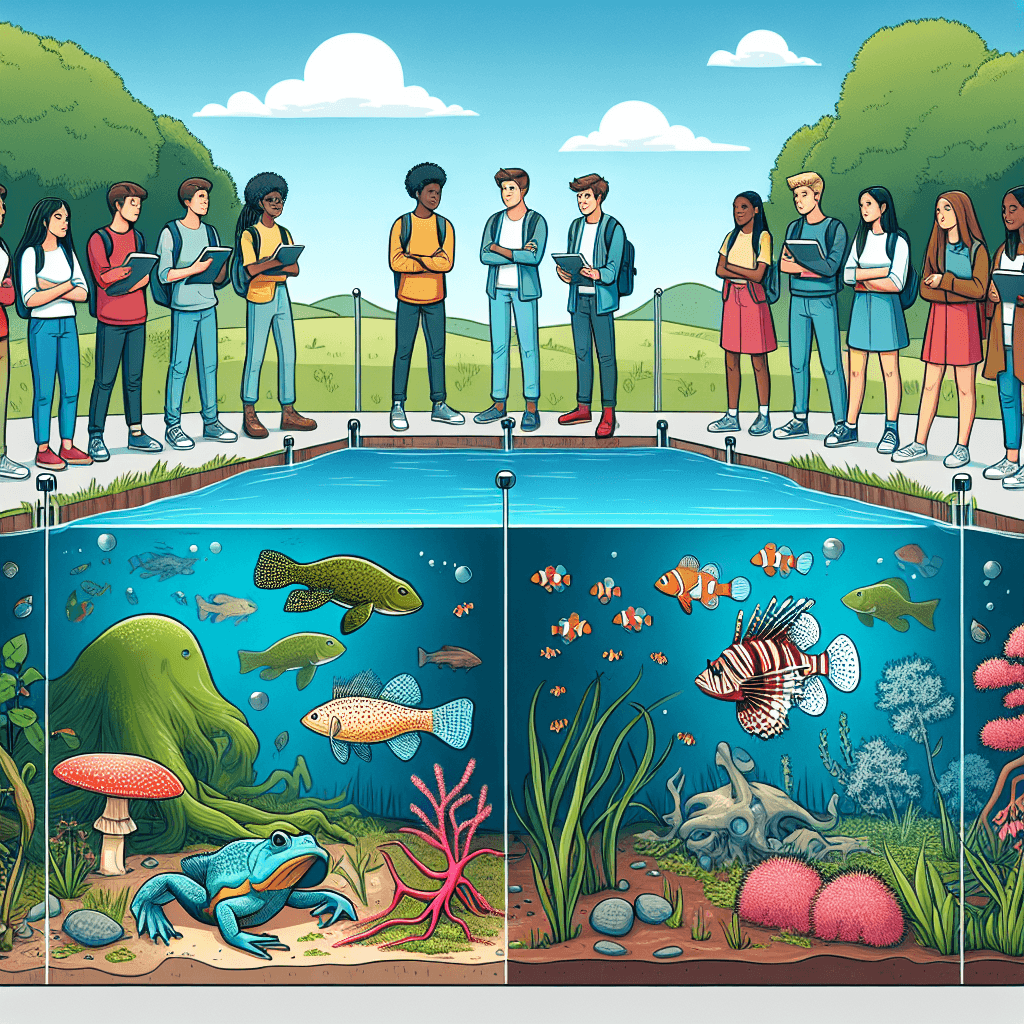
Students encounter a realistic scenario: A local park ranger discovers an unusual plant or animal and needs help identifying it and understanding its potential impact. Could this be an invasive species?Portfolio Activities
Portfolio Activities
These activities progressively build towards your learning goals, with each submission contributing to the student's final portfolio.Everglades Python Investigator
Students will investigate the Burmese python, an invasive species in the Florida Everglades, and research its resource needs within the ecosystem, focusing on its impact on native species and the Everglades' unique environment.Steps
Here is some basic scaffolding to help students complete the activity.Final Product
What students will submit as the final product of the activityA completed research report detailing the Burmese python's resource requirements and potential impacts on the Everglades ecosystem.Alignment
How this activity aligns with the learning objectives & standardsMS-LS2-1 (Analyzing and interpreting data on resource availability)Ecosystem Detective: Field Study Design
Students design a field study to collect data on the impact of an invasive species in a simulated or real-world environment.Steps
Here is some basic scaffolding to help students complete the activity.Final Product
What students will submit as the final product of the activityA field study proposal outlining the research question, methodology, data collection techniques, and expected outcomes.Alignment
How this activity aligns with the learning objectives & standardsMS-LS2-1 (Analyzing and interpreting data on resource availability) and LS2.A (Interdependent Relationships in Ecosystems)Data Collection: Into the Field!
Students will conduct the proposed field study and collect data on the selected invasive species.Steps
Here is some basic scaffolding to help students complete the activity.Final Product
What students will submit as the final product of the activityA comprehensive dataset documenting observations and measurements related to the research question.Alignment
How this activity aligns with the learning objectives & standardsMS-LS2-1 (Analyzing and interpreting data on resource availability) and LS2.A (Interdependent Relationships in Ecosystems)Data Detectives: Unraveling the Impact
Students will analyze the collected data using appropriate methods to draw conclusions about the impact of the invasive species.Steps
Here is some basic scaffolding to help students complete the activity.Final Product
What students will submit as the final product of the activityA data analysis report summarizing findings, including charts, graphs, and statistical analyses.Alignment
How this activity aligns with the learning objectives & standardsMS-LS2-1 (Analyzing and interpreting data on resource availability)Solution Architects: Protecting Our Ecosystems
Students will synthesize their learning and propose data-driven solutions for managing invasive species.Steps
Here is some basic scaffolding to help students complete the activity.Final Product
What students will submit as the final product of the activityA presentation or report outlining proposed solutions and their potential impact on the ecosystem.Alignment
How this activity aligns with the learning objectives & standardsMS-LS2-1 (Analyzing and interpreting data on resource availability) and LS2.A (Interdependent Relationships in Ecosystems)Rubric & Reflection
Portfolio Rubric
Grading criteria for assessing the overall project portfolioInvasive Species Impact Analysis Rubric
Data Analysis and Interpretation
Assesses students' ability to effectively analyze and interpret data related to invasive species and their impact on ecosystems.Data Collection
Evaluate the accuracy and thoroughness of data collected during investigations.
Exemplary
4 PointsCollected comprehensive and highly accurate data, reflecting thorough understanding and meticulous observation.
Proficient
3 PointsCollected accurate and adequate data, showing clear understanding and careful observation.
Developing
2 PointsCollected some relevant data but with inconsistencies or inaccuracies.
Beginning
1 PointsCollected minimal or highly inaccurate data, showing limited understanding.
Data Analysis
Measure the ability to analyze data using statistical and visual methods to identify patterns and conclusions.
Exemplary
4 PointsUsed sophisticated statistical and visual methods to analyze data, drawing insightful conclusions.
Proficient
3 PointsEffectively used statistical and visual methods to analyze data, drawing sound conclusions.
Developing
2 PointsUsed basic methods to analyze data, with limited conclusions drawn.
Beginning
1 PointsStruggled to use methods to analyze data, with incomplete or flawed conclusions.
Interpretation of Results
Assess the ability to interpret results and understand implications of data findings.
Exemplary
4 PointsInterpreted results with exceptional clarity, understanding complex implications of data findings.
Proficient
3 PointsInterpreted results accurately, understanding key implications of data findings.
Developing
2 PointsInterpreted some results correctly but missed significant implications.
Beginning
1 PointsStruggled to interpret results, demonstrating limited understanding of implications.
Critical Thinking and Problem Solving
Evaluates students' ability to apply critical thinking to propose solutions for controlling invasive species and predict their impacts.Solution Proposal
Assess the creativity and feasibility of proposed solutions to mitigate invasive species impacts.
Exemplary
4 PointsProposed innovative and highly feasible solutions, with extensive justifications and predictions.
Proficient
3 PointsProposed feasible solutions with clear justifications and predictions.
Developing
2 PointsProposed basic solutions with limited justification or prediction.
Beginning
1 PointsProposed solutions with inadequate justification or impractical predictions.
Long and Short-term Impact Prediction
Evaluate the ability to accurately predict potential impacts of proposed solutions over time.
Exemplary
4 PointsProvided perceptive and well-supported predictions of both long and short-term impacts.
Proficient
3 PointsProvided accurate predictions, supported by data, of long and short-term impacts.
Developing
2 PointsMade basic predictions with some support, focusing on either long or short-term impacts.
Beginning
1 PointsStruggled to make predictions or provide support for impacts over time.
Communication and Presentation
Assesses the effectiveness of communicating findings and proposals through reports and presentations.Presentation Clarity
Evaluate the clarity and engaging nature of presentations or reports.
Exemplary
4 PointsPresented findings in a clear, highly engaging manner with compelling evidence and visual aids.
Proficient
3 PointsPresented findings clearly and engagingly with pertinent evidence and visuals.
Developing
2 PointsPresented findings with basic clarity but with limited engagement or visual support.
Beginning
1 PointsPresentation lacked clarity and engagement, with insufficient supporting visuals.
Use of Visuals and Data Representation
Assess the effectiveness of data visuals in supporting the communication of findings.
Exemplary
4 PointsUtilized visuals that were highly effective, accurate, and enhanced understanding.
Proficient
3 PointsUsed effective and accurate visuals that supported understanding well.
Developing
2 PointsUsed basic visuals that provided some support to the understanding.
Beginning
1 PointsStruggled to use visuals effectively, with inaccuracies or minimal support to understanding.