
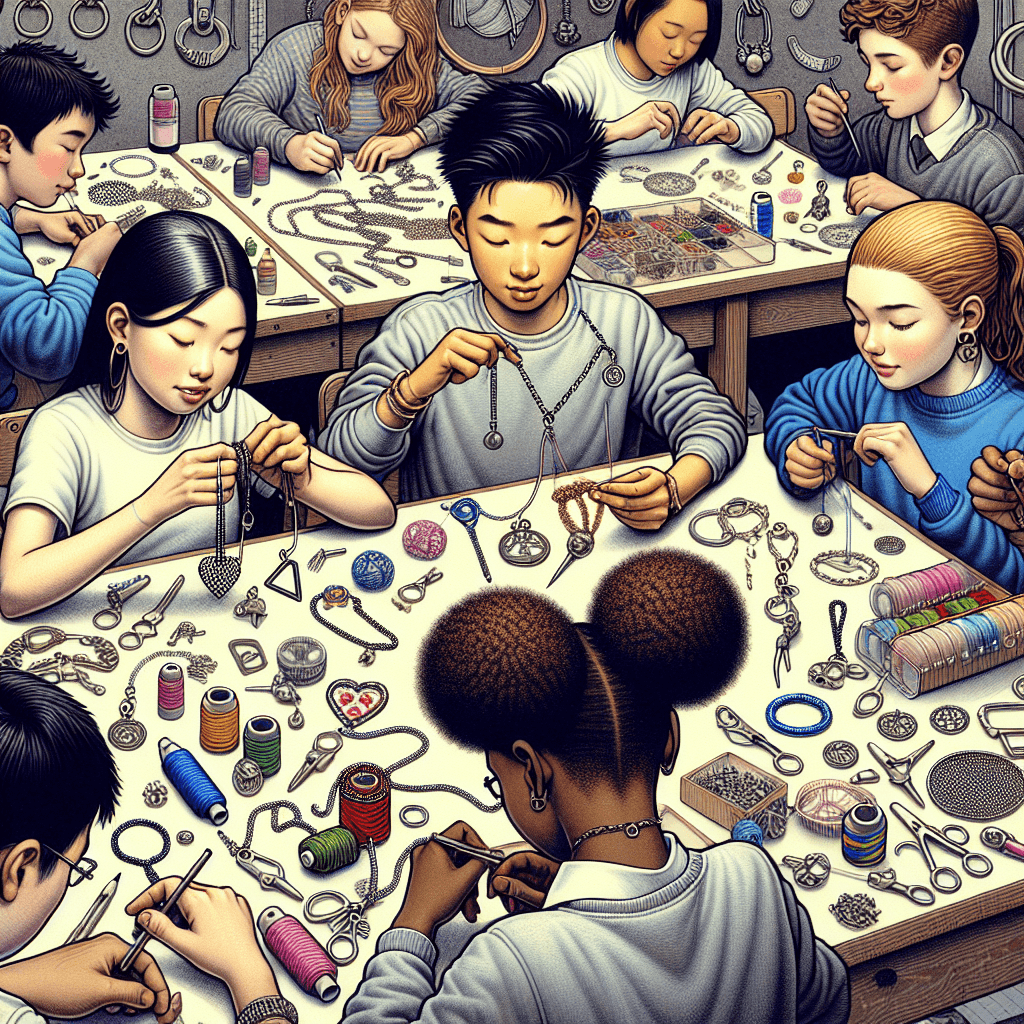
Keychain Creations: Express Yourself Through Design
Inquiry Framework
Question Framework
Driving Question
The overarching question that guides the entire project.How can we design a personalized keychain that reflects our unique identity, using a variety of materials to ensure it is both expressive and durable?Essential Questions
Supporting questions that break down major concepts.- How can a keychain express who you are?
- What materials can we use to create keychains?
- How do we design a functional and durable keychain?
Standards & Learning Goals
Learning Goals
By the end of this project, students will be able to:- Students will be able to design a keychain that reflects their personality.
- Students will be able to use different materials to create keychains.
- Students will understand design principles.
- Students will be able to create a functional and durable keychain.
Entry Events
Events that will be used to introduce the project to studentsThe Master Artist
A local artist shows off their artwork. After the artist is done, students create a keychain that shows off their personality.Portfolio Activities
Portfolio Activities
These activities progressively build towards your learning goals, with each submission contributing to the student's final portfolio.Keychain Identity Blueprint
Students will brainstorm and sketch ideas for their personalized keychain, focusing on symbols, colors, and shapes that represent their interests and personality traits.Steps
Here is some basic scaffolding to help students complete the activity.Final Product
What students will submit as the final product of the activityA detailed sketch of the keychain design with written descriptions of the chosen elements and their significance.Alignment
How this activity aligns with the learning objectives & standardsLearning Goal: Students will be able to design a keychain that reflects their personality.Material Magic Portfolio
Students will explore different materials suitable for keychain construction, considering durability, aesthetics, and ease of use. They will create a materials portfolio documenting the properties of each material and its potential application in their keychain design.Steps
Here is some basic scaffolding to help students complete the activity.Final Product
What students will submit as the final product of the activityA materials portfolio containing samples or images of various materials (e.g., beads, leather, metal rings, plastic), with written descriptions of their properties and potential uses in the keychain.Alignment
How this activity aligns with the learning objectives & standardsLearning Goal: Students will be able to use different materials to create keychains. & Students will be able to create a functional and durable keychain.Prototype Power-Up
Students will create a prototype of their keychain using inexpensive materials. They will test the prototype for functionality and durability, making adjustments to their design as needed.Steps
Here is some basic scaffolding to help students complete the activity.Final Product
What students will submit as the final product of the activityA functional prototype of the keychain, along with a written reflection on the design process, including challenges faced and solutions implemented.Alignment
How this activity aligns with the learning objectives & standardsLearning Goal: Students will understand design principles. & Students will be able to create a functional and durable keychain.Rubric & Reflection
Portfolio Rubric
Grading criteria for assessing the overall project portfolioPersonalized Keychain Portfolio Rubric
Keychain Identity Blueprint
This category assesses the student's ability to generate design ideas, effectively represent their personality through design, and provide detailed documentation of their design choices.Design Ideation
Demonstrates the ability to generate a variety of design ideas.
Exemplary
4 PointsThe student generated multiple highly creative and original keychain designs that effectively represent their personality.
Proficient
3 PointsThe student generated several keychain designs that represent their personality.
Developing
2 PointsThe student generated a few keychain designs that somewhat represent their personality.
Beginning
1 PointsThe student struggled to generate keychain designs that represent their personality.
Personal Representation
Effectively uses symbols, colors, and shapes to represent their interests and personality traits.
Exemplary
4 PointsThe student expertly uses a wide range of symbols, colors, and shapes to create a design that deeply reflects their personality and interests.
Proficient
3 PointsThe student effectively uses symbols, colors, and shapes to create a design that clearly reflects their personality and interests.
Developing
2 PointsThe student uses some symbols, colors, and shapes to create a design that somewhat reflects their personality and interests.
Beginning
1 PointsThe student struggles to use symbols, colors, and shapes to create a design that reflects their personality and interests.
Sketch Detail and Descriptions
Provides a detailed sketch of the keychain design with written descriptions of the chosen elements and their significance.
Exemplary
4 PointsThe student provides a meticulously detailed sketch with comprehensive and insightful descriptions of all elements and their significance.
Proficient
3 PointsThe student provides a detailed sketch with clear descriptions of the chosen elements and their significance.
Developing
2 PointsThe student provides a sketch with some descriptions of the chosen elements and their significance.
Beginning
1 PointsThe student provides a basic sketch with limited descriptions of the chosen elements and their significance.
Material Magic Portfolio
This category assesses the student's ability to explore different materials, assess their properties, and create a comprehensive materials portfolio.Material Collection
Gathers a diverse range of materials suitable for keychain construction.
Exemplary
4 PointsThe student gathers an extensive and innovative range of materials, demonstrating a deep understanding of material properties.
Proficient
3 PointsThe student gathers a diverse range of materials suitable for keychain construction.
Developing
2 PointsThe student gathers some materials that could be used for keychain construction.
Beginning
1 PointsThe student struggles to gather appropriate materials for keychain construction.
Material Assessment
Accurately assesses materials for durability, aesthetics, and ease of use.
Exemplary
4 PointsThe student provides an exceptionally thorough and insightful assessment of each material's properties, with a keen eye for detail and practical application.
Proficient
3 PointsThe student accurately assesses materials for durability, aesthetics, and ease of use.
Developing
2 PointsThe student provides a basic assessment of materials for durability, aesthetics, and ease of use.
Beginning
1 PointsThe student struggles to assess materials for durability, aesthetics, and ease of use.
Portfolio Creation
Creates a comprehensive materials portfolio with samples, descriptions, and potential uses.
Exemplary
4 PointsThe student's portfolio is meticulously crafted, showcasing a deep understanding of each material's properties and innovative potential uses, presented in a highly organized and visually appealing manner.
Proficient
3 PointsThe student creates a comprehensive materials portfolio with samples, descriptions, and potential uses.
Developing
2 PointsThe student creates a materials portfolio with some samples, descriptions, and potential uses.
Beginning
1 PointsThe student creates a basic materials portfolio with limited samples, descriptions, and potential uses.
Prototype Power-Up
This category assesses the student's ability to construct a functional prototype, test its functionality and durability, and reflect on the design process.Prototype Construction
Constructs a functional prototype of the keychain that closely resembles the design sketch.
Exemplary
4 PointsThe student constructs a flawless prototype that perfectly embodies the design sketch, demonstrating exceptional craftsmanship and attention to detail.
Proficient
3 PointsThe student constructs a functional prototype of the keychain that closely resembles the design sketch.
Developing
2 PointsThe student constructs a prototype of the keychain that somewhat resembles the design sketch.
Beginning
1 PointsThe student struggles to construct a prototype of the keychain that resembles the design sketch.
Prototype Testing
Thoroughly tests the prototype for functionality and durability, identifying areas for improvement.
Exemplary
4 PointsThe student conducts rigorous testing, identifying subtle nuances in functionality and durability, and proposing innovative solutions for improvement.
Proficient
3 PointsThe student thoroughly tests the prototype for functionality and durability, identifying areas for improvement.
Developing
2 PointsThe student tests the prototype for functionality and durability, identifying some areas for improvement.
Beginning
1 PointsThe student struggles to test the prototype for functionality and durability.
Design Reflection
Provides a thoughtful reflection on the design process, including challenges faced and solutions implemented.
Exemplary
4 PointsThe student provides a deeply insightful and reflective analysis of the design process, articulating complex challenges and demonstrating exceptional problem-solving skills.
Proficient
3 PointsThe student provides a thoughtful reflection on the design process, including challenges faced and solutions implemented.
Developing
2 PointsThe student provides a basic reflection on the design process, including some challenges faced and solutions implemented.
Beginning
1 PointsThe student struggles to provide a reflection on the design process.