
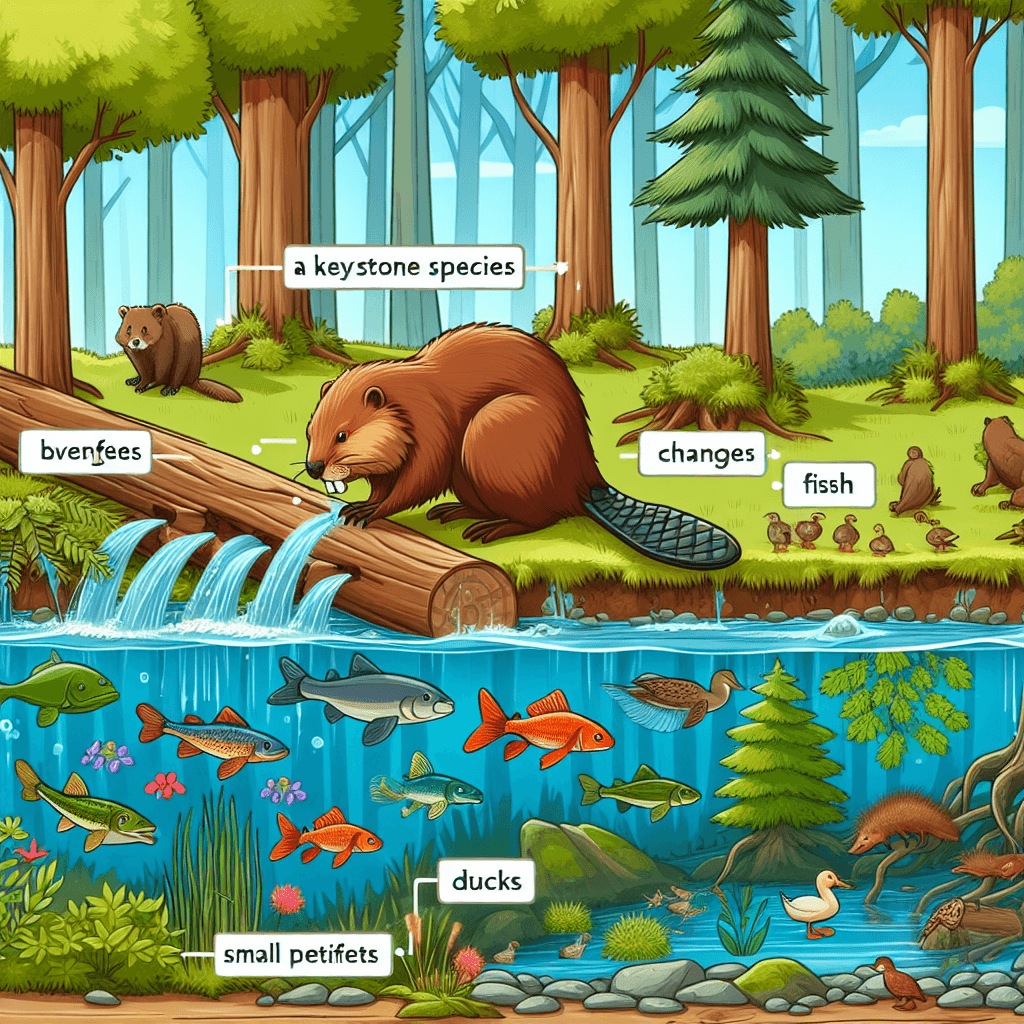
Keystone Species and Ecosystem Impact Slideshow
Inquiry Framework
Question Framework
Driving Question
The overarching question that guides the entire project.How can we understand and communicate the vital role of keystone species in ecosystems, their conservation challenges, and effective protection strategies to promote biodiversity and ecosystem health?Essential Questions
Supporting questions that break down major concepts.- What is a keystone species and why are they important to ecosystems?
- How do keystone species impact their environment and the other species within it?
- What are the current conservation statuses of keystone species and what factors threaten their survival?
- How do human activities influence the survival and protection of keystone species?
- What strategies and measures are in place to protect and conserve keystone species?
- Why is it important to study and understand keystone species in the context of biodiversity and ecosystem health?
Standards & Learning Goals
Learning Goals
By the end of this project, students will be able to:- Students will understand the ecological importance of keystone species and their roles in maintaining ecosystem stability.
- Students will be able to research and analyze the conservation status, threats, and protections associated with a chosen keystone species.
- Students will communicate their findings effectively through a multimedia presentation, demonstrating an ability to synthesize complex information.
- Students will evaluate human impacts on biodiversity and propose strategies for the conservation and protection of keystone species.
- Students will develop a deeper understanding of ecosystem dynamics and biodiversity through critical inquiry and project-based research.
NGSS
Entry Events
Events that will be used to introduce the project to studentsEcosystem Detective Adventure
Introduce an interactive adventure where students explore various ecosystems to uncover the mystery of which keystone species ensure the balance and health of each environment. Clues about different ecosystems are scattered, encouraging students to associate keystone species with the ecosystem they maintain.Portfolio Activities
Portfolio Activities
These activities progressively build towards your learning goals, with each submission contributing to the student's final portfolio.Conservation Status Investigator
Students will examine their chosen species' conservation status, including threats faced and current protection measures.Steps
Here is some basic scaffolding to help students complete the activity.Final Product
What students will submit as the final product of the activityAn informational handout detailing the species' conservation status and threats.Alignment
How this activity aligns with the learning objectives & standardsIntegrates HS-LS4-5 by articulating evidence of environmental changes and threats to the species.Biodiversity Advocate
Students will develop strategies to raise awareness and propose solutions for the conservation and protection of their chosen keystone species.Steps
Here is some basic scaffolding to help students complete the activity.Final Product
What students will submit as the final product of the activityA conservation proposal and advocacy document for the selected species.Alignment
How this activity aligns with the learning objectives & standardsAligns with HS-ESS3-4 by focusing on evaluating and proposing solutions to mitigate human impact on biodiversity.Keystone Communicators
Students will compile their research and findings into a compelling slideshow presentation to educate others about their chosen keystone species.Steps
Here is some basic scaffolding to help students complete the activity.Final Product
What students will submit as the final product of the activityA comprehensive Google Slides presentation on a keystone species, showcasing its ecological importance, conservation status, and protection measures.Alignment
How this activity aligns with the learning objectives & standardsCompletes the project by synthesizing and communicating research (linked to all listed NGSS standards) and achieving the project’s learning goals.Keystone Species Explorer
Students will embark on a research expedition to choose their keystone species. They will gather foundational knowledge about the species' ecosystem role, impact on the environment, and identifying characteristics.Steps
Here is some basic scaffolding to help students complete the activity.Final Product
What students will submit as the final product of the activityA reflection document with the chosen keystone species and initial selection rationale.Alignment
How this activity aligns with the learning objectives & standardsAligns with HS-LS2-6 by introducing ecosystem interactions and HS-LS4-5 by considering environmental impact assessments.Rubric & Reflection
Portfolio Rubric
Grading criteria for assessing the overall project portfolioKeystone Species Portfolio Assessment Rubric
Understand and Research Keystone Species
Evaluates the student's understanding of keystone species and their ability to conduct thorough research using scientific resources.Understanding Keystone Species
Measures the student's grasp of what constitutes a keystone species and its ecological role.
Exemplary
4 PointsDemonstrates an in-depth understanding of keystone species, articulating their ecological significance and recognizing multiple examples across different ecosystems.
Proficient
3 PointsShows a solid understanding of keystone species, explaining basic ecological roles and identifying several examples.
Developing
2 PointsShows an emerging understanding of keystone species and can identify some roles, although explanations lack depth.
Beginning
1 PointsShows minimal understanding, with an inaccurate or incomplete description of keystone species.
Research Skills and Resource Use
Evaluates the student's ability to utilize scientific and conservation resources effectively to gather information.
Exemplary
4 PointsUtilizes a variety of scientific resources comprehensively, ensuring all information is current and relevant, leading to insightful conclusions.
Proficient
3 PointsUses several scientific resources accurately and integrates information into conclusions, though depth may vary slightly.
Developing
2 PointsRelies on a limited number of resources, with some relevant information gathered but lacking depth or completeness.
Beginning
1 PointsMinimal use of resources with little to no relevant information collected.
Conservation Status and Threat Evaluation
Assesses the student's ability to identify and analyze the conservation status, threats, and protections for the chosen species.Threat Identification and Analysis
Assesses identification of threats and analysis of their impact on the species.
Exemplary
4 PointsThoroughly identifies a wide range of threats, providing detailed analysis of impacts on the species with supporting evidence.
Proficient
3 PointsIdentifies several significant threats with some analysis of their impact, supported by evidence.
Developing
2 PointsIdentifies basic threats with limited analysis and little supporting evidence.
Beginning
1 PointsStruggles to identify or analyze threats, lacking evidence or clarity.
Conservation Status Explanation
Measures the understanding and communication of the species' conservation status.
Exemplary
4 PointsProvides a clear, detailed explanation of the conservation status, using current data and comprehensive insights.
Proficient
3 PointsExplains conservation status adequately, with some data support, though lacking full depth.
Developing
2 PointsProvides a basic explanation of conservation status with limited data reference.
Beginning
1 PointsMinimal explanation provided, lacking coherence and data support.
Communication and Presentation Skills
Evaluates the student's ability to effectively communicate their research findings and proposals in a multimedia format.Multimedia Presentation Quality
Evaluates the clarity and impact of the slideshow presentation.
Exemplary
4 PointsPresentation is exceptionally clear and engaging, with well-organized slides that integrate visuals and data effectively.
Proficient
3 PointsPresentation is clear with good organization and use of visuals, though some areas may lack impact.
Developing
2 PointsPresents with some organization, but lacks clarity or effective use of visuals in places.
Beginning
1 PointsPresentation is unclear, poorly organized, and does not engage the audience.
Persuasive Communication in Proposals
Assesses the effectiveness of advocacy and persuasion in conservation proposals.
Exemplary
4 PointsProposal is highly persuasive, with strong, evidence-backed arguments and clear, passionate advocacy for solutions.
Proficient
3 PointsProposal is persuasive, with clear arguments supported by evidence; some elements may lack depth.
Developing
2 PointsAttempts persuasion with some arguments present, but lacks full support and clarity.
Beginning
1 PointsProposal lacks persuasive elements, with unclear or unsupported arguments.
Critical Thinking and Problem Solving
Assesses the student's engagement in inquiry-based learning and their ability to propose effective solutions.Problem-Solving Strategies
Measures the ability to generate and evaluate effective conservation strategies.
Exemplary
4 PointsDemonstrates creative and effective strategies, with clear understanding of their applicability and potential impact.
Proficient
3 PointsDevelops good strategies with some creative elements, understanding applicability and impact.
Developing
2 PointsProposes basic strategies with partial understanding, lacking creativity.
Beginning
1 PointsStruggles to propose viable strategies, with limited understanding and creativity.
Evidence-Based Conclusions
Assesses the ability to draw conclusions based on evidence from research.
Exemplary
4 PointsConclusions are well-supported by a wide range of evidence, demonstrating thorough analysis and insight.
Proficient
3 PointsPresents well-supported conclusions with sufficient evidence and analysis, but lacks depth in some areas.
Developing
2 PointsDraws conclusions with limited evidence and basic analysis.
Beginning
1 PointsUnsupported conclusions with minimal evidence and analysis.