
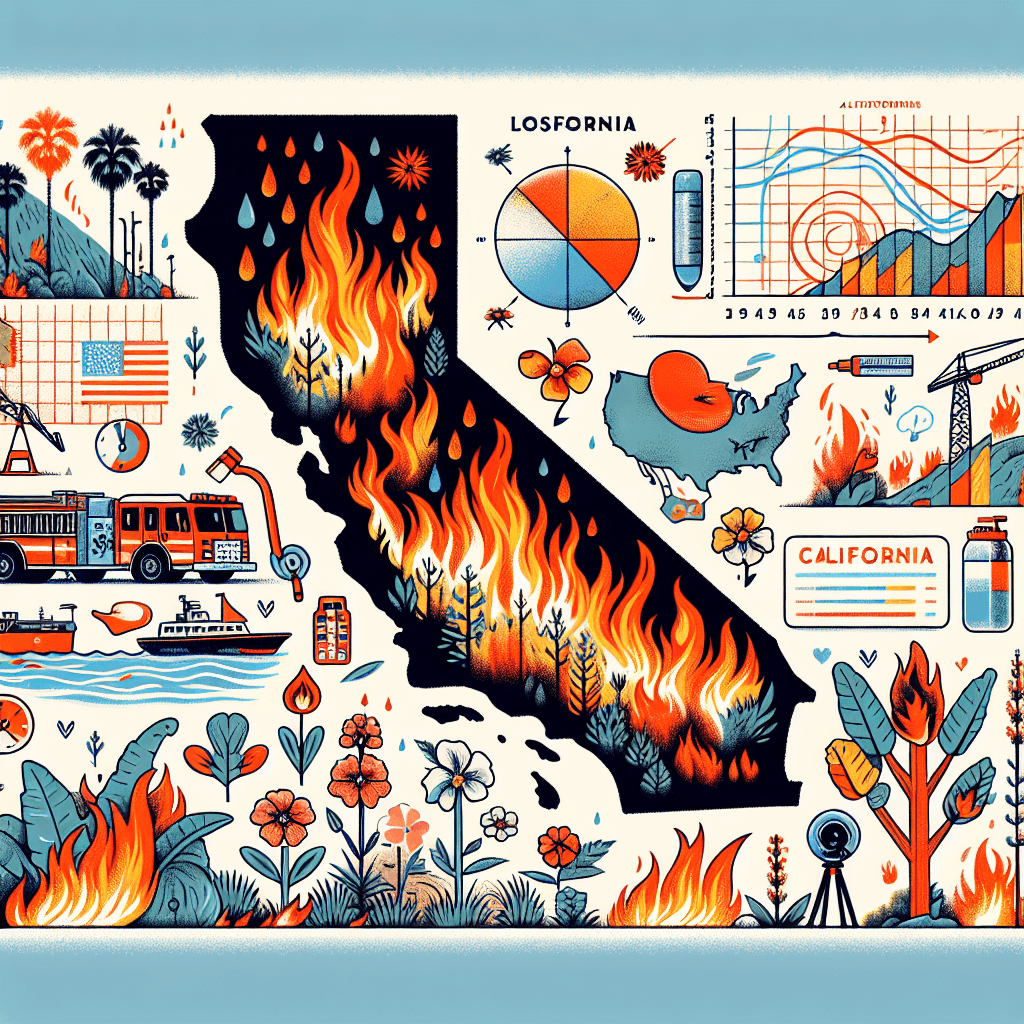
LA Wildfires: A Cross-Curricular Study
Inquiry Framework
Question Framework
Driving Question
The overarching question that guides the entire project.How can we, as informed citizens, develop and implement effective strategies to minimize the impact of wildfires on our communities and environment in a changing climate?Essential Questions
Supporting questions that break down major concepts.- How do wildfires impact air quality?
- What are the causes and effects of wildfires?
- How can communities prepare for and mitigate the impact of wildfires?
- What role does climate change play in the increasing frequency and intensity of wildfires?
- How do wildfires affect different populations within a community (e.g., humans, animals, plants)?
- What are the long-term environmental consequences of wildfires?
- What strategies can be used to prevent wildfires?
- What makes wildfires spread so quickly and intensely?
- How can individuals contribute to wildfire prevention and mitigation efforts?
- What are the social and economic impacts of wildfires on a community?
Standards & Learning Goals
Learning Goals
By the end of this project, students will be able to:- Students will be able to explain the causes and effects of wildfires, including the influence of climate change.
- Students will be able to identify and describe the impact of wildfires on various ecosystems and communities.
- Students will be able to research, develop, and communicate evidence-based strategies for wildfire prevention and mitigation.
NGSS
Common Core State Standards
Entry Events
Events that will be used to introduce the project to studentsBreaking News: Wildfires
Imagine you are a local news reporter covering the recent wildfires. You're on the scene, interviewing firefighters, evacuees, and scientists. What questions do you ask, and how do you convey the impact of these events to your audience?Portfolio Activities
Portfolio Activities
These activities progressively build towards your learning goals, with each submission contributing to the student's final portfolio.Wildfire Investigative Report
Students will step into the shoes of investigative journalists, reporting on the recent wildfires in the Los Angeles area. They will gather information from diverse sources, synthesize their findings, and create a compelling news report.Steps
Here is some basic scaffolding to help students complete the activity.Final Product
What students will submit as the final product of the activityA multimedia news report, including written articles, images/videos, and interviews, highlighting the causes, effects, and potential solutions related to the wildfires.Alignment
How this activity aligns with the learning objectives & standardsRI.5.7, W.5.2Wildfire Data Decoders
Students will analyze data on wildfire occurrences and their impacts, then present their findings as data visualization experts.Steps
Here is some basic scaffolding to help students complete the activity.Final Product
What students will submit as the final product of the activityInteractive data visualizations (charts, graphs, maps) demonstrating wildfire trends and their correlation with various factors like climate change and human activities.Alignment
How this activity aligns with the learning objectives & standards5-ESS2-2, SL.5.4Wildfire Prevention Patrol
Students will become wildfire prevention specialists, tasked with creating public service announcements (PSAs) to educate the community about wildfire safety and prevention strategies.Steps
Here is some basic scaffolding to help students complete the activity.Final Product
What students will submit as the final product of the activityA series of public service announcements (PSAs) in various formats (video, posters, infographics) targeted at specific audiences to promote wildfire prevention and safety measures.Alignment
How this activity aligns with the learning objectives & standards5-ESS1-1, W.5.2Community Wildfire Action League
Students will design and develop community action plans for wildfire preparedness and mitigation, culminating in a town hall presentation to local authorities and community members.Steps
Here is some basic scaffolding to help students complete the activity.Final Product
What students will submit as the final product of the activityA comprehensive community action plan document and a persuasive town hall presentation outlining strategies for wildfire preparedness, mitigation, and response.Alignment
How this activity aligns with the learning objectives & standardsSL.5.4, W.5.2Rubric & Reflection
Portfolio Rubric
Grading criteria for assessing the overall project portfolioWildfire Response Project Rubric
Research and Inquiry
Evaluates the depth and thoroughness of students' research into wildfires, including causes, effects, and preventative strategies.Depth of Research
The extent to which students have conducted comprehensive research using a range of sources, including online and print.
Exemplary
4 PointsResearch is thorough, covering multiple thorough sources that provide a well-rounded understanding of wildfire causes, effects, and prevention.
Proficient
3 PointsResearch is adequate, covering a few reputable sources that offer a good understanding of wildfire topics.
Developing
2 PointsResearch is basic, with limited sources that provide a superficial understanding of wildfire topics.
Beginning
1 PointsResearch is minimal or lacks credibility, offering little to no understanding of wildfire topics.
Inquiry Skills
The ability to pose informed questions and develop investigative skills through the exploration of essential questions.
Exemplary
4 PointsPoses insightful questions, demonstrating a deep curiosity and understanding of the complexities of wildfire impact and prevention.
Proficient
3 PointsPoses relevant questions that reflect a clear understanding of the wildfire topic and objectives.
Developing
2 PointsPoses basic questions, but they may not fully align with the topic objectives or may lack depth.
Beginning
1 PointsStruggles to pose relevant questions or engages in limited inquiry.
Data Analysis and Interpretation
Assesses students' ability to collect, visualize, and interpret wildfire-related data.Data Collection
The thoroughness and accuracy of collecting data related to wildfires and climate factors.
Exemplary
4 PointsData collection is comprehensive and well-organized, covering relevant datasets that reveal complex wildfire trends.
Proficient
3 PointsData collection is clear and mostly accurate, showcasing important trends about wildfires.
Developing
2 PointsData collection is incomplete or lacks significant organization, revealing only basic trends.
Beginning
1 PointsData collection is insufficient or inaccurate, with little to no evident trends.
Data Interpretation
The ability to interpret data and communicate findings effectively.
Exemplary
4 PointsInterprets data with insightful analysis, clearly communicating trends and their significance with strong evidence.
Proficient
3 PointsInterprets data accurately, communicating findings with adequate evidence of trends.
Developing
2 PointsInterprets data on a surface level, communicating findings that reveal limited trends.
Beginning
1 PointsStruggles with data interpretation and provides unclear or inaccurate findings.
Communication and Presentation
Examines the effectiveness and clarity of students’ multimedia reports, presentations, and PSAs.Clarity and Organization
The clarity, coherence, and organization of the student’s communication in written and oral projects.
Exemplary
4 PointsCommunication is clear, well-organized, and compelling, with a logical flow of information.
Proficient
3 PointsCommunication is mostly clear and organized with few lapses in flow.
Developing
2 PointsCommunication lacks clarity and organization, with noticeable lapses in flow.
Beginning
1 PointsCommunication is unclear and disorganized, lacking logical flow.
Audience Engagement
The ability to engage the audience through effective use of multimedia elements and persuasive messaging.
Exemplary
4 PointsEffectively engages the audience with creative multimedia elements and clear, persuasive messaging.
Proficient
3 PointsEngages the audience with adequate use of multimedia elements and persuasive messaging.
Developing
2 PointsEngages the audience inconsistently with minimal multimedia elements or unclear messaging.
Beginning
1 PointsStruggles to engage the audience, with limited or ineffective multimedia elements.
Community and Collaboration
Evaluates students’ ability to work collaboratively and contribute to community-focused projects.Collaborative Contribution
The effectiveness of students' collaboration and their contributions towards group projects.
Exemplary
4 PointsDemonstrates leadership in group settings, contributing significantly to the project’s success.
Proficient
3 PointsContributes effectively to the group, supporting the project’s success.
Developing
2 PointsParticipates in group work but with limited contribution to the project’s success.
Beginning
1 PointsRequires frequent assistance and struggles to contribute to the group work effectively.
Community Impact
The extent to which students’ projects aim to make a significant impact on the community.
Exemplary
4 PointsProjects are highly impactful, with innovative solutions that address community needs clearly and effectively.
Proficient
3 PointsProjects are impactful, offering clear solutions that address community needs appropriately.
Developing
2 PointsProjects have limited impact, addressing some community needs with basic solutions.
Beginning
1 PointsProjects have minimal impact, struggling to identify or address community needs adequately.