
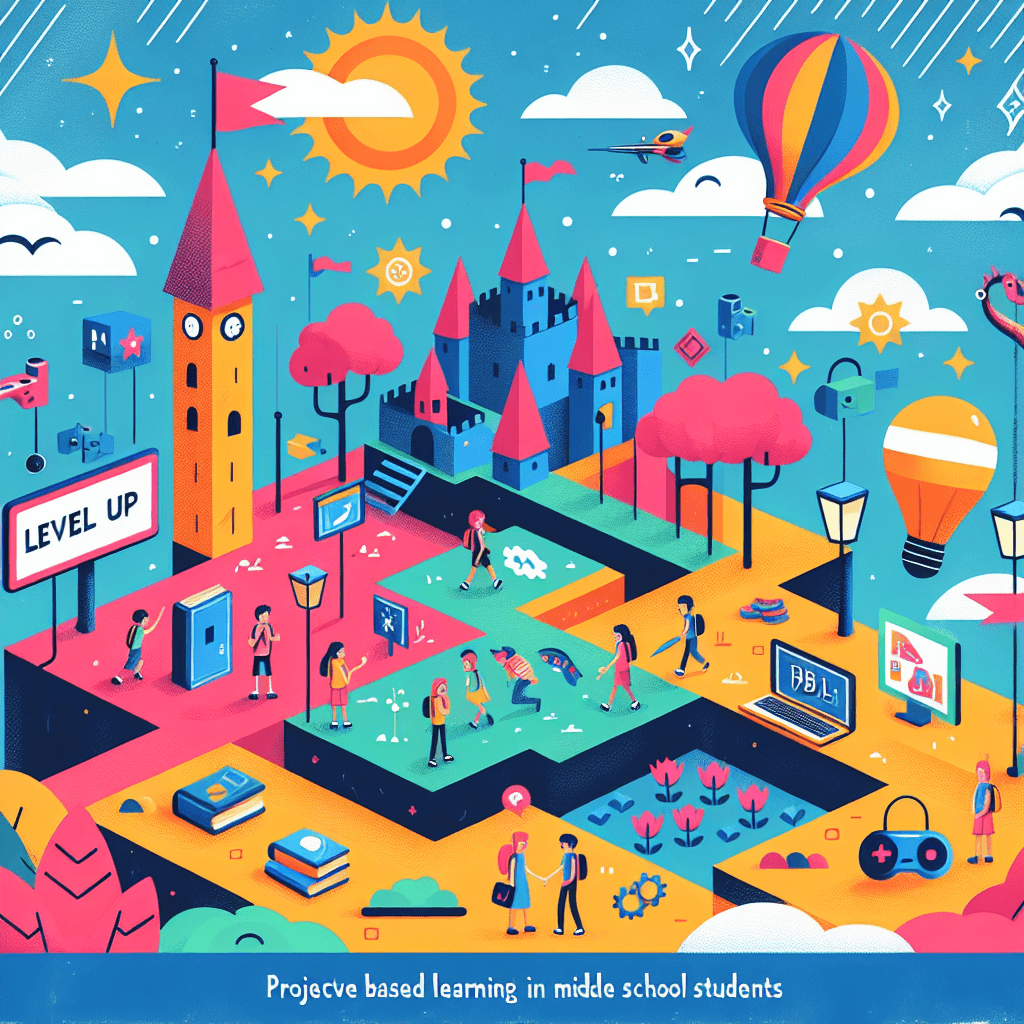
Level Up: Designing the Ultimate Middle School Narrative Quest
Inquiry Framework
Question Framework
Driving Question
The overarching question that guides the entire project.How can we design an interactive 'middle school survival' game that uses our personal growth and 'lore' to guide incoming 6th graders while mapping our own path to success in high school?Essential Questions
Supporting questions that break down major concepts.- How can we use the elements of game design (narrative, rules, and levels) to represent the challenges and rewards of the middle school experience?
- How does our writing style and tone need to shift when communicating with a younger audience versus reflecting on our own experiences for high school?
- In what ways does reflecting on our personal growth over the last three years help us set strategic goals for our transition to high school?
- How can technical writing and instructional design be used to create an engaging and accessible experience for a specific community?
- What 'lore' or essential knowledge from our own middle school journey is most critical to pass on to the next generation of students?
Standards & Learning Goals
Learning Goals
By the end of this project, students will be able to:- Design an interactive narrative (game 'lore') that utilizes descriptive details and well-structured event sequences to represent middle school experiences.
- Compose a clear and concise instructional manual or set of game rules tailored specifically for a 6th-grade audience, demonstrating mastery of technical writing and tone.
- Analyze personal academic and social growth over the past three years to develop a structured, evidence-based reflection and a strategic transition plan for high school.
- Adapt writing style and vocabulary to suit different purposes and audiences, specifically differentiating between peer-to-peer mentoring and formal self-reflection.
- Collaborate effectively within a design team to iterate on game mechanics and narratives based on peer feedback and audience needs.
TN State Standards for ELA
Entry Events
Events that will be used to introduce the project to studentsThe Middle School 'Patch Notes' Reveal
Students enter a classroom with a projected 'System Failure' screen and a scroll of 'Patch Notes' detailing common 6th-grade struggles. They are tasked as Lead Game Designers to analyze their own three-year journey to create a 'Version 2.0' gameplay experience that fixes these 'bugs' for incoming students.Portfolio Activities
Portfolio Activities
These activities progressively build towards your learning goals, with each submission contributing to the student's final portfolio.The Lore of the Middle School Odyssey
Before building mechanics, every game needs a story. In this activity, students will mine their own middle school memories to create the 'Lore' of their game. They will identify three pivotal moments from their 6th, 7th, and 8th-grade years—representing a challenge, a victory, and a 'plot twist.' These stories will serve as the narrative backbone for the levels in their game, using descriptive language to immerse the 6th-grade 'players' in the middle school experience.Steps
Here is some basic scaffolding to help students complete the activity.Final Product
What students will submit as the final product of the activityA 'World-Building Script' or Storyboard that outlines three distinct narrative levels based on real middle school experiences, complete with sensory details and dialogue.Alignment
How this activity aligns with the learning objectives & standardsAligns with TN Standard 8.W.TTP.3: Write narratives to develop real or imagined experiences or events using effective technique, relevant descriptive details, and well-structured event sequences. It focuses specifically on turning real-life middle school events into a cohesive narrative structure.The Survival Guide: Programming the Rules
Now that the story is set, students must design the 'How-To' of their game. Students will write a technical instruction manual that explains the rules of 'The Middle School Game' to a 6th grader. This includes explaining how to navigate 'Map Hazards' (like changing classes or managing a locker), how to gain 'XP' (good grades/participation), and how to avoid 'Game Over' (disciplinary issues or burnout). The writing must be clear, organized, and informative.Steps
Here is some basic scaffolding to help students complete the activity.Final Product
What students will submit as the final product of the activityA printed or digital 'Player’s Handbook' that uses headings, bullet points, and clear instructions to explain the 'gameplay' of surviving middle school.Alignment
How this activity aligns with the learning objectives & standardsAligns with TN Standard 8.W.TTP.2: Write informative/explanatory texts to examine a topic and convey ideas, concepts, and information through the selection, organization, and analysis of relevant content. It focuses on the technical writing required to explain game mechanics and school procedures.Style Swap: Mentors vs. High School Freshmen
In this activity, students shift their focus from the game they are building for others to the 'New Game+' mode: High School. Students will write two distinct pieces: a 'Letter to a Noob' (mentoring a 6th grader) and a 'High School Character Sheet' (a formal reflection and goal-setting document for their high school counselors or themselves). This teaches students how to pivot their tone and vocabulary based on who they are addressing.Steps
Here is some basic scaffolding to help students complete the activity.Final Product
What students will submit as the final product of the activityA 'Dual-Perspective Portfolio' containing a mentoring letter (informal/encouraging tone) and a High School Transition Plan (formal/academic tone).Alignment
How this activity aligns with the learning objectives & standardsAligns with TN Standard 8.W.PDW.4: Produce clear and coherent writing in which the development, organization, and style are appropriate to task, purpose, and audience. This activity highlights the transition between mentoring a younger audience and professional self-reflection.Beta Testing: The Developer Collaborative
Before the final 'launch,' students will work in development teams to 'Beta Test' their game designs. They will present their lore, manuals, and transition plans to their peers to receive constructive feedback. This is a collaborative workshop where students must defend their design choices while being open to 'patches' and 'updates' suggested by their classmates.Steps
Here is some basic scaffolding to help students complete the activity.Final Product
What students will submit as the final product of the activityA 'Patch Notes' feedback form for each student, documenting the suggestions they received and how they plan to iterate on their design.Alignment
How this activity aligns with the learning objectives & standardsAligns with TN Standard 8.SL.CC.1: Engage effectively in a range of collaborative discussions (one-on-one, in groups, and teacher-led) with diverse partners, building on others’ ideas and expressing their own clearly.The Grand Launch: E3 (Elite 8th-Grade Exhibition)
The project culminates in a 'Game Launch' event. Students will present their final 'Middle School Survival Game' design to an audience (either actual 6th graders, teachers, or a panel of 'High School Recruits'). They must use their public speaking skills to 'pitch' their game, highlighting the most important lessons they learned in middle school and how their design helps others 'level up.'Steps
Here is some basic scaffolding to help students complete the activity.Final Product
What students will submit as the final product of the activityA 3-5 minute 'Launch Pitch' presentation accompanied by their final game portfolio (lore, manual, and reflection).Alignment
How this activity aligns with the learning objectives & standardsAligns with TN Standard 8.SL.PKI.4: Present claims and findings, emphasizing salient points in a focused, coherent manner with relevant evidence; use appropriate eye contact, adequate volume, and clear pronunciation.Rubric & Reflection
Portfolio Rubric
Grading criteria for assessing the overall project portfolioLevel Up: Middle School Survival Game & Transition Rubric
Writing Production & Design
Focuses on the core ELA standards for narrative and informative writing within the game design context.Narrative Craft: Game Lore & World Building
The ability to transform real middle school experiences into a structured narrative arc (Introduction, Rising Action, Resolution) using descriptive techniques and sensory details.
Exemplary
4 PointsCrafts a highly engaging and sophisticated narrative arc. Uses vivid, sensory-rich imagery and precise language to immerse the reader in the 'lore.' Transitions between 'levels' are seamless and emotionally resonant.
Proficient
3 PointsEstablishes a clear narrative arc with identifiable stages. Uses relevant descriptive details and sensory language to portray middle school experiences. The story is well-structured and easy for a 6th grader to follow.
Developing
2 PointsNarrative arc is present but may be uneven. Descriptive details are used but may be clichéd or sparse. The connection between the 'lore' and the middle school experience is functional but lacks depth.
Beginning
1 PointsNarrative is fragmented or lacks a clear sequence of events. Minimal use of descriptive language. The story does not effectively communicate a middle school experience.
Technical Writing: Survival Guide Mechanics
The ability to organize complex information into a clear, instructional format using technical writing features like headings, bullet points, and step-by-step sequences.
Exemplary
4 PointsInformation is expertly organized for maximum accessibility. Instructions are crystal clear and anticipation of 'player' needs is evident through insightful 'Pro-Tips.' Use of formatting enhances the user experience.
Proficient
3 PointsOrganizes survival skills into a logical manual format with clear headings. Instructions are concise and accurate. Effectively conveys ideas and concepts relevant to a 6th-grade audience.
Developing
2 PointsBasic organization is present, but some instructions may be confusing or overly wordy. Use of headings or bullet points is inconsistent. Technical details are present but not always clear.
Beginning
1 PointsLacks logical organization. Instructions are difficult to follow or incomplete. Fails to use technical writing features to aid the reader's understanding.
Audience Awareness & Adaptability
Focuses on the student's ability to pivot writing style based on task, purpose, and audience.Rhetorical Flexibility: Mentors vs. Freshmen
The ability to adjust tone, vocabulary, and style when shifting between mentoring a younger student and professional self-reflection for high school.
Exemplary
4 PointsDemonstrates masterful control over rhetorical shifts. The mentoring letter is exceptionally encouraging and relatable, while the transition plan is highly professional, precise, and strategic.
Proficient
3 PointsProduces clear and coherent writing with a distinct shift in style between the two tasks. Tone and vocabulary are consistently appropriate for both the 6th-grade and high school/academic audiences.
Developing
2 PointsAttempts to shift tone, but the distinction between the mentoring letter and the transition plan is blurred. Some vocabulary choices may be inappropriate for the intended audience.
Beginning
1 PointsWriting lacks a clear sense of audience. The tone is inconsistent or inappropriate for the tasks, showing little differentiation between mentoring and formal reflection.
Collaboration & Growth Mindset
Focuses on the growth mindset and communication skills required in a collaborative design environment.Collaborative Iteration: Beta Testing & Patch Notes
The ability to participate in collaborative design sessions, provide constructive feedback, and use peer input to improve the final product.
Exemplary
4 PointsActively leads and enriches discussions. Provides deeply perceptive feedback to others and uses 'Beta Test' data to make sophisticated, meaningful 'patches' to their own project.
Proficient
3 PointsEngages effectively in collaborative discussions, building on others' ideas. Documents specific 'Patch Notes' that show clear iterations based on peer feedback and design needs.
Developing
2 PointsParticipates in discussions but may not consistently build on others' ideas. 'Patch Notes' reflect minor or superficial changes rather than substantive improvements to the design.
Beginning
1 PointsMinimal participation in collaborative sessions. Reluctant to accept feedback or fails to document how the project was modified based on peer input.
Public Speaking & Presentation
Focuses on the oral communication and presentation standards for the final exhibition.Communication: The Grand Launch Pitch
The ability to present project findings and game designs in a focused, coherent manner using effective public speaking techniques and visual aids.
Exemplary
4 PointsDelivers a compelling, high-energy pitch that flawlessly synthesizes the most salient project points. Visual aids are professional and perfectly integrated. Exceptional eye contact and presence.
Proficient
3 PointsPresents findings in a focused, coherent manner with relevant evidence. Emphasizes salient points and maintains good eye contact, volume, and clear pronunciation. Visual aids support the pitch.
Developing
2 PointsPresentation is generally coherent but may lack focus on the most important points. Delivery skills (eye contact, volume) are inconsistent. Visual aids are present but may be distracting or underdeveloped.
Beginning
1 PointsPresentation is disjointed or lacks evidence. Significant struggles with public speaking mechanics (mumbling, no eye contact). Visual aids are missing or do not relate to the topic.