
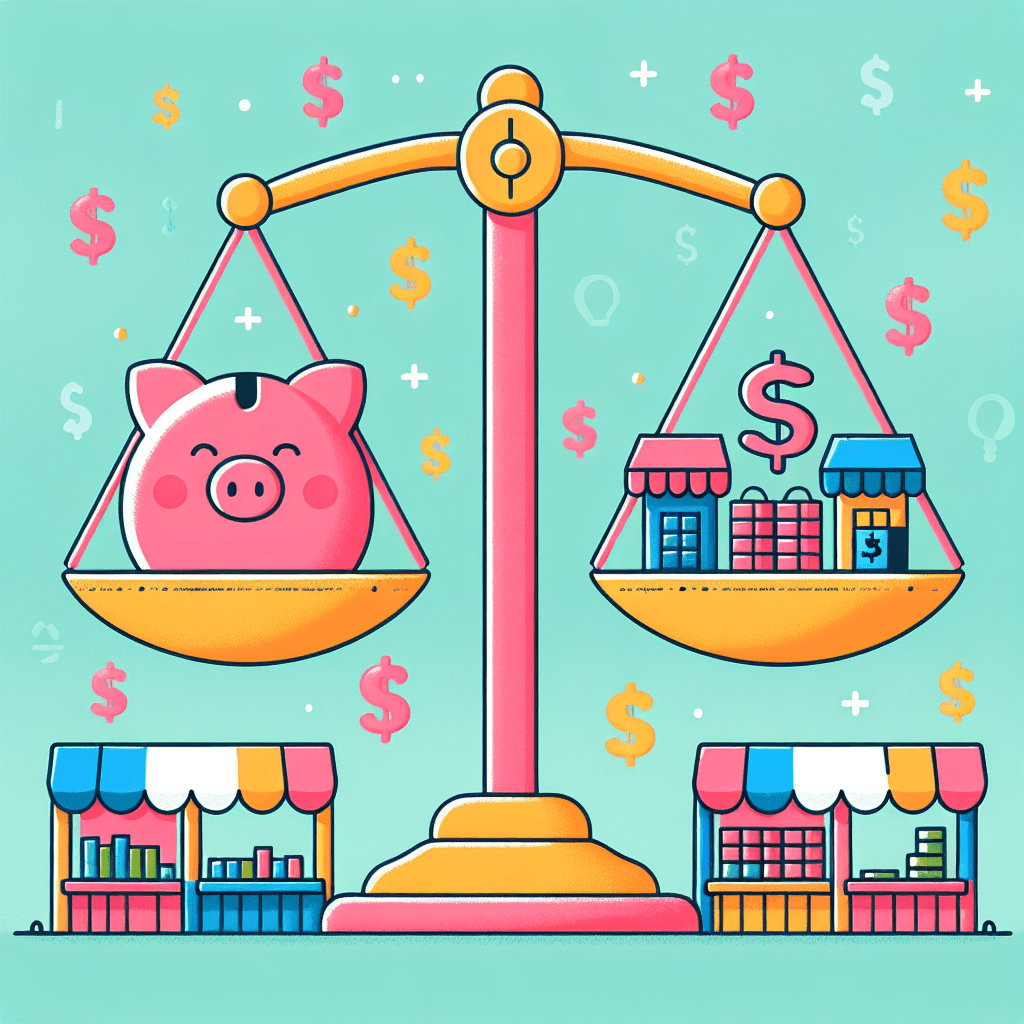
Market Mechanics: Profit, Competition, and the Power of Prices
Inquiry Framework
Question Framework
Driving Question
The overarching question that guides the entire project.How can we navigate the "rules of the market"—like ownership, competition, and prices—to make the best choices for ourselves and our community?Essential Questions
Supporting questions that break down major concepts.- How does the freedom to own property and compete with others shape our daily lives?
- Why can't we have everything we want, and how do prices help us decide what to buy?
- Why is it important to be able to say 'this is mine' when starting a business?
- How does the hope of making a profit encourage people to work hard and innovate?
- What happens to the price and quality of a product when many different stores are selling it?
- How does a price tag tell us whether an item is easy or hard to find?
- If the price of something goes up, how does that change who gets to buy it?
Standards & Learning Goals
Learning Goals
By the end of this project, students will be able to:- Define property rights and explain how owning resources encourages people to take care of them and use them productively.
- Identify how the pursuit of profit motivates entrepreneurs to take risks and innovate in a market economy.
- Analyze how competition between businesses leads to lower prices and higher quality for consumers.
- Explain the relationship between scarcity and price, demonstrating how high prices signal that a good is rare and low prices signal it is abundant.
- Apply the concept of price as an allocative tool to make informed personal financial decisions within a simulated market.
Voluntary National Content Standards in Economics
Common Core State Standards (History/Social Studies)
Entry Events
Events that will be used to introduce the project to studentsThe Great Scarcity Scramble
Students enter to find a single, highly-coveted item (like a limited edition snack or a 'Front of the Lunch Line' pass) being auctioned off using 'Class Credits.' As the bidding escalates, students analyze why the price is rising and what happens to those who can't afford it, perfectly illustrating scarcity and the allocative function of price.Portfolio Activities
Portfolio Activities
These activities progressively build towards your learning goals, with each submission contributing to the student's final portfolio.The Power of 'Mine': Property Rights in Action
In this foundational activity, students explore the concept of ownership. They will distinguish between 'private' and 'public' property within the classroom to understand how having a legal right to 'this is mine' encourages people to take better care of resources and invest time in them. This sets the stage for why property rights are the bedrock of a market economy.Steps
Here is some basic scaffolding to help students complete the activity.Final Product
What students will submit as the final product of the activityA 'Property Rights Poster' showing a personal item and a shared item, with a list of 'Care Rules' for each.Alignment
How this activity aligns with the learning objectives & standardsAligns with Econ.12.10.Institutions (Explain how property rights influence market activity) and the learning goal of defining property rights and how ownership encourages productivity.The Price Tag Detective: Decoding Scarcity
Building on the 'Great Scarcity Scramble' entry event, students will act as detectives to investigate why prices go up or down. They will use a 'Price Thermometer' to visualize how scarcity (low supply) makes prices 'hot' (high) and abundance (high supply) makes prices 'cool' (low). This helps students see prices as signals rather than just random numbers.Steps
Here is some basic scaffolding to help students complete the activity.Final Product
What students will submit as the final product of the activityA 'Price Signal Infographic' using a traffic light system (Red for High Price/Rare, Green for Low Price/Common).Alignment
How this activity aligns with the learning objectives & standardsAligns with Econ.12.7.Markets_and_Prices (Prices allocate scarce goods) and the learning goal of explaining the relationship between scarcity and price.The Great Store Clash: Why Competition Wins
Students will compare two 'competing' stores selling similar items (like sneakers or snacks). Through a visual comparison activity, they will discover that when two businesses want the same customers, they have to lower their prices or make their products better to win. This illustrates the 'allocative function' where consumers choose the best value.Steps
Here is some basic scaffolding to help students complete the activity.Final Product
What students will submit as the final product of the activityA 'Consumer Choice Comparison' chart where students choose a winner between two competing stores and explain why.Alignment
How this activity aligns with the learning objectives & standardsAligns with Econ.12.9.Competition (Competition results in lower prices and higher quality) and the learning goal of analyzing how competition benefits consumers.The Entrepreneur’s Reward: Dreaming for Profit
Students will step into the shoes of an entrepreneur. They will brainstorm a simple business idea and calculate 'Potential Profit' (Money In minus Money Out). This activity helps students understand that the 'hope' of making money is what drives people to work hard and take risks to start businesses.Steps
Here is some basic scaffolding to help students complete the activity.Final Product
What students will submit as the final product of the activityA 'Profit Blueprint' for a simple business (like a car wash or a snack stand) including a list of costs and the target profit.Alignment
How this activity aligns with the learning objectives & standardsAligns with Econ.12.4.Incentives (Profit is an incentive for entrepreneurs) and the learning goal of identifying how the pursuit of profit motivates innovation.Market Master: My Community Choice Playbook
In this final summative activity, students compile their previous work into a 'Market Navigator Playbook.' They will use all the concepts—Property Rights, Scarcity, Competition, and Profit—to solve a final scenario: 'A new mall is opening in town. How will you use your Class Credits to make the best choices?' This brings the driving question to a close.Steps
Here is some basic scaffolding to help students complete the activity.Final Product
What students will submit as the final product of the activityA 'Market Navigator Playbook' (a 4-page booklet or digital slide deck) that summarizes the 'Rules of the Market.'Alignment
How this activity aligns with the learning objectives & standardsAligns with CCSS.ELA-LITERACY.RH.11-12.7 (Integrate multiple sources of info) and the learning goal of applying market concepts to personal financial decisions.Rubric & Reflection
Portfolio Rubric
Grading criteria for assessing the overall project portfolioMarket Rules Navigator Rubric
Property Rights & Stewardship
Evaluates the student's understanding of ownership and its influence on resource management (Standard: Econ.12.10).Property Rights Awareness
Ability to distinguish between private and public property and explain how ownership affects the care and maintenance of resources.
Exemplary
4 PointsIndependently and accurately distinguishes between private and public property; provides a sophisticated rationale for why ownership leads to better stewardship (e.g., investing time/money).
Proficient
3 PointsCorrectly identifies private and public items; provides a clear and accurate reason why people take better care of their own things.
Developing
2 PointsIdentifies property types with some errors or prompts; provides a basic or repetitive reason for the 'Care Rules' without fully connecting to ownership.
Beginning
1 PointsRequires significant support to identify property; 'Care Rules' are incomplete or do not reflect the concept of ownership.
Scarcity and Price Dynamics
Assesses the ability to decode how price reflects the relative scarcity of goods (Standard: Econ.12.7).Price Signaling and Scarcity
Understanding of how scarcity (low supply) creates 'hot' prices and abundance (high supply) creates 'cool' prices using visual signals.
Exemplary
4 PointsCorrectly categorizes all items by scarcity; provides a comprehensive explanation of how high prices act as a signal to consumers about an item's rarity.
Proficient
3 PointsAccurately sorts most items and correctly labels them with high/low price tags; completes the 'Scarcity Sentence Starter' with a clear cause-effect relationship.
Developing
2 PointsSorts items with some assistance; identifies that price changes but struggles to explain 'why' (scarcity) without teacher prompts.
Beginning
1 PointsUnable to distinguish between rare and common items; price tags are placed randomly or without regard to scarcity.
Competition and Consumer Choice
Evaluates understanding of how competition benefits the consumer and drives business behavior (Standard: Econ.12.9).Market Competition Analysis
Analysis of how businesses compete through price and quality to attract customers and the resulting benefits for consumers.
Exemplary
4 PointsOffers an insightful comparison of stores; identifies both price and quality 'bonuses'; provides a strong argument for why monopolies (single stores) lack incentive to improve.
Proficient
3 PointsCorrectly identifies the cheaper option and a specific quality improvement; explains how competition leads to better choices for the consumer.
Developing
2 PointsIdentifies the cheaper item but struggles to explain why a store would add a 'bonus' or how competition helps the buyer.
Beginning
1 PointsChoices between stores are made without identifying price or quality differences; requires heavy prompting to understand the concept of 'better or cheaper.'
Incentives and Innovation
Focuses on the role of profit as an incentive for innovation and risk-taking (Standard: Econ.12.4).Profit and Entrepreneurship
Ability to identify profit as a motivator for starting a business and the relationship between costs, risk, and potential reward.
Exemplary
4 PointsDevelops a detailed 'Profit Blueprint'; accurately calculates potential profit and provides a sophisticated explanation of the 'risk' involved in entrepreneurship.
Proficient
3 PointsIdentifies a viable business idea; correctly uses the graphic organizer to list costs and charges; explains that profit is the reward for work.
Developing
2 PointsIdentifies a business idea but has difficulty distinguishing between 'money in' (revenue) and 'money out' (costs); basic understanding of profit.
Beginning
1 PointsRequires assistance to identify a business idea; does not show an understanding of why an entrepreneur would take a risk or what profit is.
Economic Decision-Making Playbook
Evaluates the ability to combine information from multiple sources to solve a problem (Standard: CCSS.ELA-LITERACY.RH.11-12.7).Synthesis and Application
Integration of property rights, scarcity, competition, and profit to make and justify a personal financial decision.
Exemplary
4 PointsSynthesizes all four market concepts into a cohesive 'Playbook'; justifies the final scenario choice using specific economic vocabulary and multiple perspectives.
Proficient
3 PointsCompiles all previous work into the 'Playbook'; makes a choice in the final scenario and justifies it using the concept of scarcity and competition.
Developing
2 PointsPlaybook is partially complete; the final decision is made but the justification is weak or misses one of the core 'Market Rules.'
Beginning
1 PointsPlaybook is missing key components; final decision is not justified or shows a lack of understanding of the market scenario.