
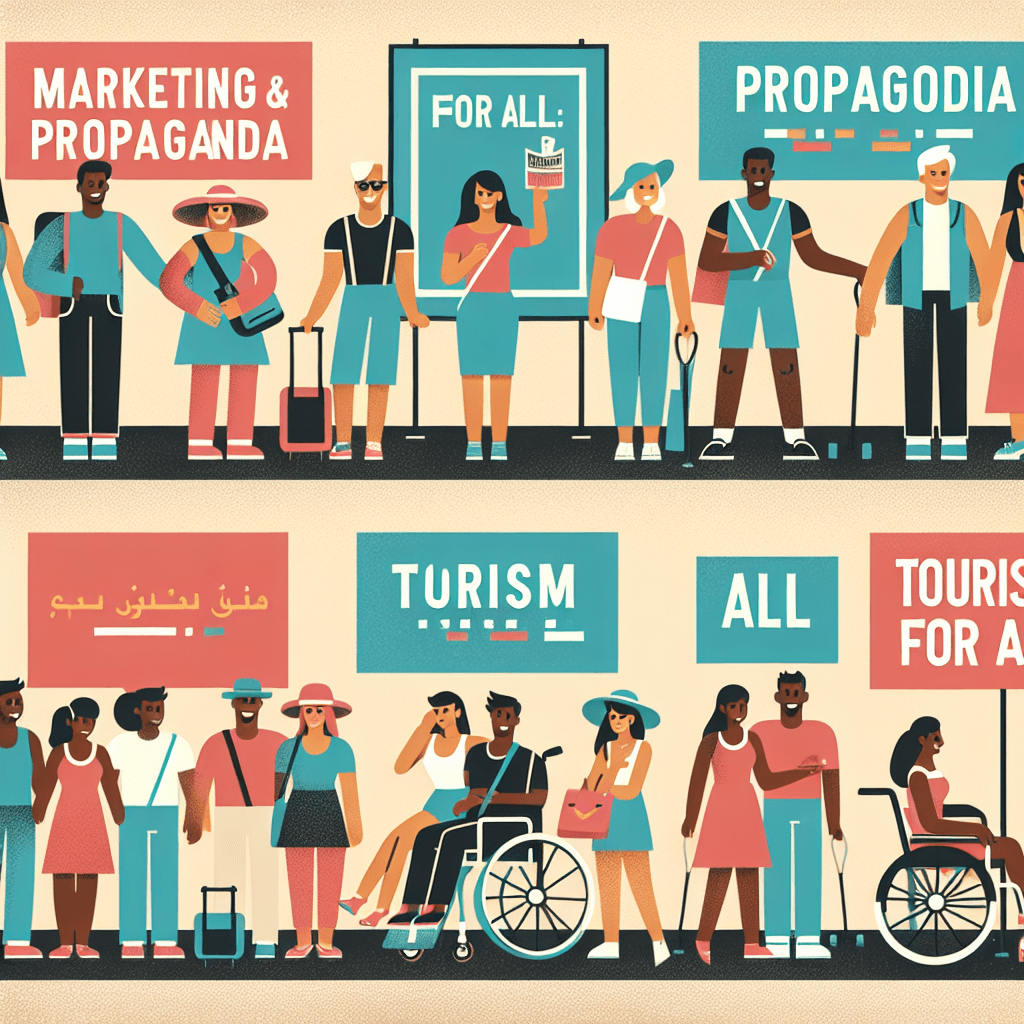
Marketing & Propaganda: Tourism for All
Inquiry Framework
Question Framework
Driving Question
The overarching question that guides the entire project.How can we, as ethical tourism marketers, leverage the power of marketing and propaganda to promote accessible and sustainable tourism while respecting diverse cultures and considering the psychological and economic impacts on consumers and society?Essential Questions
Supporting questions that break down major concepts.- How do marketing and propaganda techniques influence consumer behavior and public opinion?
- What are the ethical considerations in marketing and propaganda, especially in the context of tourism?
- How can accessible and sustainable tourism principles be integrated into marketing strategies?
- How do different cultures and languages impact the effectiveness of marketing and propaganda campaigns?
- How can mathematical and statistical analysis be used to measure the impact of marketing and propaganda efforts?
- What role does history play in shaping contemporary marketing and propaganda techniques?
- How can art and visual media be used to create compelling marketing and propaganda messages?
- How do economic factors influence marketing and propaganda strategies in the tourism industry?
- How can psychological principles be applied to understand and influence consumer behavior through marketing and propaganda?
- How can social studies frameworks help analyze the societal impact of marketing and propaganda related to tourism?
Standards & Learning Goals
Learning Goals
By the end of this project, students will be able to:- Understand the principles of marketing and propaganda.
- Analyze the ethical considerations of marketing and propaganda in tourism.
- Integrate accessible and sustainable tourism principles into marketing strategies.
- Understand the impact of culture and language on marketing and propaganda campaigns.
- Use mathematical and statistical analysis to measure the impact of marketing efforts.
- Understand the historical context of marketing and propaganda techniques.
- Use art and visual media to create marketing messages.
- Analyze the economic factors influencing marketing and propaganda in the tourism industry.
- Apply psychological principles to understand consumer behavior.
- Analyze the societal impact of marketing and propaganda related to tourism.
- Develop an ethical marketing campaign promoting accessible and sustainable tourism.
- Evaluate the effectiveness of different marketing and propaganda techniques.
- Collaborate to create a comprehensive marketing strategy.
- Communicate marketing strategies effectively to diverse audiences.
- Apply critical thinking skills to analyze marketing messages.
- Solve problems related to marketing and propaganda in the tourism industry.
- Demonstrate creativity in designing marketing campaigns.
- Reflect on the impact of marketing and propaganda on society and individuals.
- Appreciate the importance of ethical marketing practices.
- Develop skills in research, analysis, and communication.
Entry Events
Events that will be used to introduce the project to studentsThe Truth in Tourism Campaign
The class is tasked with creating a 'counter-propaganda' campaign to combat misleading or harmful tourism promotions. They must research the negative impacts of unethical marketing, identify target audiences, and develop creative messages that promote responsible travel, cultural sensitivity, and environmental stewardship.Portfolio Activities
Portfolio Activities
These activities progressively build towards your learning goals, with each submission contributing to the student's final portfolio.Marketing & Propaganda: Definitions and Principles
Students will explore the fundamental concepts of marketing and propaganda, differentiating between the two and identifying their key elements and techniques.Steps
Here is some basic scaffolding to help students complete the activity.Final Product
What students will submit as the final product of the activityA detailed report defining marketing and propaganda, outlining their core principles, and providing examples of each.Alignment
How this activity aligns with the learning objectives & standardsLearning Goal: Understand the principles of marketing and propaganda.Ethical Dilemmas in Tourism Marketing
Students will delve into the ethical dilemmas present in marketing and propaganda within the tourism industry, examining case studies of misleading or harmful campaigns and proposing ethical alternatives.Steps
Here is some basic scaffolding to help students complete the activity.Final Product
What students will submit as the final product of the activityA presentation analyzing the ethical issues in tourism marketing and propaganda, including case studies and proposed ethical solutions.Alignment
How this activity aligns with the learning objectives & standardsLearning Goal: Analyze the ethical considerations of marketing and propaganda in tourism.Marketing Accessible & Sustainable Tourism
Students will learn how to incorporate accessibility and sustainability into marketing strategies, focusing on promoting inclusive tourism experiences and environmentally friendly practices.Steps
Here is some basic scaffolding to help students complete the activity.Final Product
What students will submit as the final product of the activityA marketing plan that integrates accessible and sustainable tourism principles, including target audience, messaging, and promotional channels.Alignment
How this activity aligns with the learning objectives & standardsLearning Goal: Integrate accessible and sustainable tourism principles into marketing strategies.Culture & Language in Tourism Marketing
Students will explore how culture and language influence the effectiveness of marketing and propaganda campaigns, focusing on cultural sensitivity and linguistic nuances.Steps
Here is some basic scaffolding to help students complete the activity.Final Product
What students will submit as the final product of the activityA report analyzing the impact of culture and language on a specific tourism marketing campaign, including recommendations for cultural adaptation and translation.Alignment
How this activity aligns with the learning objectives & standardsLearning Goal: Understand the impact of culture and language on marketing and propaganda campaigns.Rubric & Reflection
Portfolio Rubric
Grading criteria for assessing the overall project portfolioMarketing & Propaganda Portfolio Rubric
Understanding Marketing & Propaganda
Assesses the student's understanding of the definitions, key elements, comparison, and examples of marketing and propaganda.Definitions
Accuracy and depth of definitions for marketing and propaganda
Exemplary
4 PointsDefinitions are comprehensive, accurate, and demonstrate a sophisticated understanding of both marketing and propaganda.
Proficient
3 PointsDefinitions are accurate and show a thorough understanding of marketing and propaganda.
Developing
2 PointsDefinitions show a basic understanding of marketing and propaganda but may lack depth or accuracy in some areas.
Beginning
1 PointsDefinitions are incomplete, inaccurate, or show a limited understanding of marketing and propaganda.
Key Elements and Techniques
Identification and explanation of key elements and techniques
Exemplary
4 PointsIdentifies and explains all key elements and techniques with exceptional clarity and insight.
Proficient
3 PointsIdentifies and explains most key elements and techniques effectively.
Developing
2 PointsIdentifies some key elements and techniques, but explanations may be unclear or incomplete.
Beginning
1 PointsStruggles to identify or explain key elements and techniques.
Comparison and Contrast
Comparison and contrast of marketing and propaganda
Exemplary
4 PointsProvides a nuanced and insightful comparison and contrast, highlighting subtle similarities and differences with exceptional clarity.
Proficient
3 PointsProvides a clear and accurate comparison and contrast, highlighting key similarities and differences.
Developing
2 PointsProvides a basic comparison and contrast, but may miss some key similarities or differences.
Beginning
1 PointsStruggles to compare and contrast marketing and propaganda effectively.
Real-World Examples
Relevance and quality of real-world examples
Exemplary
4 PointsProvides highly relevant and insightful real-world examples that demonstrate a sophisticated understanding of both marketing and propaganda.
Proficient
3 PointsProvides relevant and clear real-world examples of marketing and propaganda.
Developing
2 PointsProvides examples that are somewhat relevant, but may lack clear connection to the concepts.
Beginning
1 PointsProvides irrelevant or unclear examples.
Ethical Analysis
Evaluates the student's ability to analyze ethical dilemmas in tourism marketing and propose ethical solutions.Case Study Research
Thoroughness of case study research
Exemplary
4 PointsDemonstrates extensive and insightful research into relevant case studies of unethical marketing and propaganda in tourism.
Proficient
3 PointsDemonstrates thorough research into relevant case studies of unethical marketing and propaganda in tourism.
Developing
2 PointsDemonstrates some research into case studies, but may lack depth or relevance.
Beginning
1 PointsDemonstrates limited or irrelevant research into case studies.
Ethical Issue Identification
Identification of ethical issues
Exemplary
4 PointsIdentifies and articulates ethical issues with exceptional clarity and insight, demonstrating a deep understanding of ethical principles.
Proficient
3 PointsIdentifies and articulates ethical issues clearly and effectively.
Developing
2 PointsIdentifies some ethical issues, but may lack clarity or depth in articulation.
Beginning
1 PointsStruggles to identify or articulate ethical issues effectively.
Impact Analysis
Analysis of the impact of unethical practices
Exemplary
4 PointsProvides a comprehensive and insightful analysis of the impact on tourists, local communities, and the environment.
Proficient
3 PointsProvides a clear and thorough analysis of the impact on tourists, local communities, and the environment.
Developing
2 PointsProvides a basic analysis of the impact, but may lack depth or detail.
Beginning
1 PointsProvides a limited or superficial analysis of the impact.
Ethical Alternatives
Proposed ethical alternatives
Exemplary
4 PointsProposes innovative and highly effective ethical alternatives that demonstrate a deep understanding of ethical marketing principles.
Proficient
3 PointsProposes clear and effective ethical alternatives to the unethical practices.
Developing
2 PointsProposes some ethical alternatives, but they may lack feasibility or effectiveness.
Beginning
1 PointsStruggles to propose ethical alternatives effectively.
Sustainable Marketing
Assesses the student's ability to integrate accessibility and sustainability into a marketing plan.Tourism Research
Quality of research on accessible and sustainable tourism
Exemplary
4 PointsDemonstrates exceptional and in-depth research on accessible and sustainable tourism practices.
Proficient
3 PointsDemonstrates thorough research on accessible and sustainable tourism practices.
Developing
2 PointsDemonstrates some research, but may lack depth or breadth.
Beginning
1 PointsDemonstrates limited or superficial research.
Target Audience
Identification of target audiences
Exemplary
4 PointsIdentifies target audiences with exceptional precision and insight, considering diverse needs and preferences.
Proficient
3 PointsIdentifies target audiences clearly and effectively.
Developing
2 PointsIdentifies target audiences, but may lack specificity or relevance.
Beginning
1 PointsStruggles to identify target audiences effectively.
Marketing Messages
Development of marketing messages
Exemplary
4 PointsDevelops highly compelling and inclusive marketing messages that resonate with target audiences and promote both accessibility and sustainability.
Proficient
3 PointsDevelops clear and effective marketing messages that promote inclusivity and environmental responsibility.
Developing
2 PointsDevelops marketing messages, but they may lack clarity, inclusivity, or relevance.
Beginning
1 PointsStruggles to develop effective marketing messages.
Promotional Channels
Selection of promotional channels
Exemplary
4 PointsSelects highly appropriate and innovative promotional channels that effectively reach the target audiences.
Proficient
3 PointsSelects appropriate promotional channels to reach the target audiences.
Developing
2 PointsSelects promotional channels, but they may not be the most effective or relevant.
Beginning
1 PointsStruggles to select appropriate promotional channels.
Cultural & Linguistic Impact
Assesses the student's understanding of cultural and linguistic impacts on marketing effectiveness.Campaign Selection
Selection of tourism marketing campaign
Exemplary
4 PointsSelects a tourism marketing campaign that is exceptionally relevant and well-suited for cultural and linguistic analysis.
Proficient
3 PointsSelects a relevant tourism marketing campaign.
Developing
2 PointsSelects a marketing campaign, but its relevance may be questionable.
Beginning
1 PointsSelects an irrelevant or inappropriate marketing campaign.
Cultural/Linguistic Analysis
Analysis of cultural and linguistic elements
Exemplary
4 PointsProvides a highly insightful and nuanced analysis of the cultural and linguistic elements of the campaign.
Proficient
3 PointsProvides a clear and thorough analysis of the cultural and linguistic elements of the campaign.
Developing
2 PointsProvides a basic analysis, but may lack depth or detail.
Beginning
1 PointsProvides a limited or superficial analysis.
Contextual Effectiveness
Assessment of campaign's effectiveness in different contexts
Exemplary
4 PointsProvides a comprehensive and nuanced assessment of the campaign's effectiveness in diverse cultural contexts.
Proficient
3 PointsProvides a clear and effective assessment of the campaign's effectiveness in different cultural contexts.
Developing
2 PointsProvides a basic assessment, but may lack depth or consideration of multiple contexts.
Beginning
1 PointsProvides a limited or superficial assessment.
Adaptation Recommendations
Recommendations for adapting the campaign
Exemplary
4 PointsProvides highly practical and innovative recommendations for adapting the campaign to different cultures and languages.
Proficient
3 PointsProvides clear and feasible recommendations for adapting the campaign.
Developing
2 PointsProvides some recommendations, but they may lack feasibility or relevance.
Beginning
1 PointsStruggles to provide effective recommendations.