
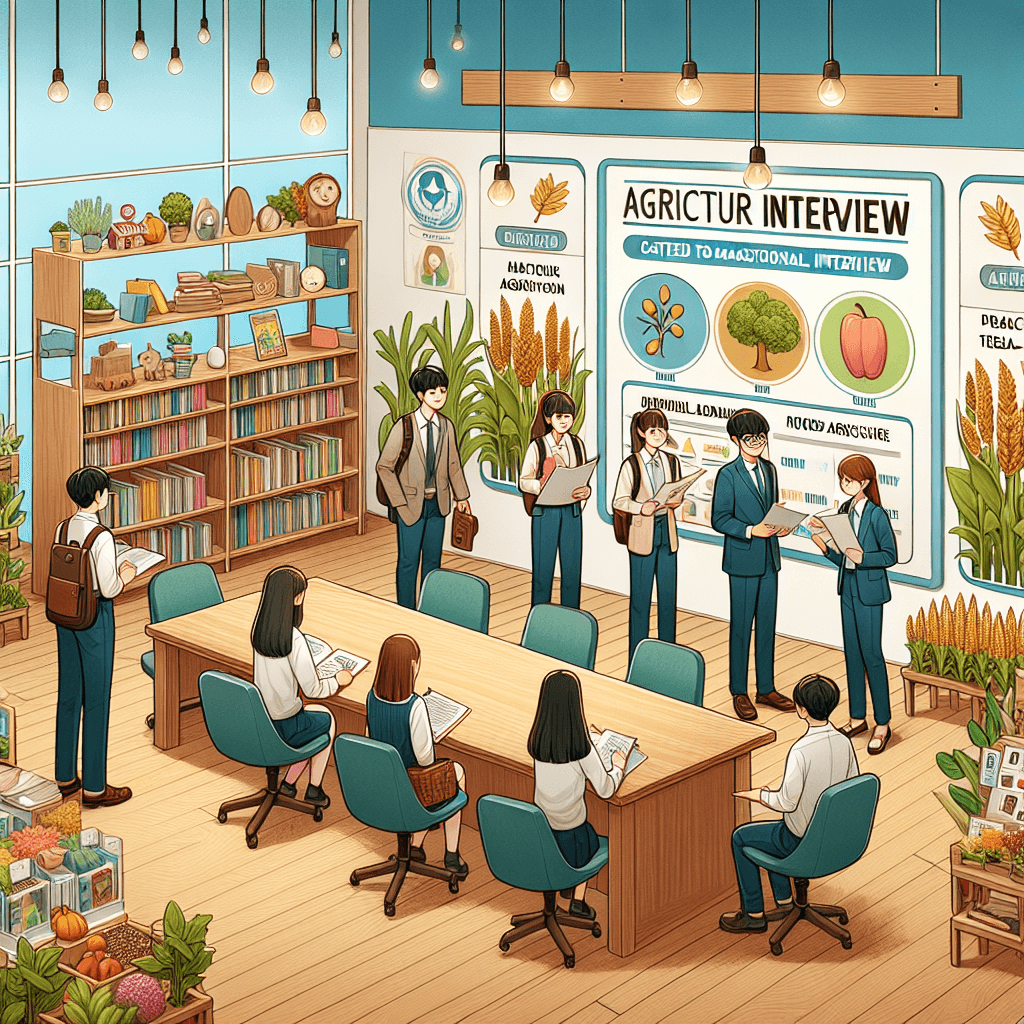
Mastering the Professional Interview for Ag Careers
Inquiry Framework
Question Framework
Driving Question
The overarching question that guides the entire project.How can we, as entering professionals, craft a compelling personal narrative and professional reputation to prove we are the ideal "organizational fit" for a career in the agricultural industry?Essential Questions
Supporting questions that break down major concepts.- Why is a job interview more about assessing "organizational fit" than simply verifying the facts on a resume?
- How does thorough research into a company’s values and culture fundamentally change the way a candidate communicates their value?
- In what ways can professional transparency about past failures and growth demonstrate a candidate's maturity and potential?
- How can a candidate effectively translate their personal background and technical skills into a compelling narrative that distinguishes them from other applicants?
- How does a candidate's digital footprint and physical preparation (like a trial run) impact their professional reputation before they even speak?
- How do open-ended questions like "Tell me about yourself" serve as opportunities to align personal goals with an employer's objectives?
Standards & Learning Goals
Learning Goals
By the end of this project, students will be able to:- Students will be able to construct a professional narrative that transforms past failures into demonstrations of growth and problem-solving skills.
- Students will be able to perform targeted organizational research to align their personal values and skills with a specific company's mission and culture.
- Students will be able to articulate a unique value proposition that differentiates them as the 'best fit' for a position based on specific job requirements.
- Students will be able to analyze and manage their professional reputation by evaluating the impact of digital footprints and logistical preparation.
- Students will be able to demonstrate effective communication strategies for open-ended interview questions, focusing on professional relevance and 'organizational fit.'
Career Ready Practices (AFNR)
Common Core State Standards (ELA/Literacy)
ASCA Mindsets & Behaviors for Student Success
Entry Events
Events that will be used to introduce the project to studentsThe Social Media 'Sting' Operation
The classroom is transformed into a Corporate HR 'War Room' where students are handed dossiers of three 'shadow candidates' for a high-stakes Ag-Tech position, including their leaked social media archives. Students must play the role of hiring managers to decide who gets the job, discovering how a single digital footprint can disqualify a top candidate, before turning the lens on their own online presence.The 360-Second Pitch Blitz
A local business leader issues a 'Flash Challenge': students have exactly six minutes to research a specific company's community impact and values to pitch why they are the 'best candidate.' This high-stakes simulation forces students to move past generic answers and find the specific 'hook' that connects their personal skills to the company’s bottom line.The Cringe-Free Consultant Challenge
Students act as 'Career Consultants' for a fictional candidate who just posted a 'venting' video about their current boss. They must work in teams to 're-brand' this candidate’s negative experiences into professional, positive responses for an upcoming interview, learning the art of tact and professional framing in real-time.Portfolio Activities
Portfolio Activities
These activities progressively build towards your learning goals, with each submission contributing to the student's final portfolio.The Digital Sentry & Prep Log
Before a candidate even speaks, their 'digital first impression' and logistical preparation set the stage. In this activity, students conduct a self-audit of their social media presence and create a 'Prep & Logistics Map' for a hypothetical or real job interview. They will analyze why an employer cares about their online persona and plan the physical logistics of an interview (like the 'trial run').Steps
Here is some basic scaffolding to help students complete the activity.Final Product
What students will submit as the final product of the activityA 'Professional Reputation Portfolio' containing a Social Media Audit Report and a Logistical Prep Checklist (including a mapped route for a trial run).Alignment
How this activity aligns with the learning objectives & standardsThis activity aligns with CRP.01 (Act as a responsible and contributing citizen and employee) by focusing on the impact of digital footprints and logistical preparedness on professional reputation. It also addresses the inquiry framework regarding physical preparation and digital footprints.Career Alchemy: Turning Setbacks into Strengths
One of the hardest interview questions involves discussing failure. Students will learn the 'STAR' (Situation, Task, Action, Result) method with a focus on 'Reflective Growth.' They will practice writing responses that address past mistakes or negative situations (like leaving a previous job) with professional tact and positivity.Steps
Here is some basic scaffolding to help students complete the activity.Final Product
What students will submit as the final product of the activityA 'Reflective Growth Script' featuring two drafted responses: one addressing a specific failure and one professionally reframing a departure from a previous employer.Alignment
How this activity aligns with the learning objectives & standardsAligns with CCSS.ELA-LITERACY.W.11-12.4 (Produce clear and coherent writing appropriate to task/audience) and CRP.04 (Communicate clearly). It specifically addresses the learning goal of transforming past failures into growth demonstrations.The Corporate Detective Agency: Mission Alignment
To answer 'Why do you want to work for us?', a candidate must be a detective. Students will select a specific company (using the Starbucks example or a local Ag-Business) and dig into their mission statement, community values, and recent projects. They will then map their own skills directly to the company’s specific needs.Steps
Here is some basic scaffolding to help students complete the activity.Final Product
What students will submit as the final product of the activityA 'Company Intelligence Brief' that includes a summary of the organization’s values and a tailored 'Alignment Statement' explaining why the student is the 'Best Fit.'Alignment
How this activity aligns with the learning objectives & standardsAligns with CRP.10 (Plan career path aligned to personal goals) and the 'Organizational Fit' inquiry question. It requires students to perform targeted research as outlined in the project details.The Value Proposition Blueprint: Your Final Narrative
In this final portfolio piece, students synthesize all previous activities into a cohesive 'Elevator Pitch' and a 'Master Interview Guide.' This guide serves as their personal cheat sheet for the most common open-ended and high-stakes questions, ensuring they remain focused on professional relevance rather than personal tangents.Steps
Here is some basic scaffolding to help students complete the activity.Final Product
What students will submit as the final product of the activityThe 'Professional Narrative Playbook'—a comprehensive document containing the student's 'Tell Me About Yourself' script and answers to the 'Big Five' interview questions.Alignment
How this activity aligns with the learning objectives & standardsAligns with CCSS.ELA-LITERACY.SL.11-12.4 (Present information conveying a clear perspective) and ASCA B-SS 1 (Use effective oral and written communication). It synthesizes the 'Tell me about yourself' goal.Rubric & Reflection
Portfolio Rubric
Grading criteria for assessing the overall project portfolioProfessional Narrative and Career Readiness Portfolio Rubric
Professional Reputation Management
This category focuses on the student's ability to manage their professional reputation and the logistical details necessary for a successful interview.Digital Integrity and Logistical Readiness
Evaluates the student's ability to audit their digital footprint and plan the logistical requirements of a professional interview, demonstrating responsibility and attention to detail.
Exemplary
4 PointsThe student provides a sophisticated social media audit with deep insight into professional perception. The logistical plan is comprehensive, identifying complex barriers and innovative mitigation strategies. The trial run route is perfectly mapped with contingency timing.
Proficient
3 PointsThe student identifies potential digital reputation issues and provides a clear plan for professionalizing profiles. The logistical plan includes a specific route and identifies standard barriers to employment with logical solutions.
Developing
2 PointsThe student provides a basic social media audit with emerging awareness of professional standards. The logistical plan is present but lacks detail regarding specific barriers or precise timing for the interview location.
Beginning
1 PointsThe student shows minimal awareness of digital reputation. The logistical plan is incomplete, missing either the mapped route, the identification of barriers, or a clear plan for preparation.
Critical Reflection and Professional Growth
This category evaluates the student's ability to communicate complex personal histories in a way that demonstrates maturity and resilience.Narrative Transformation and Tact
Assesses the student's use of the STAR method to frame past failures as growth opportunities and their ability to describe employer transitions with professional tact.
Exemplary
4 PointsThe student constructs a masterful narrative using the STAR method, focusing extensively on innovative problem-solving and growth. The reframing of negative experiences is exceptionally tactful, turning all past challenges into clear professional assets.
Proficient
3 PointsThe student effectively uses the STAR method to describe a failure, focusing on actions and results. Reframing of past employer experiences is positive and professional, avoiding disparaging remarks.
Developing
2 PointsThe student describes a failure but the STAR method is inconsistently applied (e.g., too much focus on the situation). Attempts at reframing past experiences are present but may still contain traces of negative tone.
Beginning
1 PointsThe student struggles to describe a failure as a growth opportunity. The description of past experiences lacks tact or remains focused on negative aspects without professional reframing.
Strategic Research and Alignment
This category assesses the student's research skills and their ability to argue their 'organizational fit' based on evidence.Corporate Intelligence and Strategic Fit
Measures the student's ability to research a target company and align their personal skills and values with the organization's mission and needs.
Exemplary
4 PointsThe student provides a sophisticated intelligence brief showing deep research into specific company initiatives. The T-Chart and alignment statement show a high-level integration of personal value with the company’s bottom line.
Proficient
3 PointsThe student provides a clear intelligence brief with relevant facts about company values. The alignment statement effectively connects specific personal skills to the identified company needs.
Developing
2 PointsThe student conducts basic research but findings are generic (e.g., only common knowledge). The connection between personal skills and company needs is emerging but lacks specificity.
Beginning
1 PointsResearch is minimal or inaccurate. The student fails to make a clear connection between their own skills and the specific needs or values of the target employer.
Professional Narrative Synthesis
This category focuses on the student's ability to synthesize their experiences into a coherent, professional narrative.Persuasive Communication and Value Proposition
Evaluates the clarity, structure, and professional tone of the student's 'Elevator Pitch' and their answers to critical interview questions.
Exemplary
4 PointsThe 'Past-Present-Future' pitch is compelling, concise, and expertly tailored to the audience. Responses to the 'Big Five' questions show exceptional critical thinking and a sophisticated understanding of the employer's perspective.
Proficient
3 PointsThe 'Past-Present-Future' pitch is clear and follows the required model. Responses to interview questions are thorough, demonstrate effective communication, and align well with professional standards.
Developing
2 PointsThe pitch is present but may be disorganized or lack a clear future-facing component. Responses to interview questions show basic understanding but may be brief or repetitive.
Beginning
1 PointsThe pitch is incomplete or significantly lacks professional focus. Responses to critical interview questions are insufficient or fail to address the underlying purpose of the questions.
Technical Execution and Holistic Quality
This category evaluates the holistic quality of the student's work and their attention to professional standards in their written products.Portfolio Coherence and Professionalism
Assesses the overall coherence, professionalism, and quality of the final portfolio documents, including the mastery of standard written English and formatting.
Exemplary
4 PointsThe portfolio is a professional-grade document. Writing is precise, sophisticated, and free of errors. The student demonstrates a comprehensive mastery of the 'organizational fit' concept throughout all activities.
Proficient
3 PointsThe portfolio is well-organized and professional in appearance. Writing is clear and coherent with minimal errors. The student successfully demonstrates their value as a candidate through consistent effort.
Developing
2 PointsThe portfolio is complete but may have organizational or grammatical issues that distract the reader. The demonstration of candidate value is inconsistent across different activities.
Beginning
1 PointsThe portfolio is incomplete or poorly organized. Frequent errors in writing and a lack of clear professional focus suggest a need for significant revision and support.